
Flood protection is becoming a practical priority for factories, warehouses, subway entrances, garages, and commercial buildings. In these locations, a reliable Automatic flood door can help limit water entry during sudden storms or rising river levels. However, product quality depends on more than appearance. Door structure, sealing performance, drainage design, control systems, and installation accuracy all require careful evaluation.
This guide introduces ten leading Automatic flood door manufacturers in China. The selection focuses on manufacturing experience, engineering capability, product range, and documented project performance. It also considers material quality, corrosion resistance, emergency operation, intelligent monitoring, and after-sales support. Some manufacturers specialize in compact residential barriers. Others produce large industrial doors for loading bays and underground facilities.
Real evidence matters.
Buyers should review factory qualifications, inspection records, test reports, warranty terms, and completed installations. A stainless-steel frame may look durable, yet poor sealing can still allow water through. Similarly, advanced sensors are useful, but they cannot replace correct site measurement and professional installation. These details are easy to overlook.
The companies discussed here represent different strengths, price levels, and customization capabilities. Their products may suit different climates, building layouts, and flood risks. Still, no ranking can replace an on-site assessment. Project conditions vary. Even reliable suppliers may need stronger drainage planning or clearer maintenance procedures. By comparing technical specifications, service responses, and customer feedback, readers can make a more informed purchasing decision and identify a manufacturer suitable for long-term flood protection.
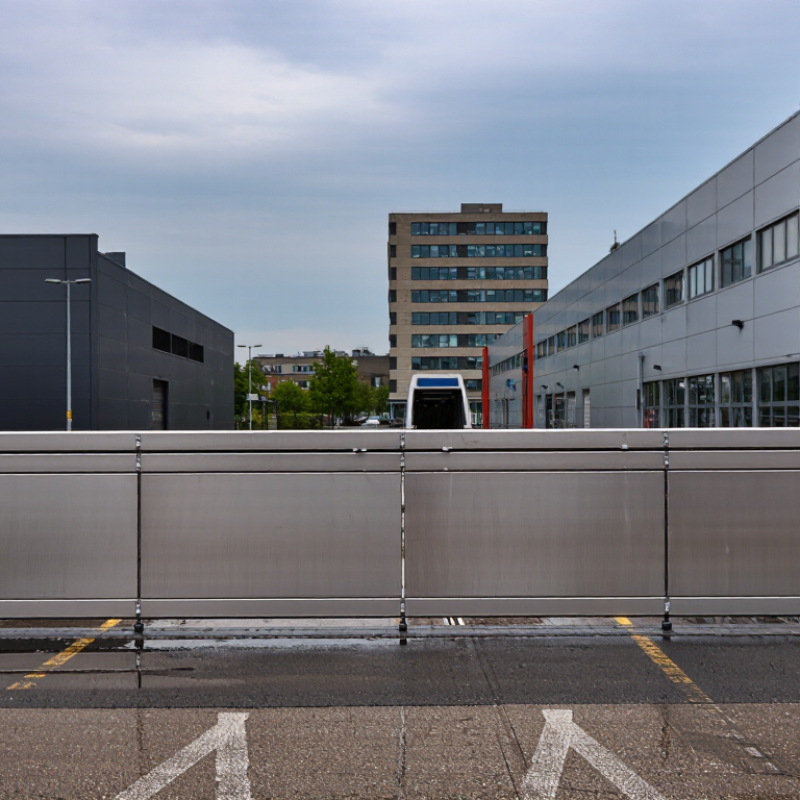
Automatic flood doors are engineered barriers that protect building entrances from rising water. Unlike ordinary doors, they use sensors, motors, seals, and reinforced frames. When water reaches a preset level, the control system activates the door. It then closes against the threshold and compresses waterproof seals.
Some systems operate automatically through float sensors, water probes, or building alarms. Others require a manual command from a control panel. Reliable designs often include battery backup, emergency release controls, and visual warning signals. During inspections, technicians should check hinges, seals, drainage channels, and electrical connections. A small damaged seal can create a surprisingly serious leak. These doors are not magic. Poor installation, blocked drainage, or delayed maintenance can reduce protection.
Tips: Measure the opening carefully before selecting a door. Test the system under supervised conditions, not only during a flood. Keep sensors clear of mud and stored materials. Review the backup power regularly. It is also wise to record each inspection, including unusual noise, slow movement, or surface corrosion. One detail is easy to overlook: nearby walls must withstand water pressure too. Otherwise, the door may perform well while water enters through weaker structures. Manufacturers and installers should provide clear operating instructions, realistic performance limits, and maintenance guidance based on the site’s flood risk.
A practical comparison of the main technical features, operating methods, and selection criteria for automatic flood doors
| No. | Technical Dimension | What It Means | Common Options or Factual Reference | Why It Matters When Selecting a Manufacturer |
|---|---|---|---|---|
| 1 | Primary Function | An automatic flood door is a flood-protection barrier installed at an entrance, opening, ramp, tunnel, or other vulnerable access point. | It is designed to restrict the passage of floodwater, floating debris, and, depending on the design, silt and contaminated water. | The supplier should clearly define the intended installation location and the water-exposure conditions. |
| 2 | Activation Method | The door can be triggered by a rising-water sensor, a float mechanism, a remote signal, or manual control. | Typical systems use level sensors, float switches, control panels, or building-management-system interfaces. | Automatic activation can reduce response time, while manual override is important during power loss, maintenance, or false alarms. |
| 3 | Operating Principle | When a flood signal is detected, an actuator moves the barrier into its protective position and seals the perimeter against water pressure. | Common mechanisms include hinged, vertically rising, horizontally sliding, and drop-down barrier designs. | The mechanism must match the available clearance, opening geometry, traffic requirements, and expected flood conditions. |
| 4 | Water-Sealing System | Seals and compression points limit water infiltration around the door leaf, frame, threshold, and side guides. | Elastomeric gaskets, compression seals, drainage channels, and mechanically locked edges are commonly used. | Water resistance depends on the complete installed assembly, not only on the door panel material. |
| 5 | Structural Materials | The frame and barrier must resist hydrostatic pressure, impact from debris, corrosion, and repeated operation. | Frequently specified materials include galvanized steel, painted carbon steel, stainless steel, and aluminum, subject to the application. | Material selection should consider water chemistry, exposure duration, structural loading, maintenance requirements, and service life. |
| 6 | Flood-Load Design | Hydrostatic pressure increases with water depth, while moving water and debris can create additional impact loads. | Design calculations should account for the stated water depth, opening width, support conditions, and applicable engineering requirements. | A credible manufacturer should provide design assumptions, load information, drawings, and installation details for technical review. |
| 7 | Power and Fail-Safe Operation | Automatic doors require a reliable power and control arrangement to open, close, monitor, and report system status. | Possible provisions include battery backup, emergency release, hand operation, alarm signals, and a normally safe position defined by the project. | The required failure position depends on life safety, building access, security, and the site’s emergency-management plan. |
| 8 | Installation Configuration | Flood doors may be surface-mounted, recessed into a wall, installed across a doorway, or integrated into a larger flood-barrier system. | Configuration is determined by the opening dimensions, threshold level, wall strength, drainage arrangement, and available operating space. | Accurate site measurements and structural verification are essential before fabrication or installation. |
| 9 | Testing and Verification | Functional testing confirms that the sensor, controller, actuator, barrier, seals, alarms, and manual override work together. | Inspection may include dry-cycle testing, seal inspection, water testing where appropriate, and review of maintenance records. | Buyers should request test procedures, inspection documentation, commissioning records, and clear performance limitations. |
| 10 | Maintenance Requirements | Routine maintenance helps preserve reliable operation and sealing performance during long periods without flooding. | Typical tasks include cleaning guides, checking sensors, lubricating approved components, inspecting seals, testing backup power, and exercising the door. | A manufacturer with documented service intervals, replacement parts, training, and after-sales support can reduce lifecycle risk. |
Selection note: Flood-door performance depends on the complete system design, installation quality, site conditions, and maintenance program. Product specifications and flood-resistance claims should be verified against project-specific engineering requirements and applicable local regulations.
Check engineering quality, production capacity, and documented project experience. Review tested panels, corrosion-resistant frames, sensors, seals, and control cabinets. No ranking is flawless. Verify every important claim.
Aluminum is lightweight and resists corrosion. Galvanized steel provides stronger impact protection. Stainless steel suits harsh, wet environments but often costs more. Material choice depends on the site.
Look for automatic sensors, battery backup, manual override, drainage channels, and warning systems. Ask about closure speed and emergency operation. Small details matter.
Request independent test reports showing water depth, closure time, and pressure resistance. Installation photos can reveal practical details. Product images alone prove very little.
EPDM seals can remain flexible around the frame. Poor installation may create hidden leakage points. Inspect corners, joints, and compression carefully.
Floor levels, wall strength, drainage, and nearby obstacles can change performance significantly. Mud and floating debris may block sensors or seals. The site decides more than the brochure.
Confirm annual maintenance responsibilities and replacement-part availability. Ask about service response times and technician coverage. Neglected hinges or seals can weaken protection.
Flood events may interrupt electricity when the door is needed most. Ask how long batteries support sensors and closing mechanisms. Manual operation should remain possible. Power planning is easy to overlook.
Not necessarily. The door must close safely without trapping people or damaging nearby equipment. Compare response time, warning signals, emergency controls, and failure behavior. Speed alone is incomplete.
Total operating costs include installation, electricity, inspections, repairs, and replacement parts. A cheaper door may require costly site redesigns. I would compare lifetime costs, not just invoices.
This guide explains how an Automatic flood door works and why it is an important protective solution for basements, garages, utility rooms, underground entrances, and other flood-prone areas. It outlines how sensors, water pressure, sealing systems, and reinforced structures work together to detect rising water and create a reliable barrier. The article also presents China’s top 10 automatic flood door manufacturers through a practical evaluation framework, focusing on engineering capability, production quality, customization, testing procedures, installation support, and after-sales service rather than brand promotion.
A detailed comparison covers key product features, construction materials, activation methods, sealing performance, corrosion resistance, maintenance needs, and suitable applications. The final section offers guidance for choosing the right Chinese manufacturer by considering site conditions, protection height, door dimensions, response speed, certification, project experience, communication, delivery capacity, and long-term service. This approach helps buyers compare suppliers objectively and select a safe, durable, and cost-effective flood protection solution.



