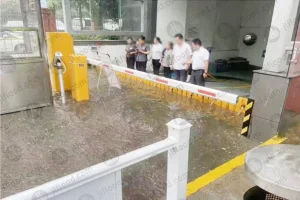
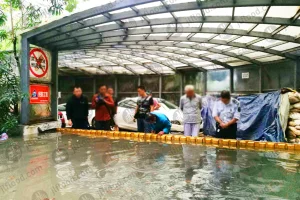
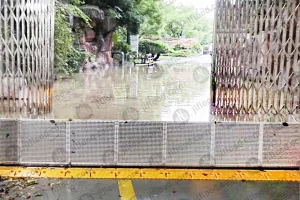
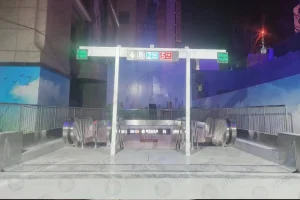
Field-proven hydrodynamic and automatic flood protection systems engineered for extreme precipitation and urban flash floods.
Why modern civil engineers are replacing manual, power-dependent barriers with hydrodynamic non-electric automatic flood control systems.
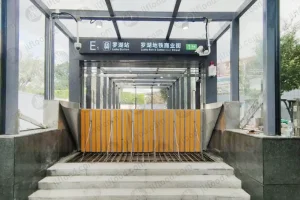
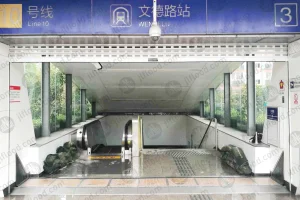
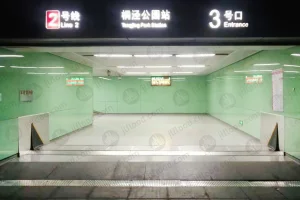
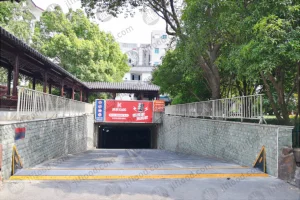
Accelerating global climate volatility has fundamentally altered urban flood dynamics. Extreme precipitation events now regularly exceed standard 50-year municipal storm drainage capacities, resulting in rapid surface water accumulation. Subterranean public assets—including underground transit networks, commercial underground parking structures, high-voltage power substations, and utility connection tunnels—represent vulnerable nodes in urban infrastructure. The failure to secure these entry points during an inundation leads to catastrophic capital loss, severe structural damage, and protracted operational downtime.
Traditional flood defense strategies relying on manual sandbag deployment or electromechanical flip-up barriers present high failure rates during crisis scenarios. Sandbag placement demands substantial labor lead-times, which are rarely available during unpredictable flash floods. Electromechanical systems suffer from critical single-point vulnerabilities: power grid collapses during typhoons, electronic sensor corrosion, and motor maintenance oversight.
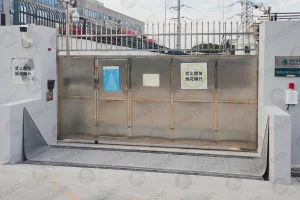
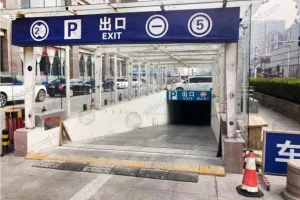
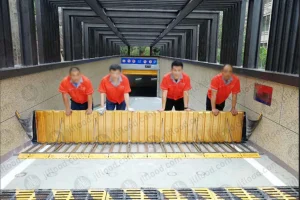
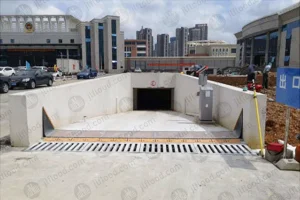
Actual Water Retaining Flood Barriers operating on hydrodynamic principles solve these operational vulnerabilities. Designed as modular, sub-surface embedded or surface-mounted assemblies, these gates operate entirely without human intervention, sensors, or external power source. Using the physical displacement and buoyancy of encroaching water, the barrier self-deploys within seconds, establishing a high-integrity hydrostatic barrier capable of maintaining structural equilibrium under dynamic dynamic hydraulic heads.
An in-depth analysis of passive hydrostatic buoyancy mechanics, FEA structural calculations, and seal longevity science.
The system utilizes a balanced counterweight panel stored flush inside a ground frame channel. As surface floodwater fills the retention basin, hydrostatic upward force overcomes calibrated panel resistance, raising the barrier plate automatically as water levels ascend.
Sealing performance is achieved using high-grade EPDM rubber seals featuring specialized memory dynamics. Hydrostatic pressure actively forces the dual-lip seal profiles against stainless steel side jambs, delivering a zero-leakage barrier meeting stringent international leakage standards.
Fabricated from marine-grade 6063-T6 extruded aluminum alloy structural hollow beams and 304/316 stainless steel housings. Finite Element Analysis (FEA) validates structural resilience under heavy vehicle wheel loads (up to 90 kN axle loads) and high static water depths.
| Parameter Benchmark | Standard Commercial Grade | Heavy Duty Transit / Infrastructure Grade | Testing / Certification Standard |
|---|---|---|---|
| Retaining Height Range | 300 mm – 1000 mm | 600 mm – 2000 mm (Modular customizable) | GB 50014 / Hydrostatic Tank Verified |
| Triggering Velocity | Automatic deployment within 15s | Instant deployment (< 5s from water entry) | Dynamic Flow Testing |
| Load Capacity Class | C250 (Medium Duty Driveways) | D400 – F900 (Heavy Metro & Airport Logistics) | EN 124 / EN 1433 Standard |
| Structural Alloy Frame | 6063-T6 High Strength Aluminum | 6005A-T6 / SUS304 / SUS316 Stainless Frame | ASTM B221 / GB/T 5237 |
| Sealing Gasket Life | 15+ Years (UV & Ozone Resistant) | 25+ Years (Fluorocarbon / Heavy EPDM) | ISO 48-4 / Hardness Shore 65A |
| Power Requirement | 0 kW (100% Hydromechanical) | 0 kW (Optional IoT Alarm Telemetry) | Zero-Grid Operational Standard |
How state-of-the-art automated manufacturing infrastructure guarantees dimensional tolerance, structural integrity, and competitive pricing.
Our manufacturing centers employ multi-axis fiber laser cutting stations paired with robotic MIG/TIG welding cells. This ensures dimensional tolerances within ±0.5mm across single span lengths exceeding 6 meters, eliminating structural misalignments during civil embedding.
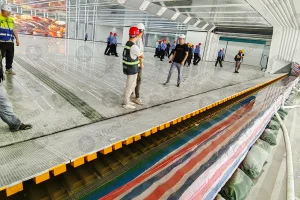
Unlike factories relying solely on computer simulations, every design series undergoes 1:1 scale hydrostatic static and dynamic water testing in specialized testing pools. Leakage rates, panel buoyancy thresholds, and seal deformation profiles are digitally logged and certified prior to container loading.
Direct supply partnerships with tier-one aluminum extruders and stainless steel mills guarantee full material traceability (MTC certificates available). Concentrated manufacturing clusters in China allow rapid scaling—capable of delivering large infrastructure project orders within 15–20 business days.
Understanding cost structures, customization parameters, and commercial budgeting for procurement managers and EPC contractors.
Procuring actual water retaining flood barriers directly from OEM manufacturers requires understanding the primary technical cost drivers. Pricing is determined not simply per linear meter, but via an engineering calculation encompassing clear opening span, required water retaining height, dynamic load-bearing classification, and installation sub-structure requirements.
| Product Configuration Category | Retaining Height | Estimated Wholesale Price Range (USD) | Primary Commercial Applications |
|---|---|---|---|
| Surface-Mounted Flip-Up Automatic Barrier | 300mm – 600mm | $350 – $650 / Linear Meter | Commercial Shop Entrances, Pedestrian Access, Utility Rooms |
| Sub-Surface Embedded Hydrodynamic Barrier (Driveover) | 600mm – 1000mm | $600 – $1,100 / Linear Meter | Underground Parking Ramps, Commercial Garages (C250/D400 Load) |
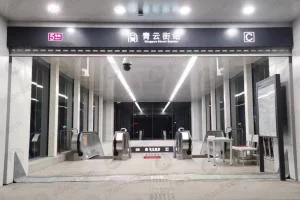
| Heavy-Duty Metro Transit Flood Protection Gate | 1000mm – 1800mm | $1,200 – $2,400 / Linear Meter | Subway Entrances, Railway Connection Channels (F900 Rating) |
| Substation & Industrial Utility Flood Gate | 500mm – 1200mm | $550 – $950 / Linear Meter | Electrical Substations, Data Centers, Chemical Plant Bounds |
Comprehensive engineering deliverables and international standards alignment for global municipal and private tenders.
We supply consultants and architectural firms with complete BIM (Revit) models, 2D AutoCAD civil integration details, structural anchor load schedules, and concrete recess specifications to streamline site planning.
Products are manufactured in strict compliance with international structural and hydraulic codes, including ISO 9001 quality management, ISO 14001 environmental standards, CE marking, and FM 2510 flood mitigation standards.
Every shipment includes comprehensive English installation manuals, step-by-step civil pouring templates, and video technical guides. Remote engineer commissioning support is available globally 24/7.
Expert engineering answers to critical operational, structural, and maintenance questions.
The barrier relies entirely on passive hydro-mechanical principles. It uses no electric motors, batteries, hydraulic pumps, or digital sensors. As floodwater flows into the embedded bottom frame casing, the natural buoyancy force lifts the internal panel. Hydrostatic pressure from the rising water continuously presses the barrier upright and locks it securely into place. It operates with 100% reliability even during total infrastructure blackouts.
Yes. The top cover plates are engineered from heavy-duty structural aluminum extrusions or reinforced stainless steel, rated for load classes up to EN 124 D400 and F900. They comfortably handle continuous daily traffic from heavy fire engines, municipal buses, fully loaded logistics trucks, and passenger vehicles without deforming the embedded casing.
Because there are no complex motor drives or electrical control circuits, maintenance is straightforward. We recommend a biannual visual inspection and cleaning of the bottom drainage channel to clear sand, leaf debris, or silt buildup. EPDM seals should be inspected annually for physical damage. Under standard operating conditions, the EPDM seals last 15–25 years and can be easily replaced without replacing the barrier frame.
Standard dimensional orders are manufactured within 10 to 15 business days. Large custom infrastructure projects requiring specialized BIM modeling, bespoke structural alloys, or custom retaining heights (over 1.5 meters) typically require 20 to 25 business days. Products are packed in export-grade reinforced wooden crates to ensure safe sea freight delivery worldwide.
Explore our full range of surface, embedded, flip-up, and metro-line specialized flood barrier systems.