
Select engineered automatic barriers designed for zero-power operation, structural resilience, and seamless architectural integration.
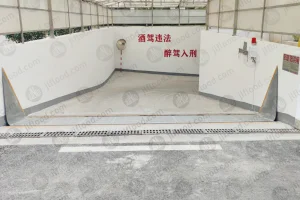
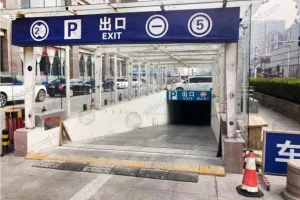
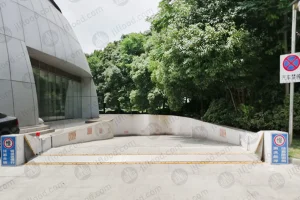
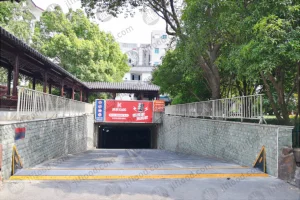
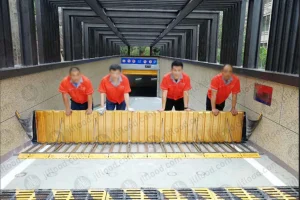
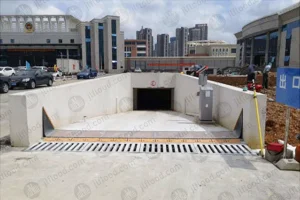
Urbanization and micro-climate shifts have exponentially increased cloudburst frequencies, exposing underground parking structures, commercial basements, and subway transit networks to unprecedented flash-flooding vulnerabilities.
Traditional electric flood gates and motorized pumps depend heavily on municipal power grids or standby diesel generators. During extreme typhoon or torrential rain events, municipal power grids frequently suffer severe disruptions. Electromechanical barriers fail precisely when needed most. Hydrodynamic passive self-rising barriers eliminate electric dependence entirely, operating purely on natural fluid dynamic pressure.
A single subterranean flood event in a commercial center or luxury residential tower can result in tens of millions of dollars in vehicle destruction, electrical switchgear ruin, structural degradation, and tenant business interruption claims. Installing certified hydrodynamic gates drastically lowers commercial property insurance actuarial risk profile and annual premiums.
Flash floods often crest within 15 to 30 minutes of cloudburst initiation. Manual sandbag deployment or stop-log bar assembly requires rapid labor mobilization, clear access routes, and staff alertness—factors that frequently fail during midnight storms. Automatic hydrodynamic gates trigger autonomously within 0.1 seconds of water entry into the embedded baseline channel.
Nanjing Junli Technology’s modular hydrodynamic automatic flood gates utilize fundamental buoyancy principles coupled with hydrostatic locking force, delivering absolute reliability during extreme municipal flooding conditions.
| Evaluation Parameter | Junli Hydrodynamic Automatic Gate | Electromechanical / Motorized Gate | Manual Aluminum Stop-Logs |
|---|---|---|---|
| Energy Requirement | Zero Power (Pure Buoyancy) | High (Power/Generator) | Zero Power |
| Deployment Time | < 30 Seconds Auto-Raise | 2 to 5 Minutes (If Powered) | 30 to 60 Minutes Manual Labor |
| Human Reliability Risk | Zero (Fully Autonomous) | Medium (Requires Switch Activation) | Critical Risk (Must Be On-Site) |
| Vehicle Drive-Over Surface | Flush Ground Profile (Heavy Duty) | Varies (Sloped Ramp / Threshold) | Obstruction (Requires Manual Slot Cleaning) |
| Blackout Operationality | 100% Functionality | Fails Without Backup Genset | 100% Functionality |
| Service Life Expectancy | 20+ Years Low Maintenance | 8-10 Years (Motor/Cable Wear) | 15+ Years (Gasket Degradation) |
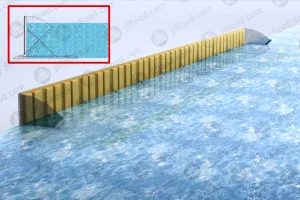
As surface storm run-off exceeds the threshold slope and flows into the recessed stainless steel foundation frame, water fills the internal buoyancy chamber through engineered intake grates. The lightweight high-rigidity aluminum alloy door panel immediately floats upward.
As the floodwater level rises, hydrostatic pressure exerts heavy force against the front face of the barrier panel. This differential pressure compresses the continuous specialized EPDM rubber compression seals firmly against the side frames and ground bottom frame, creating an IP68 watertight seal.
When municipal storm drain networks clear external floodwaters, the trapped water inside the barrier foundation chamber drains out naturally via an integrated gravity drain pipe. The barrier panel returns smoothly into its recessed, flush position, enabling uninterrupted vehicular traffic.
Understanding the commercial factors influencing hydrodynamic flood gate pricing allows architectural procurement managers and civil contractors to optimize budget allocations effectively.
Standard unit costs are calculated per linear meter based on retaining height (typical heights: 0.5m, 0.6m, 0.9m, 1.2m, 1.5m, 2.0m). Wider clear spans (e.g., double lane garage ramps of 6m to 12m) utilize modular interlocking multi-leaf door panel configurations.
Residential underground parking ramps require 10–20 ton axle rating panels. Commercial shopping plazas, logistics parks, and subway maintenance garages require reinforced 40–60+ ton axle load ratings (manufactured from aircraft-grade 6063-T6 aluminum extrusion with internal structural ribbing).
Embedded installations require trenching civil work and custom stainless steel pre-embedded framing templates (ideal for new construction projects). Surface-mounted flip-up units offer lower civil installation cost, making them perfect for retrofitting existing facilities.
| Barrier Application Profile | Standard Retaining Height | Load Capacity Grade | Est. Price Range (USD per Meter) | Ideal Project Type |
|---|---|---|---|---|
| Light Residential Ramp Barrier | 0.5m – 0.6m | 15 Ton Axle Load | $450 – $750 / m | Private Condos & Residential Parking |
| Commercial Garage Hydrodynamic Gate | 0.6m – 1.0m | 30–40 Ton Axle Load | $750 – $1,200 / m | Shopping Malls, Hospitals, Office Towers |
| Heavy Infrastructure & Metro Gate | 0.9m – 1.5m | 60+ Ton Axle Load | $1,200 – $2,200 / m | Subway Stations, Rail Depots, Airports |
| Substation & Critical Utility Gate | 0.5m – 1.2m | Heavy Pedestrian / Machinery | $650 – $1,100 / m | Power Transformer Stations, Data Centers |
*Note: Final quotations depend on exact opening width, localized drainage pit layout, customs clearance, freight charges, and custom powder-coating requirements. Contact [email protected] for engineering CAD estimate blueprints.
Nanjing Junli Technology designs and manufactures flood barriers according to strict international civil defence, hydraulic seal, and load-bearing parameters.
Our hydrodynamic barrier seals and panel deflections are engineered in alignment with rigorous flood abatement equipment protocols, ensuring structural integrity under full hydrostatic head pressures up to 2.0 meters.
Factory manufacturing operations follow certified ISO quality management. Welded components undergo strict non-destructive testing (NDT), while EPDM sealing gaskets comply with anti-aging, UV-resistant, and chemical degradation benchmarks.
Extensively deployed across Chinese tier-1 urban infrastructure projects (Guangzhou Metro, Beijing Metro, State Grid Substations), meeting stringent national underground flood mitigation directives.
A successful flood mitigation installation requires structured coordination between the structural manufacturer, civil works contractor, and facility engineering management.
Analysis of 50-year rainfall data, entrance slope, kerb elevations, traffic frequency, and baseline storm drain discharge capacity.
Excavation of ground trench across the garage ramp, laying reinforced concrete bed, and anchoring the 304 stainless steel embedded frame template.
Installation of modular buoyancy door leaves, side stainless steel seal guide channels, anti-debris brushes, and high-density EPDM bottom compression gaskets.
Connecting bottom chamber drain outlet to sump pump pits, followed by full-scale simulated water testing to verify zero-leakage threshold.
Junli Technology flood barriers are tested in dedicated hydro-test pools and field-proven during real typhoon flood events across Asia.
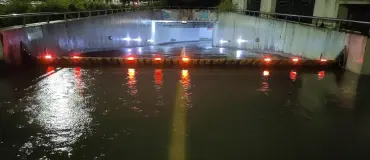
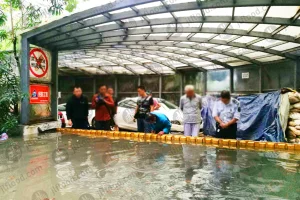
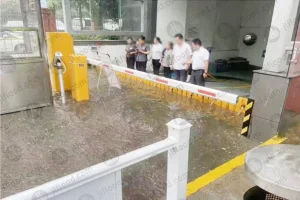
During Typhoon Bebinca, multiple sites equipped with Junli automatic floodgates blocked surface runoff automatically without staff intervention.
Read Case Study →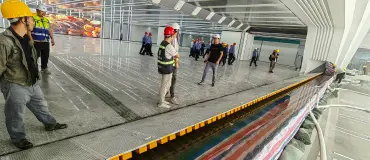
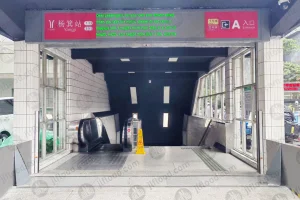
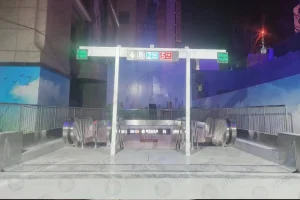
Validated on transit networks in Guangzhou, Beijing, Suzhou, and Hong Kong, protecting passengers and subterranean electronics.
Explore Metro Solutions →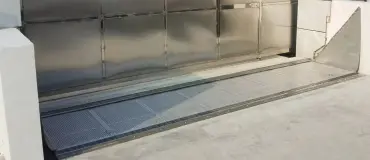
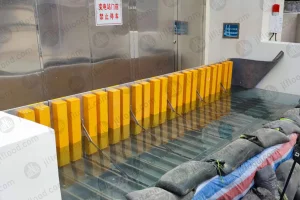
Protecting critical electrical distribution hubs against urban waterlogging, ensuring uninterrupted power grid operation.
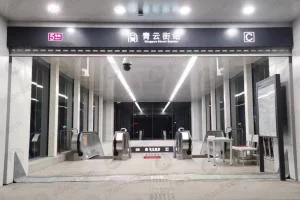
View Substation Gate Specs →Browse additional tested flood protection barrier models for civil, municipal, and commercial facilities.
Addressing essential technical, pricing, and installation inquiries for consulting engineers, developers, and municipality buyers.
The barrier panel is housed flush inside a recessed foundation chamber embedded at the top of a garage ramp or entrance. Rising surface runoff water enters the buoyancy chamber through intake grates. The natural water buoyancy instantly lifts the panel into the water-retaining position, while hydrostatic head pressure forces the panel against continuous EPDM rubber seals. No electricity, sensors, motors, or human intervention are required—ensuring 100% operation during severe blackout conditions.
Our heavy-duty garage flood barriers are constructed from T6-treated 6063 high-strength extruded aluminum alloy profiles with internal structural web supports. Standard commercial garage models support 30-ton to 60-ton axle loads, easily accommodating heavy delivery trucks, fire engines, and dense daily passenger vehicle traffic without structural deformation.
Yes. Every design series undergoes factory water pool testing to measure seal leakage rates, deployment speed, and structural deflection under full design water height. We provide full factory test documentation, material mill certificates, and video evidence with each procurement batch, and support third-party inspection (SGS, TUV, Bureau Veritas) prior to export shipment.
Because our systems contain no electric motors, hydraulic pumps, or complex control boards, routine maintenance is minimal. We recommend a semi-annual inspection: clearing leaves or road debris from the bottom stainless steel chamber grates, flushing out sediment with a hose, and inspecting the EPDM side rubber gaskets for signs of wear. Replacement seal kits can be ordered directly from our factory.
We issue detailed English CAD cross-section drawings, concrete pit rebar clearance specs, embedded frame installation templates, and step-by-step installation manuals. For large commercial projects or subway transit contracts, our engineering service department offers video conference commissioning support or on-site field engineer dispatch.
Send us your entrance clear width, required flood protection height, and site opening photos. Our senior hydraulic engineers will provide a comprehensive engineering layout proposal and official factory quote within 24 hours.


