
Direct factory engineered solutions verified in extreme monsoon and typhoon flood retention scenarios.
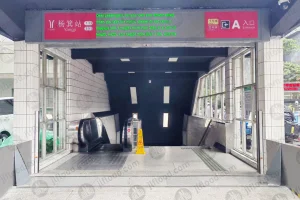
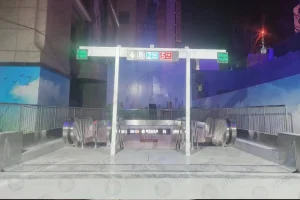
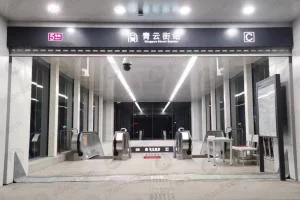
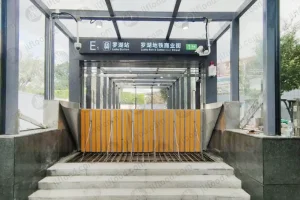
Mitigating extreme surface water runoff in high-density underground mass transit systems.
Rapid urban sprawl combined with climate-change-induced cloudbursts has radically heightened the flood vulnerability of underground civil infrastructure. Subterranean metro systems, light rail transit (LRT) networks, and municipal connection tunnels function as low-lying hydraulic sinks during severe flash floods. When surface water breaches station portals, pedestrian entrances, or ventilation shafts, thousands of lives are put at risk, and structural/electrical damage can cascade into hundreds of millions of dollars in losses.
Historically, transit authorities relied on manual stoplogs, sandbags, or electromechanical flood gates requiring motor drives and external grid power. However, critical flood events almost universally co-occur with localized power outages, electrical short-circuits, and severe traffic gridlock that delays maintenance personnel. When human intervention or electrical power fails, traditional flood barriers succumb to inundation.
As leading Metro Flood Barrier Suppliers & Factories, Nanjing Junli Technology Co., Ltd. leads this structural transformation. Engineered to withstand extreme hydro-dynamic forces, our automatic flood barrier arrays integrate flush into the structural curb of metro station portals, maintaining complete pedestrian and vehicle clearance until an active water-retaining event occurs.
How precise structural fluid dynamics achieve fail-safe flood defense without power.
The flood barrier panel rests flush within a recessed stainless-steel ground frame. As surface water enters the intake chamber, Archimedes' principle drives the high-density lightweight hollow panel to rise automatically as the fluid level elevates within the basin.
Once upright, the forward pressure of the accumulated water body pushes the panel firmly against the wall frames and base seals. Increased water height proportionalizes the sealing pressure, establishing a hermetic dual EPDM rubber barrier.
When the storm subsides and external surface water recedes, accumulated fluid drains through bottom weep-holes. The barrier panel smoothly resets flush back into its embedded ground housing under controlled counterweight damping.
The technical parameters below reflect the baseline factory standards for Junli's municipal metro-grade automatic flood barrier series:
| Parameter | Standard Embedded (HM4D-0006) | Heavy-Duty Surface (HM4D-S) | Flip-Up Modular (HM4D-F) |
|---|---|---|---|
| Retaining Height ($H$) | 500 mm – 2000 mm (Customizable) | 600 mm – 1500 mm | 300 mm – 1000 mm |
| Single Span Width ($L$) | Up to 6.0 m per section | Up to 5.0 m per section | Up to 4.0 m per section |
| Primary Structural Alloy | 6063-T6 Aviation Aluminum Extrusion | SUS304 / SUS316 Stainless Steel | Anodized Reinforced Marine Alloy |
| Maximum Load Capacity | 40-Ton Heavy Axle Truck (Flush state) | 20-Ton Vehicle Traffic | Pedestrian / Light Utility Vehicle |
| Sealing Gasket Material | Triple Co-extruded EPDM + Silicone | High-Density Neoprene Rubber | Dual EPDM Profile Seal |
| Leakage Rate Criteria | < 0.05 L/hr per meter frame | < 0.10 L/hr per meter frame | < 0.08 L/hr per meter frame |
| Activation Power Source | 0 kW (100% Passive Hydrodynamic) | 0 kW (100% Passive Hydrodynamic) | 0 kW Mechanical / Counterweight |
Why Tier-1 international contractors source custom metro flood barriers directly from Nanjing Junli Technology.
Our Nanjing manufacturing complex houses heavy-duty CNC laser cutting setups, robotic seam welding stations, and specialized aluminum extrusion dies. This scale permits tolerances under 0.5 mm across continuous 30-meter multi-leaf station entrance arrays.
Located near major metallurgical hubs, Junli benefits from direct access to high-grade T6-6063 aluminum and SUS316 stainless steel. This streamlined supply chain provides a 35%–50% cost advantage over European manufacturers without compromising structural integrity.
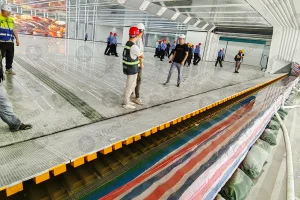
Before dispatch, every modular unit undergoes static and dynamic fluid stress verification in our full-scale testing facility. Clients receive verified water retention certificates, pressure deflection logs, and seal performance videos matching project specifications.
Specific structural configurations across subterranean urban rail environments.
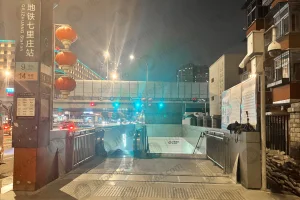
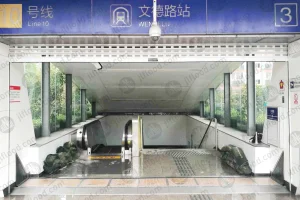
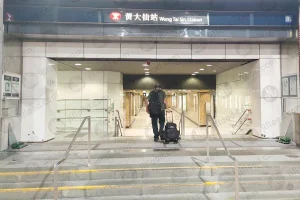
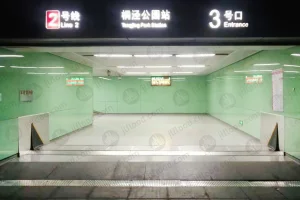
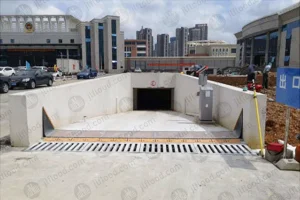
Metro station entrances situated at ground level or integrated into commercial plazas are primary pathways for surface flood water. Flush-embedded automatic barriers (e.g., HM4D series) are installed directly beneath the architectural step thresholds. In daily operation, foot traffic walks smoothly over the stainless-steel top covers. Under flash flood conditions, incoming surface runoff fills the baseline tray, causing the embedded barrier leaf to swing upward to a height of up to 1.5 meters, sealing the portal against catastrophic water entry.
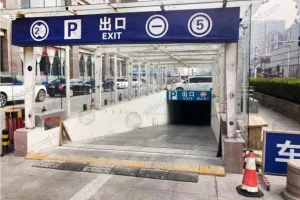
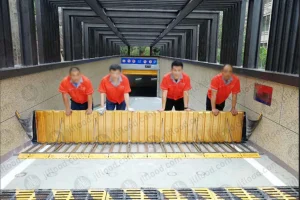
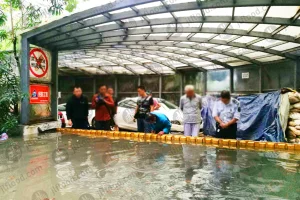
Modern subway stations frequently link to adjacent underground commercial malls and car parks via subterranean connection channels. These interfaces represent high-risk boundary zones where water breaching a commercial basement can flow unimpeded into the rail station. Installing multi-leaf continuous hydrodynamic flood gates (such as the systems fielded at Guangzhou Metro Yangji Station) creates an automatic hydraulic diaphragm that isolates transit tunnels from connected private developments.
Vertical ventilation grilles and emergency stairwells located in sidewalk sidewalk zones can be overwhelmed by high-velocity surface flows. Junli produces specialized compact flip-up and automatic vertical drop flood barriers engineered for narrow shafts, low-clearance cable trenches, and electrical room access points, protecting critical signal relays and high-voltage power rooms from water ingress.
Depots and underground maintenance facilities require ultra-wide clear spans for rolling stock movement. Junli heavy-duty auto-rising track barriers feature recessed wheel-flange seals and 40-ton vehicle load-bearing capacity. These gates sink into heavy reinforced concrete foundations, rising in minutes during emergency storm surges without impeding routine maintenance scheduling.
Meeting international structural codes, municipal transit mandates, and insurance risk metrics.
Junli operates under certified ISO 9001 Quality Control and ISO 14001 Environmental management systems. Structural welds meet EN 1090-2 standards, and all mechanical units carry full CE marking compliance for seamless import into the EU, UK, Middle East, and North America.
To support EPC contractors and municipal transit consultants during tender bidding, Junli provides full structural finite element analysis (FEA) reports, 3D BIM/CAD STEP files, civil foundation layout drawings, and detailed material mill test certificates (MTC).
Our flood defence systems are engineered in alignment with international risk management guidelines (such as FM Global 1-15 and standard loss prevention frameworks). Installing field-proven automatic flood gates drastically lowers commercial property and infrastructure insurance premiums.
Merging mechanical fluid auto-rising reliability with real-time digital monitoring networks.
While mechanical failure is eliminated through passive hydrodynamic design, modern smart cities demand real-time situational awareness. The flood control industry is rapidly evolving from isolated mechanical barriers toward integrated IoT-enabled infrastructure networks.
Junli Technology is pioneering this transition by embedding micro-power IoT telemetry sensors within our automatic barrier frames. Key smart features include:
Heavy-duty, self-closing, and connection channel flood protection systems engineered for long service life.
In-depth responses covering mechanical physics, civil interface preparation, and OEM supply logistics.


