
Deploy field-proven hydrodynamic flood protection systems engineered specifically for high-voltage energy infrastructure.
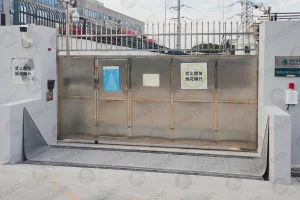
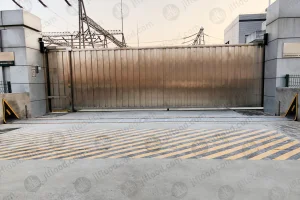
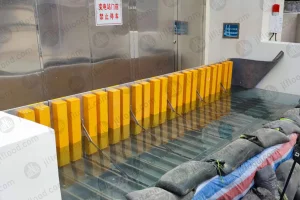
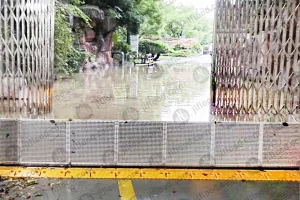
An authoritative technical analysis of critical power infrastructure vulnerabilities under extreme precipitation and climate-driven flooding.
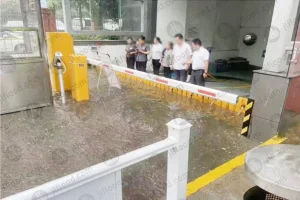
Manual aluminum stop-logs and sandbags depend on advance meteorological warnings and physical labor. During sudden nocturnal cloudbursts, site personnel cannot arrive in time to install temporary gates.
Motorized flood gates require electrical power and electronic sensors. Severe storms frequently cut off grid power first, rendering motorized systems useless at the exact moment inundation strikes.
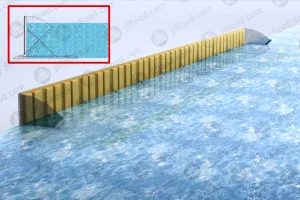
Nanjing Junli’s hydrodynamic automated flood barriers operate purely on water buoyancy and hydrostatic pressure. No human presence, no sensors, and zero grid power are required for 100% reliable deployment.
Evaluate how passive hydrodynamic self-rising flood gates surpass traditional protection methods across critical performance metrics.
| Performance Indicator | Manual Aluminum Stop-Logs | Motorized / Electric Flood Gates | Junli Hydrodynamic Automatic Barrier |
|---|---|---|---|
| Power Dependence | Manual Effort Required | High (Requires AC Grid / Battery Backup) | 0% (100% Power-Free Mechanical Buoyancy) |
| Response Latency | 30 to 120 Minutes (Human Dependent) | 1 to 5 Minutes (Sensor Dependent) | Instantaneous (<0.5 Seconds Water Buoyancy Trigger) |
| Operational Reliability | Low (Vulnerable to Human Error/Absence) | Medium (Vulnerable to Motor/Sensor Failure) | Maximum (Zero Electrical or Electronic Failure Points) |
| Heavy Vehicle Load Class | None (Pedestrian Only) | Limited Load Rating | AASHTO HS-20 / 60-Ton Heavy Truck Load Capable |
| Maintenance Overhead | Low Storage Maintenance | High (Motors, PLC, Sensors, Batteries) | Ultra-Low (Annual Visual & Seal Inspection) |
| Service Life Expectancy | 5 - 10 Years | 8 - 12 Years | 25+ Years (304/316 Stainless Steel & EPDM Seals) |
Delivering precision-engineered hydraulic structures with high-volume production throughput and rigorous global testing standard compliance.
Located in Nanjing, Jiangsu Province, Nanjing Junli Technology Co., Ltd. operates state-of-the-art manufacturing facilities equipped with multi-axis fiber laser cutting machines, robotic seam welding stations, and heavy-duty hydraulic press brakes. Every embedded frame unit and barrier panel undergoes strict dimensional tolerance verification (+/- 0.5mm), guaranteeing seamless field alignment for high-voltage substation perimeter entrances.
Unlike standard metal fabricators, Junli maintains a dedicated full-scale hydraulic testing chamber in-house. Prior to factory dispatch, standard and custom substation flood gate assemblies are subjected to continuous water head retention testing to measure real-world seal deflection, dynamic water impact resilience, and zero-leakage IPX8 sealing performance. Third-party inspection reports (SGS, TUV, Intertek) are issued upon contract request.
Comprehensive flood mitigation strategies tailored to specific structural vulnerabilities within high-voltage sub-stations.
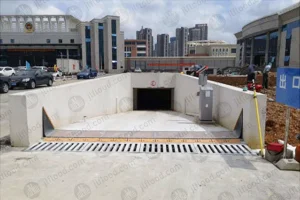
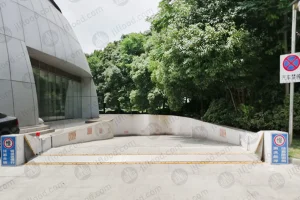
Embedded flush into entry driveways. Supports daily traffic from heavy maintenance trucks, cranes, and utility service vehicles. Automatically rises during surface water runoff.
Compact, light-type self-closing or flip-up barriers installed at pedestrian access doors leading into sensitive Gas-Insulated Switchgear halls to prevent water intrusion.
Surrounding primary oil-cooled power transformers. Dual protection designed to retain oil spillage during maintenance while preventing floodwaters from entering oil pits.
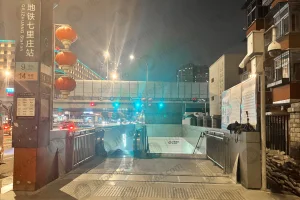
Specialized embedded sealing gates placed at subterranean cable entry points, preventing underground water backflow from filling equipment basements.
Key compliance factors specified by international EPC contractors and power utility engineering consultants.
Global utility procurement teams (IEEE 980, IEC 60529, AISC 360, NFPA 850) require flood protection equipment to satisfy rigorous structural loading and sealing mandates. Barrier frames must withstand hydrodynamic shock waves, floating debris impact, and static water head pressures exceeding 1.5 to 2.0 meters without permanent structural deformation.
Substations are frequently exposed to harsh environmental factors, including industrial chemical sulfur exposure, atmospheric humidity, and coastal salt spray. Junli flood barriers utilize high-grade SUS304 or SUS316L stainless steel, coupled with marine-grade fluororubber and EPDM sealing strips, providing superior resistance to UV aging, ozone exposure, and corrosive soils.
A common point of failure for embedded flood gates is sediment accumulation (sand, gravel, leaves) inside the bottom basin channel. Junli hydrodynamic barriers incorporate specialized sloped bottom basins and hydro-dynamic flush drainage paths that prevent silting, ensuring smooth buoyancy floatation even after years of inactivity.
Bridging passive mechanical reliability with modern IoT telemetry and SCADA integration.
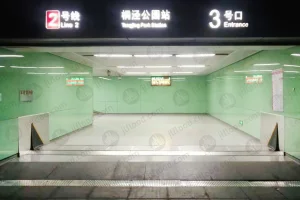
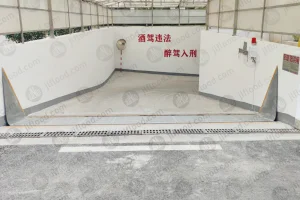
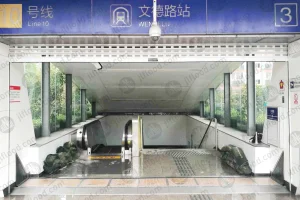
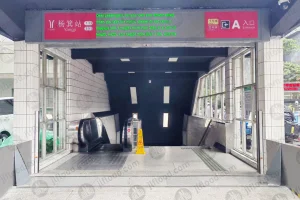
Select from our specialized line of metro, substation, and industrial infrastructure flood barriers.
Expert responses to critical engineering, installation, and procurement questions asked by power grid buyers.
The hydrodynamic flood barrier utilizes Archimedian buoyancy and hydrostatic pressure principles. The structural gate panel sits flush inside a recessed bottom basin embedded in the driveway concrete. When rising floodwater flows into the basin, the internal buoyancy tanks generate immediate upward lift, pivoting the panel into a vertical retaining position. As the water level rises, hydrostatic head pressure compresses the high-grade EPDM rubber gaskets against the side frames, creating an IPX8 watertight seal without relying on electric motors, sensors, or human intervention.
Yes. Nanjing Junli’s substation driveway flood barriers are engineered to meet AASHTO HS-20, Eurocode, and Chinese GB heavy vehicular load ratings. The top drive-over cover panel is constructed from high-tensile structural steel or reinforced aluminum alloy capable of supporting axle loads up to 60 metric tons. Heavy transformer delivery trailers, utility crane trucks, and emergency repair vehicles can drive over the flush barrier panel repeatedly without causing structural deformation or seal misalignment.
For embedded models, the site contractor must excavate a trench across the gateway according to Junli’s dimensional shop drawings, pour a reinforced concrete sub-base, and provide a 100mm gravity drainage outlet at the lowest point of the basin to handle minor rainwater inflow. Junli provides full CAD/BIM embedment templates, anchor bolt locations, and rebar reinforcement specifications. Surface-mounted retrofit models are also available for operating substations where deep trenching is not feasible.
Junli’s patented bottom basin features a sloped hydrodynamic drainage channel and modular stainless steel debris screens. Small sand and leaf particles are naturally washed out through the lower drainage ports during routine rain events. Furthermore, the buoyancy chamber design maintains a self-cleaning clearance gap that prevents gravel jamming, ensuring smooth mechanical rotation even in high-sediment flood environments.
Standard gateway spans (3 meters to 6 meters clear opening) with retaining heights of 0.6m to 1.5m typically ship within 15 to 20 business days from drawing approval. Custom wide-span multi-leaf arrays (spanning up to 20+ meters) for major transmission substations require 25 to 35 days, including complete pre-shipment assembly and water tank testing at our factory.
Because our system contains no motors, hydraulic oil, electrical relays, or sensors, routine maintenance is minimal. Utility asset teams should conduct a semi-annual visual inspection to clear accumulated leaves from the bottom pit, flush the floor frame with a hose, and inspect the EPDM perimeter seals for physical damage. Replacement seal kits are standard stock items dispatched globally within 72 hours.


