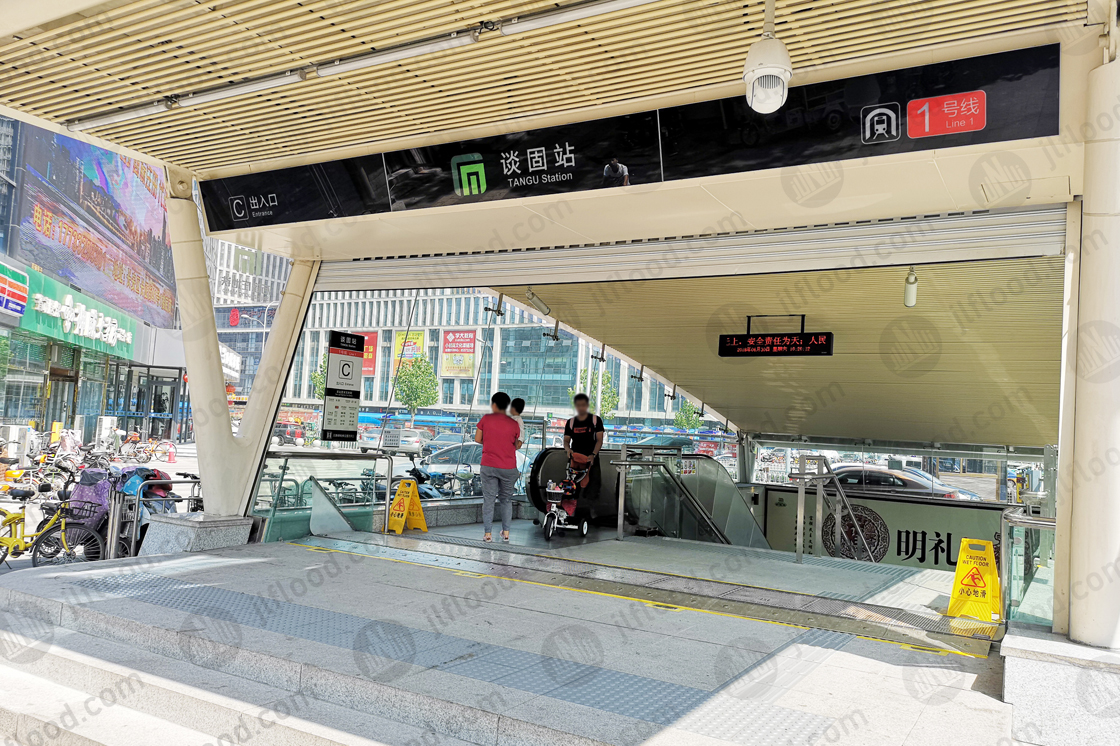

China Surface type Automatic flood barrier for Metro Suppliers, Pricelist
Regular maintenance and inspection
Warning! This equipment is an important flood control safety facility. The user unit shall designate professional personnel with certain mechanical and welding knowledge to conduct regular inspection and maintenance, and shall fill in the inspection and maintenance record form (see the attached table of the product manual) to ensure that the equipment is in good condition and normal use at all times! Only when the inspection and maintenance are carried out in strict accordance with the following requirements and the "inspection and maintenance record form" is filled in, can the company's warranty terms take effect.
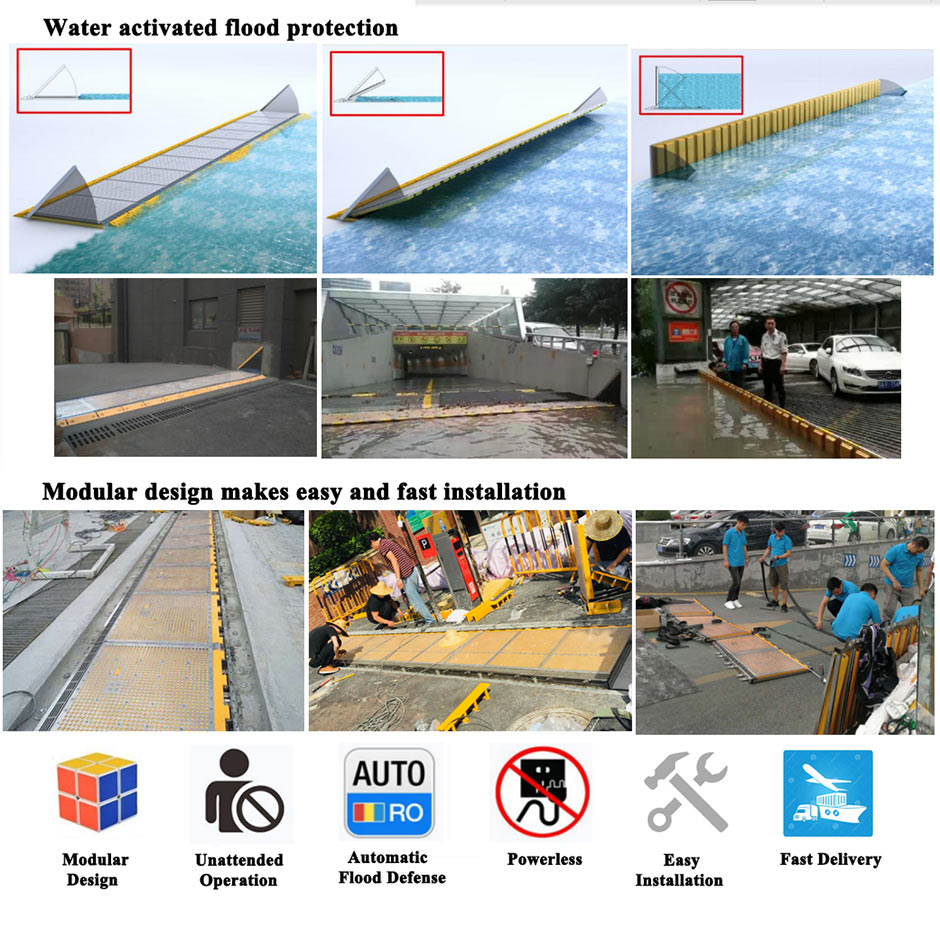
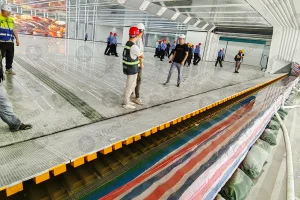
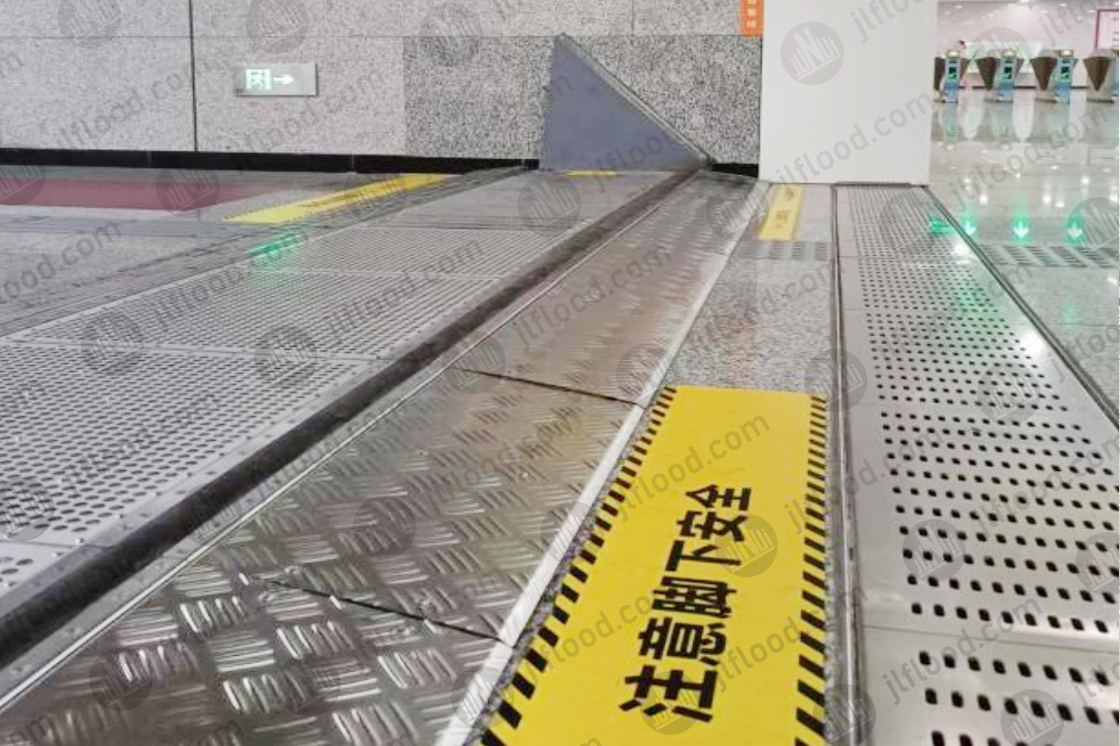
Our advantages:1. **Fully Automated Without Electrical Dependency**: Operates normally during power outages in extreme weather.2. **Unmanned Operation**: Automatically rises to block water when the water level reaches the trigger point, providing 24/7 flood control with automatic adjustment of the gate's opening angle according to water level changes.3. **Ground-Flat Storage**: Lays flat on the ground, occupying no space and allowing unimpeded pedestrian and vehicle traffic.4. **Emergency Vehicle Passage**: In the early stage of water blocking, garage vehicles can drive over the water-blocking panels for evacuation.5. **Modular Design**: Enables quick installation without major modifications.6. **Anti-Collision Warning Lights**: Prevents accidental impacts by pedestrians and vehicles during flood control.7. **Optional Remote Networking Supervision System**: Enables intelligent flood control management.8. **Minimal Maintenance**: Only requires periodic cleaning of debris at the gate's base.9. **Dual-Mode (Manual & Automatic) Operation**: Enhances flood control flexibility.10. **Durable Materials**: Ensures a service life of up to 10 years.
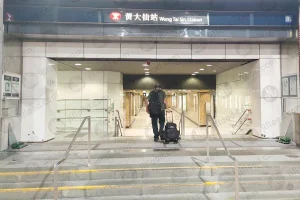
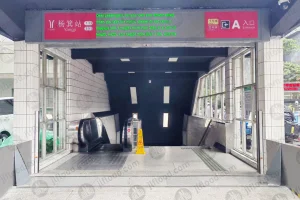
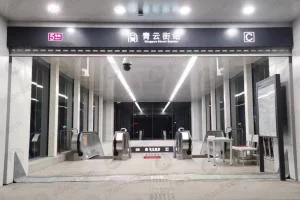
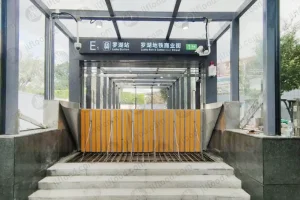
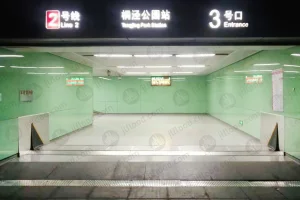
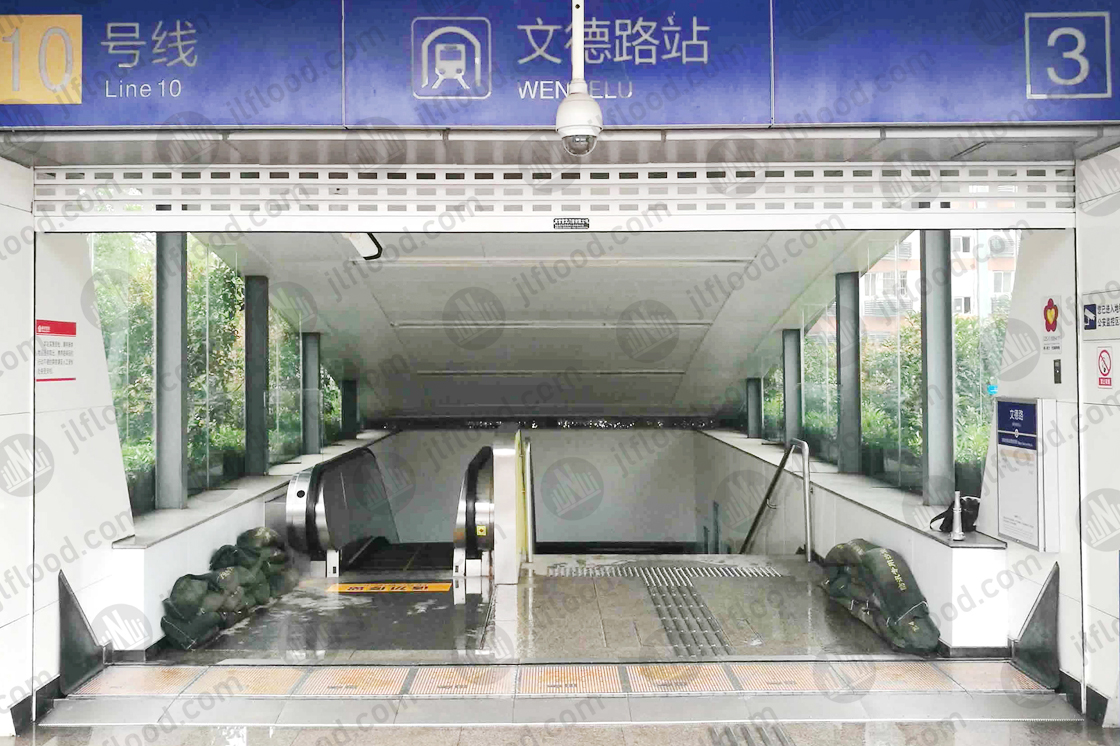
The Model Hm4d-0006E hydrodynamic automatic flood barrier is applicable to the entrance and exit of subway or metro train stations where allow for pedestrian only.
Installation Requirements
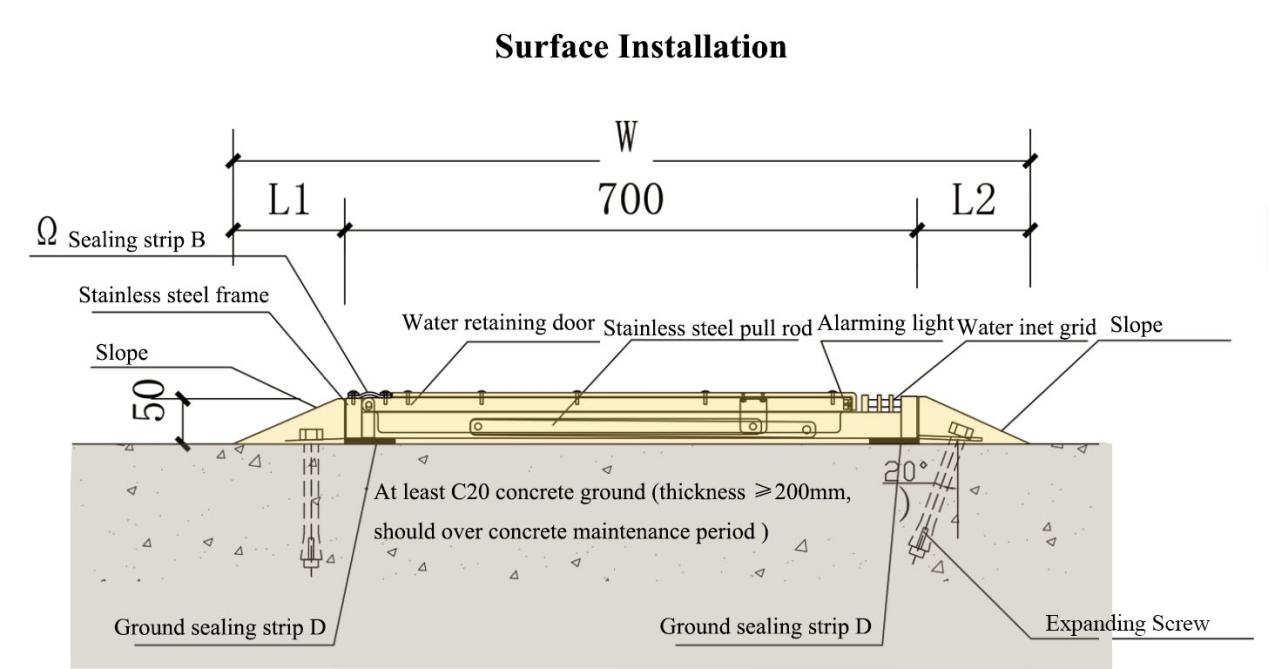
Surface Installation Location
It is about 5cm high from the ground. Need to prevent it from scratching the vehicle bottom when the vehicle is fully loaded. (Minimum ground clearance when fully loaded: Pentium B70 = 95mm, Honda Accord = 100mm, Feidu = 105mm, etc.)
The location should be on the horizontal section at the top of the ramp, the inside of the outermost intercepting ditch, or installed on the intercepting ditch. (Reasons: small water can be discharged through intercepting ditch; it can prevent backflow from intercepting ditch after municipal pipeline is full).
The higher the installation location, the higher the water retaining level.
Levelness of Installation Surface
The installation surface horizontal height difference at the end of the wall on both sides ≤ 30mm (measured by laser level meter).
Flatness of Installation Surface
According to code for acceptance of construction quality of building ground engineering (GB 50209-2010), the surface flatness deviation shall be ≤ 2mm (measured with 2m guiding rule and wedge feeler gauge); otherwise, the ground shall be leveled first, or the bottom frame will leak after installation.
In particular, the ground with anti-skid treatment shall be leveled first.
Frequently Asked Questions (FAQ)
Q1: What is the primary application for the Hm4d-0006E flood barrier?
The Model Hm4d-0006E hydrodynamic automatic flood barrier is designed specifically for entrances and exits of subway or metro train stations that are restricted to pedestrian traffic only.
Q2: What is the water retaining height of Model Hm4d-0006E?
Model Hm4d-0006E features a water retaining height capability of 620 mm.
Q3: What is the load-bearing capacity of this metro type flood barrier?
This Metro Type (Grade E) barrier has a load bearing capacity of 7.5 KN, making it ideal for pedestrian-only access areas.
Q4: What are the levelness requirements for the installation surface?
The horizontal height difference of the installation surface at the end of the wall on both sides must be ≤ 30mm, measured accurately using a laser level meter.
Q5: Why is surface flatness critical, and what is the allowed deviation?
According to GB 50209-2010 standards, surface flatness deviation must be ≤ 2mm (measured with a 2m guiding rule and wedge feeler gauge). If the surface is uneven, particularly anti-skid ground, it must be leveled first to prevent bottom frame leakage after installation.
Q6: Where is the optimal placement for a surface-mounted installation?
It should ideally be placed on the horizontal section at the top of a ramp, inside the outermost intercepting ditch, or directly on the intercepting ditch. This positioning allows small water volumes to drain properly and prevents municipal backflow.