
Facebook LinkedIn YouTube

China Top Flood Barrier Manufacturers How to Choose?

Time:2026-09-21 Author:Sienna
0%

Choosing among China’s top Flood Barrier manufacturers requires more than comparing prices, photographs, or impressive factory videos. Flood protection is becoming a higher-stakes engineering decision. The World Meteorological Organization reported that 2023 was the warmest year on record, reaching approximately 1.45°C above the pre-industrial average. The United Nations Office for Disaster Risk Reduction also estimates that disaster-related losses could reach $560–580 billion annually by 2030.

China’s urban expansion makes this issue especially practical. The World Bank’s China Country Climate and Development Report identifies increasing flood exposure as a major threat to infrastructure, communities, and economic continuity. A suitable Flood Barrier should therefore match local rainfall, drainage capacity, river levels, ground conditions, and emergency procedures. Check tested water-retention performance, panel strength, anchoring methods, deployment time, corrosion resistance, and maintenance requirements. Factory traceability matters. So does evidence from completed projects.

Mami Mizutori, the United Nations Secretary-General’s Special Representative for Disaster Risk Reduction, has stated, “There is no such thing as a natural disaster.” The message is important: poor planning can turn a predictable hazard into a severe loss. A brochure can look convincing. It can still hide weak testing. Buyers should request independent test records, technical drawings, installation instructions, warranty terms, and customer references. Reports from WMO, UNDRR, and the World Bank provide useful context, but they cannot replace site-specific engineering. Manufacturer rankings are also not perfectly comparable. The most reliable choice combines verified performance, transparent documentation, responsive support, and realistic lifecycle costs.
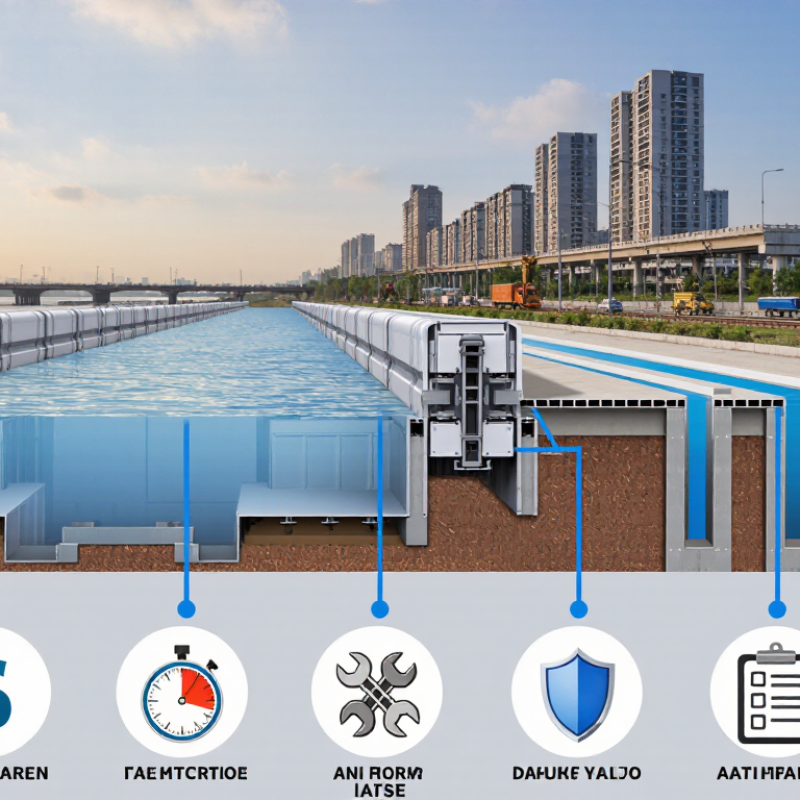
China Top Flood Barrier Manufacturers How to Choose?

What Flood Barriers Are and How They Work

Flood barriers are temporary or permanent systems designed to keep rising water away from buildings, roads, and equipment. Common types include modular panels, water-filled tubes, removable gates, and reinforced flood walls. Their purpose is simple: create a stronger path for water to follow.

A barrier works by resisting hydrostatic pressure, which increases as water becomes deeper. Its weight, anchors, and sealed joints help prevent movement and leakage. Some systems press tightly against the ground, while others use frames or supports to transfer pressure into a foundation. Even a small gap can become a serious leak. Water is patient.

Proper installation matters as much as the barrier itself. The ground should be reasonably level, clear of sharp stones, and checked for weak surfaces. Operators should inspect connectors, seals, pumps, and drainage points before heavy rain arrives. Field checks often reveal problems that product sheets cannot show, especially poor storage or rushed assembly.

No flood barrier can stop every threat. Fast currents, floating debris, and water rising above the designed height may defeat an otherwise reliable system. Selection should consider local flood depth, warning time, installation labor, reuse requirements, and maintenance access. A lower-cost option may appear practical, yet repeated setup difficulties can reduce real protection. That is an uncomfortable detail worth considering.

Which Types of Flood Barriers Do Chinese Manufacturers Produce?

China’s flood-barrier manufacturers commonly produce several practical systems. Removable aluminum-panel barriers protect doorways, shopfronts, and garage entrances. Their panels usually slide into fixed side posts and seal against a rubber gasket. Stop-log systems use stacked boards for wider openings. They are reusable, but storage and installation time can become weaknesses.

Manufacturers also offer flood doors, swing gates, modular flood walls, and water-filled barriers. Flood doors suit homes, electrical rooms, and basement access points. Modular walls cover longer perimeters, while water-filled units deploy quickly around temporary sites. Inflatable barriers appear useful during emergencies, yet puncture resistance and anchoring require close inspection. The IPCC Sixth Assessment Report confirms that heavy precipitation events are increasing in many regions. That trend makes overflow height, drainage, and warning time important selection factors.

The right supplier should provide test evidence, material specifications, installation drawings, and replacement-part details. Ask for laboratory results covering water depth, leakage, impact, and repeated assembly. European guidance, including CIRIA flood-resistance practice, stresses compatibility between barriers, walls, floors, and drainage routes. A strong-looking panel may still fail beside a weak threshold. I would also check independent inspection records, not only factory photographs. UNDRR’s Global Assessment Report 2022 links rising disaster risk with exposed infrastructure and poor planning. That warning matters. A low price can hide difficult maintenance, uncertain seals, or limited after-sales support.

How to Evaluate China’s Leading Flood Barrier Manufacturers

China Top Flood Barrier Manufacturers How to Choose?

Evaluating China’s leading flood barrier manufacturers requires more than comparing catalog prices. Start with factory evidence, not polished promises. Request production photos, material certificates, quality procedures, and recent project references. A reliable manufacturer should explain its testing methods clearly. Ask how each barrier handles water pressure, ground unevenness, repeated installation, and long-term storage.

Inspect the technical design in detail. Check aluminum or steel grades, seal quality, anchoring systems, drainage gaps, and corrosion protection. Request test records showing leakage performance at the proposed water depth. Independent inspection can verify dimensions, welding, coating thickness, and packaging before shipment. Certifications matter, but their scope and issuing organization deserve careful review.

Communication also reveals practical experience. The supplier should provide drawings, installation instructions, maintenance schedules, and realistic delivery times. Ask for replacement seal availability and training support after arrival. Speak with previous buyers when possible, especially those using barriers in similar rainfall conditions. A low quote may exclude site preparation or spare parts. No evaluation is perfect. A polished brochure can still hide weak after-sales service, so I would test the questions before signing.

Which Quality Standards and Product Features Should You Compare?

When comparing China’s top flood barrier manufacturers, begin with evidence, not polished photographs. Request independent test reports showing water-tightness, hydrostatic pressure resistance, impact strength, and repeated-use performance. Check whether the testing matches recognized standards, such as ISO quality-management requirements or relevant regional flood-protection codes. Standards differ by market, so confirm compliance with your installation location.

Material selection matters. Aluminum should resist corrosion and remain light enough for rapid installation. Stainless steel fittings need suitable grades, especially near saltwater. Seals should stay flexible after heat, cold, and repeated compression. Look closely at corner joints, locking handles, drainage channels, and anchor spacing. These small details often decide whether water enters a doorway.

Measure the real site, not only the advertised opening size. A barrier should fit uneven floors, wall gaps, and emergency access points. Ask for installation drawings, maintenance intervals, replacement-part availability, and staff training. On-site trials are valuable: place the system across a garage entrance and inspect leakage around each seal. A perfect-looking barrier can still fail.

I would also compare warranty terms and traceability records. Batch numbers, material certificates, and final inspection documents show stronger manufacturing control. Do not rely on one test result. I once underestimated floor unevenness during a site review; the design needed an adjustable base seal. That mistake remains useful. Independent inspection is still worth the cost.

China Top Flood Barrier Manufacturers: How to Choose? Which Quality Standards and Product Features Should You Compare?

Comparison Dimension Relevant Standard or Reference Objective Data to Compare Recommended Verification Evidence Why It Matters
Quality management ISO 9001:2015 or GB/T 19001-2016 Certificate scope, validity period, manufacturing site, incoming-material controls, inspection plans, corrective-action records and product traceability. Certificate issued by an accredited certification body, current audit status, quality manual excerpt and sample inspection records. A certified system supports repeatable production, but certification alone does not prove that a particular barrier meets its design load.
Environmental management ISO 14001:2015 or GB/T 24001-2016 Environmental controls for coating, chemical handling, waste management and energy use. Valid certificate and documented controls for coating, sealing, packaging and waste disposal. Useful when project procurement requires environmental management and controlled manufacturing processes.
Occupational safety ISO 45001:2018 or GB/T 45001-2020 Safety procedures for fabrication, welding, assembly, lifting and installation work. Valid certificate, risk assessments, installation safety procedures and worker training records. Reduces installation risks, especially for large removable, demountable or mechanically operated systems.
Flood-product performance EN 13564-1:2002, where applicable, plus project-specific engineering requirements Declared water-retention performance, allowable water depth, leakage measurement method, dimensional tolerances, operating conditions and failure mode. Independent test report identifying the exact product configuration, test water depth, test duration, leakage result and failure criteria. Flood barriers differ by design; a general management certificate cannot replace product-level hydraulic testing.
Hydrostatic design load Basic hydrostatic relationship: p = ρgh At fresh-water depths of 0.30 m, 0.50 m and 1.00 m, the approximate pressure at the bottom is 2.94 kPa, 4.91 kPa and 9.81 kPa, respectively. Structural calculations showing water density, design depth, support spacing, panel stiffness, anchorage and safety factors. Water pressure increases with depth. Barriers should not be compared only by nominal height or appearance.
Design water depth Project hydraulic design and site flood-risk assessment Maximum retained water height, freeboard, expected flood duration, flow velocity and whether waves, debris or uplift are possible. Signed design calculation, site survey, hydraulic assumptions and clearly stated maximum operating water depth. A barrier rated for shallow static water may not be suitable for fast-moving water, debris impact or long-duration inundation.
Leakage performance Declared test method and specified acceptance criteria Leakage rate reported in measurable units such as L/min/m, together with test head, test duration, joint condition and installation method. Full-scale test report using the production sealing system and the same joint details proposed for the project. “Waterproof” is not a measurable comparison unless the water head, duration and leakage limit are stated.
Structural material Applicable material specifications and certified mill documentation Alloy or grade, yield strength, tensile strength, thickness, hardness, weldability and batch traceability for aluminum, steel or other structural materials. Material certificates, incoming inspection records, dimensional inspection reports and traceable batch numbers. Material grade and thickness affect deflection, load capacity, corrosion resistance and service life.
Welding quality ISO 3834, where welded metallic structures are used Welding procedure qualification, welder qualification, weld inspection method, defect acceptance criteria and repair records. Welding procedure specifications, welder certificates, visual inspection records and non-destructive testing reports when specified. Weld defects can reduce structural capacity and create leakage paths even when the base material is suitable.
Corrosion protection ISO 9227 for salt-spray testing when specified; project coating specification for service conditions Surface preparation, coating system, dry-film thickness, adhesion, edge treatment, fastener material and exposure category. Coating inspection records, thickness readings, adhesion results and corrosion-protection maintenance instructions. Salt-spray hours are laboratory data and should not be treated as a direct guarantee of service life in every environment.
Seal and gasket performance Material-specific elastomer test methods and supplier technical data Seal material, operating-temperature range, compression set, chemical compatibility, UV resistance, replaceability and expected maintenance interval. Material data sheet, batch certificate, compression-set data and replacement instructions for the exact seal profile. Seals commonly control leakage performance and may age faster than the main frame.
UV and weather resistance ISO 4892 laboratory weathering methods, where relevant Resistance of exposed polymers, coatings and gaskets to sunlight, temperature cycling, rain, humidity and freeze-thaw conditions. Accelerated-weathering report, outdoor exposure information and defined inspection or replacement intervals. Outdoor deterioration can cause cracking, embrittlement, discoloration or loss of sealing pressure.
Installation tolerance Manufacturer installation specification and project survey requirements Permitted opening width and height variation, substrate flatness, verticality, anchor spacing, joint gap and required surface condition. Installation drawings, site measurement form, anchor layout, method statement and commissioning checklist. A well-designed barrier can leak or deform if the opening, substrate or anchor system is outside tolerance.
Deployment time Project emergency-response requirement Number of trained operators, tools required, personnel required, time to install, time to remove and performance under low-light or wet conditions. Witnessed deployment demonstration using the full specified length and actual accessories. Short installation time is valuable only when the procedure is repeatable and does not compromise sealing or anchorage.
Storage and readiness Manufacturer maintenance and emergency-readiness procedure Storage dimensions, weight per module, packaging, shelf-life of seals, inspection frequency and protection from moisture or UV exposure. Storage plan, inspection checklist, spare-parts list and documented periodic deployment test. Removable barriers may fail because of missing parts, damaged seals or inaccessible storage rather than poor original design.
Mechanical operation IEC 60204-1 and applicable machinery or electrical-safety requirements, where powered equipment is used Motor rating, power supply, manual override, limit protection, emergency stop, ingress protection and safe operating temperature. Electrical diagrams, risk assessment, functional test report and maintenance instructions. Powered barriers require safety controls and a fail-safe procedure for power loss or control-system failure.
Drainage and pressure relief Project civil and hydraulic design requirements Drainage route, sump capacity, backflow prevention, groundwater conditions and pressure equalization provisions where applicable. Civil drawings, drainage calculations and site commissioning test. Water behind or beneath a barrier can create uplift, leakage, hidden structural loads or damage to the protected building.
Impact and debris resistance Project-specific structural and hydraulic assessment Expected debris size and velocity, impact location, barrier redundancy, replaceable components and post-impact inspection procedure. Engineering analysis, physical impact test where required and documented replacement strategy. Hydrostatic testing alone does not demonstrate resistance to vehicles, floating debris, waves or accidental impact.
Quality inspection before delivery Approved inspection and test plan Dimensions, flatness, hole position, weld quality, coating thickness, seal continuity, hardware torque and operating force. Factory acceptance test, inspection checklist, calibrated measuring-equipment records and final release report. Pre-delivery inspection confirms that the supplied configuration matches the tested and approved design.
Traceability and documentation ISO 9001-based document-control practices Product drawing revision, serial or batch number, bill of materials, test configuration, installation manual and maintenance history. Complete technical dossier supplied with the shipment and retained for the project life. Traceability simplifies warranty evaluation, replacement-part ordering and future modifications.
Warranty and lifecycle support Contract terms and project maintenance plan Warranty duration, exclusions, response time, spare-parts availability, seal replacement cost, inspection interval and repair procedure. Written warranty, service-level agreement, spare-parts schedule and lifecycle cost calculation. The lowest purchase price may not be the lowest total cost when inspections, replacement seals and emergency servicing are included.
Selection principle: Compare barriers using the same retained water depth, test duration, leakage criterion, support spacing, substrate condition, installation method and environmental exposure. No single certificate can replace project-specific structural and hydraulic verification.

How to Choose the Right Manufacturer for Your Project

Choosing a flood barrier manufacturer requires more than comparing prices. Your project needs evidence, not polished brochures. The World Meteorological Organization’s State of the Global Climate 2023 report identified 2023 as the warmest year on record. The IPCC also reports that heavy precipitation events are becoming more intense in many regions. These findings make site-specific flood protection increasingly important.

Ask manufacturers for hydraulic test results, material specifications, installation drawings, and maintenance procedures. Check whether the barrier has been tested under pressures similar to your site conditions. A reliable supplier should explain leakage limits, anchoring methods, emergency deployment time, and expected service life. Request references from projects with similar water depths and ground conditions. Factory experience matters. However, experience alone is not enough. Independent verification is stronger.

Tips: Visit the production facility if possible. Inspect seals, joints, storage systems, and quality records. Compare the full lifecycle cost, including training, inspections, replacement parts, and labor. The U.S. Federal Emergency Management Agency emphasizes that flood mitigation works best when planning, maintenance, and installation are treated as one process. Ask who responds after delivery. A low quote can hide expensive site adjustments. No checklist is perfect. Leave room for professional judgment.

How to Choose the Right Flood Barrier Manufacturer

Use a weighted evaluation framework to compare manufacturers objectively. The suggested weights below prioritize verified hydraulic performance, site-specific engineering, and independent testing rather than brand recognition.

How to use this chart: Score each manufacturer from 1 to 5 for every criterion, multiply the score by the corresponding weight, and compare the total results. Always verify test evidence, installation requirements, maintenance procedures, warranty terms, and compliance with applicable local regulations.

FAQS

What is a flood barrier?

A flood barrier is a temporary or permanent system that redirects rising water. It can protect buildings, roads, equipment, and entrances. The basic idea is simple.

How does a flood barrier resist water pressure?

Deeper water creates greater hydrostatic pressure. The barrier uses weight, anchors, sealed joints, frames, or foundation supports. Even a small gap can cause serious leakage.

Which flood barrier types are commonly available?

Common options include modular panels, removable gates, flood doors, stop-log systems, reinforced walls, and water-filled tubes. Inflatable barriers are also available. Each type has different setup and storage needs.

Where are removable panel barriers useful?

Removable panels often protect doorways, shopfronts, garage entrances, and basement access points. Panels slide into fixed side posts and press against rubber seals. The threshold must remain strong and level.

What should be checked before installing a barrier?

Inspect the ground, connectors, seals, pumps, and drainage points. Remove sharp stones and clear loose debris. Weak surfaces can undermine a strong barrier. Rushed assembly causes avoidable problems.

How should a flood barrier be selected?

Consider expected water depth, warning time, installation labor, reuse needs, and maintenance access. Also examine floating debris and current speed. A cheaper option may become difficult after repeated use.

Can any flood barrier stop every flood?

No barrier can stop every threat. Fast currents, floating objects, and water above the designed height may defeat it. Water keeps testing weaknesses.

What evidence should a supplier provide?

Request material specifications, installation drawings, test results, and replacement-part information. Useful tests cover water depth, leakage, impact, and repeated assembly. Factory photos alone are not enough.

Conclusion

Choosing the right Flood Barrier manufacturer in China requires an understanding of how flood protection systems work and which solutions best fit your site. Flood barriers are designed to block, redirect, or slow rising water, and they may include removable panels, modular systems, automatic barriers, flood gates, or water-filled structures. Each type offers different advantages in terms of installation speed, storage, height capacity, durability, and suitability for residential, commercial, or infrastructure projects.

When comparing manufacturers, evaluate their production experience, engineering capabilities, material quality, testing procedures, and ability to provide customized solutions. Important factors include structural strength, sealing performance, corrosion resistance, ease of deployment, maintenance requirements, and compliance with relevant quality standards. A reliable manufacturer should offer clear technical documentation, inspection support, responsive communication, and dependable after-sales service. By comparing product performance, project experience, certifications, delivery capabilities, and total lifecycle costs, buyers can select a suitable partner and achieve effective, long-term flood protection.

Sienna

Sienna

Sienna is a skilled marketing professional with a deep expertise in our company’s core products and services. With a passion for innovation and detail, she plays a pivotal role in crafting insightful blog posts that not only highlight the unique features of our offerings but also provide valuable......
Request a Catalog