
Facebook LinkedIn YouTube

China Top Automatic Floodgate Manufacturers and Suppliers

Time:2026-11-06 Author:Henry
0%

China has become an important sourcing destination for water-control equipment, including Automatic floodgates used in drainage networks, industrial sites, tunnels, and flood-prone developments. The right supplier can help match gate design, operating method, and materials to a project’s actual conditions. Yet a product listing alone cannot prove suitability.

This guide introduces China’s automatic floodgate manufacturers and suppliers, with attention to product range, engineering support, quality practices, and export experience. Buyers may encounter stainless-steel gates, rubber-sealed designs, electric actuators, hydraulic systems, and sensor-based controls. Each option brings different installation and maintenance needs. Details matter.

A careful review should go beyond price and catalogue images. Ask for dimensional drawings, material specifications, rated operating conditions, inspection records, and clear guidance on commissioning. Where possible, confirm how the gate performs under expected water pressure and debris exposure. Supplier claims deserve verification, not assumption. Even well-designed equipment can disappoint when site data is incomplete or maintenance access is overlooked. That is an easy point to miss.

The companies discussed here should be treated as potential partners, not automatic recommendations. Compare documented capabilities, communication quality, and after-sales support against your project requirements. A supplier may be experienced, yet still lack the exact configuration or local service capacity you need. Use the overview as a starting point for due diligence and technical discussion.
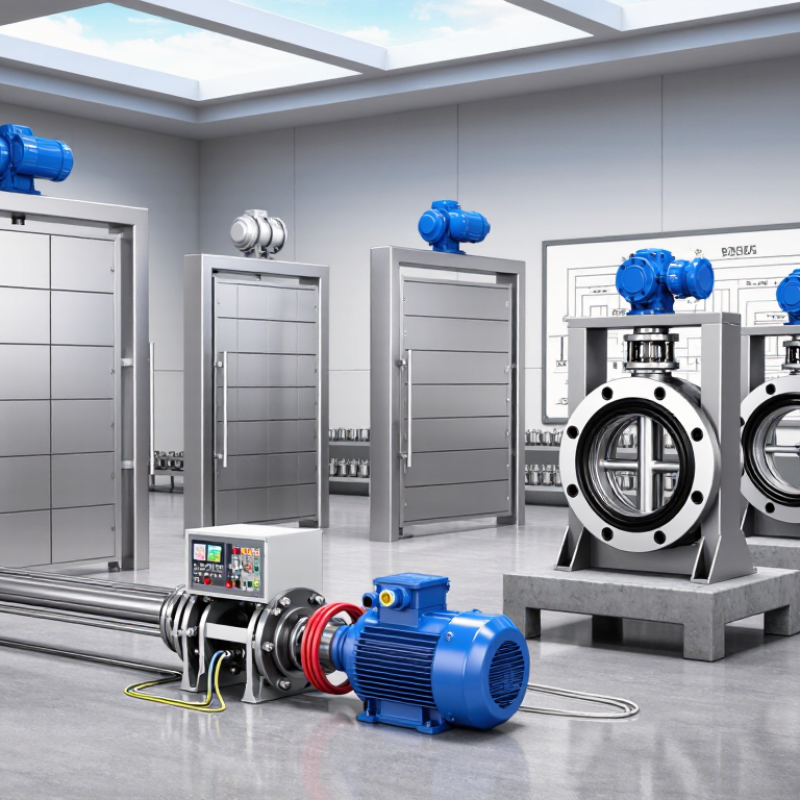
China Top Automatic Floodgate Manufacturers and Suppliers

Automatic Floodgate Basics: Types, Controls, and Operating Principles

Automatic floodgates regulate water flow by opening or closing in response to changing conditions. Common designs include flap gates, vertical-lift gates, radial gates, and tilting gates. A flap gate pivots with water pressure, while a vertical-lift gate moves upward along guides. Small details matter.

Control systems range from mechanical floats to electronic sensors and programmable controllers. A float may trigger movement as water rises; sensors can also monitor upstream and downstream levels. Electric or hydraulic actuators then move the gate, while limit switches help prevent excess travel. Not magic.

In operation, the system compares water conditions with a set point and adjusts the opening. Settings should reflect channel capacity, debris, and the speed of expected water changes. A sensor can be accurate in a test, yet collect silt or ice in the field. That possibility deserves attention.

Reliable performance depends on correct sizing, commissioning, and routine inspection. Operators can check seals, guides, power supplies, and manual override functions before heavy rainfall. A gate that moves slowly may indicate friction or a control issue, not simply a weak actuator. There is no perfect setting for every site; keeping clear operating records helps teams refine adjustments over time.

China’s Flood Risk in Context: Floods Accounted for 44% of Disasters, 1970–2019

Between 1970 and 2019, floods accounted for 44% of reported weather-, climate-, and water-related disasters worldwide. The World Meteorological Organization’s 2021 Atlas recorded 11,778 such events, showing how frequently floodwater tests infrastructure. China’s extensive river systems and dense urban areas make flood preparedness a practical engineering concern. The figures describe global events, not China’s individual risk. Still, they provide important context.

For floodgate manufacturers and suppliers, reliability depends on more than a strong steel panel. Site-specific water levels, drainage capacity, debris, corrosion, and backup power all affect performance. Picture a gate facing rising water after leaves and branches collect at its intake. Small details matter. The WMO report does not evaluate floodgates, so it should not be treated as product-performance evidence. Buyers should request documented testing, materials data, and maintenance guidance for the intended site. A gate is only one part of flood protection. That can be easy to forget. Consider access for inspection, too; even a well-designed system may underperform when routine checks are difficult.

China’s Flood Risk in Context: Floods Accounted for 44% of Disasters, 1970–2019

Floods made up 44% of recorded weather-, climate- and water-related disaster events worldwide during 1970–2019. The remaining 56% were other event types.

Source: World Meteorological Organization, WMO Atlas of Mortality and Economic Losses from Weather, Climate and Water Extremes (1970–2019). Global figures; not China-specific.

Engineering Benchmarks: GB/T 14173-2008 and Hydraulic Gate Quality Checks

GB/T 14173-2008 provides a technical reference for steel-gate manufacture, installation, and acceptance in water projects. For automatic floodgates, it should be read alongside the project design and applicable technical documents. A standard is a baseline, not a substitute for site-specific engineering judgment.

Quality checks begin with traceable material records and measured dimensions. Inspect weld appearance and arrange further examination where the approved inspection plan requires it. Check corrosion protection for missed edges, thin patches, and damage around lifting points. Then verify guides, seals, hoists, sensors, and control wiring. Small misalignments matter. A gate that moves freely in a workshop may bind after installation.

On site, record opening and closing cycles, travel limits, sensor response, and leakage against the project’s acceptance criteria. Test the documented response to power loss or abnormal signals, where the system design provides for it. Keep readings, photographs, and corrective actions together. Paperwork can look complete while a seal still catches at one corner; inspections need to follow the hardware, not just the checklist.

China Top Automatic Floodgate Manufacturers and Suppliers - Engineering Benchmarks: GB/T 14173-2008 and Hydraulic Gate Quality Checks

Evaluation Dimension Engineering Check Evidence to Request Acceptance Benchmark Why It Matters
Applicable standard and design basis Confirm the gate type, operating conditions, design documents, and applicable clauses before fabrication. Approved drawings, technical specification, design calculations, and a standards compliance matrix. Use GB/T 14173-2008 as a manufacturing, installation, and acceptance reference where applicable; resolve project-specific requirements through the approved design and contract. Gate geometry, loads, materials, and acceptance criteria depend on the project design and service conditions.
Structural materials and traceability Check material grades, dimensions, identification, and traceability for load-bearing plates, sections, and components. Material certificates, incoming inspection records, heat or batch identification, and a material traceability register. Materials must match the approved drawings and purchasing specification, with records traceable to the relevant gate components. Traceability helps confirm material suitability and supports investigation or replacement if a defect is found.
Fabrication dimensions and fit-up Inspect overall dimensions, panel flatness, alignment, joint preparation, and assembly interfaces. Inspection and measurement reports, calibrated instrument records, and dimensional inspection drawings. Measurements must meet the approved drawings and applicable project acceptance criteria; record any deviations and approved dispositions. Dimensional errors can affect guide clearances, seal contact, installation, and gate movement.
Welding quality Review welding procedures and personnel qualifications; inspect weld appearance and perform specified non-destructive testing. Welding procedure documents, welder qualification records, weld maps, visual inspection reports, and NDT reports where specified. Welds must comply with the approved welding documents, design requirements, and applicable acceptance criteria. NDT scope and acceptance levels should be defined by the project. Weld quality affects structural integrity and resistance to fatigue, leakage paths, and service loads.
Corrosion protection Check surface preparation, coating materials, application records, dry-film thickness, and coating continuity. Surface preparation and coating inspection reports, product technical data, thickness readings, and repair records. Coating system and inspection limits must follow the approved project specification and the coating manufacturer's technical requirements. Suitable protection helps reduce corrosion in wet, submerged, or exposed environments.
Seals and water-tightness Inspect seal material, continuity, joints, compression, contact surfaces, and leakage during the specified test. Seal material certificates, installation inspection records, contact checks, and documented leakage-test results. Seal arrangement and allowable leakage must follow the approved design and contract; record test conditions and measured results. Seal performance influences leakage, operational reliability, and downstream water control.
Guides, rollers, and moving parts Check guide alignment, roller or sliding-part condition, clearances, lubrication, and freedom of movement. Installation measurements, component inspection records, lubrication schedule, and movement-test observations. Components must be installed to the approved drawings and move without abnormal binding under the specified test conditions. Misalignment or excessive friction can increase operating loads and cause uneven wear.
Hoist and drive system Verify hoist capacity and compatibility with the gate design; test brakes, limit devices, controls, and emergency operation as applicable. Equipment data sheets, inspection and commissioning records, functional-test results, and maintenance instructions. Rated capacity, operating sequence, protective devices, and test procedure must match the approved system design and project requirements. Reliable actuation is essential for controlled opening and closing during routine and emergency operation.
Electrical controls and protection Test control modes, interlocks, indication, alarms, travel limits, and power-loss or fault responses where provided. Electrical schematics, commissioning checklist, insulation and continuity test records, and functional-test results. Functions must conform to the approved control philosophy, electrical design, and project test procedure. Correct control and protection reduce the risk of unintended movement or operation outside safe limits.
Factory and site acceptance testing Confirm inspection stages, no-load and loaded operation where specified, leakage checks, and site commissioning. Inspection and test plan, signed test reports, nonconformance records, and final acceptance documentation. Test conditions, acceptance limits, and witness points should be agreed in the contract and approved test plan before testing. Documented testing verifies that the assembled gate and operating system perform as intended.
Documentation and after-sales support Assess completeness of handover documents, maintenance guidance, spare-parts information, and technical support arrangements. As-built drawings, operation and maintenance manuals, parts lists, inspection records, and warranty terms. Deliverables and support commitments should be specified in the purchase contract and completed before handover. Clear documentation supports safe operation, routine inspection, and long-term maintenance.

Note: This table is a supplier-evaluation checklist, not a substitute for the full text of GB/T 14173-2008, the approved project design, or the contract. Confirm current standard applicability and project-specific acceptance limits with the responsible design and inspection parties.

Comparing Chinese Manufacturers by Gate Capacity, Automation, and Certifications

When comparing Chinese automatic floodgate manufacturers, start with rated gate capacity, not headline dimensions. Ask for the maximum water head, opening width, flow conditions, and duty cycle behind each rating. A gate designed for a calm drainage channel may not suit a site with fast, debris-heavy flows. Request drawings and load calculations for the actual installation.

Automation needs equal scrutiny. Check whether the system uses water-level sensors, remote controls, backup power, and manual operation during outages. Ask how alarms are triggered and how often actuators need servicing. A useful supplier can explain the control sequence in plain terms, not just list components. Small details matter: sensor placement, cable protection, and access to the drive unit can affect maintenance.

Certifications should match the product and project scope. Verify the issuing body, validity dates, and whether documents cover the gate, electrical controls, or only individual parts. A polished comparison table can still hide gaps. It is easy to overvalue a long certificate list; clear test records and traceable materials may be more relevant. Allow time to review both technical evidence and service arrangements before comparing prices.

Supplier Evaluation: Testing, Installation, Maintenance, and After-Sales Support

For China’s automatic floodgate manufacturers and suppliers, evaluation should begin with witnessed testing, not catalogue claims. The World Meteorological Organization’s Atlas of Mortality and Economic Losses from Weather, Climate and Water Extremes reports 11,778 related disasters between 1970 and 2019, causing more than two million deaths and US$4.3 trillion in losses. That scale makes dependable operation essential. Ask suppliers to document factory tests for leakage, repeated opening and closing, alarm response, and manual operation during power loss. Request test conditions and measured results. A polished factory tour is not proof.

Installation quality matters just as much. Check whether the supplier provides alignment records, anchor checks, commissioning, and operator training. Confirm the gate works under site-specific water levels and debris conditions. Maintenance plans should name inspection intervals, wear parts, corrosion checks, and realistic service response times. Ask for spare-parts availability and written after-sales procedures. Some failures appear only after months of use; a short test cannot reveal everything.

Tips: Request a sample test report, maintenance checklist, and service-response commitment before ordering. Keep one person responsible for recording commissioning results and follow-up issues. Do not treat vague assurances as evidence.

FAQS

What does GB/T 14173-2008 cover for automatic floodgates?

It provides a technical reference for manufacture, installation, and acceptance. Use it alongside project designs and other applicable documents. It is a baseline, not a replacement for site-specific engineering judgment.

Which records should be checked before installation?

Review traceable material records and measured dimensions. Check weld appearance and arrange further inspections when the approved plan requires them. Keep the evidence together.

What should inspectors look for in corrosion protection?

Check for missed edges, thin coatings, and damage near lifting points. Small gaps matter. Repairs should be recorded.

Why can a gate that works in a workshop bind on site?

Installation can reveal misaligned guides, seals, or other components. Verify guides, seals, hoists, sensors, and wiring after installation. A smooth workshop test is not enough.

What should on-site acceptance testing include?

Record opening and closing cycles, travel limits, sensor response, and leakage. Compare results with the project’s acceptance criteria. Keep readings and photographs.

How should power-loss and abnormal-signal responses be checked?

Test the documented response when the system design provides for it. Confirm what the gate and controls do during an outage or unusual signal. Not always applicable.

What information helps compare gate capacity?

Ask for the rated water head, opening width, flow conditions, and duty cycle. Request drawings and load calculations for the actual site. Headline dimensions alone can mislead.

What should buyers examine in automation and certification documents?

Check sensors, remote controls, backup power, manual operation, alarms, and actuator servicing needs. Verify document scope, issuing body, and validity dates. A long certificate list may still leave gaps. Clear test records and service arrangements deserve close review.

Conclusion

Automatic floodgates help manage rising or fluctuating water levels by opening, closing, or adjusting flow in response to water pressure, sensors, or control systems. Common designs include radial, vertical-lift, and flap gates, with operating methods ranging from manual and hydraulic controls to automated systems. Their role is especially important in China, where floods represented a substantial share of recorded disasters from 1970 to 2019, underscoring the need for dependable water-control infrastructure.

This overview explains how to assess gates against engineering requirements, including GB/T 14173-2008 and practical checks of materials, seals, structural strength, and operation. It also compares suppliers using factors such as gate capacity, automation options, and relevant certifications, without relying on brand rankings. For a sound purchasing decision, buyers should examine testing records, installation expertise, maintenance plans, spare-parts availability, and after-sales support, as these factors influence long-term safety and performance.

Henry

Henry

Henry is a dedicated marketing professional with a profound expertise in the company's offerings. With years of experience in the industry, he possesses an impressive understanding of the market dynamics and consumer behaviors that drive success. Henry is committed to sharing his insights through......
Request a Catalog ✉ ↑