
Choosing a Flood gate supplier is not just a price comparison. Buyers need to examine design limits, materials, testing records, installation support, and access to replacement parts. A gate beside a tidal channel faces different demands from one protecting a factory basement. Site conditions matter. So do lead times, documentation, and the supplier’s ability to explain maintenance requirements clearly. A polished catalogue is useful, but it cannot replace project-specific engineering review.
To keep this introduction transparent, the quotation below is an illustrative statement, not a verified remark from a real industry expert. It is attributed to a fictional flood-control engineer, Dr. Maya Chen: “A gate is only dependable when its design, installation, and inspection fit the site.” That distinction matters. Buyers should verify supplier claims against drawings, test data, references, and independent engineering advice where appropriate. Even experienced procurement teams can overlook a small detail, such as access for actuator servicing after installation. This guide will compare suppliers through practical criteria, while recognizing that no single manufacturer suits every project. The shortlist should start with the hazard, not the brochure.
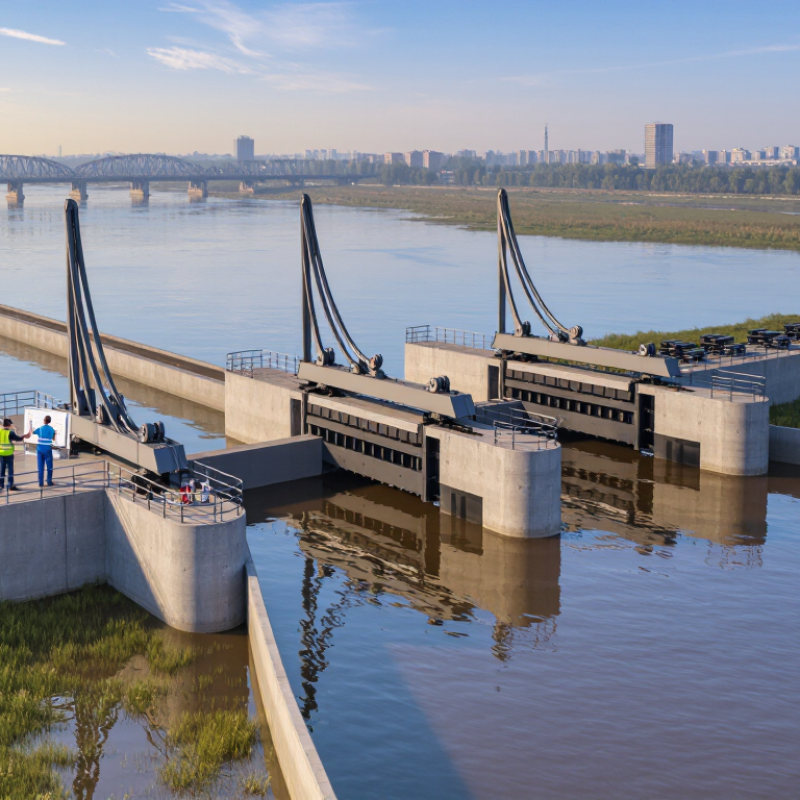
Flood gates are movable barriers that help control water at river channels, drainage outlets, coastal defenses, and building openings. When closed, they can limit incoming floodwater; when opened, they allow normal flow or drainage. Their performance depends on more than the gate itself. Site elevation, water pressure, debris, corrosion, and reliable operation all matter. A gate may look substantial and still fail if its seals are damaged.
The World Meteorological Organization’s Atlas of Mortality and Economic Losses from Weather, Climate and Water Extremes (1970–2019) reports that floods accounted for 44% of recorded disasters in those categories. That figure highlights why flood protection needs careful planning, not a single product choice. Engineers assess expected water levels, flow direction, closure time, maintenance access, and backup power where needed. Gates can reduce exposure, but they cannot stop groundwater seepage or overwhelmed drainage systems. That limitation is easy to overlook.
Tip: Check the gate’s rated design conditions against local flood levels, and inspect seals and operating parts before each flood season. Keep the operating area clear of leaves and sediment. Test the closure. Real-world conditions can still exceed assumptions, so document inspections and revise the plan after near misses.
Flood gates are selected by how water moves, how quickly it rises, and who must operate the barrier. Stop-log gates use stacked panels fitted into side channels. They suit drainage openings and temporary closures where crews can install panels before a forecast storm. The trade-off is labor: handling heavy sections during rising water is unsafe and unreliable.
Sliding gates move vertically or horizontally within a frame. They are common at canals, pumping stations, and industrial water channels, where controlled flow matters as much as flood protection. Their guides need regular inspection; grit, corrosion, or a bent track can prevent a tight seal. Small details matter.
Flap gates open under outward water pressure and close when levels reverse. They are often fitted to drainage outfalls, helping prevent rivers or tides from backing into low-lying areas. They work without routine manual operation, but debris can hold the flap open.
Inflatable barriers can protect temporary sites or doorways, though they need a suitable surface and dependable inflation equipment. There is no universal best gate. A design that works beside a concrete canal may perform poorly on soft ground, so site levels, debris, access, and maintenance capacity should guide the choice.
Global buyers should judge flood gate suppliers by verified performance, not catalogue claims. Check design head, opening size, flow direction, debris exposure, and expected operating cycles. Ask for material certificates, coating specifications, seal details, and documented factory acceptance tests. For coastal sites, request corrosion protection appropriate to measured salinity. Confirm actuator options, manual operation, spare-part availability, and installation support.
The IPCC Sixth Assessment Report projects likely global mean sea-level rise of 0.28–1.01 metres by 2100, depending on emissions scenarios, relative to 1995–2014. This is not a site design value. Buyers still need local flood levels, wave conditions, and ground data before comparing bids. A technically sound gate can be undermined by poor measurements. No checklist is perfect.
Tips: Request drawings showing the gate’s seals, guides, and anchor details. Compare test conditions with your site’s maximum water head. Verify certificates with their issuing bodies, and ask who handles commissioning and maintenance. A low price may hide gaps; sometimes supplier documents are incomplete, so clarify every assumption in writing.
A flood gate supplier should be assessed on more than its product catalogue. Ask how the gate is sized for the opening, expected water pressure, debris, and operating frequency. A technically detailed answer is more useful than a broad claim of suitability. Request drawings, material specifications, and test records for the proposed configuration. Check whether the supplied evidence matches the actual gate type and project conditions.
Certifications can help buyers compare quality systems and product testing, but their scope matters. Confirm the issuing body, validity period, and covered products. Standards and approval requirements vary by project and location, so a certificate alone may not settle compliance. Look for traceable inspection records, documented quality checks, and clear explanations of any test limitations. Details matter.
Service capability is equally practical. Ask who reviews installation drawings, how site measurements are verified, and what support is available during commissioning. Response times, spare-part availability, and maintenance instructions should be stated in writing. A supplier may perform well in the factory yet provide limited field support. That gap is easy to miss. Compare sample service plans, not just promises, and ask how urgent faults are handled outside normal working hours. No supplier is perfect; unclear answers about exclusions deserve a second look.
Comparison guide: The profiles below describe common supplier types, not named or individually verified companies. Capabilities and certificates vary by supplier, product, and destination market; confirm them directly before purchase.
| Supplier profile | Typical capabilities | Common products | Best fit | Certifications and documentation to verify | Service considerations | Buyer checks |
|---|---|---|---|---|---|---|
| Integrated gate manufacturer | May provide design, fabrication, coating, assembly, and factory testing under one organization. Custom sizing and project-specific configurations are often available. | Fabricated flood gates, sluice gates, stoplogs, frames, and related operating equipment. | Municipal, industrial, drainage, and infrastructure projects requiring coordinated equipment and engineering. | Ask for a current ISO 9001 certificate and confirm that its scope covers the relevant activities. Request material certificates, inspection records, test procedures, and product-specific conformity documents. | May coordinate technical support and commissioning; confirm whether installation, training, and on-site service are included or separately contracted. | Review comparable project references, design responsibility, testing scope, production lead time, spare-parts availability, and warranty terms. |
| Specialist water-control fabricator | Typically focuses on gate fabrication and application-specific details such as seals, frames, corrosion protection, and manual or powered operation. | Penstocks, channel gates, flap gates, wall-mounted gates, and custom water-control structures. | Water-treatment, wastewater, irrigation, and drainage applications where operating conditions and sealing requirements are clearly defined. | Verify quality-system certification, welding qualifications where relevant, material traceability, coating records, and inspection documentation. Requirements depend on the contract and market. | Check access to replacement seals and wear parts, maintenance instructions, operator support, and response times for technical questions. | Provide design head, water direction, opening size, operating frequency, media, temperature, and leakage criteria for a comparable quotation. |
| Project engineering and system supplier | May combine gates with actuators, controls, sensors, and system integration. Engineering and interface coordination can be a central part of the offer. | Motorized gates, control panels, actuators, monitoring interfaces, and integrated gate packages. | Facilities that need remote operation, automated control, or integration with existing plant systems. | Confirm the certificates and declarations applicable to each component and destination. CE marking applies only where relevant EU legislation requires it; request the applicable declaration and technical documentation. | Clarify commissioning, software or controls support, operator training, cybersecurity responsibilities, and long-term support arrangements. | Check actuator sizing, manual override, power-failure behavior, control-system compatibility, environmental ratings, and responsibility for system integration. |
| Regional custom fabricator | May offer local fabrication, adaptation to existing structures, and shorter communication or service routes. Engineering depth and production scope differ by workshop. | Locally fabricated flood barriers, gate leaves, frames, stoplogs, and replacement components. | Repair, retrofit, or smaller projects where local measurement, site access, and regional service are important. | Request evidence of applicable quality controls, material grades, welding procedures and qualifications where relevant, and inspection or load-test records required by the project. | Local availability can simplify site visits; confirm geographic coverage, installation capacity, and whether parts can be replaced independently. | Check verified dimensions, structural calculations, corrosion-protection details, fabrication tolerances, and the supplier’s ability to document the finished assembly. |
| Distributor or sourcing integrator | May source products from one or more manufacturers and support quotations, logistics, documentation collection, and local coordination. | Standard or project-specified gates and accessories sourced from manufacturing partners. | Buyers seeking consolidated procurement or local commercial support across multiple equipment categories. | Identify the legal manufacturer for each product. Verify certificates and declarations with their issuer and confirm that they cover the actual product, site, and intended use. | Service depends on the distributor’s own team and manufacturer agreements; establish who handles technical claims, commissioning, warranty, and spare parts. | Confirm traceability, manufacturer authorization where applicable, delivery responsibility, warranty chain, and a named technical contact. |
Sourcing a flood gate internationally begins with site conditions, not a supplier shortlist. Record the opening width, water depth, flow direction, and available installation space. A gate that fits the drawing may still fail if the wall is uneven or access for maintenance is blocked. Share photos, dimensions, and local operating conditions with potential suppliers. Ask how they select materials, seals, and actuators for your water quality and expected pressure. Small details matter. A few millimeters can affect sealing.
Compare suppliers using the same written specification. Request drawings, material data, factory test records, and references for projects with similar conditions. Check whether the quoted scope includes anchors, controls, spare seals, packing, and installation guidance. These items can disappear between quotation and delivery. Confirm lead time, shipping method, delivery point, and who handles import documents before paying a deposit. Arrange an independent inspection when project value or risk justifies it. I would not rely on a polished brochure alone; documentation can look complete while leaving practical questions unanswered. Ask what happens if the gate arrives damaged, dimensions differ, or commissioning reveals leakage. Get responsibilities and remedies in writing, then have a local engineer review the final drawings before production. Even careful buyers miss something. Recheck the lifting plan and maintenance access.
It controls water at channels, drainage outlets, coastal defenses, and building openings. Closed gates limit incoming water; open gates allow flow or drainage.
Site elevation, water pressure, debris, corrosion, seals, and reliable operation all matter. A sturdy-looking gate can still fail if its seals are damaged.
No. They cannot stop groundwater seepage or an overwhelmed drainage system. That limit is easy to overlook.
Inspect seals and operating parts, clear leaves and sediment, and test the closure. Keep a written inspection record. Real conditions may exceed design assumptions.
Ask how the design accounts for opening dimensions, expected water pressure, debris, and operating frequency. Request drawings and material specifications for the exact configuration.
Confirm the issuing body, validity period, and products covered. Check that test records match the proposed gate and project conditions. Details matter.
Ask how measurements are verified, who reviews installation drawings, and what commissioning support is available. Get response times, spare-part availability, and maintenance instructions in writing.
Request a sample service plan and ask how faults are handled outside normal working hours. Factory quality does not guarantee strong field support. No plan catches everything; unclear exclusions deserve another look.
Flood gate systems play an important role in reducing flood risks by controlling or blocking water at vulnerable openings, such as building entrances, roadways, and utility areas. Different designs suit different conditions: some are installed permanently, while others can be deployed when rising water is expected. Selecting the right type depends on the site’s layout, anticipated water levels, frequency of use, and the speed and effort required for installation.
For global buyers, evaluating suppliers involves more than comparing prices. Buyers should review product specifications, material quality, testing records, relevant certifications, manufacturing capacity, customization options, and after-sales support. Clear communication about measurements, shipping arrangements, installation guidance, maintenance, and warranty terms can help prevent costly misunderstandings. A careful sourcing process—defining project needs, requesting detailed quotations, comparing supplier capabilities, checking documentation, and confirming delivery expectations—helps buyers choose a Flood gate solution suited to their location and long-term flood protection requirements.
