
Global buyers need a Flood solution because water risk now reaches factories, warehouses, ports, and homes. It is no longer a distant seasonal concern. A flooded loading bay can stop production within hours. Damaged stock, blocked roads, and unsafe electrical systems can extend losses for weeks.
The World Meteorological Organization’s Atlas of Mortality and Economic Losses reports more than 2 million deaths and approximately US$4.3 trillion in losses from weather, climate, and water-related hazards between 1970 and 2021. The World Bank also estimates that floods affect around 1.5 billion people worldwide. These figures reveal the scale. They do not show every delayed shipment or failed supplier.
Professor Hannah Cloke, a hydrologist at the University of Reading, has said, “Floods are not just a physical hazard; they are a social hazard too.” That distinction matters to international procurement teams. A reliable Flood solution should combine forecasting, physical protection, drainage planning, emergency communication, and recovery procedures. The technology may include sensors, barriers, pumps, and real-time alerts. The stronger system connects them to clear decisions.
The United Nations Office for Disaster Risk Reduction promotes risk-informed planning, while the WMO repeatedly emphasizes that early warnings save lives. Still, warnings alone cannot protect goods stored below ground. A barrier cannot compensate for poor maintenance. This is where buyers must reflect. The cheapest option may create the highest long-term exposure. Global purchasing therefore requires evidence, local risk data, tested performance, and honest limits. No Flood solution removes uncertainty completely. It can, however, turn rising water into a manageable business risk.
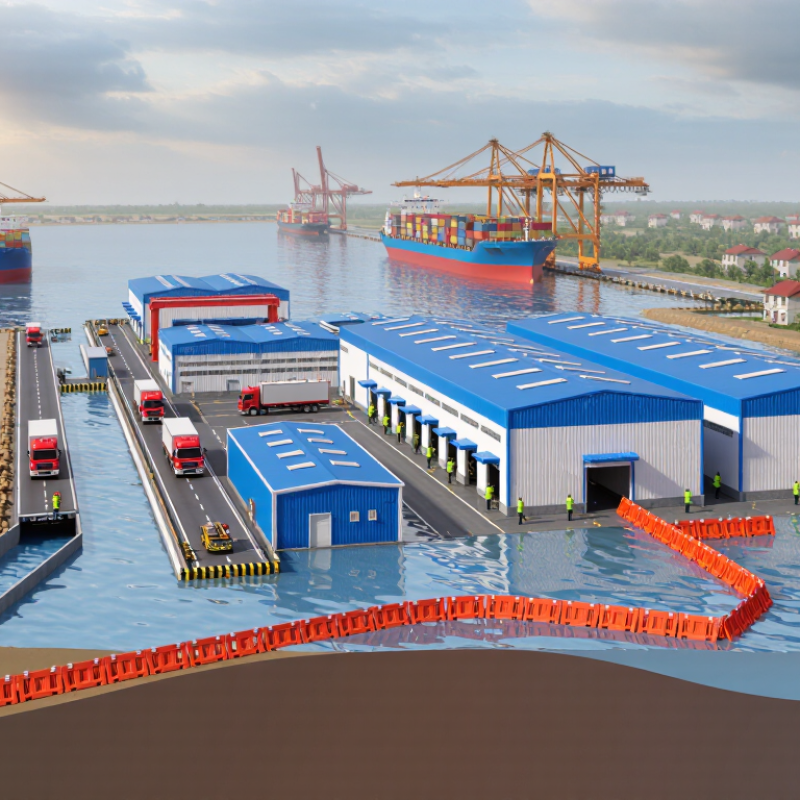
Why Do Global Buyers Need a Flood Solution?
Flood Risks Facing Global Buyers
Global buyers face flood risk long before water reaches a warehouse. A supplier may sit beside a river, tidal coast, or poorly drained industrial park. The World Bank reported that about 1.81 billion people lived in areas exposed to 1-in-100-year floods. Many sites appear safe during dry inspections. They may not remain safe after one severe storm.
Small details can create expensive delays. Water enters through loading docks, basement vents, and unfinished drainage channels. A few centimeters can damage cartons, electrical panels, and stored materials. The World Meteorological Organization reported that heavy rainfall events are becoming more intense in many regions. Climate change makes old risk maps less reliable. That is uncomfortable, but buyers should admit it.
A practical flood solution needs more than barriers. Buyers should review site elevation, drainage capacity, emergency power, and supplier recovery plans. The IPCC states that extreme precipitation generally increases with additional warming. Yet many purchasing audits still focus on price and delivery dates. That approach is incomplete. A site visit during dry weather proves very little. Better decisions combine local engineering records, satellite data, insurance assessments, and recent incident history. Buyers should also test whether staff can protect inventory within minutes, not hours. Mistakes remain possible. Regular reviews matter.
Flood risk is a global procurement concern because it affects both production regions and vulnerable communities. The indicators below show the scale of people exposed to a 1-in-100-year flood.
Source: World Bank, “1.8 Billion People at Risk of Floods Worldwide,” 2022. The categories overlap: people living in low- and middle-income countries and people living in extreme poverty are subsets of the total exposed population.
Flooding disrupts international supply chains far beyond the flooded area. Water can close ports, damage roads, stop warehouse operations, and cut electricity. A supplier may remain intact, yet trucks cannot reach the facility. Containers then wait at terminals, while production schedules quietly collapse.
The Swiss Re Institute reported $280 billion in global economic losses from natural catastrophes in 2023. Insured losses reached $108 billion. Floods formed a significant share of these events, showing why buyers should treat water risk as a commercial issue. The World Bank’s 2023 Logistics Performance Index also highlights reliability and shipment predictability as core logistics strengths. Flooding attacks both. In practical audits, buyers often track suppliers but overlook ports, bridges, and backup power. That gap can become expensive.
Tips: Map every critical supplier, route, port, and warehouse. Check flood exposure using local hazard maps and recent rainfall records. Ask suppliers about elevated equipment, drainage capacity, backup power, and alternate transport routes. Keep safety stock for vulnerable components, but avoid excessive inventory. It ties up cash. Test the plan with a realistic scenario, such as a two-week port closure during peak production. No risk model is perfect. Assumptions need regular review, especially after construction, climate shifts, or changes in shipping routes.
Why Do Global Buyers Need a Flood Solution?
An effective flood solution begins with accurate, local risk assessment. Flood depth, drainage capacity, soil condition, and nearby waterways can change within a few streets. Buyers should demand solutions that combine rainfall sensors, water-level monitoring, predictive alerts, and site-specific flood maps. The WMO’s State of the Global Climate 2023 reports that weather, climate, and water-related hazards caused over 11,000 disasters between 1970 and 2021. The exposure is not theoretical.
Speed matters.
A reliable system should issue alerts before water reaches entrances, loading bays, or electrical rooms. It also needs physical protection, including temporary barriers, raised equipment, backflow prevention, and controlled drainage. The World Bank reports that each dollar invested in hydrometeorological information and early warning systems can generate about nine dollars in economic benefits. Yet technology alone is insufficient. Power backup, offline alarms, cybersecurity, and simple maintenance procedures are equally important. Staff should know what to move, where to evacuate, and who has authority to act.
Global buyers should also examine data quality, installation records, testing frequency, and lifecycle costs. The UNDRR estimates that disaster costs could reach 560 billion dollars annually by 2030 without stronger risk reduction. No system is perfect. Sensors can fail, maps can become outdated, and warnings may arrive too late. That uncomfortable possibility deserves regular drills, independent inspections, and transparent performance records. A flood solution becomes credible when it protects people, limits downtime, and keeps working after the first heavy storm.
Why Do Global Buyers Need a Flood Solution?
Flood protection cannot be evaluated with one global checklist. Markets face different hazards, regulations, and construction practices. The World Meteorological Organization reported 11,778 weather, climate, and water-related disasters from 1970 to 2021. These events caused more than two million deaths and about 4.3 trillion dollars in economic losses. The figures show the scale, but they hide local differences.
In coastal markets, buyers should examine storm surge, saltwater corrosion, and evacuation access. Inland cities may face short, intense rainfall that overwhelms drainage within minutes. The World Bank estimated that annual flood losses in major cities could rise from 6 billion dollars in 2005 to 52 billion dollars by 2050 without stronger adaptation. That projection makes installation speed, barrier height, pump capacity, and maintenance evidence important purchasing criteria.
Local performance matters.
A solution tested in one climate may perform poorly elsewhere. Buyers should request independent test results, installation records, service intervals, and failure scenarios. They should also compare protection against local building codes and insurance requirements. The United Nations Office for Disaster Risk Reduction stresses that risk depends on hazard, exposure, and vulnerability, not rainfall alone. A cheaper barrier may reduce visible water but protect equipment poorly. This is where evaluations can become imperfect. Public flood maps may be outdated, while supplier data may highlight successful projects only. Careful buyers should inspect both.
| Market | Documented Exposure Indicator | Dominant Flood Mechanisms | Regulatory or Planning Reference | Key Buyer Evaluation Criteria | Recommended Protection Focus |
|---|---|---|---|---|---|
| Netherlands | Approximately 26% of the country lies below sea level, while a further 29% is vulnerable to river flooding. | Coastal surge, river overflow, extreme rainfall and groundwater pressure. | National flood-risk management, water-board planning and the European Floods Directive. | Resistance to prolonged water exposure, compatibility with permanent flood defenses, reliable deployment during evacuation or infrastructure maintenance. | Demountable barriers, watertight doors, perimeter protection and systems designed for repeated use. |
| England | About 5.7 million properties are at risk of flooding from rivers, the sea or surface water. | River flooding, coastal flooding, surface-water flooding and sewer surcharge. | Environment Agency flood-risk mapping and local flood-risk management strategies. | Fast installation, protection of entrances and critical equipment, clear performance limits and compatibility with listed or older buildings. | Door and window barriers, property-level resilience kits, backflow prevention and surface-water management. |
| Japan | Approximately 35% of the population and 47% of national assets are located in flood-prone areas. | Typhoon rainfall, river flooding, urban drainage overload, storm surge and tsunami-related inundation in selected coastal zones. | Hazard-area mapping, river-basin planning and national building and disaster-management requirements. | Compact storage, rapid deployment, earthquake-conscious installation, corrosion resistance and dependable operation during power disruption. | Modular barriers, raised utilities, sump and drainage protection, and products suitable for dense urban properties. |
| Bangladesh | Approximately two-thirds of the country is less than five metres above sea level. | Monsoon river flooding, flash floods, coastal storm surge, tidal flooding and drainage congestion. | National flood-management programs, cyclone preparedness planning and local land-use controls. | Affordability, low maintenance, transportability, repairability, availability without grid power and suitability for rural or informal settings. | Portable barriers, raised platforms, flood-resilient sanitation, protected water points and community-scale drainage solutions. |
| United States | Flooding is the most common and costliest natural-disaster category in the country, affecting coastal, riverine and urban areas. | River flooding, hurricane storm surge, coastal erosion, snowmelt, flash floods and intense urban rainfall. | Federal flood-hazard mapping, local building codes, floodplain management rules and flood-resistant design standards. | Verified design loads, installation documentation, insurance and permitting compatibility, serviceability after repeated events. | Engineered flood barriers, floodproofing for critical equipment, backflow controls and flood-resistant building assemblies. |
| Australia | Flooding is identified as the country’s most frequent natural hazard, with significant exposure in river basins, coastal settlements and rapidly growing urban areas. | River flooding, flash flooding, coastal inundation, tropical-cyclone rainfall and storm surge. | State and territory flood studies, local planning schemes and national construction requirements. | Heat and UV resistance, resistance to debris impact, easy cleaning, repeated deployment and compatibility with detached homes and commercial sites. | Property-level barriers, resilient landscaping, elevated services, drainage protection and temporary access control. |
Source basis: Government of the Netherlands; Environment Agency and UK Government; Japan Ministry of Land, Infrastructure, Transport and Tourism; World Bank Bangladesh Overview; Federal Emergency Management Agency flood-risk resources; Geoscience Australia natural-hazard resources. Exposure figures and descriptions reflect the cited public sources; local risk can vary substantially by site, elevation, drainage and flood-defense condition.
Why Do Global Buyers Need a Flood Solution?
Implementing a scalable flood management strategy requires more than purchasing pumps or barriers. It starts with local risk evidence. Review rainfall records, drainage maps, soil conditions, and past flood depths before selecting equipment. A warehouse beside a river needs different protection from a coastal distribution center.
Scalable systems should grow with the site. Modular barriers, adjustable drainage channels, backup power, and remote water-level sensors can support changing operations. Maintenance access matters too. A blocked drain can defeat expensive protection within minutes. Global buyers should request test reports, installation guidance, replacement schedules, and independent engineering reviews. Local contractors must understand the design and regional building requirements. Standards vary across jurisdictions, so assumptions can become costly. No plan is perfect. Unexpected ground conditions may force revisions during installation.
Tips: Begin with a small, high-risk zone. Measure response times during heavy rain. Train staff using realistic drills, including night shifts and power failures. Keep spare components nearby, not in another country. Review the plan after every serious storm. A practical checklist should include alarms, evacuation routes, drainage inspections, emergency contacts, and documented inspection records. Budget for upkeep from the beginning. Cheap protection can become expensive when neglected.
Flooding can close ports, damage roads, and stop warehouse operations. A supplier may remain dry, while trucks cannot arrive. Production then loses time. The real risk extends beyond the flooded site.
Map suppliers, roads, bridges, ports, warehouses, and backup facilities. Check local flood maps and recent rainfall records. Nearby waterways can change the risk within a few streets. A familiar route may still fail.
Ask about drainage capacity, raised equipment, backup power, and alternate transport routes. Check whether electrical rooms sit above likely water levels. Request installation records and maintenance details. Some answers may be incomplete, so verify important claims.
Test a realistic closure scenario during peak production. Identify alternate ports, routes, carriers, and storage locations. Keep safety stock for vulnerable components. Too much inventory ties up cash.
It should combine rainfall sensors, water-level monitors, predictive alerts, and local flood maps. Alerts should arrive before water reaches loading bays or electrical rooms. Speed matters. Warnings are useful only when staff can act.
Temporary barriers can protect entrances and loading areas. Raised equipment reduces contact with shallow water. Backflow prevention helps stop contaminated water from entering buildings. Controlled drainage can reduce pressure during heavy rainfall.
Provide backup power, offline alarms, cybersecurity controls, and simple maintenance procedures. Staff should know what to move and where to evacuate. Assign clear decision-making authority. Technology alone is not enough.
Review data quality, testing frequency, installation records, and lifecycle costs. Run regular drills and independent inspections. Keep transparent performance records after heavy storms. Sensors can fail. Maps can become outdated. That uncomfortable possibility deserves attention.
Global buyers face growing flood risks as extreme weather, aging infrastructure, and rapid urban development increase the likelihood of disruption. Flooding can damage factories, warehouses, transport routes, ports, and inventory, creating delays that spread across international supply chains. These interruptions may lead to production stoppages, missed delivery commitments, higher logistics costs, and uncertainty for customers and business partners. For companies operating across multiple regions, flood preparedness is therefore an essential part of supply chain resilience.
An effective Flood solution should combine risk assessment, early warning capabilities, physical protection, emergency response planning, and continuous monitoring. Because flood conditions and infrastructure vary between markets, buyers should evaluate solutions according to local geography, regulatory requirements, facility design, and operational priorities. A scalable strategy can begin with the most vulnerable sites and expand through standardized procedures, staff training, data-based planning, and regular testing. By integrating prevention, response, and recovery into broader business planning, global buyers can reduce losses, protect continuity, and respond more confidently to future flood events.
