Explore our field-tested hydrodynamic flood gates, automatic barriers, and modular water retention systems manufactured to international civil engineering standards.
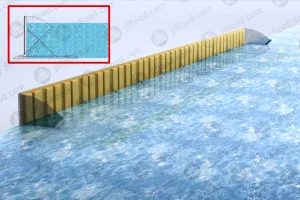
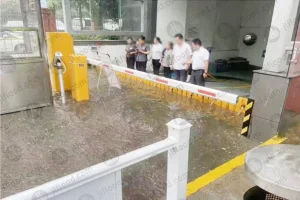
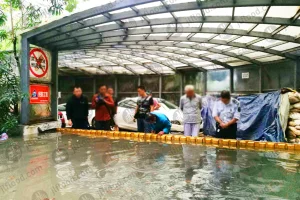
As extreme weather events become more frequent and unpredictable, global municipal authorities, structural engineers, commercial real estate developers, and utility operators are rethinking urban flood mitigation strategies. Traditional flood defence methods—such as manual sandbagging, temporary demountable aluminum stop-logs, or electronically powered barrier gates—have proven repeatedly vulnerable to human error, late response times, mechanical pump failures, and grid power outages during heavy storm events.
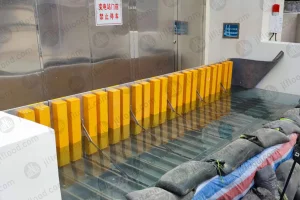
The modern architectural landscape demands a transition toward hydrodynamic passive flood barrier systems. These passive systems operate autonomously without human intervention, electrical power, or hydraulic sensor grids, using the natural physical forces of buoyancy and hydrostatic head pressure to deploy instant flood defenses.
Core Technical Insight: Over 78% of catastrophic urban flood damages occur due to power blackouts or delayed deployment of manual barriers during sudden cloudburst events. Self-activating hydrodynamic flood gates eradicate human operational risk entirely.
Operates completely independent of electricity, diesel generators, or backup battery grids. Activated purely by water buoyancy and fluid dynamics when surface runoff enters the retaining trough.
Achieves 0.1-second water entry activation. The panel automatically rises and seals as water accumulates inside the foundation pit, securing openings long before surface water breaches critical thresholds.
Flush ground surface integration engineered with heavy-duty structural steel or high-tensile aircraft aluminum alloy, capable of supporting up to 60-ton vehicle drive-over loads daily.
Why leading global EPC contractors, architectural firms, and municipal procurement directors source wholesale flood gates from specialized Chinese engineering manufacturers.
China has emerged as the global leader in flood defence manufacturing, supported by end-to-end industrial supply chain integration, advanced metallurgical metallurgy, automated laser cutting, robotic welding, and stringent hydraulic performance testing facilities. Companies like Nanjing Junli Technology Co., Ltd. have set international benchmarks in structural integrity and sealing reliability for complex underground infrastructure.
Direct sourcing of marine-grade 6063-T6 aluminum alloys and SUS304/SUS316 stainless steel guarantees superior anti-corrosion resistance against saltwater intrusion, acidic urban runoff, and heavy vehicular wear over a 20+ year design lifespan.
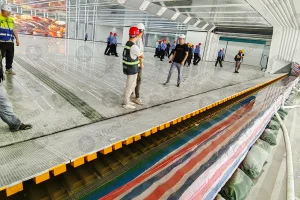
Unlike regional suppliers who rely strictly on computer simulation, major Chinese manufacturing hubs maintain dedicated hydrostatic pressure testing pools. Every custom barrier design undergoes physical water head leakage and load deflection validation before dispatch.
With fully modular manufacturing processes, Chinese factories produce bespoke barrier clear spans (ranging from standard 2m pedestrian doors to multi-leaf 30m wide underground garage ramps) within remarkably short turnaround cycles.
Integrated supply chains allow Chinese manufacturers to deliver high-specification automatic self-opening flood control gates at competitive factory-direct wholesale pricing, reducing total procurement expenditure for international infrastructure tenders by 35% to 50%.
Key statistics reflecting the acceleration of smart city floodproofing and global engineering requirements.
| Feature / Parameter | Hydrodynamic Automatic Gate | Manual Demountable Stop-Logs | Motorized Electric Flood Barriers |
|---|---|---|---|
| Power Source Required | None (Buoyancy Driven) | None (Manual Assembly) | High (AC Grid / DC Battery) |
| Deployment Response Time | Instantaneous (< 30 seconds) | Slow (1 to 4 Hours) | Medium (1 to 5 Minutes) |
| Human Operator Required | No (100% Autonomous) | Yes (Multiple Crew) | Yes (Remote / Sensor Trigger) |
| Blackout Risk Vulnerability | Zero Vulnerability | High (Labor Access Blocked) | Critical (Motor Failure Risk) |
| Aesthetics & Driveability | Flush Embedded Ground Surface | External Storage Needed | Protruding Side Frame Posts |
| Maintenance Frequency | Annual Drain Inspection | Manual Gasket Check | Quarterly Motor/Sensor Calibration |
Engineered configurations tailored for critical municipal infrastructure, high-density commercial real estate, and electrical grid facilities.
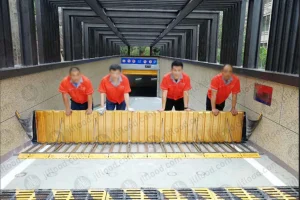
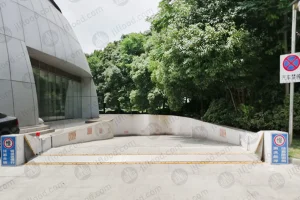
Basement parking entrances represent the primary entry point for flash flood runoff in commercial shopping centers, luxury residential towers, and hospitals. Embedded hydrodynamic flood barriers sit flush with the driveway surface, allowing seamless vehicular ingress and egress daily, while automatically rising to seal the ramp entrance the instant floodwater begins flowing down the slope.
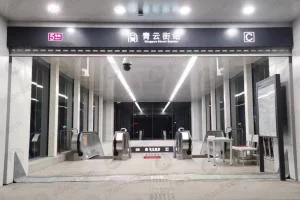
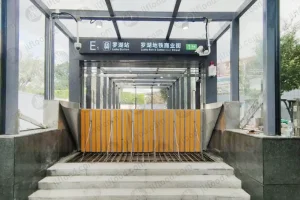
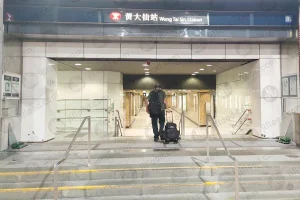
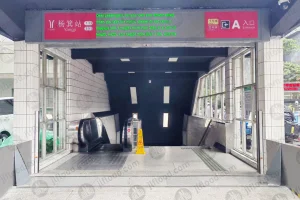
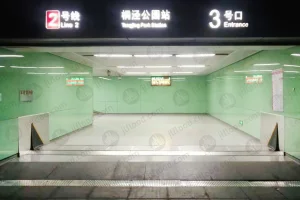
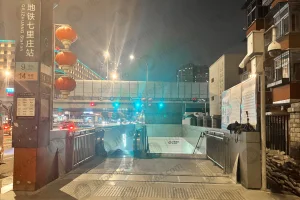
Subway networks in major metropolises (e.g., Guangzhou, Beijing, Dalian, Suzhou, Hong Kong) require extreme reliability. Water entering a single transit portal can flood miles of underground tunnels and electrical signaling channels. Specialized metro-type flood gates (such as the Hm4d-0006E series) provide fail-safe physical barriers across wide pedestrian entrances, concourses, and ventilation shafts.
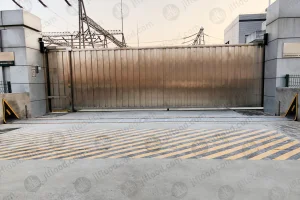
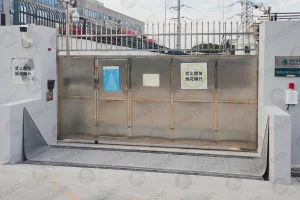
Substations operated by state grid utilities contain high-voltage transformers, switchgear rooms, and cable trenches where water contact causes catastrophic short circuits and citywide power blackouts. Compact flip-up automatic gates and embedded frame gates seal perimeter walls and door thresholds, ensuring continuous energy grid resilience.
Pedestrian street-crossing passages, underground air-raid shelters, and municipal utility corridors require structural flood barriers capable of resisting extreme static water pressure heads for extended durations without structural distortion or seal degradation.
The principle behind modular hydrodynamic automatic flood gates lies in continuous hydro-balance dynamics. Engineered as a flush-mount ground system, the solution comprises three structural sub-assemblies:
Deployment Sequence: Dry State (Panel Flush with Driveway) → Water Accumulation in Base Chamber → Hydrodynamic Buoyancy Lift → Vertical Locking & Pressure Sealing → Natural Water Receding & Manual / Gravity Reset.
A standardized procurement framework for international EPC contractors, civil engineers, and commercial project managers submitting RFPs for building flood protection.
Verify that drive-over ground panels meet minimum axle load specifications (Standard Light Vehicles: 5T-10T; Heavy Commercial / Fire Truck Ramps: 40T-60T) validated by Finite Element Analysis (FEA) and physical wheel testing reports.
Specify maximum design flood levels (DFL). Standard retaining panel heights range from 500mm to 2000mm. Check that structural deflections at full design water height remain within safe engineering tolerances (< L/250).
For coastal installations, request 316-grade stainless steel fasteners, anodized aluminum panel treatments (minimum 15 microns), and UV-resistant EPDM elastomer compounds tested according to ASTM standards.
Ensure factory supplies complete shop drawings including rebar clearance notes, frame embedment template layouts, perimeter expansion joint details, and gravity drain connection sizing to prevent silt accumulation inside the base frame.
Explore additional specialized flood gate systems, metro channel protection solutions, and embedded automatic barriers ready for factory-direct global shipment.
Detailed technical answers addressing design parameters, installation requirements, maintenance, and overseas logistics.