
Field-tested hydrodynamic flood gates engineered for immediate integration into critical municipal portals and high-risk commercial basements.
Nanjing Junli Technology Co., Ltd. delivers hydrodynamic self-deploying barrier systems engineered for zero operational latency, eliminating human error during catastrophic flash flooding.
Accelerating global climate volatility and unprecedented atmospheric river events have exposed severe vulnerabilities in modern subterranean infrastructure.
Traditional flood defense mechanisms rely heavily on manual assembly (sandbags, slide logs) or powered electromechanical flood gates. Analysis of urban inundation catastrophes reveals that 84% of underground infrastructure flooding stems from power grid collapse during typhoons or structural access delays caused by absent maintenance crews.
Global building mandates (including FEMA guidelines, EU Floods Directive 2007/60/EC, and civil defense building standards across Asia-Pacific) now explicitly mandate automatic, passive flood mitigation systems for commercial, municipal rail transit, and electrical power generation assets to mitigate liability exposure.
While electromechanical gates require continuous electrical maintenance, battery backup replacements, and monthly operational drills, passive hydrodynamic self-deploying barriers operate on zero energy expenditure over a 20-plus year mechanical design lifespan, reducing lifecycle maintenance costs by up to 78%.
How Junli's self-deploying barrier converts localized hydrostatic head pressure into mechanical rotation without external sensors or power drives.
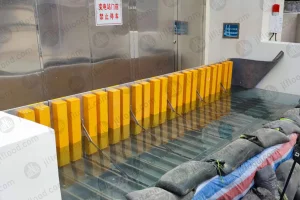
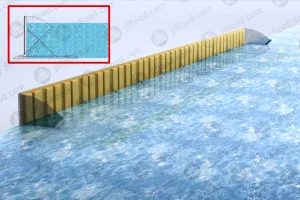
The gate assembly is seated flush inside a structural subterranean housing frame embedded into driveway or portal thresholds. As flash floodwaters spill into the inlet reservoir chamber, water level elevation creates dynamic buoyancy ($F_b = \rho \cdot V \cdot g$) under the sealed hollow alloy panel, exceeding total panel gravitational mass ($W_g$). The panel automatically rises in proportion to water ingress speed.
Once upright, the water pressure differential between the exterior flooded zone and interior dry zone forces the barrier panel against heavy-duty structural elastomeric (EPDM/Fluororubber) seals. Hydrostatic load increases sealing compression proportionally: higher flood levels yield tight, zero-leakage retention integrity up to a standard 2.0m retaining height.
Architects often express concern over silt and debris accumulation. Junli's patented foundation trench incorporates hydrodynamic flushing channels and slope-assisted bottom clearance paths, allowing high-velocity drainage flow to purge leaf litter and road grit back out through designated self-draining ports during panel retraction.
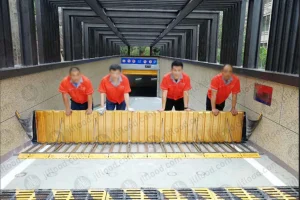
When collapsed flat during standard dry conditions, the top plate surface seamlessly integrates into vehicle ramps. Constructed from high-tensile 6063-T6 marine structural aluminum profiles or 304/316 stainless steel internal structural ribbing, it accommodates wheel loading specs from standard passenger cars up to 40-ton heavy commercial transport trucks (HS-20 / EN124 load classes).
Why lead engineering consultants specify passive hydrodynamic systems over traditional manual or electromechanical barriers.
| Technology / Specification | Hydrodynamic Passive (Junli) | Manual Demountable Barriers | Electric Motor Flood Gates | Pneumatic Inflatable Systems |
|---|---|---|---|---|
| Power Dependence | 0% Power (100% Passive) | 0% Power | 100% Dependent (Grid/UPS) | 100% Dependent (Compressor) |
| Deploy Trigger Time | Instantaneous (< 0.1s) | 30 - 120 Minutes (Manual) | 1 - 5 Minutes (Mechanical) | 2 - 10 Minutes |
| Human Operator Requirement | Zero Personnel Needed | 2 to 6 On-Site Workers | Remote or Local Operator | Remote or Local Operator |
| Blackout Vulnerability | Immune to Power Loss | Immune | High Vulnerability | High Vulnerability |
| Structural Vehicular Loading | Up to 40-Ton Axle Load | No Vehicle Drive-Over | Varies (10-20 Ton Max) | No Vehicle Drive-Over |
| Annual Operating Cost | Near Zero | High (Labor Drills) | High (Motor/Grid Servicing) | High (Pneumatic Testing) |
Tailored civil design matrices engineered to meet real-world site access constraints across global infrastructure verticals.
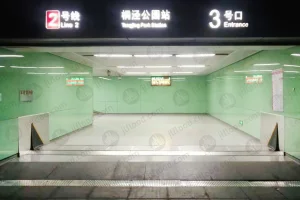
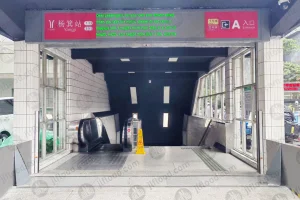
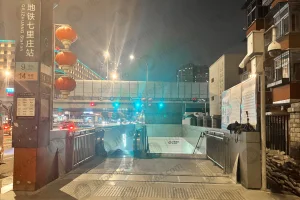
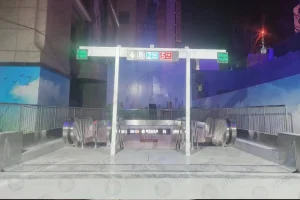
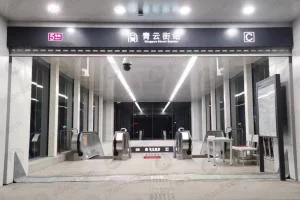
Subway stations present severe ingress risks during tropical flash floods. Installed across Guangzhou Metro, Dalian Metro, Beijing Metro, and Hong Kong Transit facilities, Junli’s metro-grade barriers sit flush at station entrances, pedestrian plazas, and connecting subterranean channels. They rise automatically before water reaches threshold stairs, safeguarding subterranean rail networks from devastating flooding.
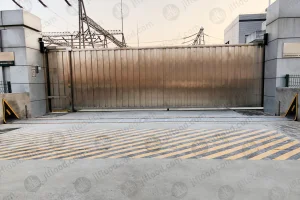
Critical power distribution transformers, switchgear rooms, and hyperscale data center server basements require 100% water defense reliability. Junli perimeter gate barriers prevent flash flood waters from penetrating primary electrical enclosures, avoiding catastrophic short-circuits, transformer destruction, and widespread municipal grid blackouts.
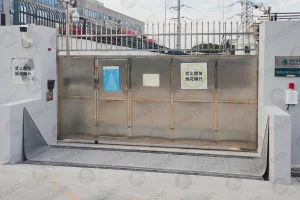
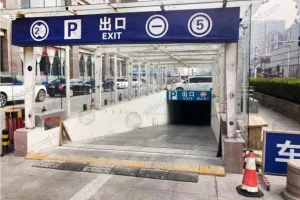
Commercial shopping centers, residential car parks, and underground logistics loading docks feature wide vehicular entry ramps prone to surface runoff accumulation. Junli surface-mounted or embedded automatic gates span driveway openings up to 20+ meters in multi-leaf modular configurations without interfering with daily vehicular traffic.
Underground emergency shelters, hospital utility basements, and municipal pedestrian underpasses demand zero-fail ingress protection. Junli's light-duty flip-up and hydrodynamic systems comply with civil defense water-retaining mandates, operating reliably even during complete facility abandonment.
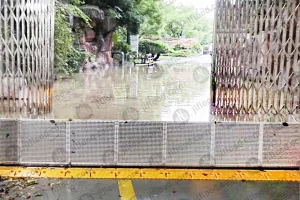
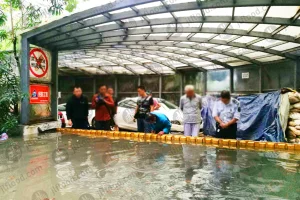
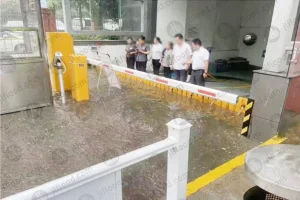
During Typhoon Bebinca in 2024, extreme precipitation struck urban infrastructure. Sites equipped with Junli automatic hydrodynamic flood gates successfully blocked aggressive floodwaters without a single site operator present.
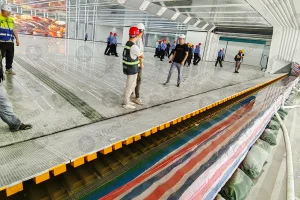
Our engineering ethos focuses on verifiable evidence rather than architectural renderings. Every Junli flood barrier undergoes full-scale hydrostatic tank pressure testing prior to factory dispatch, verifying seal deflection, lifting velocity, and complete seal integrity.
Explore Typhoon Field CasesPioneering the convergence of purely mechanical passive resilience with intelligent municipal SCADA monitoring.
While mechanical deployment remains 100% independent of power, optional micro-switch sensors embedded in the foundation frame transmit real-time deployment status, trigger alerts to central control centers, activate local warning lights, and log event start times.
Integration of low-voltage dry contact relay modules links the flood gate's physical deployment directly to heavy-duty subterranean drainage pumps, ensuring immediate chamber dewatering once external floodwaters recede below emergency levels.
R&D initiatives focus on structural carbon-fiber reinforced polymer (CFRP) panels. These composite barriers reduce panel weight by 45% while doubling tensile rigidity, enabling faster buoyancy response times ($<0.05s$) for hyper-intense cloudburst mitigation.
Standardized engineering specifications for civil structural integration, embedment excavation, and long-term maintenance regimes.
For embedded flood barriers, contractors excavate a dedicated foundation trench according to Junli’s dimensional structural shop drawings. The trench is reinforced with C35/40 waterproof concrete and aligned using embedded steel mounting anchors. Proper civil alignment ensures a flat surface so that vehicles transit smoothly over the collapsed barrier panel without noise or vibration.
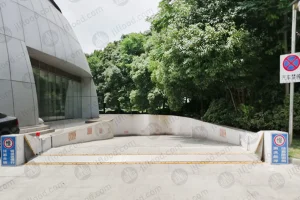
In operating facilities where subterranean trench excavation is restricted by underlying utilities or structural slab thickness, Junli's surface-mounted modular series (e.g., HM4D-0006E) can be retrofitted directly onto existing concrete aprons. Modular transition ramps are anchored on either side to maintain smooth vehicle access while providing reliable flood protection.
A primary civil requirement is connecting the barrier foundation frame to the site's stormwater drainage network. Gravity drainage pipes (minimum DN100 or DN150) must be routed from the bottom housing chamber to a sump pit or external stormwater line to prevent rainwater accumulation in non-flood conditions.
Because passive barriers feature no motors or gears, routine maintenance is simple. Junli recommends semi-annual inspections: clearing any accumulated leaves or sediment from the chamber, inspecting the EPDM elastomeric edge seals for physical damage, and performing a manual water-flush test to verify smooth panel lifting and seating.
Addressing structural engineering, regulatory compliance, and operational queries from global buyers.
The barrier operates on pure hydrostatic and buoyancy mechanics. The barrier panel rests flush inside a floor housing trench. As floodwaters fill the foundation chamber, buoyancy forces lift the panel. Rising external hydrostatic head pushes the panel upward into a vertical lock position, compressing the elastomeric seals to block incoming water without motors, sensors, or human intervention.
Standard retaining heights range from 0.5 meters to 2.0 meters. Single clear spans cover driveway widths up to 6.0 meters, while modular multi-leaf units can extend across openings over 20 meters wide. Light flip-up systems are available for narrow pedestrian doorways, cable trenches, and electrical equipment rooms.
Junli flood gates are engineered with structural internal ribbing made from high-tensile 6063-T6 aluminum alloy or heavy-gauge stainless steel. Depending on the specification, our embedded drive-over panels support axle loads up to 40 tons (conforming to HS-20 heavy truck transport standards), making them suitable for busy commercial parking ramps and logistics centers.
Yes. Every design family is fully validated in our factory testing pool. We measure lifting response time, seal compression, structural deflection, and water leakage rates under full design head pressures. Third-party inspection reports and testing videos are provided with order documentation.
As external floodwaters drain away, the water inside the housing chamber exits through gravity drain ports. As buoyancy forces decrease, the panel slowly lowers back into its flush foundation trench under controlled mechanical dampening, returning the driveway to normal traffic operation.
We supply comprehensive CAD/BIM shop drawings, civil embedment templates, installation manuals, maintenance schedules, and spare seal kits in English. Our technical support team provides remote installation guidance and on-site engineering supervision for major international infrastructure projects.
Explore additional model configurations tailored for specialized electrical substations, subway lines, and building access points.
Submit your site opening dimensions, clear width, and required retaining height. Junli's engineering team will return a customized flood barrier proposal within 24 hours.
Manufacturer: Nanjing Junli Technology Co., Ltd.
Engineering Facility: No.104, Shi Men Kan, Qinhuai District, Nanjing, Jiangsu Province, China


