


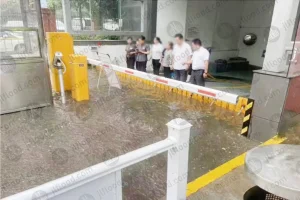

Deploying instantaneous hydrodynamic self-rising technology across Georgetown municipal entries, below-grade parking aprons, and sensitive commercial threshold perimeters.
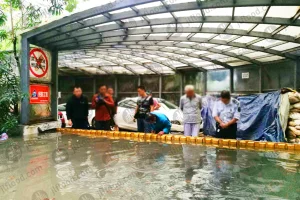
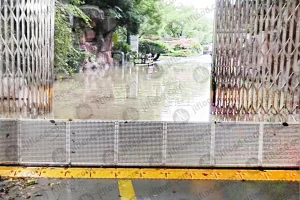
The urban and industrial landscape of Georgetown faces an acute, systemic water-retaining challenge. Geographically situated in a low-lying coastal and riverine convergence zone—with extensive sectors lying at or below mean high-tide level—the municipality contends with an unforgiving dual-threat hydrological profile: marine tidal backsurges from the Atlantic and heavy tropical pluvial inundation that saturates local gravity-drainage outfalls.
In historical flood events, Georgetown's seawall infrastructure, koker sluice networks, and municipal canals have experienced hydraulic choke points. When torrential rains coincide with astronomical high tides, the gravity outfalls lock shut. The resulting surface water cannot escape, creating severe localized pooling across key commercial arteries, waterfront logistics depots, utility substations, and underground vehicular parking basements. Traditional defensive methodologies—such as deployable sandbags or manually positioned demountable panels—exhibit unacceptable failure rates due to labor shortages, sudden nighttime flood surges, and human error during cyclone alerts.
As industrial expansion accelerates across Georgetown—spanning modern port logistics terminals, energy sub-transmission facilities, international hospitality complexes, and commercial high-rises—asset preservation requires an uncompromising shift from reactive intervention to fail-safe, autonomous hydrodynamic water-retaining flood barriers.
Over 88% of destructive urban inundations in Georgetown coincide with grid interruptions caused by falling transmission lines, transformer sub-station trips, or preventive shutoffs. Motor-driven gates lacking massive battery banks fail to actuate at the precise moment water ingress begins. Junli’s purely hydrodynamic, buoyancy-driven barrier eliminates the electrical dependency link entirely.
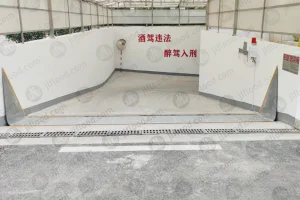
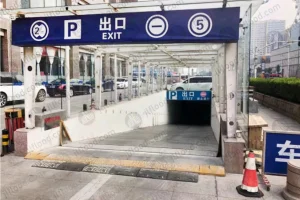
Multi-level underground parking ramps and mechanical service vaults in central Georgetown represent immense financial risk. Ingress of 1.2 meters of storm surge completely totals vehicle inventories and building switchgear.
Ground-level transformers and high-voltage cable trenches demand perimeter barriers capable of maintaining a 100% dry seal under dynamic hydrostatic head pressure, protecting regional power grids from cascading outages.
Waterfront logistics facilities along the Demerara riverfront require heavy-duty barriers engineered to endure continuous 40-tonne container hauler drive-over loading while retaining readiness for instantaneous sea-swell deployment.
Architects, civil structural engineers, and facility directors in Georgetown must weigh full lifecycle economics, structural defense integrity, and human dependency factors.
| Evaluation Parameter | Junli Hydrodynamic Autonomous Gate | Motorized Electric Flood Gates | Demountable Aluminum Planks | Sandbag Embankments |
|---|---|---|---|---|
| Deployment Speed | ✓ 0.1s passive (Flow Driven) | 60–120s (Sensor + Motor) | 2–5 Hours (Manual Assembly) | 4–12 Hours (Heavy Labor) |
| Power Grid Dependency | ✓ Zero (Pure Archimedean Buoyancy) | 100% Critical (Generator backup needed) | Zero (Manual) | Zero (Manual) |
| Human Error Vulnerability | ✓ Zero (Unmanned Autonomous Trigger) | Medium (Requires sensor health) | Critical (Requires crew on site) | Extreme (Subject to personnel panic) |
| Vehicle Axle Load Rating | ✓ Up to 40 Tonnes (Flush Profile) | Varies (Requires surface track) | No Drive-over capability | None |
| Long-Term Sealing Integrity | ✓ Double EPDM Vulcanized Gasket | Single Strip / Pneumatic Bladder | Compression Gaskets (Wear prone) | Highly Permeable (High seepage) |
| Operational Lifespan | ✓ 25+ Years (Marine Grade Alloy) | 10–12 Years (Motor burnout risk) | 5–8 Years (Component loss) | Single-use (Bio-hazard waste) |
Junli Technology refuses to sell flood protection on CAD renderings alone. Every barrier design installed in our global export pipeline has withstood real-world storm floods, typhoons, and certified water-testing pools under strict structural engineering observation.
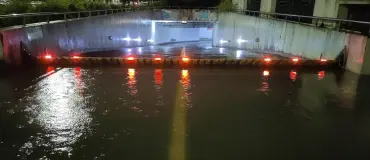
Zero electrical power available; barrier retained 1.4m of rushing floodwaters autonomously.
Water enters the recessed foundation chamber, automatically raising the high-tensile panel.
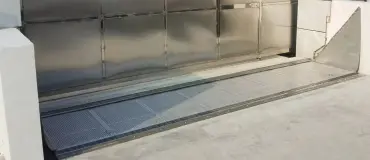
Leakage rate verified at zero liters per meter/hour under full design head before international shipment.
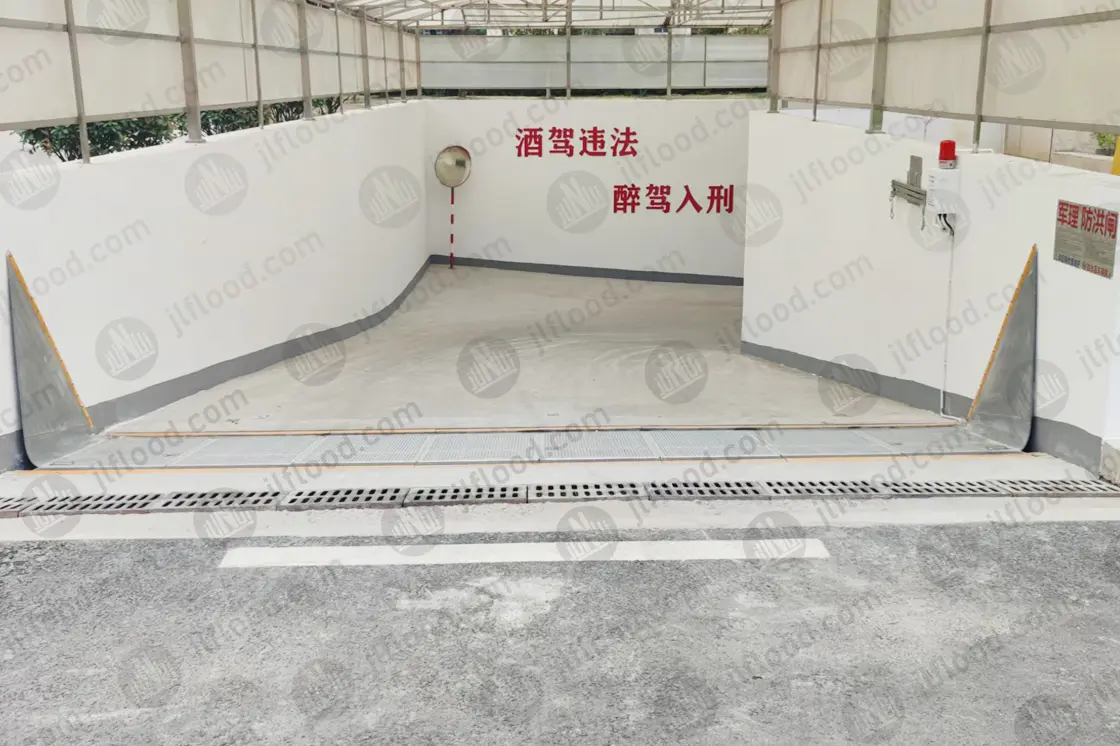
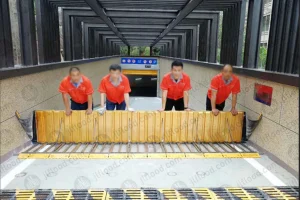
Flush floor integration. Supports passenger cars, fire trucks, and heavy supply transport without gate deformation.
Junli Technology delivers complete engineering packages calibrated specifically for Georgetown’s tropical coastal atmosphere, high-salinity air, and civil construction conventions.
Tropical marine environments pose severe corrosion threats to metallic flood structures. In the Georgetown market, standard galvanized sheet metal degrades prematurely, compromising seal margins and structural rigidity. Junli implements an uncompromising materials standard: panels are fabricated from marine-grade extruded 6063-T6 aluminum alloys with a minimum 25-micron hard-anodized protective skin, or heavy-gauge AISI 304 / 316 stainless steel designed for extreme exposure along waterfront docks and tidal estuaries.
To assure seamless turnkey execution for Georgetown contractors, consultants, and public works authorities, each Junli system is backed by a full structural dossier:
Full CAD/BIM drawing sets covering concrete trench excavation depths, embedded anchor plates, drainage discharge gradients, and structural rebar clearance notes compliant with local construction codes.
Finite Element Analysis (FEA) reports verifying that panel deflection remains below L/250 under maximum dynamic wave impact and static hydrostatic head pressures up to 2.0 meters.
Full-scale water tank acceptance testing witnessed via high-resolution live video link or third-party inspection agencies (SGS / Bureau Veritas) prior to export crating.
Engineered configurations addressing distinct ingress failure patterns across public and private infrastructure.
Underground ramp entry points where high-velocity surface flash flooding cascades into basements. Flush-mounted installation allows smooth vehicular ingress during standard conditions and erects automatically within seconds of stormwater entering the chamber.
Critical power generation and distribution sub-stations in low-lying coastal sectors. Designed with self-closing or automatic perimeter flip-up flood barriers that block corrosive tidal water from entering cable trenches and indoor control switchboards.
High-traffic freight docks along riverbanks and sea defense perimeters. Panels are engineered for continuous 40-tonne container hauler drive-over loading while retaining readiness for instantaneous sea-swell deployment.
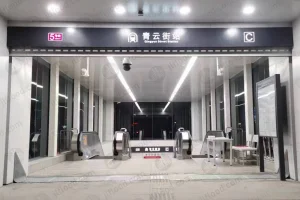
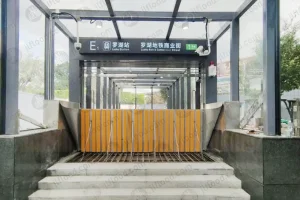
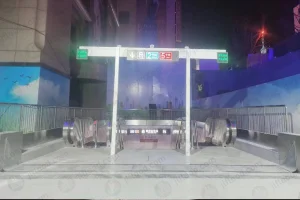
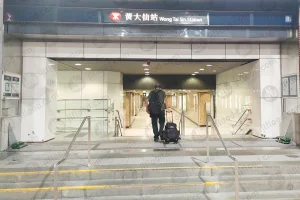
Subway portals, pedestrian underpasses, and multi-modal transit links. Zero-clearance side seals provide a hermetic barrier against high-level urban inundation, preventing station drowning and preserving passenger escape corridors.
Continuous uninterrupted operations are vital during severe hurricane conditions. Autonomous water-retaining flood gates defend back-up diesel generator rooms, medical gas stores, and lowest-level triage centers without requiring nurse or orderly staff intervention.
Retrofit installations into aging masonry culverts and concrete drainage channels to prevent tidal surge backflow into downtown Georgetown during high astronomical tides.
Next-generation flood defense combines mechanical zero-failure physics with intelligent city monitoring networks.
As smart city frameworks evolve across international hubs, flood barriers must transition from isolated mechanical units to node-connected protective infrastructure. Junli Technology’s R&D pipeline bridges physical buoyancy mechanics with digital sensor arrays:
Equipped with battery-free micro-switch transponders that transmit barrier deployment status, water level head height, and lock position to central municipal flood control dashboards in real time.
Engineered self-flushing chamber geometrics designed to prevent high-turbidity tropical river sediment and storm washouts from compacting beneath the lifting leaf, ensuring complete recess retention year-round.
Adoption of graphene-enhanced vulcanized elastomer seals offering enhanced resistance to UV radiation, extreme tropical humidity, fuel residue, and coastal salt spallation, extending service intervals beyond 10 years.
Technical clarifications addressing operational parameters, civil requirements, and lifecycle maintenance.
Explore our complete catalog of substation, subway, embedded, and flip-up water-retaining flood barriers calibrated for global infrastructure deployment.
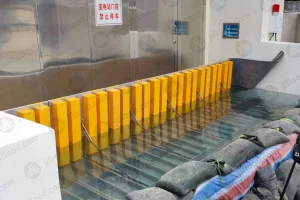
Send your entrance width, threshold sill height, and site flood elevation data. Junli Technology provides custom CAD section drawings, hydro-thrust load calculations, and turnkey factory quotation within 24 hours.