


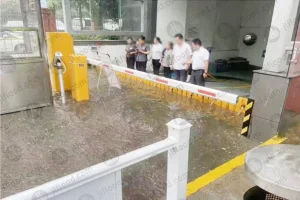

Hydrodynamic zero-power self-rising flood gates engineered for Thailand’s monsoon intensity, EEC industrial estates, Bangkok underground transit, and high-value commercial assets.
Proven passive hydrodynamic technology deployed across commercial car parks, substations, and metro infrastructure worldwide.
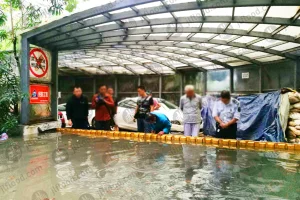
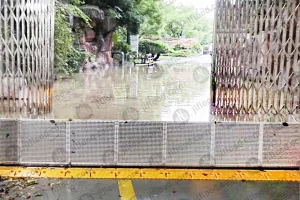
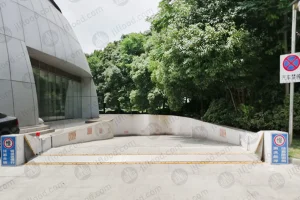
Thailand’s geographic positioning in the Chao Phraya River basin and coastal tropical climate subjects its commercial hubs and industrial heartlands to seasonal monsoon extremes, tropical depressions, and tidal surge backflows. As economic growth accelerates under the Thailand 4.0 directive and the expansion of the Eastern Economic Corridor (EEC), the protection of physical infrastructure—from underground transit networks in Bangkok to high-tech manufacturing plants in Rayong and Chonburi—has shifted from a reactive emergency measure to a strategic capital risk-management mandate.
Industrial estates such as Amata City, Map Ta Phut, and Bangpoo house crucial global supply chains for automotive assembly, electronics, and semiconductor packaging. Flash flooding caused by urban runoff and overflowing drainage canals triggers catastrophic disruption. When floodwaters enter cleanrooms, basement switchgear rooms, or automated storage areas, financial losses extend beyond property damage to lost contract fulfillment and multi-million-dollar operational downtime.
Greater Bangkok faces a compound hydro-geological threat: low land elevation, slow coastal land subsidence, and extreme precipitation events. Commercial high-rises along Sukhumvit, Silom, and Sathorn, alongside critical public transit assets (BTS Skytrain concourses and MRT underground stations), feature deep underground car parks and basement utility vaults. Traditional manual sandbags or demountable aluminum flood planks consistently fail due to human delay, lack of night-shift personnel, and seal degradation.
In modern urban and industrial flood engineering, human intervention is recognized as the single highest point of failure. Active electrical flood barriers also carry severe risks: grid failures and power outages routinely accompany tropical storms.
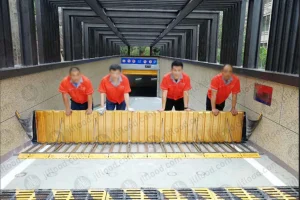
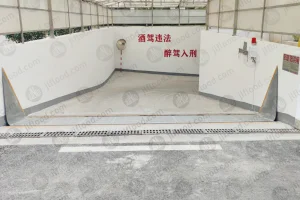
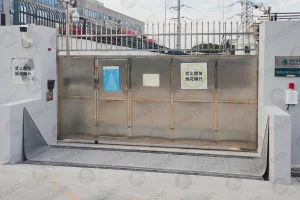
Our hydrodynamic automatic flood barrier requires zero electricity, zero sensors, and zero manual labor. Installed flush with the driveway or threshold, the barrier panel rests inside a stainless-steel foundation pit. When floodwater reaches the trigger level, water flows into the chamber via inlet grates. Buoyancy forces naturally rotate and lift the barrier panel upright, while rising hydrostatic pressure locks the EPDM double-lip sealing mechanism tightly against the frame walls.
| Evaluation Parameter | Hydrodynamic Automatic Barrier | Manual Demountable Flood Planks | Motorized / Hydraulic Electric Gates |
|---|---|---|---|
| Operational Reliability | 100% Passive (Water Buoyancy Powered) | Low (Requires human dispatch & assembly) | Medium (Vulnerable to power outages) |
| Response Speed | Automatic (< 30 seconds upon water arrival) | Slow (1 to 4 hours deployment time) | Fast (Requires functional sensors/power) |
| Vehicular Traffic Load | Heavy Duty (20T – 40T Axle Load Flush Deck) | N/A (Ramp obstruction when deployed) | Variable (Requires drive-over ramp modifications) |
| 20-Year Total Cost of Ownership (TCO) | Lowest (Minimal mechanical wear components) | High (High labor, storage & damage costs) | High (Routine motor, sensor & battery service) |
| Thailand Tropical Climate Suitability | Excellent (Corrosion-resistant SUS304/316 & Marine Al) | Fair (Rubber seals degrade in storage) | Fair (Electronics fail in high humidity/heat) |
Multinational corporations operating in Thailand, institutional property developers, and government engineering procurement teams demand rigorous compliance, verified structural calculations, and seamless supply-chain integration.
Global industrial property insurers (such as FM Global, AXA XL, and Allianz) mandate stringent flood risk reduction standards before issuing coverage for assets in high-risk zones like Thailand's coastal floodplains. Installing certified self-rising hydrodynamic barriers serves as tangible proof of physical resilience, enabling property managers to negotiate lower insurance deductibles and premiums.
Our engineering export team provides complete CAD clearance drawings, structural finite element analysis (FEA) reports, and BIM objects (Revit) for immediate integration into civil consultant tenders. Specifications include customized retaining heights (0.5m to 2.0m) and single-span width adjustments tailored to your driveway dimensions.
As environmental sustainability and climate adaptation reporting become obligatory under ESG frameworks, passive zero-carbon flood defenses offer a measurable advantage. Operating without grid power consumption or backup battery disposal hazards, hydrodynamic barriers provide clean, lifetime climate adaptation.
As a specialized Chinese high-tech manufacturer of intelligent flood barrier systems, our facility combines automated structural steel fabrication, high-precision laser cutting, advanced sealing rubber vulcanization, and full-scale hydraulic testing under one roof.
Unlike standard metal fabricators who rely on theoretical seal calculations, every barrier design undergoes real-water pool testing in our factory. We test buoyancy response time, seal compression tight-fit under design hydrostatic head pressure, and structural deflection before issuing factory acceptance documentation.
Thailand's coastal climate accelerates electrochemical corrosion on standard steel. Our barriers feature heavy-duty 304 or 316 stainless steel frame housings, marine-grade anodized aluminum panel structures, and fluorocarbon anti-corrosion coatings engineered for prolonged UV exposure and brackish water resistance.
With established maritime export routes connecting Eastern China ports to Laem Chabang Port and Bangkok Port (Klong Toey), we ensure reliable lead times, modular export packaging, pre-assembled embedded frame templates, and complete English technical installation manuals.
Flush-mounted driveway barrier arrays installed at the top or foot of basement parking ramps in Sukhumvit office towers and shopping complexes. Enables daily high-density vehicle passage without noise or bump discomfort, rising automatically when torrential rains flood urban street surfaces.
Heavy-duty, high-axle-load embedded automatic flood gates protecting warehouse entries and logistics loading bays in Rayong, Chonburi, and Chachoengsao. Designed to withstand heavy container truck traffic while maintaining absolute flood perimeter security.
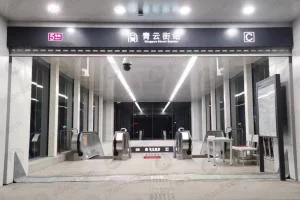
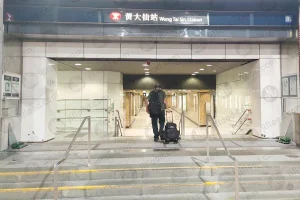
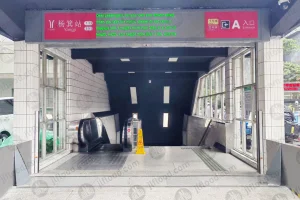
Critical entry barrier protection for rail transit underground pedestrian portals, ventilation shafts, and high-voltage power substation perimeter gates where water intrusion would result in catastrophic power blackouts and citywide logistics failure.
Contact our structural and hydraulic engineering team today to receive a complete dimensional barrier drawing set, civil recess design guide, and competitive direct-from-factory pricing.
Send Inquiry NowThe hydrodynamic automatic flood barrier requires zero electricity, battery power, or electronic sensors. It relies entirely on passive physical principles: fluid hydro-buoyancy and hydrostatic pressure. As rising floodwater enters the recessed bottom foundation trough, the panel rises automatically. Because electrical blackouts frequently accompany severe tropical typhoons and monsoons in Thailand, this passive mechanism guarantees 100% operational readiness when powered gates fail.
Yes. Our heavy-duty industrial series (including models HM4D and HM4E) are engineered with reinforced structural steel internal ribbing and heavy top-cover plates capable of supporting standard vehicle axle loads from 20 tons up to 40 tons. When closed in its rest position, the barrier panel sits perfectly flush with the finished roadway level, allowing smooth traffic flow for cars, forklifts, and heavy logistics trucks.
Routine maintenance is minimal due to the absence of complex motors, hydraulic lines, or electrical controls. We recommend periodic inspection every 3 to 6 months to clear silt, leaves, or debris from the stainless-steel bottom collection trough and drainage outlet. Inspecting the EPDM rubber side seals and verifying smooth mechanical hinge movement ensures a service lifetime exceeding 20 to 25 years.
Every export order includes custom structural calculation sheets, detailed civil work recess dimensions, rebar layout notes, embedded frame anchor templates, and step-by-step English installation manuals. Our engineering team provides remote video technical guidance during civil foundation pouring and barrier commissioning for projects across Southeast Asia.
Explore our full series of heavy-duty, subway-grade, embedded, and flip-up automatic flood barriers suitable for civil and commercial projects.

Share your entry clear width, threshold level, and target retaining height. Our engineering support desk will return a detailed CAD layout plan, seal specifications, and direct factory pricing within 24 hours.