
Facebook LinkedIn YouTube
Engineering Whitepaper & Technical Procurement Guide

Actual Water Retaining Flood Barrier Manufacturers & Factories Serving Paris

Hydrodynamic Power-Free Self-Closing Flood Gates & High-Capacity Infrastructure Water Retaining Systems for Greater Paris (Île-de-France)

Flagship Deployments

Priority Water Retaining Barrier Series

Certified Hydrodynamic Automatic Flood Gates Engineered for Paris Metro Stations, Underground Garages, and Critical Utilities.
China Automatic Flood Barrier without electric power Pricelist, Quotes

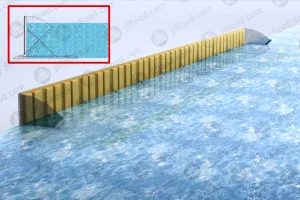
Power-Free Automatic Water Retaining Barrier (Zero-Electricity Mechanical Actuation)

View Product & Spec
Local Climate & Hydrological Context

Urban Flood Risks in Paris: Protecting the Seine Basin & Subterranean Assets

The Paris metropolitan area (Île-de-France) faces an extraordinary hydrological challenge. Traversed by the Seine River and its key tributaries including the Marne and Oise, Paris combines high urban density with deeply integrated underground infrastructure. Historical flood benchmarks—most notably the catastrophic 1910 Great Flood of Paris (which saw the Seine crest at 8.62 meters) and more recent major inundations in June 2016 and January 2018—demonstrate that surface water surge can instantly paralyze subterranean rail networks, electrical substations, commercial parking structures, and civil defence vaults.

Under the stringent requirements of the French PAPI (Programme d'Action de Prévention des Inondations) and the municipal PPRI (Plan de Prévention du Risque Inondation Paris), property developers, municipal engineers, and transit authority contractors (such as RATP and SNCF) are required to deploy certified, zero-failure flood mitigation technologies. Standard demountable aluminum stop-logs or manual sandbagging are no longer sufficient for high-consequence urban environments. Modern Paris infrastructure demands passive, hydrodynamic self-closing flood barriers that operate automatically without human intervention or electrical power.

Key Seine Basin Hydrological Metrics

  • Historic Flood Peak: 8.62 m (1910 Hydrological Datum)
  • Recent Flood Events: June 2016 (6.10 m), January 2018 (5.84 m)
  • Vulnerable Assets: 300+ Underground Metro & RER Stations, Grand Paris Express Expansion Lines, Subterranean Substations (Enedis grid), Underground Parking Facilities in La Défense.
  • Regulatory Standards: PPRI Île-de-France, Eurocode 3 (EN 1993 Structural Steel Design), EN 124 Load Classifications (D400/F900 for vehicle traffic).
0.1 s
Passive Hydrodynamic Trigger Time
100%
Power-Free Self-Rising Reliability
D400+
Heavy Axle Load Capability
25+ Yrs
Structural Design Lifecycle
Engineering Blueprint & Mechanical Architecture

Hydrodynamic Self-Closing Flood Gates: How Power-Free Buoyancy Works

Eliminating electrical vulnerability during extreme severe weather events and blackouts.

1. Flush Embedded Installation

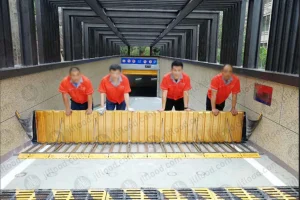
During dry weather, the flood door panel sits completely flush inside a recessed stainless-steel ground frame embedded into the structural floor slab. Pedestrians and heavy urban traffic (up to 40-tonne vehicles) cross seamlessly without acoustic rattle or obstruction.

2. Water Inflow & Dynamic Buoyancy

When floodwaters or surface runoff overflow kerbs into the entrance, water enters the bottom retention chamber via intake grilles. Buoyancy forces act immediately on the internal hollow-core structural door leaf, causing it to pivot upward automatically around its continuous hinge axis.

3. Hydrostatic Self-Locking & EPDM Sealing

As water depth increases, hydrostatic head pressure compresses high-density EPDM double-lip rubber profile seals against the wall side-mullions and bottom frame. Higher water levels increase sealing force, yielding zero-leakage performance under extreme hydrostatic heads up to 2.0m.

E-E-A-T Technical Advantage: Unlike electrical flip-up barriers or automated motorized flood gates, hydrodynamic passive barriers require zero power lines, zero battery backup systems, zero hydraulic oil pumps, and zero human sensor checks. During catastrophic urban storm events, local electrical grids in Paris frequently experience localized transformer tripping or blackout conditions. Hydrodynamic barriers guarantee 100% operational readiness precisely when power fails.

Deployment Matrices

Application Scenarios Across Paris Infrastructure

Engineered for precise integration into high-density French architectural and civil frameworks.

A. Underground Rail & Metro Entrances (RATP / RER / Grand Paris Express)

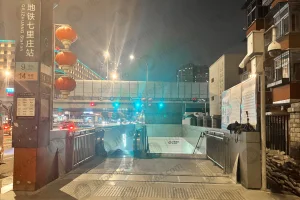
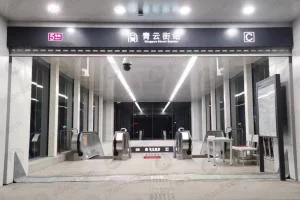
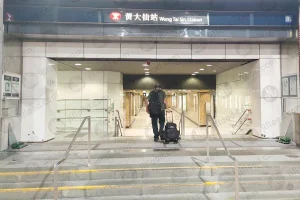
The Grand Paris Express is adding 200 kilometers of new automatic metro lines and 68 new stations across Greater Paris. Station portals, subterranean ventilation shafts, and pedestrian underground access points located in low-lying zones along the Seine basin require high-capacity, low-profile flood gates. Our embedded metro-type hydrodynamic flood barriers integrate smoothly into granite or paved concourse floors, maintaining compliance with French public safety accessibility mandates (PMR regulations) during normal operations while protecting deep underground platform caverns from sudden surface water inundation.

B. Subterranean Commercial Parking Garages (La Défense & Central Arrondissements)

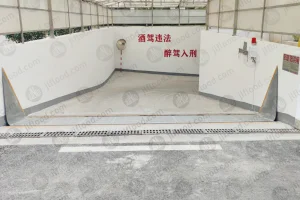
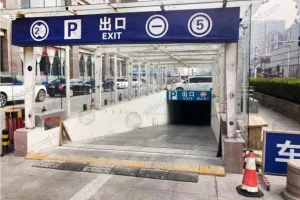
High-value commercial developments in business districts like La Défense, Opéra, and Front de Seine feature multi-level underground parking structures extending up to 6 stories below ground level. Surface runoff down vehicle ramps can cause millions of Euros in structural and property damage. Our surface-mounted and flush-embedded ramp flood barriers are rated to D400 and F900 axle load capacity (EN 124 standards), easily supporting heavy commercial vehicles, emergency fire tenders, and continuous delivery transport without deformation.

C. High-Voltage Electrical Substations & Utility Vaults (Enedis & RTE Grid Protection)

In urban Paris, power distribution substations, transformer vaults, and telecommunications switching nodes are predominantly installed below ground level or within tight urban basements. Water intrusion into high-voltage environments results in immediate catastrophic regional blackout. Light flip-up automatic doors and specialized perimeter flood gates manufactured from marine-grade 6063-T6 aluminum alloy provide sealed protection for utility cable trenches, access hatches, and equipment room doorways.

D. Heritage Buildings & Cultural Embankment Assets

Historical structures bordering the Seine—such as museums, government ministry basements, and historic residential quarters—require non-invasive flood mitigation that preserves structural integrity and aesthetic appearance. Our modular hydrodynamic barriers allow discrete ground frame embedment, preserving historical facades while delivering industrial-strength perimeter flood defense.

Supply Chain Resilience & Direct Manufacturing

China Factory Scale & Engineering Edge: Why Partner with Nanjing Junli Technology

Unmatched manufacturing capacity, rigorous hydrostatic quality assurance, and seamless global logistics to France.

For European procurement managers and project contractors serving the Paris market, securing high-spec flood control hardware requires balancing stringent engineering compliance with cost efficiency and delivery speed. Nanjing Junli Technology Co., Ltd. stands as a primary Chinese high-tech manufacturer specializing in hydrodynamic flood protection systems for mega-scale infrastructure.

Operating dedicated production bases in Nanjing, Jiangsu Province, Junli Technology maintains full in-house control over the entire production lifecycle: structural engineering design, precision CNC laser cutting, automated robotic welding, specialized EPDM rubber vulcanization, and full-scale hydrostatic water-pool testing.

Factory Direct Advantage: By bypassing traditional European intermediaries and sourcing direct from our specialized manufacturing facility, engineering contractors serving Paris achieve a 30% to 45% capital expenditure savings while securing customized structural dimensioning, Eurocode-compliant weldments, and factory acceptance test (FAT) documentation.

Production & Quality Metrics

  • Factory Floor Area: 25,000+ m² specialized manufacturing plant
  • Structural Material: High-tensile 6063-T6 / 6005A-T6 Anodized Aluminum Alloys & SUS304 / SUS316L Stainless Steel frames
  • Full-Scale Hydrostatic Test Basin: 100% of barrier designs undergo dynamic head & leakage rate validation prior to export
  • Production Capacity: Over 15,000 linear meters of hydrodynamic flood barrier annually
  • Logistics Network: Direct container shipping from Shanghai/Ningbo ports to Le Havre port, with rapid rail/truck transport into Paris warehouses and site locations.
Technical Matrix & Standards Compliance

Engineering Specifications & Quality Benchmarks

Designed for full alignment with French and European structural codes.

Technical Parameter Embedded Type Barrier (Metro & Garage) Surface Installation Type Light Flip-Up Type (Doorway)
Standard Retaining Height 600 mm – 2000 mm (Customizable) 400 mm – 1200 mm 300 mm – 900 mm
Single Leaf Clear Width 1.0 m – 6.0 m (Modular array for >20m) 1.0 m – 4.5 m 0.8 m – 2.5 m
Actuation Source Hydrodynamic Pure Buoyancy (Power-Free) Passive Buoyancy / Manual Assist Option Passive Gas-Strut / Buoyancy Assisted
Vehicle Load Class (EN 124) D400 (40 Tonne) / F900 (90 Tonne Heavy Rail) C250 (25 Tonne) / D400 Pedestrian / A15 (1.5 Tonne)
Sealing Material High-Density Vulcanized EPDM Double Lip Co-extruded EPDM & Neoprene Composite EPDM Foam Compression Seals
European Regulatory Compliance EN 1993 (Eurocode 3), ISO 9001, CE Mark EN 1993, ISO 9001, CE Mark ISO 9001, CE Mark
Full Factory Catalog

Complete Hydrodynamic Flood Gate Product Matrix Serving Paris

Select your structural application below to review technical specifications and direct factory quotes.
Technical Support & Procurement FAQ

Frequently Asked Questions by Paris Specifiers & Civil Engineers

Clear answers regarding installation, hydraulic testing, civil work requirements, and European compliance.

How does a hydrodynamic automatic flood barrier operate without electricity or battery backup?
The hydrodynamic flood barrier utilizes pure buoyancy and hydrostatic head pressure. The door panel normally rests flush inside an embedded ground foundation chamber. When surface water inundation reaches the entrance, water flows into the bottom chamber through intake grilles. As the chamber fills, Archimedes' buoyancy principle forces the internal hollow alloy panel to pivot upward. As water rises further, hydrostatic pressure forces the EPDM rubber gaskets firmly against the side mullions and frame frame, forming a watertight seal. No sensors, motors, wiring, or human intervention are required.
What civil works preparation is required on-site in Paris prior to barrier installation?
For embedded types, a concrete trench casting according to Junli Technology’s structural embedment drawings is required. The trench must incorporate a secondary drainage outlet (connected to gravity drain or sump pump) to evacuate residual rainwater post-event. Junli supplies pre-fabricated steel embedment positioning frames, anchor bolt sets, and step-by-step civil engineering layout drawings in English and French. For retrofit projects where concrete trenching is restricted, surface-mounted flip-up barriers can be anchored directly onto existing slab surfaces.
Can Junli barriers support heavy vehicle loads like municipal fire engines and trucks in La Défense?
Yes. Junli heavy-duty embedded flood barriers (such as the Hm4d-0006C series) are engineered using high-tensile 6063-T6 structural aluminum extrusion profiles reinforced with internal load-bearing ribs. They are tested and certified to EN 124 standard load classes D400 (400 kN / 40-tonne axle load) and F900 (900 kN for airport and heavy rail maintenance equipment). Vehicles can drive over the flush barrier continuously without structural deflection or damage to seal housings.
How are barriers tested for water leakage and hydrostatic head prior to shipment to France?
Every barrier design undergoes mandatory Factory Acceptance Testing (FAT) in our dedicated hydraulic test pool. The barrier is installed in a full-scale test bay, flooded to maximum design retaining height (up to 2.0m head), and held for 24 to 48 hours. Leakage rates are measured against strict international standards (achieving zero leakage to less than 0.1 L/min per linear meter). Third-party inspection certificates (SGS/TÜV) and complete video documentation are provided with export shipments.
What is the design lifecycle and maintenance schedule for high-density EPDM seals in urban environments?
The main structural body of anodized aluminum alloy and 316L stainless steel has a design lifespan of 25 to 30 years. The vulcanized EPDM rubber sealing profiles are UV-resistant, ozone-resistant, and chemically stable against road salt and oil runoff, with an operational lifespan of 10 to 15 years. Annual maintenance requires simple clearing of debris from the bottom chamber intake grilles and visual inspection of side rubber seals. Modular seal strip replacement can be completed in under two hours without removing the main barrier frame.
What is the lead time for custom barrier orders shipped from China to Paris project sites?
Standard fabrication time for customized hydrodynamic barriers is typically 15 to 20 business days following shop drawing approval. Ocean freight from Shanghai/Ningbo to Le Havre port takes approximately 28 to 35 days, followed by 48-hour customs clearance and direct inland trucking to Paris. For urgent transit or municipal infrastructure emergency works, air freight or expedited sea-rail logistics options are available.

Protect Your Paris Infrastructure Against Extreme Flood Events

Contact Nanjing Junli Technology’s senior engineering team today for custom dimensional sizing, Eurocode engineering calculations, CAD embedment details, and competitive factory pricing.

Send Inquiry Now
Request a Catalog