
Engineered for high-density metropolitan areas, commercial subterranean parking garages, and critical power infrastructure across North America.
An authoritative technical evaluation of passive flood mitigation, regulatory pressures, structural requirements, and supply-chain realities facing American civil engineers and property developers.
Across the United States, climate-induced precipitation anomalies and urban runoff realities are rapidly altering the risk profile of commercial real estate, municipal transit systems, and critical energy utilities. According to the National Oceanic and Atmospheric Administration (NOAA) and FEMA risk mapping, severe cloudburst events (exceeding 3 inches of rain per hour) have increased in frequency by over 37% across the Northeast, Midwest, and Gulf Coast regions over the last decade. Traditional manual flood gates and sandbag deployments are no longer deemed adequate by insurance underwriters and civil engineering firms due to human error risks, slow deployment response, and high labor overhead.
Core Industry Imperative: Modern U.S. building codes (ASCE 24-14, IBC 2021) demand continuous, automatic dry floodproofing solutions for non-residential structures located in Special Flood Hazard Areas (SFHAs). Passive hydrodynamic flood barriers represent the apex of this transition—operating entirely without human intervention or electrical power.
During extreme convective storms or hurricane landfall events in U.S. coastal and riverine corridors (such as New York City, Houston, Miami, and Chicago), the municipal power grid is frequently the first system to fail. Traditional electromechanical flood gates reliant on backup generators face severe vulnerability points: fuel pump failure, circuit board short-circuiting, wiring submersion, or delay in manual transfer switch activation. When floodwaters breach a subterranean parking ramp or an electrical transformer vault at a rate of 500 gallons per minute, even a 3-minute delay in barrier elevation results in millions of dollars in catastrophic structural and operational damage.
The solution engineered by Nanjing Junli Technology relies exclusively on hydrodynamic buoyancy principles and fluid pressure differentials. By housing the barrier assembly flush inside a concrete foundation basin, incoming surface water automatically fills the lower buoyancy chamber, triggering instantaneous passive rotation and vertical lock-in of the barrier leaf. Zero electricity. Zero sensors. Zero standby energy draw.
| Evaluation Parameters | Junli Hydrodynamic Automatic Gate | Active Electromechanical Gates | Manual Aluminum Stop-Logs |
|---|---|---|---|
| Deployment Power Source | Water Hydrostatic Pressure (0 Electric) | Grid Power / Diesel Generator Backup | Manual Human Labor |
| Activation Speed | Passive Immediate (< 15 seconds) | 1 to 5 minutes (Sensor + Motor) | 30 to 120 minutes (Assembly required) |
| Human Reliability Risk | 0% (Fully Autonomous) | Medium (Requires Maintenance/Controls) | High (Requires On-site Personnel) |
| Structural Service Life | 25+ Years (Alloy 6063-T6 + Stainless Steel) | 10-15 Years (Motor/Electronics Failure) | 15-20 Years (Gasket Wear & Storage Damage) |
| FEMA P-936 Suitability | Optimal (Passive Dry Floodproofing) | Requires Redundant Power Systems | Strict Limitations (Needs Warning Time) |
Tailored structural configurations designed to meet specific municipal entry geometry, load-bearing requirements, and environmental exposure conditions across North America.
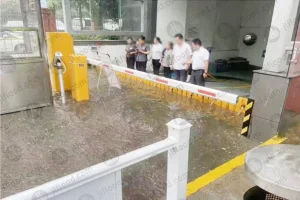
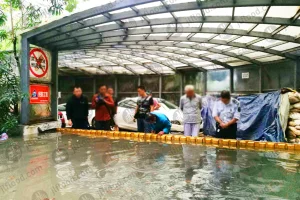
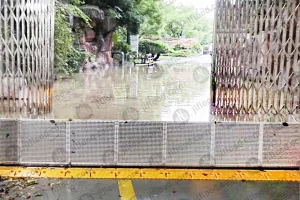
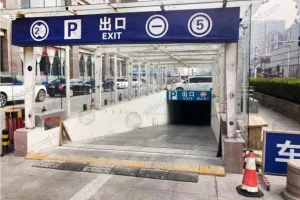
Designed to sustain heavy vehicular traffic loads (AASHTO HS-20 / HS-25 bridge loading standard) when recessed flush into ramp driveways. Ideal for high-density multi-family, hospital, and office towers in coastal metros like Miami, Boston, and Seattle.
Protects critical power grid assets, switchgear rooms, and subterranean cable vaults from flash flooding. Provides zero-maintenance continuous protection for power utility operators across Texas ERCOT, PJM Interconnection, and California MISO sectors.
Custom-engineered modular barrier arrays built to protect pedestrian station portals, emergency ventilation shafts, and inter-building connection tunnels in high-capacity transit systems (e.g., MTA NYC, CTA Chicago, WMATA DC).
Combining state-of-the-art automated manufacturing capacity with stringent global testing standards to deliver cost-effective, high-reliability flood control equipment.
Nanjing Junli Technology utilizes high-strength marine-grade 6063-T6 aluminum extrusion panels combined with SUS304/SUS316 stainless steel structural framing components. This material selection delivers superior tensile strength (exceeding 245 MPa) while resisting harsh atmospheric salt spray, de-icing chemicals, and chemical pollutants typical of U.S. metropolitan environments.
Every structural weld is executed using robotic TIG/MIG processes under ISO 3834 manufacturing quality specifications, followed by ultrasonic non-destructive testing (NDT) to eliminate internal structural micro-defects.
Unlike regional fabricators who rely solely on computer finite element modeling (FEM), Junli operates dedicated full-scale hydraulic testing pools at our Nanjing manufacturing center. Every standardized and custom barrier configuration undergoes full static head pressure testing, dynamic impact simulation, and seal leakage rate validation before export clearance.
Hydrostatic seal compression is measured against EPDM / Fluororubber vulcanized compound gaskets, ensuring structural deflection limits under maximum design flood depth remain strictly under L/250.
U.S. Supply Chain Advantages: Through streamlined OEM/ODM manufacturing processes, standardized modular components, and direct logistics pathways to major U.S. ports (Los Angeles, Long Beach, Houston, Savannah, Newark), Junli reduces project lead times by up to 40% compared to domestic custom fabricators—at a savings of 30-50% in capital cost per linear foot.
Bridging passive mechanical reliability with intelligent Building Management Systems (BMS) and smart city early-warning telemetry.
Integration of non-contact ultrasonic and optical fluid level sensors within the foundation basin. Wireless LoRaWAN/NB-IoT modules transmit real-time gate position status directly to facility managers' mobile devices and BMS platforms.
Optional hybrid system additions allow facility operators to remotely trigger gate elevation prior to storm landfall via SCADA controls, preserving full passive hydrodynamic automatic backup should control wiring fail.
Patent-pending flush bottom pan geometries equipped with sediment displacement slots prevent sand, silt, and urban debris accumulation from impeding the structural rotation mechanism during long dormant periods.
Complete documentation packages engineered to streamline review processes by U.S. Registered Professional Engineers (P.E.) and municipal building departments.
Our hydrodynamic automatic flood barriers are engineered to satisfy the strict criteria outlined in FEMA Technical Bulletin 3-12 (Dry Floodproofing – First Floor and Subgrade Facilities) and ASCE/SEI 24-14 (Flood Resistant Design and Construction). Structural calculations account for hydrostatic pressure, hydrodynamic action forces, debris impact loads (1,000 lb concentrated impact), and localized buoyancy forces.
To assist U.S. architects, structural engineers, and general contractors during the bidding and permitting phases, Junli provides comprehensive project submittal packages, including:
Browse our field-tested product family engineered for transit hubs, subway channels, power stations, and subterranean commercial assets.
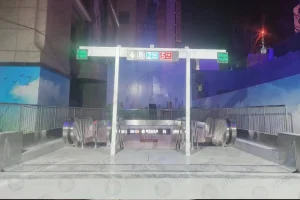
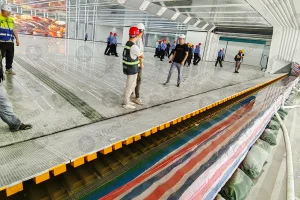
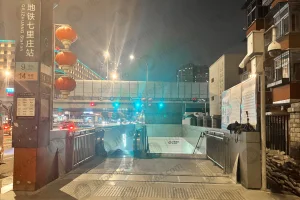
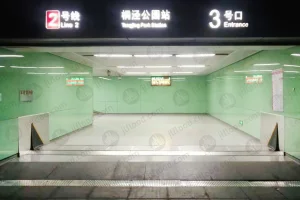
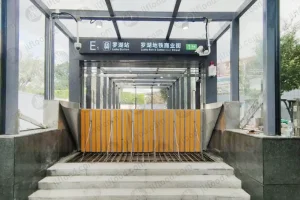
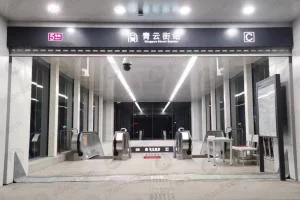
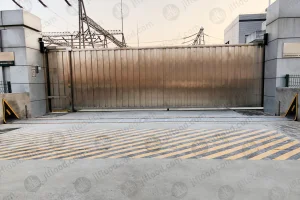
In-depth answers addressing structural engineering, installation procedure, regulatory compliance, and international freight logistics.
The system functions on pure hydrodynamic physics. The barrier panel rests completely flat inside a pre-installed recessed foundation basin at ground level, allowing routine vehicle and pedestrian traffic to drive over it. When floodwaters reach the threshold, water flows into the chamber through intake grates. The accumulating liquid creates buoyancy forces underneath the hollow aluminum profile while hydrostatic pressure pushes against the lower lever mechanism, automatically pivoting the barrier plate upward into a vertical locked seal position. No sensors, electrical pumps, backup generators, or human operators are required.
Standard modular retaining heights range from 0.5 meters (20 inches) up to 2.0 meters (79 inches). Single continuous clear span leaves are fabricated up to 6.0 meters (20 feet) in width. For wider subterranean driveway openings—such as 15-meter to 30-meter commercial parking ramps—multiple modular barrier leaves are connected using heavy-duty intermediate removable or self-rising support mullions, forming an unbroken water-tight defense wall.
For embedded installations, the project contractor must excavate a trench corresponding to our embedment detail drawings, pour a reinforced concrete sub-base, and set the embedded steel frame unit level with finished grade. Gravity drainage connections (minimum 4-inch PVC outlet) must be linked from the basin bottom to the storm sewer system or a sump pit to allow the barrier to reset automatically once floodwaters recede. Surface-mounted retrofit options are also available for sites where deep trenching is restricted.
Yes. Every production run undergoes 100% full-scale water retention testing in our dedicated factory test pool. We measure zero-leakage hydrostatic performance, seal compression ratios, and structural deflection limits under simulated maximum flood depth. Pre-shipment inspection certificates, factory water test videos, and complete mill test reports for 6063-T6 aluminum and 304/316 stainless steel are included with all export documentation.
We offer full DDP (Delivered Duty Paid) or FOB export logistics terms to major U.S. sea ports and job sites across all 50 states. Products are packaged in ISPM-15 compliant reinforced wooden crates with waterproof lining. Onsite assembly is straightforward and guided by our comprehensive English installation manuals, step-by-step video tutorials, and direct remote engineering support via videoconference. Local installation can be performed by any licensed U.S. general contractor, steel erector, or commercial door installer.
Contact our senior flood protection engineering team for site drawing reviews, hydraulic load calculations, and competitive factory-direct pricing.
Send Inquiry Now

