
Egypt is experiencing a monumental transformation in civil infrastructure, driven by national megaprojects including the New Administrative Capital (NAC), extensive expansions of the Cairo Metro network (Lines 3 & 4), and vast economic corridor developments along the Red Sea and Suez Canal Economic Zone (SCZONE). However, this rapid urban acceleration coincides with severe climate-induced hydrological vulnerabilities. Coastal cities like Alexandria, Port Said, and Damietta face compounded threats from rising Mediterranean sea levels and intense storm surges, while inland desert urban centers are increasingly hit by violent, concentrated flash flooding events (locally termed "Seyool").
When sudden deluge events occur across urban topography characterized by low water infiltration capacity, storm runoff rapidly inundates basement car parks, underground power substations, metro access portals, and industrial warehousing hubs. In critical facilities, traditional flood prevention methods—such as manual sandbagging or motorized barriers—fail due to unexpected grid blackouts, rapid flood onset times (under 15 minutes), and human latency.
As a world-leading Wholesale Flood Barrier Water Testing Manufacturer and Supplier, our engineering mission is to equip Egyptian civil contractors, state utility authorities (such as the Egyptian Electricity Transmission Company - EETC), and private developers with Hydrodynamic Automatic Self-Rising Flood Barriers. Engineered for zero-energy operation, our hydrodynamic systems harness the physical force of incoming floodwaters to raise barrier panels automatically—ensuring continuous, uncompromised perimeter defense without relying on electricity, sensors, or manual intervention.
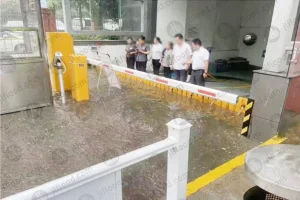
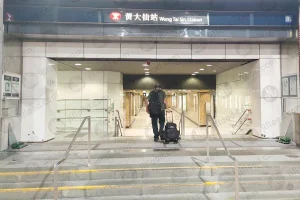
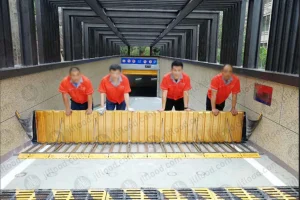
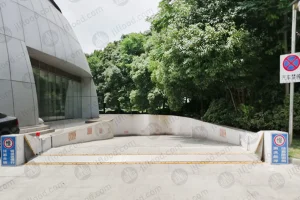
Below are our top four field-proven automatic hydrodynamic barrier configurations deployed across critical utility portals, metro access points, and underground facility ramps.
Worldwide municipal engineering standards are rapidly moving away from active motorized flood walls toward buoyancy-driven hydrodynamic mechanisms. Climate statistics show that 87% of municipal flood events cause immediate grid outages or electrical control failures. Passive flood barriers deploy automatically via pure hydraulic displacement, eliminating single-point electrical dependency.
Major consulting engineering offices in Cairo and Alexandria (such as Dar Al-Handasah and ECG) are standardizing flood mitigation specifications for high-density assets. Property insurers now demand certified hydrostatic seal compliance before issuing policy coverage for subterranean equipment rooms and commercial underground garages.
In Egypt’s coastal and arid environments, floodwaters carry fine desert silt, sand, and highly corrosive sea salts. Barrier designs must incorporate self-cleaning bottom track channels and marine-grade anodized aluminum (6063-T6) combined with EPDM weather-resistant sealing gaskets that resist UV degradation under intense North African sunlight.
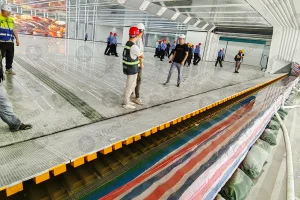
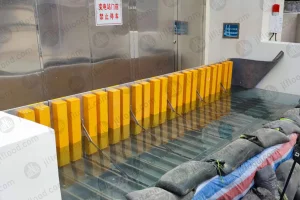
In flood control engineering, theoretical finite element models must be verified through real-world hydraulic testing. A flood gate is a critical life-safety barrier; minor seal imperfections or panel deflections under water pressure can result in catastrophic structural failure. Our manufacturing facility houses a state-of-the-art Full-Scale Hydraulic Water Testing Pool engineered to simulate dynamic pressure heads, wave action, and rapid water inundation.
| Test Parameter | Verification Standard | Engineering Objective for Egypt Projects |
|---|---|---|
| Hydrostatic Pressure Deflection | Tested at 1.25x Design Water Level (Up to 2.5m Head) | Ensures zero structural panel warping or permanent frame deformation under maximum inundation levels. |
| Buoyancy Trigger Sensitivity | Water Inflow Rate ≥ 15 mm/min Trigger Threshold | Guarantees gate panel fully elevates and locks in place before water overtops the threshold boundary. |
| EPDM Rubber Gasket Leakage Rate | < 0.05 Liters/Hour per Meter of Frame Perimeter | Achieves near-perfect hydrostatic sealing to protect sensitive electrical equipment, high-voltage transformers, and server rooms. |
| Sediment Clogging & Silt Resistance | Simulated Silt Load Test (2000 ppm Fine Sand Mixture) | Verifies that bottom chamber drainage channels self-flush and deploy reliably in desert/coastal flash floods. |
| Dynamic Heavy Vehicle Load Test | AASHTO HS-20 / EN 124 Class D400 (40-Ton Axle Load) | Ensures surface plates withstand daily heavy truck traffic across warehouse driveways and underground garage ramps. |
Every customized flood barrier ordered for Egyptian commercial or municipal projects undergoes individual hydrostatic pool testing prior to export packing. Video documentation, third-party inspection certificates (SGS/TÜV), and factory acceptance test (FAT) reports are supplied directly with shipping documentation.
Sourcing wholesale automatic flood barriers directly from our Chinese manufacturing headquarters offers Egyptian contractors, EPC developers, and distributors an unmatched balance of technological sophistication and cost efficiency:
Our fully automated manufacturing lines utilize multi-axis CNC laser cutters and robotic welding stations, maintaining sub-millimeter tolerances on long-span aluminum gate structures up to 60 meters wide.
By procuring raw structural aluminum extrusions (6063-T6) and 304/316 stainless steel components in bulk, we lower unit production costs by 30-40% compared to European manufacturers, passing these savings directly to Egyptian procurement clients.
Leveraging established Maritime Silk Road shipping routes, we offer accelerated container transit times directly to Ain Sokhna Port, Alexandria Port, and Port Said, complete with full customs clearance documentation and Form A certificates.
Our specialized flood protection models are custom-engineered to solve specific civil layout challenges found in modern Egyptian construction projects:
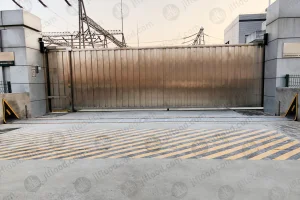
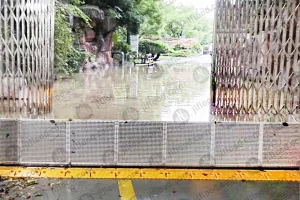
High-voltage electrical transformer rooms require uncompromised perimeter sealing. Our Substation Gate Automatic Flood Barriers feature stainless steel embedded frames flush with vehicle access roads. In the event of flash torrential rain, incoming surface water deploys the panel, preventing short circuits and multi-million-dollar power grid downtime across central government districts.
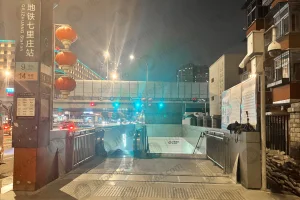
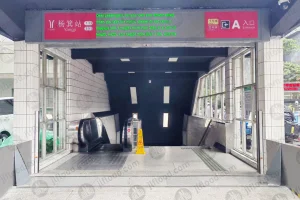
Subway station entries, emergency pedestrian exits, and ventilation shafts require fail-safe flood gates. Our Embedded & Surface-Mounted Metro Flood Barriers integrate smoothly with public architectural paving, remaining hidden flush beneath foot traffic until floodwaters enter the trigger chamber, creating an instantaneous water-retaining wall up to 2.0 meters high.
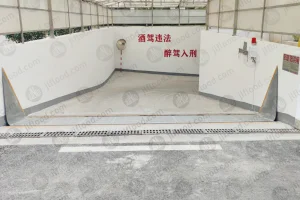
Commercial parking garages along the Corniche and Alexandria industrial zones face sea-level surge risks. Our heavy-duty driveway flood gates endure 40-ton vehicle rollover loads daily while remaining instantly reactive to rising tides or intense coastal rainstorms.
Luxury resorts in Sharm El Sheikh and Hurghada are vulnerable to sudden mountain flash flood runoffs down local wadis. Compact flip-up and modular hydrodynamic barriers safeguard resort power plants, desalination equipment rooms, and underground storage areas.
Explore our comprehensive range of hydrodynamic automatic flood gates, flip-up barriers, and self-closing flood protection systems designed for diverse civil engineering requirements.
Comprehensive technical answers regarding civil integration, hydrostatic testing, shipping logistics, and performance in Egyptian climate conditions.
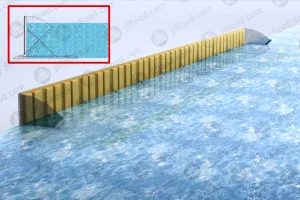
The system operates on Archimedes’ principle of buoyancy and hydrostatic pressure balance. The barrier door panel rests flush inside an embedded underground stainless steel chamber during normal conditions. When flash flood surface water enters the front intake grates, water fills the bottom chamber, causing the buoyant hollow aluminum panel to float upwards automatically. As the water level rises further, the hydrostatic head pressure forces the panel firmly against vertical frame wall seals, locking it into position. No sensors, motors, backup generators, or human operator commands are required.
Every customized barrier unit is tested in our factory hydraulic test tank before export. We issue a comprehensive Factory Acceptance Test (FAT) report that includes: 1) Hydrostatic seal leakage rate measurement under maximum water head; 2) Buoyancy activation speed log; 3) Structural deflection report verified by finite element analysis (FEA); and 4) High-definition video recordings of the automated test cycle. Third-party inspection witnessing by SGS, Bureau Veritas, or TÜV can also be arranged upon request prior to shipping from China.
Our embedded chamber profiles incorporate a self-flushing design equipped with sloping bottom mud gutters and integrated sediment drainage outlets. Dust and sand that enter during dry periods are easily flushed out using low-pressure municipal hose washing during quarterly maintenance. Furthermore, the EPDM seals feature multi-lip wiper blades that continuously clear debris from frame sealing faces during panel elevation.
Standard manufacturing production cycles range from 15 to 25 calendar days depending on total order volume and span dimensions. Direct ocean freight shipping from Ningbo or Shanghai port to Ain Sokhna Port or Alexandria Port typically takes between 18 and 24 shipping days. Expedited air freight is available for critical spare components or compact door barrier kits.
Yes. We provide complete AutoCad civil interface drawings, structural rebar integration detail sheets, step-by-step English installation manuals, and 3D video tutorials for local Egyptian civil contractors. For major infrastructure contracts, our senior engineering specialists can be dispatched on-site to oversee embedded frame positioning, concrete pouring, and final hydrostatic testing.
Whether you are designing a high-voltage substation in the New Administrative Capital, retrofitting a metro station entrance in Cairo, or securing a coastal commercial garage in Alexandria, our engineering team is ready to deliver tailored hydrodynamic flood protection solutions.


