
Hydrodynamic, Zero-Power Automatic Flood Barrier Engineering for Electrical Grid Reliability, Petrochemical Enclosures, and Heavy Industrial Facilities Across Greater Houston & Texas Gulf Coast.
Pre-engineered automatic flood defense assemblies tested for extreme flash flooding, high-tonnage vehicle drive-over, and blackout conditions.
The Greater Houston metropolitan area presents one of North America's most challenging hydrological environments for electrical power utilities, transmission grid operators, and heavy industrial facilities. Characterized by low-lying topography, clay-rich soil with poor infiltration capacity, high groundwater tables, and proximity to the Gulf of Mexico, Houston is uniquely exposed to catastrophic surface water inundation. Extreme weather events such as Hurricane Harvey, Tropical Storm Allison, and recurrent tropical mesoscale convective systems have repeatedly demonstrated that standard flood-control measures—such as manual sandbagging, temporary panel assembly, or electromechanical flood pumps—fail when municipal infrastructure is compromised.
In high-voltage electrical substations (spanning 69kV to 500kV distribution networks), water ingress into control enclosures, transformer bays, cable trenches, and switchgear vaults results in immediate phase-to-ground arcing, catastrophic transformer fires, extended grid outages, and tens of millions of dollars in asset destruction. Under the guidelines established by the Federal Energy Regulatory Commission (FERC), NERC CIP-014 physical security standards, and IEEE 693 seismic/structural recommendations, substation facilities in flood-prone zones (FEMA 100-year and 500-year floodplains) must maintain uncompromised continuity of operations. This whitepaper analyzes the deployment of hydrodynamic automatic flood barriers engineered directly for Houston's electrical infrastructure, detailing manufacturing procurement, mechanical operation, and direct factory-to-site wholesale logistics.
Eliminating human error, electrical reliance, and sensor failure during hurricane-induced power grid blackouts.
Unlike electromechanical gates that require AC power, backup generators, optical water level sensors, or PLC controllers—all of which are vulnerable to electrical short circuits during severe storms—the Junli Hydrodynamic Barrier operates purely on fluid dynamics and Archimedes' principle of buoyancy.
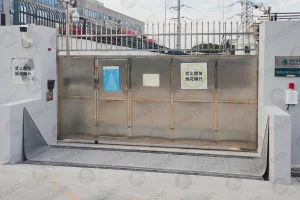
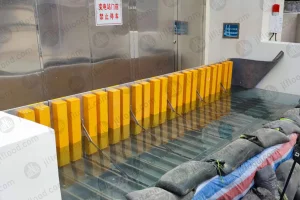
The barrier leaf sits completely flush inside a subterranean stainless-steel embedded frame flush with the substation driveway. As surface runoff fills the inlet basin, incoming water enters the bottom retention chamber via intake grates. Hydrostatic pressure and natural buoyancy automatically float the aviation-grade extruded aluminum panel upwards, rotating on a reinforced hinge line. As water levels rise, the hydrostatic head forces the barrier leaf tightly against internal EPDM vulcanized sealing gaskets, forming a continuous, self-tightening water seal up to 2.0 meters of retaining height.
Manual Stop-Logs & Demountable Barriers: Require 2 to 4 hours of dedicated utility crew labor to transport and bolt into place prior to a storm. In flash flood conditions along Houston's Buffalo Bayou or Brays Bayou, floodwaters rise in minutes, making manual assembly impossible due to flooded access roads.
Motorized Overhead or Sliding Gates: Rely on motorized winches, hydraulic rams, or utility grid power. During hurricane landfalls in Texas, grid power is lost early, standby generators frequently fail due to fuel contamination or air intake flooding, rendering motorized gates completely non-functional when needed most.
| Performance Metric | Junli Hydrodynamic Barrier (Factory Wholesale) | Electromechanical Sliding Gates | Manual Aluminum Stop-Logs |
|---|---|---|---|
| Power Consumption | 0kW (100% Passive Hydro-Buoyant) | 3.5kW - 11kW (Requires UPS/Genset) | 0kW (Manual Deployment) |
| Response Time | Immediate (<0.5 Seconds on Ingress) | 2 to 5 Minutes (If Power Available) | 2 to 6 Hours (Requires On-Site Crew) |
| Vehicle Load Rating | AASHTO HS-20 / H-20 Heavy Transformer Rig | Limited Drive-over Capacity | Requires Clear Ground Driveway |
| Maintenance Overhead | Minimal (Annual Debris Flush & Seal Check) | High (Motor Servicing, Hydraulic Oil) | Medium (Storage Rack Audits & Gaskets) |
| Corrosion Resistance | Fluorocarbon Coated 6063-T6 / SUS316 | Standard Painted Carbon Steel | Anodized Structural Aluminum |
Strict structural verification, seismic resistance, and hydrological flow modeling for procurement managers.
Fully compliant with the American Society of Civil Engineers (ASCE 24-14) standard for Flood Resistant Design and Construction. Engineered to withstand hydrodynamic impact loads, floating debris strikes, and hydrostatic pressure loads equal to 150% of maximum design flood elevation (DFE).
Substation perimeter barriers installed in electrical distribution zones must maintain structural integrity under seismic accelerations. High-tensile 6063-T6 aluminum panel extrusion ensures zero structural distortion during ground motion events alongside heavy vehicular loads.
Greater Houston’s coastal air carries high salt concentration and industrial airborne contaminants from the Houston Ship Channel. Junli barrier frames utilize SUS316 stainless steel hardware, EPDM synthetic rubber seals, and fluorocarbon thermosetting coatings for 25-year anti-salt fog endurance.
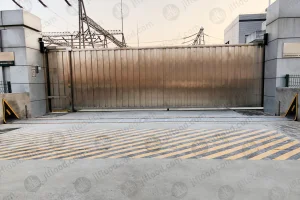
1. CenterPoint Energy & Regional Distribution Substations: High-voltage transformers (345kV/138kV) located near Greens Bayou and White Oak Bayou require clear driveway spans ranging from 4 meters to over 12 meters. Embedded multi-panel hydrodynamic gates deliver flush, zero-impedance driveway entry for heavy equipment maintenance trucks while providing instant 1.5m flood protection during torrential downpours.
2. Petrochemical Refinery Substations (Baytown, Pasadena, Deer Park): In chemical processing and refining infrastructure, floodwaters carrying hydrocarbons create hazardous, flammable surface runoff. Junli supplies specialized chemical-resistant EPDM and Viton fluororubber seal gaskets designed to prevent hazardous fluid intrusion into low-voltage switchgear rooms.
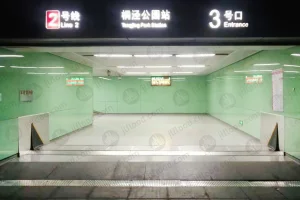
3. Houston METRO Rail Traction Substations: Urban light rail power distribution buildings situated in downtown Houston feature low kerb thresholds. Custom flip-up and automatic embedded barriers shield critical traction power convertors from street-level urban runoff and flash floods without disrupting pedestrian rights-of-way.
How sourcing directly from Junli’s manufacturing facilities saves 30% to 50% on capital expenditure while maintaining top engineering quality.
As an established high-tech engineering enterprise specializing in civil defense and hydraulic barriers, Nanjing Junli Technology Co., Ltd. operates full-scale automated CNC machining, robotic laser welding, vulcanized sealing extrusion, and structural pressure-testing facilities.
By eliminating intermediary brokers, US local distributors, and multi-tier trading markups, Houston EPC contractors, utility engineers, and commercial builders can procure factory-direct barrier systems custom-engineered to exact opening dimensions. Every unit undergoes rigorous hydrostatic seal testing in our 1:1 scale hydraulic test pool prior to export packaging.
Navigating global supply chain logistics requires robust export packaging and expedited sea-freight routing. Junli maintains dedicated container shipping channels directly to the Port of Houston (Barbours Cut / Bayport Terminals), ensuring seamless customs clearance and door-to-project delivery across Harris, Fort Bend, and Montgomery counties.
Send us your clear opening dimensions, required retaining height, and site kerb photos. Our engineering department returns complete shop drawings, hydro-pressure load calculations, and CIF Houston wholesale quotes within 24 hours.
Contact Engineering Team for QuoteCombining passive mechanical reliability with real-time IoT monitoring for smart city resilience.
While mechanical deployment requires no electrical power, optional non-contact inductive sensors send instantaneous deployment signals to utility SCADA control centers, alerting grid managers when a substation perimeter has engaged flood defense mode.
Integrating surface water runoff velocity data with local NOAA weather feeds, enabling predictive maintenance schedules and debris clearance alerts prior to named storm systems making landfall along the Texas coast.
Built with 100% recyclable structural aluminum alloy profiles and non-toxic EPDM compounds, meeting corporate ESG sustainability goals for power utilities and municipal authorities committed to climate resilience.
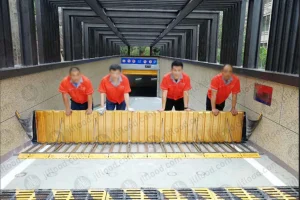
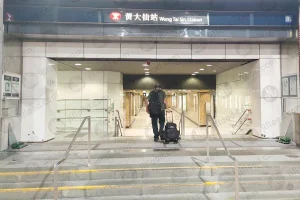
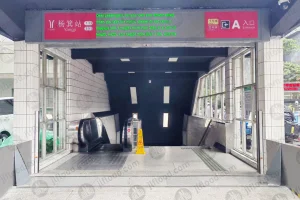
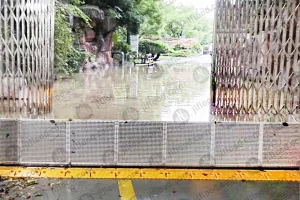
Explore our specialized range of hydrodynamic, automatic, and embedded flood barriers available for direct wholesale supply.
Expert answers addressing civil integration, load ratings, shipping lead times, and warranty guarantees.
The barrier panel is housed inside a recessed, concrete-embedded foundation basin flush with the driveway floor. Rising surface floodwater enters the basin through stainless-steel inlet grates, generating immediate buoyancy and hydrostatic force underneath the panel. This fluid pressure automatically pivots the panel upward, locking it securely against side seals. The system requires zero electricity, zero sensor signals, zero batteries, and zero human intervention, ensuring 100% operational reliability during severe grid blackouts.
Yes. Our heavy-duty embedded models (such as the Hm4d series) are structurally engineered to meet AASHTO HS-20 / H-20 loading standards (capable of supporting 32,000 lbs per axle load). Internal structural ribbing and aviation-grade 6063-T6 aluminum extrusions allow heavy low-boy transport trailers, transformer installation cranes, and utility service trucks to drive smoothly over the barrier top plate without causing deformation or seal misalignment.
For embedded hydrodynamic models, a concrete trench matching the frame depth (typically 150mm to 300mm) must be saw-cut across the entrance gateway, complete with a bottom drainage weep pipe or gravity drain outlet. Surface-mounted or flip-up door barriers require only a flat, level concrete threshold with expanding mechanical anchors. Junli provides full dimensional CAD templates, rebar clearance requirements, and concrete pouring notes to local Houston civil contractors before delivery.
Standard OEM manufacturing time is 15 to 20 days upon drawing approval. Direct ocean freight from our plant to the Port of Houston takes approximately 24 to 28 days via direct liner services. Complete door-to-jobsite delivery, including customs brokerage and inland trucking across Greater Houston, typically totals 45 to 50 days from order confirmation. Air freight options are available for urgent storm-repair emergency contracts.
Every barrier assembly comes with a standard 5-Year Factory Mechanical Warranty and a 10-Year Structural Integrity Guarantee. Each production batch is issued a Factory Water-Tightness Inspection Certificate, Hydro-Static Head Deflection Report, and Material Composition Certificate compliant with ASTM standards. Video evidence of full-scale pool testing for your specific order is archived and delivered with shipping documentation.


