
Explore our engineering-grade hydrodynamic flood barriers deployed across tier-1 metro lines and high-voltage power substations.
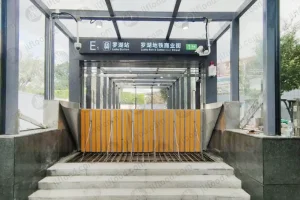
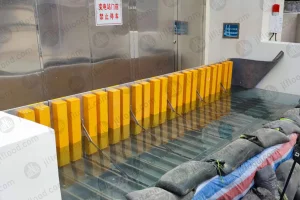
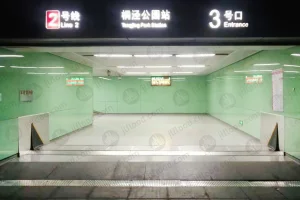
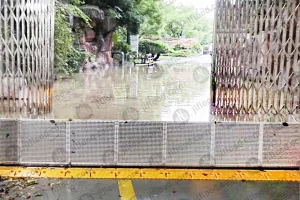
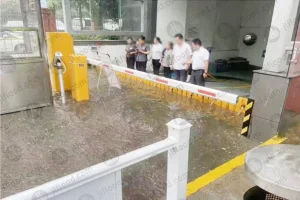
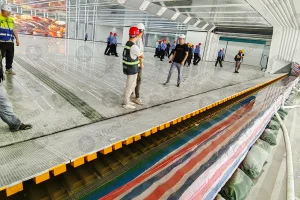
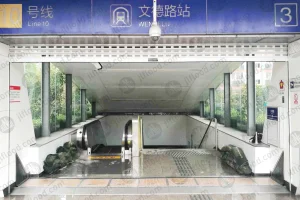
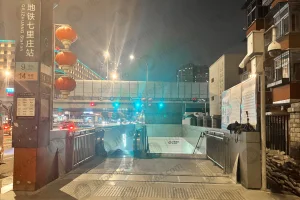
In an era defined by intensifying climate volatility, cloudburst rainstorms, and extreme typhoon events, metropolitan transit networks represent the absolute baseline of urban mobility and civil safety. Metro entrances, ventilation shafts, underground connection channels, and electrical substations typically sit at or below municipal grade level. When surface runoff exceeds urban stormwater drainage capacity, these openings turn into catastrophic conduits for water intrusion.
Historically, transit authorities relied on manual aluminum flood boards, sandbags, or electrically powered motorized gates. However, real-world forensic analysis of major flooding events across Asian and European transit systems reveals a crucial vulnerability: The Power-Failure Triad. Extreme urban floods are almost universally accompanied by regional grid blackouts, telecommunication loss, and severe municipal traffic paralysis. Manual deployment often fails because personnel cannot reach the site in time, while electrical systems fail due to early circuit trippings or backup battery exhaustion.
Key Engineering Insight: True disaster resilience requires absolute passive autonomy. An effective flood gate must operate on hydrostatic pressure and hydrodynamic buoyancy alone—eliminating human agency, sensors, wiring, external actuators, and power sources from the safety critical loop.
Leverages natural water buoyancy ($F_b = \rho_{water} \cdot V \cdot g$) to automatically raise the retaining panel as incoming water levels rise inside the foundation chamber. 100% operational during total power blackouts.
Constructed with high-strength structural steel frames rated for heavy vehicle transit (up to 30-40 tons axle load, compliant with AASHTO HS-20 / EN 124 standards), maintaining flush ground profiles for daily pedestrian and vehicular movement.
Engineered for clear opening spans from 2 meters to over 20 meters, with customizable retaining heights ranging from 500 mm to 2000 mm per leaf, seamlessly integrating into new civil builds or retrofit retrofittings.
Nanjing Junli Technology Co., Ltd. has established a proprietary engineering roadmap for flood control solutions. The structural mechanics of the Hydrodynamic Automatic Flood Barrier are built upon fluid dynamic balance, structural FEA elasticity, and high-durability EPDM sealing arrays.
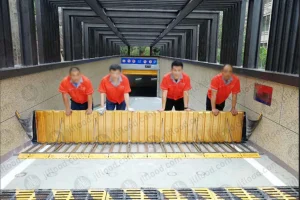
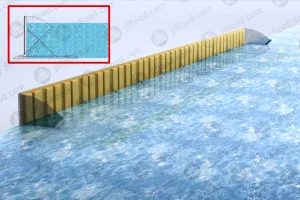
The unit consists of a recessed bottom tray (foundation basin), a hinged retaining door panel, and lateral seal side columns. In dry conditions, the top face of the door panel sits completely flush with the surrounding finished floor level. When localized flooding occurs, water flows into the chamber through targeted intake grates. As the chamber fills, the buoyant hollow structure of the panel generates upwards uplift. Once the water level reaches approximately 50 mm to 100 mm within the basin, the hydrostatic moment overcomes the structural resting weight, initiating automatic rotation around the primary pivot hinge.
As water continues to rise, the panel swings upward until reaching its design retention angle (typically 60° to 75° relative to horizontal). At maximum elevation, the hydraulic head pushing against the front surface of the panel forces multi-lip EPDM seals tightly against the stainless steel jambs. The higher the flood head rises, the greater the hydrostatic pressure exerted against the seals, creating a self-tightening sealing dynamic that virtually eliminates leakage.
| Technology Parameter | Junli Hydrodynamic Barrier | Motorized Electric Flood Gate | Manual Aluminum Demountable Dam |
|---|---|---|---|
| Trigger Mechanism | 100% Water-Power Buoyancy (Passive) | Water Sensor + Electric Motor | Manual Assembly by On-Site Staff |
| Operation During Blackout | Unaffected (No Electricity Required) | Fails unless UPS/Generator remains operational | Unaffected (Requires physical access) |
| Response Speed | Immediate (< 0.1s after water entry) | 30s to 120s sensor delay | 30 minutes to 2 hours manual labor |
| Drive-Over Traffic Load | Heavy-Duty (Up to 40-Ton Truck Load) | Medium to Heavy (Depends on frame) | None (Requires total threshold clearance) |
| Lifespan & Maintenance | 20+ Years (Stainless Steel / EPDM) | 8-10 Years (Motor/Cable wear) | 15+ Years (Subject to human storage damage) |
As a core high-tech manufacturer located in Nanjing, Jiangsu Province, Nanjing Junli Technology Co., Ltd. leverages China's ultra-dense industrial cluster for raw structural materials, precision metal fabrication, advanced elastomer vulcanization, and hydraulic testing infrastructures.
Engineering adaptation across diverse municipal assets and high-risk flood entry channels.
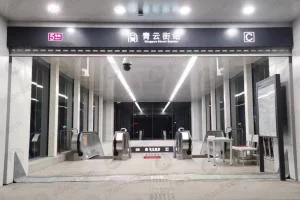
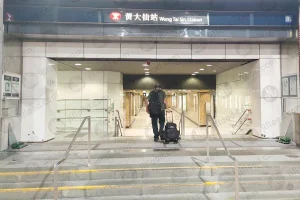
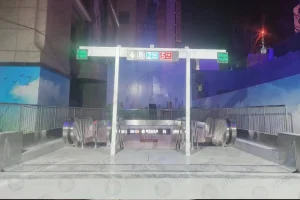
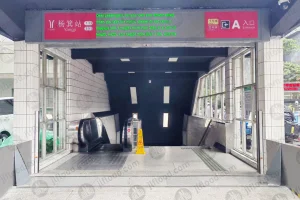
Installed flush at the top or landing of subway entrance staircases. The barrier remains invisible to thousands of daily commuters. During severe cloudbursts, incoming surface run-off triggers instant rising, protecting subterranean train platforms, electrical tracks, and ticketing halls from catastrophic water inundation (Proven across Guangzhou, Beijing, Dalian, and Hong Kong MTR lines).
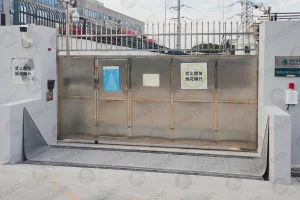
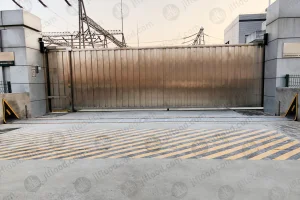
Substations house critical transformers, switchgears, and battery banks. Water ingress causes short circuits, catastrophic explosions, and multi-day grid blackouts. Junli substation gates provide perimeter protection around main access gates and cable trench entryways, operating reliably even if the substation loses total internal power.
Underground car parks present broad, sloping driveways that collect fast-flowing surface water. Surface-mounted or embedded flood barriers span wide ramp thresholds (6m to 20m+ multi-leaf arrays), tolerating heavy continuous vehicular traffic while guaranteeing zero-energy flood deployment.
Municipal underground walkways and underground shopping complexes represent complex civil air defense assets. Custom flip-up or hydrodynamic barriers prevent massive structural inundation, preserving emergency egress channels and structural integrity during extreme urban waterlogging events.
Purchasing authorities, OEM contractors, and municipal procurement officers must evaluate several critical structural variables when calculating project pricing. Flood barriers are highly engineered safety products calculated per linear meter and customized to clear width, retaining height, load ratings, and installation depth.
| Barrier Type & Specification Category | Standard Retaining Height | Estimated Wholesale Price Range (USD / Linear Meter) | Primary Application Profile |
|---|---|---|---|
| Surface-Mounted Hydrodynamic Barrier (Hm4d-0006E series) | 500 mm – 900 mm | $650 – $950 / meter | Retrofit metro entrance steps, commercial doorways, light vehicle entrances. |
| Embedded Heavy-Duty Hydrodynamic Gate (Hm4d-0006C series) | 600 mm – 1200 mm | $980 – $1,650 / meter | High-traffic subway entrances, underground parking ramps (Heavy vehicle rating). |
| Extreme Retaining Metro & Substation Barrier | 1200 mm – 2000 mm | $1,700 – $2,800 / meter | Critical grid substations, railway connection channels, high head flood risks. |
| Flip-Up Power-Free Automatic Barrier | 300 mm – 600 mm | $450 – $750 / meter | Equipment room doors, cable trenches, pedestrian entrances. |
*Note: Prices above represent baseline EXW/FOB China tier-1 project quotes. Final project quotes vary according to structural engineering calculations, custom dimensions, shipping logistics, and site-specific civil drawings.
In-depth responses to critical engineering, installation, and maintenance questions from international contractors and transit authorities.
The system works strictly on principles of fluid mechanics and buoyancy (Archimedes' Principle). The retaining door panel is housed flush within a recessed stainless steel foundation tray. When floodwaters reach the entrance threshold, water flows into the chamber through front inlet grates. The water creates upwards hydraulic buoyancy against the hollow structural panel, causing it to pivot upward around a stainless steel axle. As the water level rises, hydrostatic head pushes the panel securely against specialized multi-lip rubber gaskets, creating a watertight seal without electric motors, batteries, sensors, or human intervention.
Junli hydrodynamic barriers feature an integrated sediment management design. The bottom tray is constructed with smooth-sloped self-cleansing channels and sediment collection traps. Front intake grates block large debris (twigs, trash, large rocks). Fine silt that enters during a storm floats within the water volume and drains out naturally through bottom municipal drain outlets equipped with one-way check valves once the flood subsides. Annual inspection routines involve removing top maintenance covers and flushing out accumulated fine silt with a pressurized water hose.
Yes. Embedded heavy-duty models (such as the Hm4d-0006C series) are structurally reinforced with internal stainless steel I-beam webbing and high-tensile top treadplates. They are engineered to sustain wheel loads compliant with AASHTO HS-20/24 standards (axle loads up to 40 tons), making them completely safe for continuous transit by city buses, fire engines, and heavy delivery vehicles entering underground parking garages or municipal facilities.
We provide end-to-end technical support for global engineering tenders. This includes AutoCAD DWG structural profiles, 3D BIM/Revit modules, civil foundation embedment details, finite element analysis (FEA) structural deflection reports, and detailed English installation manuals. Our engineering team also offers custom CAD alterations to fit unique site kerb radii, threshold widths, and drainage conduit connections.
For cold-climate regions (such as Northern Europe, Canada, or Northern China), Junli offers optional low-wattage self-regulating electric heating cables (heat-tracing cords) embedded within the perimeter frame. These heating elements prevent ice formation inside the basin during freezing weather. Additionally, the EPDM rubber seals utilize synthetic elastomeric compounds tested to maintain elasticity down to -40°C.
Explore our full range of certified automatic self-closing gates, heavy-duty industrial barriers, and specialized transit station solutions.
Nanjing Junli Technology Co., Ltd. provides full engineering partnership services for municipal authorities, MEP design firms, and international general contractors. From site survey evaluation to custom structural calculations, BIM modeling, water-tightness pool verification, and global containerized shipping—our team ensures your flood protection infrastructure meets the highest safety standards.


