Select from our standard industrial-grade automatic flood barrier models engineered for rapid surface installation, deep ground embedding, and high-load civil transit protection.

An authoritative analysis of zero-power passive self-rising barrier systems, global procurement metrics, structural compliance, and manufacturing advantages from Chinese industrial clusters.
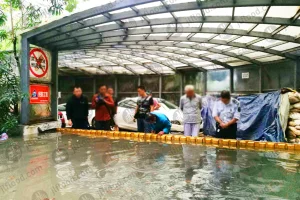
For decades, municipal flood mitigation relied on motorized flood gates, pneumatic seals, or manual sandbag deployment. However, empirical post-event analysis from severe typhoons and cloudburst events highlights a critical failure pattern: severe storm surges and flash floods are routinely accompanied by grid failures, electrical short circuits, and severe labor shortages.
When power is severed or sensors fail due to extreme submersion, electrically driven gates remain motionless. Manual barriers require human intervention hours before an event—a fatal requirement during sudden urban flash flooding. Consequently, modern infrastructure specifications are shifting aggressively toward passive hydrodynamic automatic flood control devices.
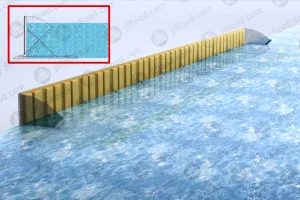
An automatic hydrodynamic flood barrier operates on fundamental physical principles: Archimedes’ principle of buoyancy and hydrostatic pressure differential. The gate assembly is embedded flush with the driving surface inside a stainless steel or heavy-duty structural frame basin.
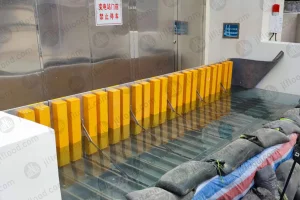
As surface run-off water overflows into the basin inlet, the buoyancy chamber fills automatically. The fluid displacement generates an upward mechanical force on the hollow-structure panel, causing it to pivot upwards. As the external water level rises, the hydrostatic pressure against the panel front creates a dynamic seal against the lateral frame gaskets, guaranteeing complete containment without human or electronic dependency.
China’s advanced metallurgical integration, automated precision welding, and comprehensive testing infrastructure have positioned Chinese manufacturers as the premiere global source for large-span hydrodynamic flood gates.
Chinese suppliers leverage direct access to high-strength marine-grade 6063-T6 aluminum extrusions and 304/316 stainless steel profiles. This raw material integration ensures superior yield strength capable of enduring wheel loads up to 45 tons (AASHTO HS-20 / Eurocode load standards) while maintaining zero structural deformation during daily traffic interaction.
Unlike Western niche fabricators offering restricted standard widths, Chinese factories operate extensive multi-axis CNC machining complexes. This enables scalable modular design—spanning clear opening widths from 1.5 meters for single doorways up to multi-leaf interconnected barrier arrays exceeding 100 meters for wide metro ramps.
Leading Nanjing and Jiangsu manufacturing hubs feature full-scale hydrostatic testing pools. Every custom order undergoes physical water-retaining verification, dynamic sealing integrity testing under head pressure, and cycle fatigue testing before export packaging, eliminating jobsite failure risk.
Understanding FOB, CIF, and OEM pricing structures for automatic flood gates allows international engineering consultants and buyers to optimize project budgets effectively.
| Device Type / Configuration | Retaining Height | Load Rating Class | Est. Wholesale Price (USD / Linear Meter) | Primary Application |
|---|---|---|---|---|
| Surface Installation (Light Duty) | 300mm – 600mm | Pedestrian / Light Car (3-5 Tons) | $450 – $750 / m | Storefronts, Commercial Doorways |
| Surface Installation (Metro / Heavy) | 600mm – 1000mm | Heavy Transit (20-30 Tons) | $750 – $1,200 / m | Subway Station Entrances, Plazas |
| Embedded Hydrodynamic Type | 500mm – 1200mm | Heavy Vehicle (30-45 Tons) | $950 – $1,650 / m | Underground Garage Ramps, Warehouses |
| Heavy-Duty Substation Security Barrier | 800mm – 1500mm | Perimeter Secure / High Pressure | $1,200 – $2,100 / m | Power Substations, Chemical Plants |
| Flip-Up Automated Hydraulic Gate | 600mm – 2000mm | Extreme Load / Custom Span | $1,500 – $2,800 / m | Coastal Basins, Infrastructure Culverts |
While initial capital expenditure (CAPEX) for automated hydrodynamic gates is higher than basic manual aluminum stop-logs, the TCO over a 10-year lifecycle is up to 65% lower. Eliminating recurring labor training expenses, annual emergency standby pay, power grid maintenance, and potential human failure during rapid-onset flood events yields immediate return on investment for asset managers.
Leading Chinese suppliers provide turnkey OEM manufacturing for international flood control brands, offering custom powder-coating colors, laser-etched agency logos, specialized EPDM rubber formulations for freezing or tropical environments, and complete BIM/CAD integration support for structural design teams.
Ensuring seamless integration with civil concrete works, municipal drainage systems, and international building codes.
Global engineering specifications require rigorous testing verification. Quality Chinese manufacturers engineer systems to comply with FM Approvals 2510, BS EN 13564 (Anti-flooding devices), and U.S. FEMA Technical Bulletin 3-93 for floodproofing non-residential structures.
An automatic embedded barrier relies on proper basin water management. Standard installation details mandate connecting the bottom embedded steel frame basin to the building’s storm drain network or sump pump pit via integrated 110mm/160mm outflow ports to clear residual rainwater post-event.
With zero motorized gearboxes, maintenance protocols are minimal. Quarterly inspections involve flushing debris from the basin floor with a standard water hose and checking the EPDM rubber seals for physical wear, reducing operational overhead for facilities managers.
Tailored engineering configurations designed specifically for high-risk urban access points.
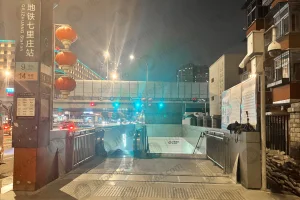
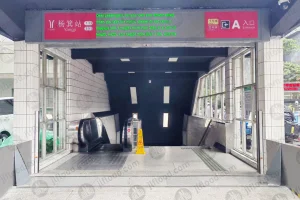
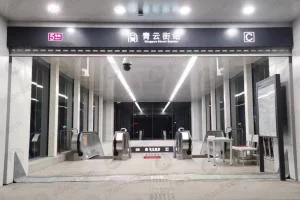
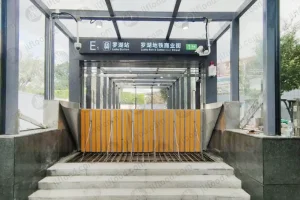
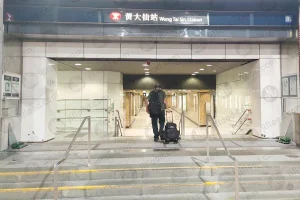
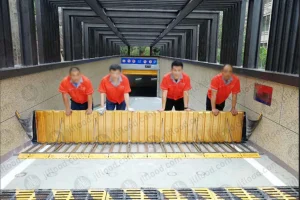
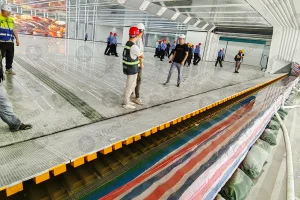
Subway stations act as massive urban funnels during torrential storms. Installing surface-mounted or semi-embedded automatic flood gates like the Hm4d-0006E at pedestrian station portals guarantees immediate water containment. When surface water reaches kerb-overflow levels, the barrier rises silently, protecting subterranean rail lines and passenger platforms from catastrophic flooding without blocking emergency egress.
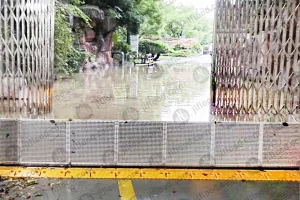
Substations, transformer vaults, and cable trenches require continuous 100% dry environments. A single water ingress incident can cause grid-wide blackouts costing millions. Specialized non-conductive, corrosion-resistant flood gates installed at substation perimeter gates provide continuous passive defense, sealing perimeter access points against flash runoff.
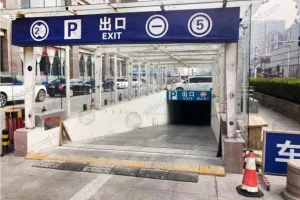
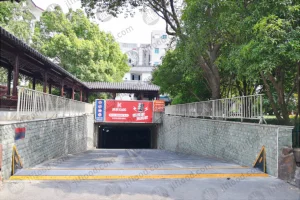
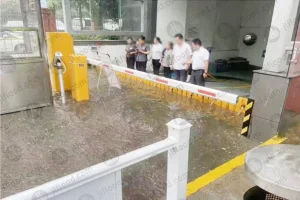
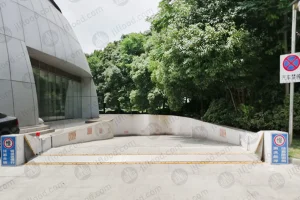
Basement parking facilities represent significant financial liability during severe weather. Embedded hydrodynamic flood barriers are installed flush at the crest or base of ramp slopes. Daily traffic drives smoothly over the recessed stainless steel top plate. During cloudbursts, incoming surface run-off triggers automatic rising, preventing water entry into subterranean car parks.
Industrial logistics centers, underground storage vaults, and civil defense shelters require heavy-duty drive-over solutions capable of supporting 45-ton container trucks. Modular hydrodynamic flood gates provide wide-span protection across loading dock driveways, securing supply chain infrastructure against severe weather interruptions.
How smart city integration and advanced material science are reshaping flood protection systems globally.
While activation remains 100% mechanical and power-free, modern automatic barriers are increasingly integrated with low-power NB-IoT (Narrowband IoT) sensors. These sensors transmit real-time deployment notifications, water height metrics, and basin silt accumulation alerts to municipal smart city management dashboards without compromising activation reliability.
To reduce barrier panel mass and accelerate hydrodynamic buoyancy response, research is transitioning toward carbon-fiber-reinforced polymers (CFRP) and ultra-lightweight anodized aluminum alloys. Lighter panel weight enables faster lifting speeds under minimal water entry depth, expanding protection performance.
Global insurance institutions and municipal zoning authorities are increasingly mandating automatic flood barrier installation as a prerequisite for commercial property underwriting in 100-year flood zones. Passive automated systems are fast becoming the global standard over manual emergency deployments.
In-depth technical responses regarding installation, operational safety, lead times, and customization.
Automatic hydrodynamic flood barriers require zero electrical power, batteries, sensors, or human operation. The system relies entirely on fluid buoyancy and hydrostatic pressure. When surface water flows into the ground chamber, the buoyant panel naturally rises. As water depth increases, hydrostatic force presses the panel firmly against the side frame seals, ensuring 100% operation even when local electrical grids fail completely.
Standard heavy-duty embedded hydrodynamic flood gates (such as the Hm4d series) are structural alloy assemblies rated for wheel load capacities ranging from 20 tons to over 45 tons. This conforms to AASHTO HS-20 heavy truck loading specifications, allowing heavy buses, fire engines, and delivery trucks to drive over the flush-mounted top panel daily without causing structural deflection or seal degradation.
The entrance inlet of the foundation chamber is engineered with integrated stainless steel debris grates and continuous filtration meshes. Small silt accumulations are washed away via the integrated bottom drainage collection port connected to the facility's drainage network. Quarterly maintenance simply involves rinsing out accumulated sediment with a standard water jet.
Yes. Chinese manufacturers specialize in modular interlocking designs. While single panel spans typically range from 1.5m to 6.0m for structural rigidity, multiple modular units can be joined seamlessly using intermediate vertical support posts or sync-linked mechanical hinges to cover entrance spans exceeding 50 to 100 meters across logistics hubs or wide metro plazas.
Standard production lead times for custom-engineered automatic flood gates range from 15 to 25 business days following CAD approval. Products are packaged using reinforced ISPM-15 compliant export wooden crates with moisture-barrier wrapping, protective corner guards, and labeled civil anchor hardware ready for immediate containerized sea freight (FCL/LCL).
Explore our extended range of power-free self-closing gates, embedded metro barriers, and modular hydrodynamic systems.