
Field-proven flood control barriers deployed across 30+ metro systems, substations, and critical civil defense assets worldwide.
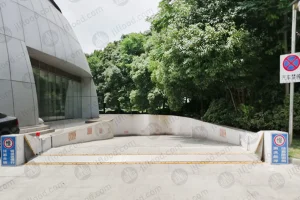
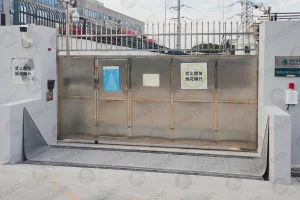
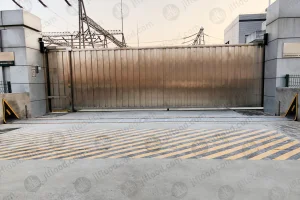
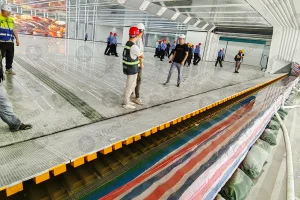
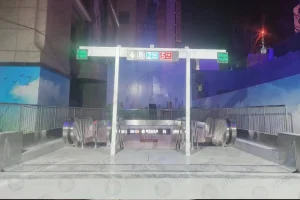
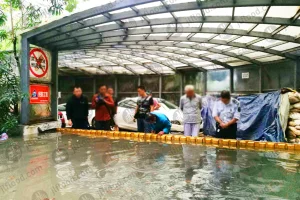
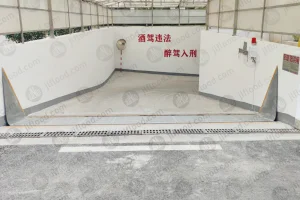
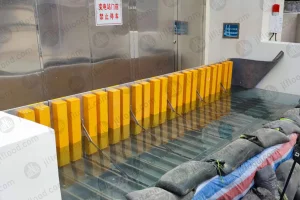
In an era characterized by intensifying climate volatility, urban rail transit networks represent both the critical pulse of global megacities and their most hydro-vulnerable infrastructure. Municipal transit authorities, EPC contractors, and civil engineering consultants across Asia, Europe, the Americas, and the Middle East are re-evaluating baseline flood defense strategies. The primary vulnerability of underground metro systems—including station portals, pedestrian connection channels, air shafts, and cable trenches—lies in sudden, unannounced surface runoff surges during cloudbursts, typhoons, and flash flooding events.
Historical reliance on manual deployment systems (such as sandbags, modular aluminum stoplogs, or electrically actuated barrier gates) has repeatedly failed during critical urban crisis scenarios. Manual barriers suffer from operational latency, workforce mobilization delays during off-peak hours, and human error. Electrical gates, conversely, suffer from single-point failure vectors: grid blackouts, control sensor short-circuits caused by initial water ingress, and mechanical drive binding under debris loading.
E-E-A-T Technical Baseline: Modern metro flood resilience specifications increasingly demand passive, hydrodynamic, self-rising flood gates that operate autonomously without human intervention, external electric power, or sensor logic circuit inputs. Nanjing Junli Technology Co., Ltd. leads this global paradigm shift, manufacturing fully integrated hydrodynamic flood control barriers engineered for 20+ year asset lifespans under severe fatigue and environmental conditions.
Eliminates dependence on electrical grid integrity during extreme storm events when sub-station trips and power outages are most likely to occur.
Installs completely level with pedestrian footpaths and vehicular entrance ramps, causing zero obstruction during normal transit operations.
Engineered to withstand daily vehicular traffic up to load classes EN124 D400 and E600 for multi-purpose transit logistics portals.
The core fluid mechanical principle governing Junli’s hydrodynamic automatic flood gates is hydrostatic buoyancy balance coupled with localized pressure equalization. The barrier assembly consists of a structural recessed foundation frame embedded flush into the entrance threshold, a high-strength buoyant door leaf hinged internally, and dual EPDM/Fluororubber compression seal arrays.
When surface water runoff reaches the threshold level, fluid enters the foundation recess via integrated flow-intake grilles. As the fluid level inside the bottom chamber rises, two hydro-mechanical vectors trigger automatically:
This dual action locks the barrier into position within seconds of water arrival. As floodwaters recede, fluid drains out of the foundation chamber via specialized check-valves or sump linkages, allowing the door leaf to lower back smoothly into its housing without damaging internal components.
Door leaf sits perfectly flush ($0^\circ$ incline) with the finished floor level. Stainless steel (SUS304/SUS316) top cover plates allow pedestrian foot traffic and emergency service vehicles to cross seamlessly. Debris seals prevent sand and litter accumulation in the tray.
Water enters the baseline tray. Buoyancy forces lift the panel edge automatically ($0^\circ \to 90^\circ$). End-wall side rubber seals engage against side-wall abutments, forming a continuous water-retaining envelope rated to specific hydro-head levels (e.g., 600mm to 2000mm retention height).
Industrial metro barrier systems are exposed to harsh urban micro-environments, including de-icing salts, dynamic vibration from passing rail cars, heavy wheel impact loads, and biological fouling. The technical roadmap implemented by Nanjing Junli Technology utilizes advanced material matrices to ensure structural integrity over a 25-year service life.
| Component / Structural Subsystem | Standard Material Matrix | Heavy-Duty Coastal / High-Corrosion Spec | Engineering Standard Compliance |
|---|---|---|---|
| Main Structural Frame | Structural Carbon Steel Q235B / Hot-Dip Galv. | Austenitic Stainless Steel SUS304 / SUS316 | GB/T 700, EN 10025-2, ASTM A36 |
| Buoyant Door Leaf Panel | Aviation Grade Aluminum Alloy 6063-T6 / 6082-T6 | Marine Grade Aluminum 5083-H116 / SUS316 Panel | GB/T 6892, ASTM B221, EN 755-2 |
| Primary Sealing Gaskets | Triple EPDM Synthetic Rubber Extrusion | Fluororubber (FKM) / UV-Resistant Silicone Array | ISO 3302-1, ASTM D2000 |
| Hinge Pins & Mechanical Fasteners | Stainless Steel 304 (A2-70) | Stainless Steel 316 / Duplex 2205 (A4-80) | ISO 3506-1, DIN 931 |
| Foundation Recess Box | 2.0mm - 4.0mm Galvanized Steel Structural Frame | Stainless Steel SUS304 Embedded Frame | JT/T 1002-2015 Metro Infrastructure Standard |
When procurement managers, civil consultants, and B2B buyers query for "China Flood Barrier For Metro Pricelist & Quotes", pricing clarity relies on several critical structural and customized parameters. Because mass transit portals range from narrow 1.5-meter pedestrian staircases to wide 12-meter dual-lane vehicle access ramps, flood barriers are quoted based on modular width ($W$), retaining height ($H$), structural load rating, and environmental material selection.
In B2B contract manufacturing and OEM project delivery, flood barrier pricing consists of three primary component cost layers:
Indicative Budgetary Quotation Spectrum (FOB China Port):
• Standard Pedestrian Metro Entrance Barrier (600mm Retaining Height): $450 – $750 per Linear Meter.
• Heavy-Duty Embedded Hydrodynamic Barrier (1000mm Retaining Height, Vehicle Load): $850 – $1,400 per Linear Meter.
• Specialized Substation & Cable Trench Barriers (Model HM4E-006C / HM4D-0006C): Project-based engineered quotes starting from $1,200 – $2,500 per complete module assembly.
*Note: Final B2B volume pricing fluctuates based on steel/aluminum spot raw material indices, customization level, and total tender scope.
Procurement audits demonstrate that investing in high-grade hydrodynamic automatic barriers delivers superior ROI compared to both traditional manual sandbagging and complex electrical motorized barriers:
| Evaluation Parameter | Junli Hydrodynamic Automatic Gate | Manual Stoplog / Sandbag Systems | Motorized Electric Gate Systems |
|---|---|---|---|
| Initial Capital Expenditure (CapEx) | Moderate ($$$) | Low ($) | High ($$$$) |
| Annual Operational & Maintenance (OpEx) | Near Zero (Visual Inspection Only) | High (Repetitive Labor & Storage) | High (Motors, Sensors, Battery Backup) |
| Deployment Latency | 0.1 seconds (Instantaneous) | 30 – 120 minutes (Labor Dependent) | 2 – 5 minutes (Power Dependent) |
| Blackout Vulnerability | 100% Immunity (Power-Free) | 100% Immunity | High Risk (Requires UPS/Genset) |
| 20-Year Life Cycle Cost | Lowest overall total expenditure | Extremely High (Labor accumulation) | High (Electronics replacement cycles) |
Nanjing Junli Technology Co., Ltd. has established a formidable engineering track record, delivering tailored flood protection solutions for complex urban environments across major metropolitan rail transit systems. Key application scenarios include:
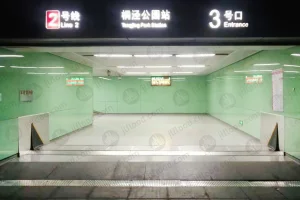
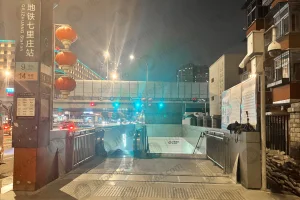
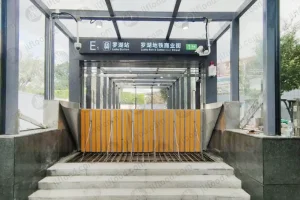
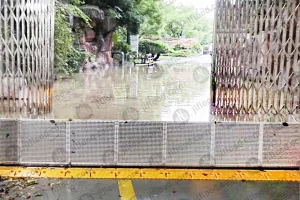
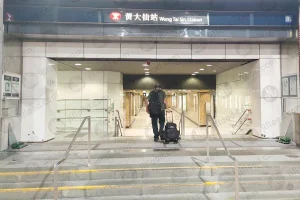
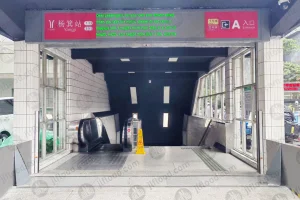
High-density urban interchange stations experience extreme foot traffic. Junli installed flush-mounted automatic hydrodynamic flood barriers across main ground portals. During severe seasonal typhoons (including Typhoon Bebinca and Typhoon Haikui), the barrier deployed without power, completely protecting station escalators and subterranean concourses from devastating inundation.
Coastal metro lines face combined flood risks from cloudbursts and seawater storm surges. Customized embedded heavy-duty automatic flood gates (Model HM4E series) were manufactured and integrated into connection channels and equipment vaults, featuring high-salinity corrosion resistance coatings and reinforced structural ribs.
Substations powering metro traction systems require absolute dry-zone protection. Junli designed specialized self-opening and closing substation gate barriers (Hm4d-0006C series) that safeguard transformer bays and cable trenches from surface flash floods without interfering with utility maintenance vehicles.
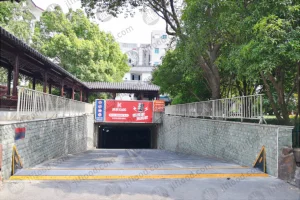
Underground parking ramps connected directly to metro concourses present significant back-water flood risks. Junli’s heavy-duty flip-up and hydrodynamic ramp gates protect commercial real estate complexes, shopping malls, and civic parking hubs across Beijing, Suzhou, Shenzhen, and international export sites.
Overseas procurement directors and municipal consultants must satisfy rigorous localized building codes and civil engineering standards. Nanjing Junli Technology supports global clients with an end-to-end engineering export framework:
Complete 2D/3D CAD section drawings, rebar clearance templates, concrete recess dimensions (C30/C40 requirement notes), and drainage connection details provided in English for local architectural integration.
100% of factory production units undergo full-scale hydrostatic tank pressure testing prior to export dispatch. Water tightness, seal deflection, and passive lifting speeds are certified in factory acceptance test (FAT) reports.
Export-ready fumigated wooden crate packaging, containerized sea freight logistics support, spare seal maintenance kits, and remote commissioning assistance via dedicated engineering teams.
Direct technical answers addressing hydraulic mechanics, civil installation, maintenance, and ordering procedures.
Explore specialized automatic flood barrier models, flip-up barriers, and heavy-duty embedded designs.

Request customized CAD section drawings, engineering compliance documentation, or an immediate B2B project price quotation from Nanjing Junli Technology Co., Ltd.


