
Explore our primary range of hydrodynamic automatic flood barriers, metro-type emergency gates, and embedded water-retaining structures manufactured in our state-of-the-art facility in China.
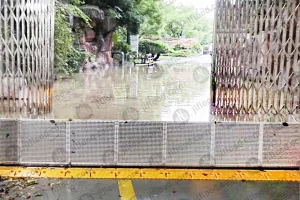
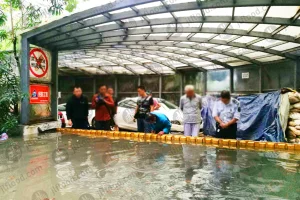
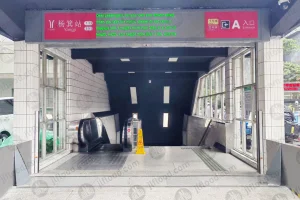
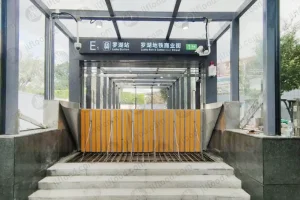
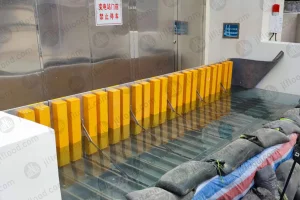
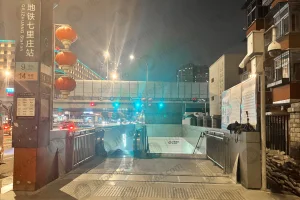
The global climate crisis has fundamentally shifted civil engineering paradigms from reactive flood response to proactive, autonomous flood resilience. Urban waterlogging, triggered by short-duration, high-intensity rainfall events (microbursts), poses an unprecedented threat to subterranean infrastructure, commercial real estate, underground parking networks, metro transit lines, and electrical distribution substations. According to recent municipal risk assessments, over 78% of flood-related structural losses in dense urban centers occur due to delayed deployment of manual barriers or electrical component failures in automated pump systems during flash floods.
As municipal authorities enforce stringent civil defense codes and building standards worldwide—such as ISO 22315 for societal security and local flood plain management directives—property developers, engineering procurement contractors (EPCs), and municipal infrastructure authorities are mandating the integration of passive hydrodynamic automatic flood barrier systems. These system designs eliminate human operational dependency, electrical grid vulnerability, and mechanical sensor latency.
Flash floods often strike during nighttime or holidays when security and maintenance crews are unavailable. Passive self-rising barriers react dynamically to rising water levels within seconds, deploying 24/7/365 without human oversight.
Extreme typhoon and rainstorm events routinely disable municipal electricity grids and backup diesel generators. By operating purely on buoyancy and hydrostatic leverage, hydrodynamic flood gates function flawlessly during total power blackouts.
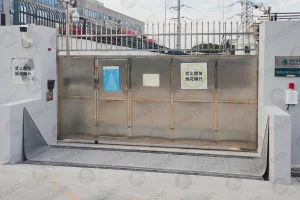
When dry, embedded automatic flood gates rest completely flush within the driveway or threshold concrete frame, allowing unhindered passage of heavy vehicular traffic, emergency vehicles, and pedestrians without compromising aesthetic design.
As the global nexus of advanced industrial manufacturing and infrastructure development, China has developed an unmatched industrial ecosystem for structural water-retaining equipment. China-based manufacturers lead the world in custom engineering, material science, and large-scale industrialization of hydrodynamic flood defense barriers.
China's comprehensive metallurgical and polymer supply chains allow top-tier factories to source premium architectural-grade 6063-T6 marine aluminum alloy, SUS304/SUS316 stainless steel assemblies, and custom-vulcanized EPDM sealing profiles directly with minimal lead times. This vertical integration guarantees superior material purity and traceable mill test certification.
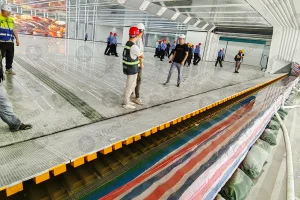
Leading Chinese manufacturer facilities utilize Computational Fluid Dynamics (CFD) modeling and Finite Element Analysis (FEA) to simulate flood velocity, hydrostatic pressure heads, and sediment accumulation dynamics. In-house full-scale hydraulic testing pools validate door panel buoyancy, structural deflection limits, and rubber seal watertightness prior to shipment.
Modern Chinese production lines incorporate multi-axis CNC laser cutting centers, automated robotic welding, and specialized surface treatment lines (such as fluorocarbon coating and heavy anodization). Strict ISO 9001, ISO 14001, and ISO 45001 quality management systems ensure every gate leaf meets demanding dimensional tolerances (+/- 0.5mm).
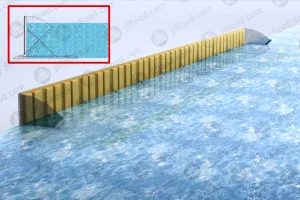
The core technology behind Chinese hydrodynamic automatic flood barriers relies on Archimedes' principle of buoyancy combined with hydrostatic equilibrium. The unit consists of three main structural components: a pre-embedded foundation frame trench, a dynamic buoyancy leaf panel, and a multi-stage seal assembly.
| Operational Phase | Physical Mechanism | System Behavior | Sealing & Mechanical Status |
|---|---|---|---|
| 1. Standby / Rest Phase | Gravity & Vehicle Load | Door leaf rests flat inside the embedded bottom frame flush with the ground line. | EPDM bottom seals protected within stainless steel channel. Top plate supports heavy vehicle drive-over. |
| 2. Water Inflow Activation | Surface Runoff Intake & Water Level Equilibrium | Flash flood water reaches the threshold and flows into the inlet grille of the foundation basin. | Basin fills rapidly; water level inside frame matches external flood elevation. |
| 3. Buoyancy Elevation | Archimedean Buoyancy Force ($F_b > W$) | Internal high-density hydrophobic buoyancy foam causes the panel front end to float upwards. | Panel rotates around its stainless steel bottom hinge pivot point. Self-adjusting lip seals engage side frame walls. |
| 4. Hydrostatic Locking & Retaining | Hydrostatic Pressure Differential ($P = \rho g h$) | As flood waters rise, hydrostatic force pushes the door panel firmly against the rear structural stop frame. | Continuous elastomeric perimeter gasket compresses tightly against frame walls. Complete zero-leakage hydrostatic barrier established. |
| 5. Auto-Recession | Gravitational Drainage Recess | Floodwaters recede; water inside the embedded frame drains via municipal subterranean drain connections. | Panel automatically lowers back into the ground chamber. Surface reverts to flat, unobstructed roadway. |
Different civil infrastructure assets exhibit distinct hydraulic risks and civil engineering constraints. China flood control manufacturers deliver tailored architectural and mechanical design configurations for specific sector requirements.
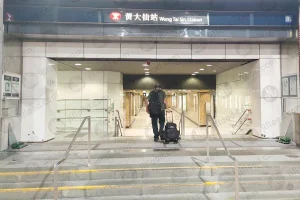
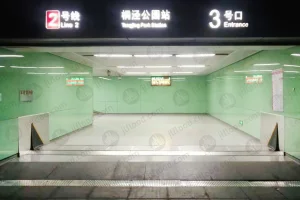
Critical Risk: Subway entrance stairwells, pedestrian connection passages, and emergency ventilation shafts act as low-resistance conduits for urban surface water inundation during severe typhoons.
Engineered Solution: Metro-grade embedded automatic flood gates (such as the HM4D and HM4E series). Installed at station entry portals and connecting shopping concourses, these barriers withstand rapid hydraulic shock waves and heavy pedestrian traffic, featuring automatic mechanical lockouts and integrated optical monitoring sensors linked to the central Metro Control Center (OCC).
Critical Risk: Ingress of floodwaters into high-voltage transformer yards, switchgear rooms, or underground cable trenches causes short circuits, catastrophic grid blackouts, and millions of dollars in equipment destruction.
Engineered Solution: Substation gate perimeter flood barriers and specialized cable trench sealing doors. Built with non-conductive, heavy-duty composite or insulated aluminum alloys, these barriers block water from entering critical power infrastructure enclosure perimeter walls, maintaining zero power loss during municipal inundations.
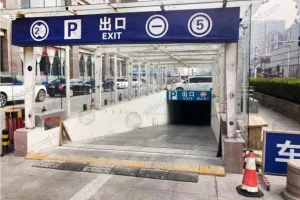
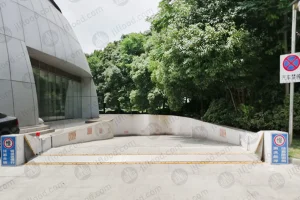
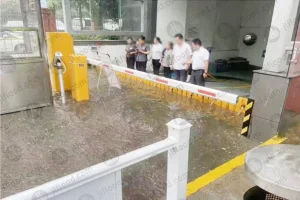
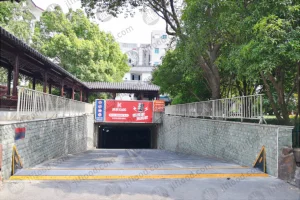
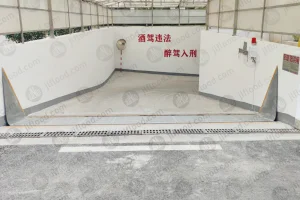
Critical Risk: Downward sloped parking ramps funnel massive surface runoff into subterranean levels, trapping vehicles and damaging electrical charging stations, HVAC plant rooms, and building basements.
Engineered Solution: High axle-load flip-up and hydrodynamic surface-mount garage flood barriers. Designed to accommodate wheel loads up to 40-ton truck capacities (A15 to E600 ratings), these units sit at the top or foot of parking ramps, instantly lifting as surface runoff reaches the threshold line.
Critical Risk: Chemical storage yards and port logistics centers face dual threats of ocean storm surges and toxic liquid run-off containment requirements.
Engineered Solution: Modular wide-span hydrodynamic gates with chemical-resistant Viton/Fluororubber perimeter seals. Capable of spanning single openings up to 6 meters per module (and unlimited spans via intermediate detachable mullions), these systems prevent both external water ingress and internal toxic spill egress.
When engineering consultants and global procurement managers evaluate flood defense suppliers, specific structural, hydraulic, and environmental performance parameters must be verified. Below is an engineering comparison matrix comparing China-manufactured hydrodynamic passive barriers against traditional flood control methods.
| Evaluation Parameter | Passive Hydrodynamic Barrier (China Standard) | Active Electric Motorized Gate | Manual Aluminum Demountable Stop-Logs |
|---|---|---|---|
| Energy Requirement | 0 kWh (Pure Buoyancy Driven) | 2.2 kW – 15 kW (Requires Grid Power/UPS) | 0 kWh (Manual Labor Driven) |
| Deployment Speed | Autonomous (< 0.1s water trigger response) | 30 – 120 seconds (Sensor dependent) | 30 – 180 minutes (Labor assembly time) |
| Blackout Reliability | 100% Fail-Safe (No electrical parts) | Vulnerable (Fails if power/battery cut) | 100% (If personnel are present) |
| Load Capacity Rating | Heavy Vehicle Drive-Over (Up to 60 Tons) | Medium to High (Frame limited) | Pedestrian to Light Vehicle only |
| Leakage Rate | < 0.05 L/hr per meter of seal | < 0.20 L/hr per meter of seal | 0.50 – 2.0 L/hr per meter of seal |
| Operational Lifespan | 20+ Years (Minimal mechanical wear) | 8 – 12 Years (Motor/sensor maintenance) | 10 – 15 Years (Storage degradation) |
| Annual Maintenance Cost | Ultra-Low (Visual inspect & drain clean) | High (Motor, drive gear, sensor audits) | Medium (Storage box audit & seal check) |
The hydrodynamic automatic flood barrier relies entirely on fluid pressure dynamics and Archimedes' buoyancy principle. The barrier door panel contains high-density hydrophobic closed-cell flotation cores. As surface runoff or floodwaters flow into the embedded foundation basin through front inlet grilles, water fills the bottom chamber. The rising water level generates an upward buoyant force that lifts the dynamic panel. Hydrostatic pressure from the accumulated external water head then locks the panel securely against the rear sealing frame gasket. Because the system contains no electric motors, sensors, wiring, or actuators, power blackouts have zero effect on its operational reliability.
Standard retaining heights for single leaf panels range from 0.3 meters (300mm) up to 2.0 meters (2000mm). Single continuous span widths can reach up to 6.0 meters. For extra-wide installations—such as multi-lane underground garage ramps (12m to 24m wide) or metro station concourses—multiple modular barrier leaves are installed end-to-end with intermediate removable or automatic structural mullions. China manufacturers specialize in custom OEM engineering, tailoring exact dimensions, depth of embedment trench, and top plate finish to site civil drawings.
Yes. Reputable Chinese flood control manufacturers perform 100% factory acceptance water-retaining testing. Each batch order is assembled in custom hydraulic test pools to simulate maximum design water head pressure. Tests measure panel deployment response speed, structural deflection under maximum hydro load, and seal leakage rate per linear meter. Video documentation, third-party SGS/TÜV inspection reports, and mill material test certificates (MTC) are regularly supplied with export shipments.
Embedded barriers require a concrete recessed foundation trench prepared during ground construction or retrofit cutting. The trench depth (typically 300mm–600mm depending on gate height) must accommodate the stainless steel base frame and embedded drainage outlets. Outlets connect to the building’s subterranean drainage or sump pump system to remove residual rainwater when flood levels recede. Factory engineers provide detailed civil layout templates, rebar clearance schematics, and concrete pouring guidelines to ensure precise alignment.
When flat in standby mode, the top cover plate of the barrier forms a smooth, flush surface with the surrounding road pavement. Reinforced internal structural ribbing engineered from high-tensile extruded 6063-T6 aluminum alloy or SUS304 steel enables the unit to support heavy vehicle traffic. Standard models support wheel loads up to 15-ton truck axles, while heavy-duty industrial models meet EN124 load class D400 to F900 standards (up to 60-90 tons), suitable for fire engines and commercial freight trucks.
For cold climate installations (such as Northern Europe, Canada, or Northern China), manufacturers integrate low-voltage electric heating cables inside the embedded basin bottom to prevent standing water from freezing in winter. To handle silt, sand, and urban debris, the foundation basin is engineered with sloping collection sumps and removable front cover grilles, allowing routine quarterly pressure washing and debris clearing during standard facility maintenance cycles.
Browse our secondary selection of specialized flood control products, including surface installation metro units, garage flip-up systems, and custom embedded flood gates.
Whether you are designing a high-capacity metro rail connection, upgrading power substation flood security, or protecting underground commercial real estate, our engineering team provides complete technical CAD drawings, structural calculation reports, and worldwide project support.


