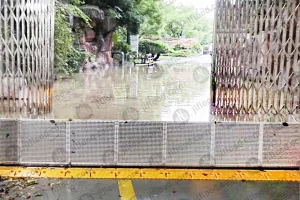
As global climate anomaly events intensify, severe convective rainstorms, flash pluvial floods, and coastal surge backflows pose catastrophic financial risks to subterranean assets—most notably commercial parking garages, transit tunnels, and critical energy substations.
In recent years, municipal civil defense standards across North America, Europe, East Asia, and the Middle East have undergone drastic revisions. Insurance underwriters and civil engineering authorities (such as FEMA, EN 12056, and Chinese GB 50015 civil defense protocols) now mandate active or passive perimeter flood defense barriers for subterranean entry ramps. Multi-national facility operators, real estate investment trusts (REITs), and municipal subway authorities face mounting pressure to safeguard below-grade infrastructure.
When evaluating global sourcing intent for China Floodgate For Garage Factory & Quotes, enterprise buyers are no longer seeking primitive barrier plates. Sourcing directors require comprehensive engineering packages that integrate structural load-bearing capacity (capable of enduring continuous heavy vehicular traffic up to 30-40 ton axle loads), severe corrosion resistance, automated deployment without reliance on utility power grids, and factory-certified zero-leakage hydrostatic sealing.
China's specialized manufacturing ecosystem—led by high-tech enterprises like Nanjing Junli Technology Co., Ltd.—has established a new global benchmark by merging advanced hydrodynamic fluid mechanics with Industry 4.0 precision metal fabrication. By leveraging integrated supply chains in Jiangsu and Guangdong, Chinese manufacturers deliver fully customized, water-tested automatic flood barrier systems at a fraction of the total cost of ownership (TCO) compared to European or North American counterparts.
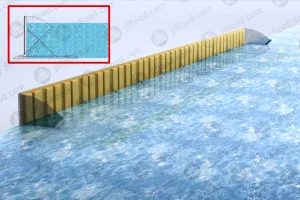
The core technology behind passive automatic flood barriers relies on hydrodynamic buoyancy principles and hydrostatic head pressure balancing. Unlike electromechanical systems that depend on water sensors, electric motors, back-up generators, or human triggers, hydrodynamic barriers operate on purely passive physics.
Operates entirely on hydraulic buoyancy and hydrostatic forces. Protects underground garages even during city-wide electrical grid blackouts during typhoons.
Engineered with aircraft-grade T6 6063 aluminum alloy profiles and internal structural ribs, supporting heavy commercial transport vehicles up to 40 tons.
Modular section design permits scalable clear-span installation from 2 meters up to 30 meters wide, with replaceable EPDM sealing strips and 25-year service life.
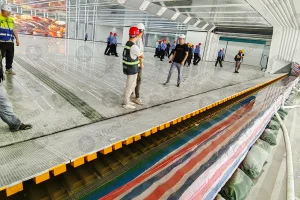
The manufacturing of automated flood control doors requires high precision in structural engineering, seal molding, and surface anti-corrosion treatments. China’s Industry 4.0 transformation has fundamentally shifted the competitive paradigm in flood defense manufacturing.
Nanjing Junli Technology Co., Ltd. serves as a premier model of this industrial advancement. Operating dedicated state-of-the-art facilities in Jiangsu Province, Chinese flood gate factories leverage:
Hydrodynamic flood barriers are deployed across diverse urban infrastructure typologies. Selecting the appropriate model configuration requires evaluating site-specific civil interfaces, traffic frequencies, and flood height projections.
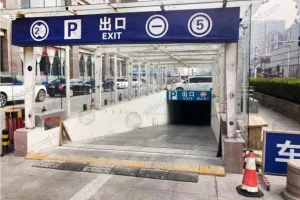
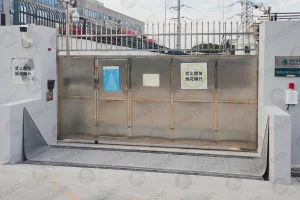
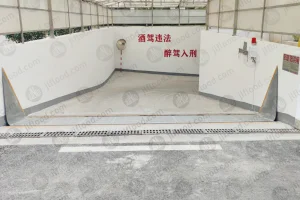
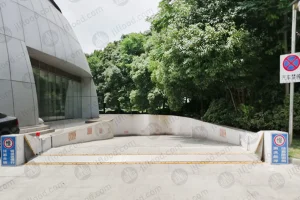
Subterranean garages in shopping malls, hospital complexes, and luxury residential towers are highly vulnerable to pluvial surface runoff entering down ramp driveways. Surface-mounted or embedded hydrodynamic barriers (such as the Junli HM Series) install flush at the top or bottom of the driveway ramp. Vehicles pass seamlessly over the barrier daily, while incoming flash floods automatically raise the barrier up to 1.5 meters in height.
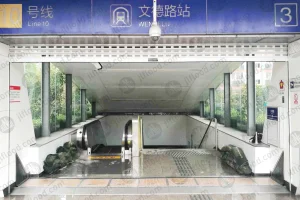
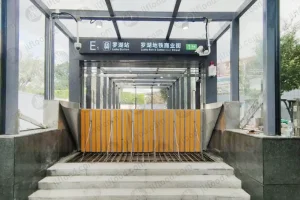
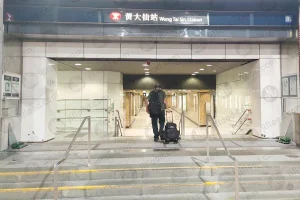
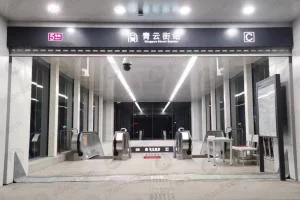
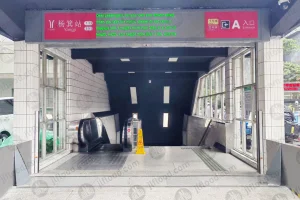
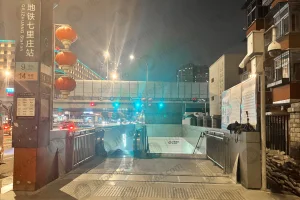
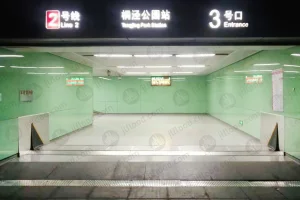
Subway station entrances, emergency pedestrian exits, and underground connection channels require ultra-reliable barriers. Metro-grade embedded automatic barriers feature heavy-duty stainless steel frame enclosures flush with pedestrian walkways. Field-tested across subway systems in Guangzhou, Beijing, Suzhou, and Hong Kong, these systems guarantee that metro lines remain operable even when surrounding streets are submerged.
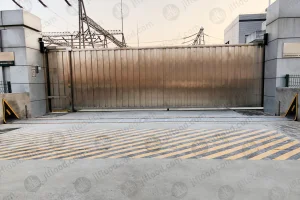
Electrical substations and data center facilities house critical high-voltage equipment. A single flood breach can lead to multi-million-dollar equipment destruction and regional electrical grid failure. Specialized wide-span substation automatic flood barriers feature reinforced perimeter frames, anti-vandalism locking mechanisms, and continuous perimeter EPDM seals designed for long-duration hydrostatic retention.
When requesting quotes for China Floodgate For Garage Factory orders, overseas procurement managers and engineering consultants must evaluate several key structural specifications that influence unit pricing:
By establishing direct factory relationships with OEM manufacturers in China, international buyers eliminate intermediary distributor markups, gain access to certified structural calculation reports, receive custom CAD/BIM drawings for tender submission, and secure factory-direct pricing under competitive FOB/CIF shipping terms.
Expert answers regarding hydrodynamic flood barrier operation, civil installation requirements, and global procurement procedures.
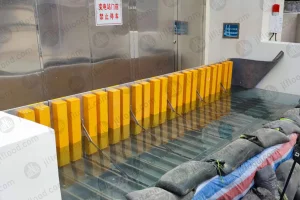
The system operates on pure physical hydrodynamic buoyancy. The flood gate panel rests inside a flush recessed foundation trench. When surface floodwater arrives, water enters the trench through inlet grates, causing internal high-density floats to lift the hinged panel automatically. As the water head rises, external hydrostatic pressure pushes the barrier against structural frame seals, locking it firmly into a watertight position without human intervention or electricity.
Yes. Junli garage flood barriers are engineered with internal heavy-duty load-bearing structural ribs. Heavy-duty models are factory-certified to withstand wheel axle loads up to 40 tons (standard Chinese/European heavy truck loading standards). The top plate remains completely flush with the roadway, preventing vehicle bump or noise during passage.
For embedded installations, civil contractors prepare a reinforced concrete trench according to our structural embedded CAD drawings. A bottom drainage pipe or sump pump connection is required to drain residual rainwater out of the trench after a flood event. For retrofit projects where ground trenching is restricted, surface-mounted flip-up barriers can be anchor-bolted directly onto flat concrete driveways.
The structural aluminum alloy and stainless steel frame components have an engineered service life exceeding 25 years. Maintenance is minimal: routine quarterly inspection to clear debris/leaves from the bottom trench inlet grates, and semi-annual inspection of the EPDM rubber seals. Seal strips are modularly designed and easily replaced on site if damaged after years of service.
Quotes are calculated based on clear opening width (linear meters), design retaining height, load capacity rating (standard vs. heavy truck load), and material selection (aluminum vs. 304/316 stainless steel). Direct factory quotations are issued within 24 hours of receiving site opening drawings and hydrological requirements.