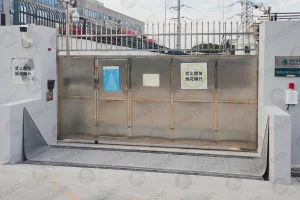
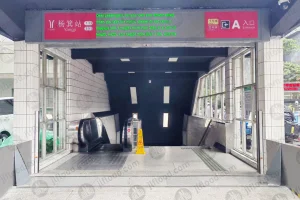
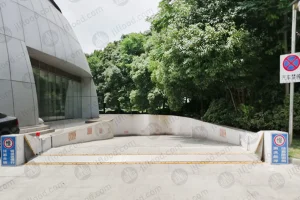
Explore our field-tested, hydrodynamic self-rising flood gate systems manufactured under ISO & CE standards for urban rail transit, power substations, and commercial basements.
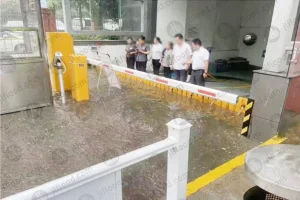
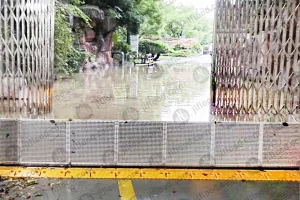
In an era of intensifying climate volatility, extreme rainfall events frequently overwhelm municipal storm drainage networks within minutes. Traditional urban flood mitigation relies heavily on manual slot-in aluminum stop logs or electrically powered motorized gates. However, historical flood post-mortems reveal systemic failure points in both approaches: manual barriers suffer from human latency, lack of available personnel during sudden night storms, and missing components, while electric gates fail due to grid collapse, short circuits, or water-submerged control panels.
As a leading premier China Non-Electric Surface Type Automatic Flood Gate Manufacturer & Supplier, Nanjing Junli Technology Co., Ltd. has re-engineered urban flood defence around passive hydrodynamics. Operating on fundamental principles of buoyancy and hydrostatic pressure differential, our surface-mounted automatic flood gates deploy completely autonomously—without human presence, electrical power, sensors, or mechanical actuators.
Core Technical Superiority: Unlike traditional recessed flood gates that require deep, complex foundation trenching—disrupting underground utilities and requiring extensive civil excavation—the surface-type non-electric automatic flood barrier features an ultra-slim profile anchored directly onto existing concrete slabs or low-height threshold kerbs. This eliminates heavy civil engineering overhead while maintaining continuous structural integrity under extreme hydrostatic loads.
100% powered by rising floodwater buoyancy. Operation remains fully functional during grid outages, utility blackouts, and electrical short-circuits caused by storm surges.
Eliminates deep pit excavation. Ideal for retrofitting existing metro station portals, underground parking ramps, and operational substations without breaking internal cabling or drainage lines.
Reinforced structural aluminum/steel composite design withstands daily passage of heavy commercial vehicles, buses, and container trucks up to 60-ton gross vehicle weight.
The engineering design of Junli's non-electric surface flood barrier (such as the Hm4d-0006E series) rests upon mechanical equilibrium and fluid mechanics. Below is the step-by-step hydrodynamic sequence that guarantees zero-failure field operation:
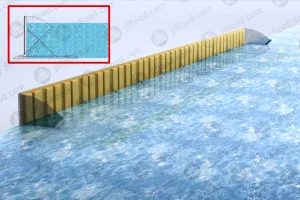
When surface runoff exceeds the threshold kerb level, water enters the front intake grates of the surface housing frame. The incoming water enters the bottom chamber, creating upwards displacement force ($F_b = \rho_{water} \cdot V_{displaced} \cdot g$). As water accumulates, buoyancy overcomes the self-weight of the structural door panel, initiating smooth upward rotation around the stainless steel hinge axis.
As the floodwater level continues to rise, the panel reaches its maximum design elevation (ranging from 500 mm to 2000 mm). The pressure exerted by the retained water head ($\Delta P = \rho g h$) pushes the door panel firmly against the side frame abutments and top locking struts. The higher the floodwater rises, the tighter the dynamic seal compresses against the structural frame.
| Technical Feature | Surface-Mounted Barrier (Hm4d-0006E) | Embedded Trench Barrier (Hm4d-0006C) | Flip-Up Doorway Gate |
|---|---|---|---|
| Installation Method | Anchored to Surface Slab / Kerb | Recessed Flush in Concrete Trench | Side Frame & Bottom Threshold |
| Civil Excavation Depth | 0 mm (No Pit Required) | 350 mm – 600 mm Trench | 0 mm (Surface Bolt Fix) |
| Max Retaining Height | 600 mm – 1200 mm | 1000 mm – 2000 mm | 400 mm – 800 mm |
| Load Capacity (Axle) | Up to 30 Tons (Ramp Type) | Up to 60+ Tons (Heavy Duty) | Pedestrian / Light Cart |
| Primary Sealing Material | EPDM + Fluorosilicone Elastomer | Triple-Lip Vulcanized EPDM | Neoprene Compression Strip |
| Power Source | Pure Hydrodynamic Buoyancy | Hydrodynamic / Dual Hybrid | Manual / Passive Water Lift |
| Corrosion Protection | Anodized Aluminum + Fluorocarbon | 316 Stainless Steel + Hot-Dip Galv | Powder Coated T6 Alloy |
Choosing a specialized manufacturer from China provides global EPC contractors, municipal authorities, and commercial developers with unprecedented advantages in structural quality, custom fabrication speed, and cost efficiency.
Our Nanjing manufacturing facility utilizes 12,000W fiber laser cutting centers and automated robotic welding arms to process high-strength 6063-T6 aluminum extrusions and structural 304/316 stainless steel with sub-millimeter tolerances.
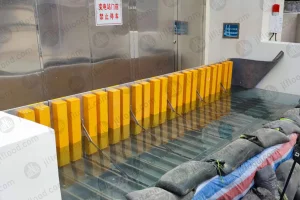
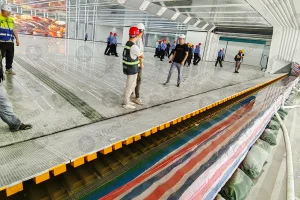
We do not rely solely on digital simulations. Every batch of flood barriers undergoes real water testing in our factory hydraulic test pool. Leakage performance is measured under variable water heads before export clearance.
Leveraging China's comprehensive industrial ecosystem, Junli sources premium raw materials, custom EPDM extrusion profiles, and marine-grade anti-corrosion fluorocarbon coatings at unmatched scale, offering significant cost savings to global buyers.
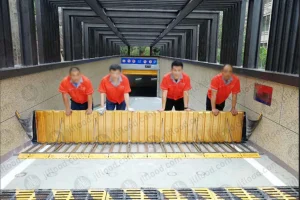
Watch full-scale water simulation testing of Junli automatic hydrodynamic flood barrier systems:
Different infrastructure entrances face unique hydrological challenges. Junli delivers customized non-electric surface automatic flood protection systems tailored to specific sector mandates:
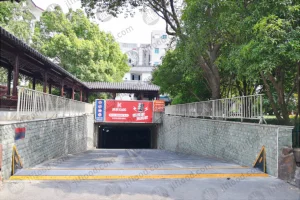
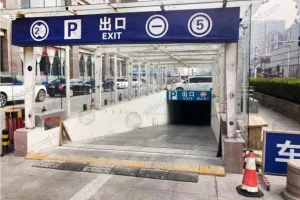
Sloped garage driveways act as natural funnels during cloudburst floods. Installing surface-mounted flood barriers at the top or middle of the ramp prevents cataclysmic basement submergence without restricting vehicle ground clearance during normal operation.
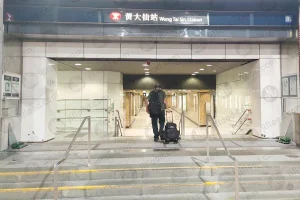
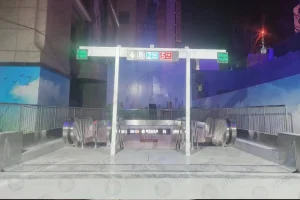
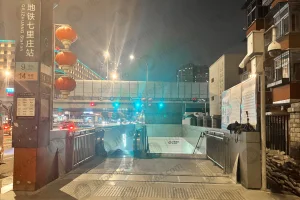
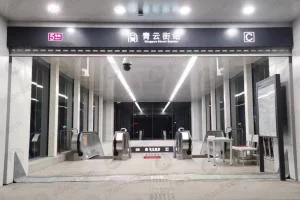
Subway station passenger entrances, ventilation shafts, and connection channels require rapid, bulletproof flood control. Tested across rail lines in Guangzhou, Shenzhen, Suzhou, and Beijing, Junli metro barriers prevent tunnel inundation.
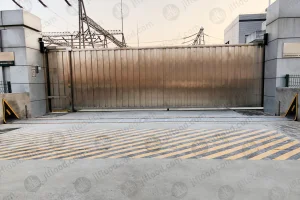
Electrical transformers and cable trenches are highly vulnerable to short-circuit disasters. Non-electric barriers are mandatory here because grid outages frequently disable electrical gates right when flooding occurs.
Prevents hazardous chemical spill runoff during extreme weather while protecting critical process machinery and control rooms from external municipal water inundation.
To assist engineering consultants, procurement agents, and EPC managers in drafting watertight technical specifications, ensure the following critical parameters are included in your procurement request:
Navigating international civil codes and site logistics requires more than just product delivery. Junli provides end-to-end technical backup for global projects across Southeast Asia, the Middle East, Europe, and the Americas:
We provide complete 2D Autocad civil interface details, 3D BIM Revit models, structural rebar layout diagrams, and drainage connection schematics for seamless consultant integration.
All flood barriers are packaged in fumigated solid plywood crates with corrosion-inhibiting VCI film, engineered to survive ocean container transport and rough on-site handling.
Detailed English installation manuals, step-by-step video guides, and remote video technical support ensure site contractors install anchored frames and seals perfectly.
As smart cities evolve, passive mechanical hardware must seamlessly interface with digital municipal monitoring networks without sacrificing passive operational reliability.
Integrating energy-harvesting LoRaWAN and NB-IoT telemetry modules that transmit real-time gate deployment signals to city SCADA systems without requiring external mains power wiring.
Developing ultra-lightweight carbon fiber hybrid matrix door leaves, reducing panel mass by 40% while doubling yield strength for super-wide multi-span applications.
Coupling physical flood gates with predictive cloud algorithms that notify facility managers hours before storm surges hit, enabling proactive maintenance verification.
Clear, authoritative engineering answers addressing common technical queries from architects, structural engineers, and global buyers:
The system operates on Archimedes' principle of buoyancy and hydrostatic fluid mechanics. The barrier door panel rests inside a low-profile surface frame. When rising floodwater arrives, water flows into the bottom buoyancy chamber via front inlet grates. The displaced volume creates positive upward hydrostatic lift. As water continues to rise, the panel automatically rotates upward to block the opening. Increasing water pressure pushes the door panel firmly against high-density EPDM rubber gaskets, achieving a watertight mechanical seal with zero electricity, sensors, or manual effort.
Surface-mounted barriers (such as our Hm4d-0006E model) require zero underground trenching or heavy civil excavation. They are installed by directly anchoring the bottom frame to the existing concrete floor or kerb using expansion anchor bolts. This eliminates the risk of hitting underground utilities, electrical cables, or pipework, reduces installation labor by up to 70%, and makes them ideal for retrofit projects in operational underground garages, subway portals, and utility substations.
Yes. When in the flat standby position, our surface barrier features a tapered aluminum drive-over ramp designed to withstand severe dynamic vehicle impact. Standard models support axle loadings from 20 tons to 40 tons, while heavy-duty custom models support container trucks and fire engines up to 60 tons without structural deformation.
The front intake grates feature stainless steel mesh filters that block debris, leaves, and large gravel. Furthermore, the internal chamber profile is designed with self-flushing hydraulic channels. Routine maintenance requires only periodic removal of the top grate cover to clear accumulated fine sediment, keeping the barrier ready for activation year-round.
Junli flood gates are manufactured from marine-grade 6063-T6 aluminum alloys and 304/316 stainless steel, offering a structural design service life of over 25 years. The elastomeric EPDM seals have an operational lifespan of 10 to 15 years and are easily replaceable on site. We recommend bi-annual visual inspections, debris clearing, and manual test lifting before typhoon seasons.
Absolutely. While standard retaining heights range from 500 mm to 1200 mm, custom heights up to 2000 mm can be engineered. For wide openings exceeding single-panel limits (typically 6 meters), we supply continuous multi-leaf barrier arrays with removable or auto-latching intermediate support posts, allowing infinite clear width coverage across wide plaza entrances and multi-lane ramps.
Discover our extended line of specialized flood defense products for infrastructure projects, metro stations, and power utility sites.