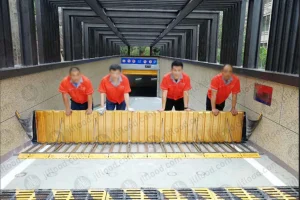
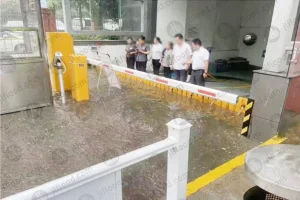
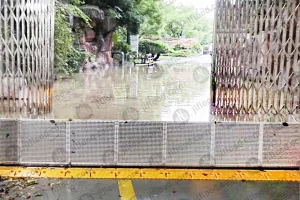
In modern civil engineering and municipal risk management, extreme weather events driven by climate instability have drastically increased the frequency of urban flash flooding. Conventional manual flood defense barriers (such as aluminum stop logs or sandbags) and motorized electric flood gates suffer from critical failure vectors: human delay, power outages during extreme storms, mechanical actuator seizures, and sensor breakdowns. When municipal power grids fail or storm surges occur outside operating hours, active gates fail to deploy, resulting in severe infrastructure damage and financial liability.
As a leading China Self Closing Automatic Flood Gate Manufacturer, Nanjing Junli Technology Co., Ltd. engineers fully autonomous, hydrodynamic-driven passive flood barrier solutions. Installed flush with driveway entrances, subway portals, power substation gates, and underground garages, these systems operate without electricity, human intervention, or electronic sensors. By utilizing the intrinsic physics of hydrostatic pressure and hydrodynamic buoyancy, incoming floodwater itself becomes the physical force that raises and locks the heavy-duty barrier wall into place.
Eliminates dependence on electrical supply, emergency backup generators, or sensors. Operates flawlessly during city-wide blackouts and severe typhoon power cutoffs.
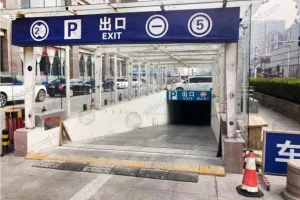
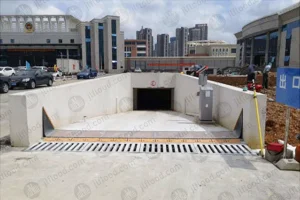
Concealed seamlessly beneath ground level. Vehicles and heavy industrial transport pass smoothly over the reinforced cover plate without disruption.
Features high-elasticity EPDM compression gaskets combined with hydrostatic side-wall seals, ensuring zero water ingress under maximum design head.
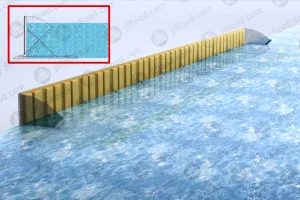
The operational mechanics of Junli’s Modular Hydrodynamic Automatic Flood Gate are rooted in fundamental hydraulic dynamics and Archimedes' buoyancy principle. The system consists of three core structural modules: the embedded ground housing basin, the pivoted structural gate leaf, and the hydrostatic retention locking arm mechanism.
During heavy downpours or rapid surface runoff, floodwater exceeds the kerb drainage threshold and enters the stainless-steel intake grating of the recessed foundation chamber. The intake structure incorporates debris filters that prevent leaves, gravel, and urban rubbish from impairing interior flotation mechanism performance.
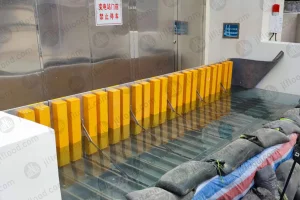
As water accumulates inside the chamber, the sealed hollow structural panel—engineered with lightweight high-strength marine aluminum alloys (6061-T6 / 6082-T6) or structural stainless steel (304 / 316L)—experiences immediate hydrodynamic displacement. Within seconds, buoyancy forces lift the trailing edge of the gate panel upward around its primary pivot axle.
As surface floodwaters rise further, the hydrostatic head pressure against the exposed upstream face of the vertical panel pushes it tightly against the side frame seals. The structural geometry transforms horizontal liquid pressure into sealing compression. Special EPDM dual-lip gaskets deform elastically to form a waterproof barrier capable of withstanding water heads up to 2.0 meters.
When the flood event subsides and external water levels drop below the threshold, the water inside the underground chamber automatically drains out through gravity-fed check valves or connected storm drainage pipes. The panel returns slowly to its resting position flush with the road level, fully resetting for the next flood event without human intervention.
| Engineering Parameter | Standard Specification | Custom / Industrial Specification |
|---|---|---|
| Retaining Height (H) | 0.5m, 0.6m, 0.9m, 1.2m | Up to 2.0m per modular leaf |
| Clear Span Width (W) | 2.0m – 6.0m per single module | Unlimited (Multi-leaf modular connection) |
| Response Time | < 0.5 seconds upon water entry | Instantaneous hydrodynamic elevation |
| Structural Material | Aluminum Alloy 6063-T6 / Stainless Steel 304 | Stainless Steel 316L for coastal/saline environments |
| Driveway Load Class | EN 124 Class C250 (25 Tons) | EN 124 Class D400 / E600 (40 to 60 Tons Heavy Axle) |
| Sealing Gasket Rating | EPDM Rubber (-40°C to +120°C, UV/Oil Resistant) | Dual-lip extrusion profile with 20+ year lifespan |
| Power Consumption | 0 kWh (Zero Power Operation) | 0 kWh (Zero Power Operation) |
Global procurement teams, municipal authorities, and international EPC (Engineering, Procurement, Construction) contractors are increasingly specifying Chinese manufacturers for heavy infrastructure flood protection systems. The competitive edge provided by specialized manufacturers like Junli Technology in Nanjing stems from robust metallurgical supply chains, advanced precision engineering, and extensive field installation track records.
From structural steel laser cutting and robotic welding to automated EPDM gasket extrusions, complete control over manufacturing guarantees rigorous quality control and fast export production cycles.
Every design undergoes finite element analysis (FEA) for structural deflection under maximum fluid stress, alongside physical full-scale water pool verification prior to dispatch.
Direct factory sourcing removes intermediary margins, enabling municipal buyers to procure heavy-duty infrastructure assets at up to 40% lower capital expenditure than European counterparts.
Deploying critical flood barriers in international jurisdictions requires absolute compliance with local building codes, structural standards, and environmental certifications. Junli Technology provides full technical document suites, CAD civil drawings, FEA calculation reports, and English installation manuals tailored to international engineering firms.
Self-closing automatic flood gates are critical protection assets across diverse municipal, commercial, and industrial facilities. Below are the primary field installation profiles validated across over 30 major metro systems and municipal districts.
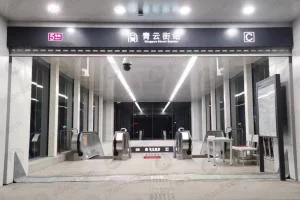
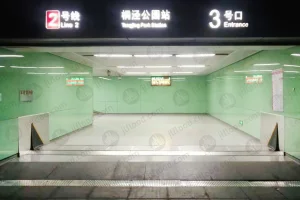
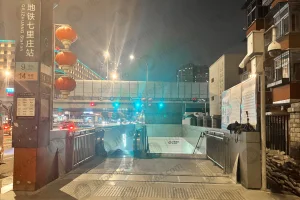
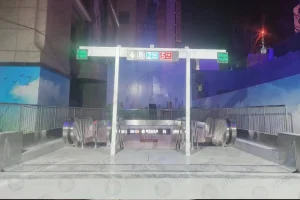
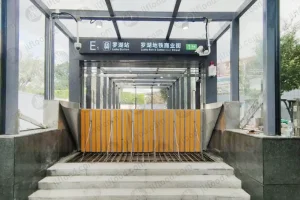
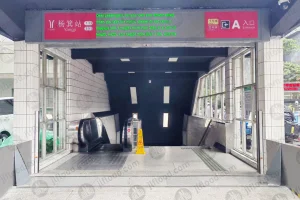
Subway station entrances, pedestrian plazas, and connecting tunnels represent severe flood risk zones. Junli Metro Flood Barriers are installed at surface ground level to prevent catastrophic water ingress into underground transit networks.
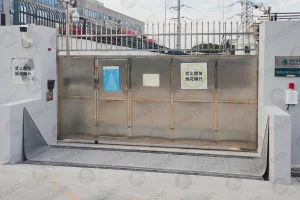
Electrical substations and transformer rooms face immense disruption if water invades high-voltage equipment. Junli Substation Flood Barriers deliver zero-power perimeter security to maintain grid resilience during flash floods.
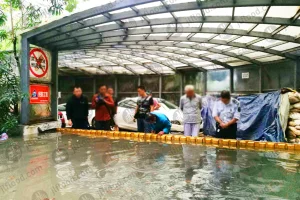
Commercial shopping malls, residential towers, and underground car parks require unobstructed vehicle access. Junli Garage Flood Barriers lie flush with the ramp surface until triggered by rising stormwater.
Underground street crossings, civil defense shelters, and utility cable vaults require automated deployment. Our heavy-duty self-opening & closing gates guarantee asset isolation without staff intervention.
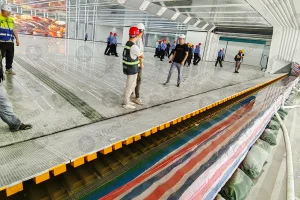
Purchasing managers and municipal specifiers must never rely solely on theoretical digital renderings. Junli Technology operates a dedicated full-scale hydraulic testing laboratory in Nanjing equipped with pressurized water test pools, flow rate meters, and structural deflection gauges.
Before any production lot leaves our factory, sample units undergo rigorous Flood Barrier Water Testing. We measure buoyancy activation thresholds, hydrostatic seal deformation rates, and structural deflection under maximum head conditions. Factory acceptance testing (FAT) video recordings and third-party inspection reports are generated per customer order.
Furthermore, our hydrodynamic gates have demonstrated 100% field protection during extreme weather events, including Typhoon Bebinca and historical urban waterlogging across major Chinese metros like Guangzhou, Suzhou, Beijing, Nanjing, and Dalian.
The global flood control industry is transitioning from reactive emergency measures to proactive, intelligent passive infrastructure. Emerging engineering trends driving self-closing automatic flood gate technology include: