Explore our engineered self-rising flood gates designed for home driveways, underground parking ramps, transit hubs, and power substations.
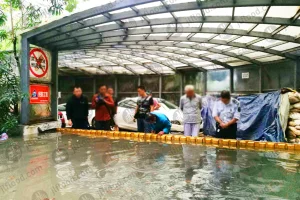
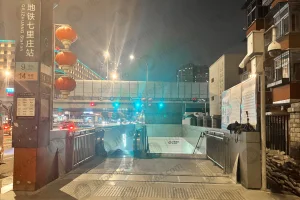
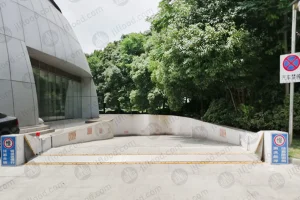
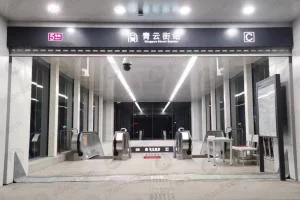
Why unpowered hydrodynamic self-closing flood gates are replacing traditional manual demountable barriers and active electrical gates globally.
Traditional electric flood barriers rely on continuous power grids or backup generators, both of which are notoriously prone to failure during severe convective storms and flash flood blackouts. Self-closing flood barriers harness pure buoyancy physics, deploying automatically without human intervention, electrical signals, or hydraulic pumps.
Manual flood boards and sandbags require advance warning, mobilization time, and substantial labor forces. A hydrodynamic self-closing flood barrier responds within 0.1 to 0.5 seconds as floodwaters enter the embedded bottom basin, offering 24/7/365 continuous passive protection for vulnerable residential basements.
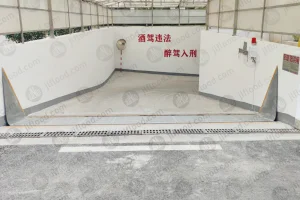
Modern residential and commercial urban developments demand high aesthetic standards. Self-closing flood barriers are embedded flush into driveways and thresholds. Vehicles and pedestrians traverse smoothly over high-strength cover plates without noticing the underlying engineering chamber.
Understanding the fluid mechanics, buoyancy ratios, and sealing architecture behind automatic residential flood protection.
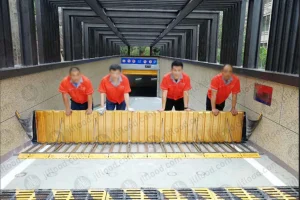
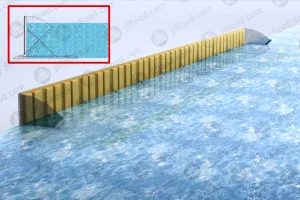
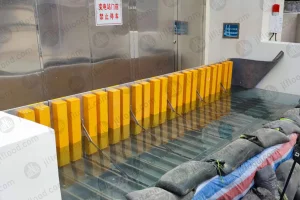
The system consists of an embedded stainless steel bottom foundation basin, a high-buoyancy composite panel, and dynamic perimeter sealing gaskets. Under normal dry conditions, the door leaf lies horizontally flush with the ground line, held down by a mechanical balancing spring system or balanced gravitational equilibrium.
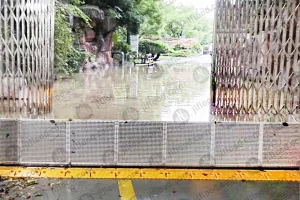
As water accumulation increases, the panel pivots upward automatically along engineered stainless steel hinge assemblies. As flood levels peak, hydrostatic pressure presses the vertical panel firmly against side wall frame seals, forming a continuous water-tight defense barrier up to 2.0 meters high.
Residential and municipal flood defense requires zero-tolerance seal degradation under continuous water heads. Sourcing directly from certified Chinese manufacturers ensures access to high-grade materials and precise engineering specifications:
| Technical Parameter | Standard Home / Villa Driveway | Commercial Basement Ramp | Metro & Substation Gate |
|---|---|---|---|
| Retaining Height (H) | 500mm – 900mm | 900mm – 1500mm | 1200mm – 2000mm |
| Clear Width Span | 2.5m – 6.0m per module | 4.0m – 12.0m modular array | Customized continuous spans (>20m) |
| Load Bearing Rating | Pass Cars / SUVs (5 - 10 Tonnes) | Heavy Delivery Trucks (20 - 30 Tonnes) | Extreme Industrial Axle (40 - 60 Tonnes) |
| Material Grade | SUS304 Frame + Al-6063 Panel | SUS304 Stainless Steel Complete | SUS316L Marine Grade Steel |
| Leakage Rate | < 0.1 L/min per meter (Exceeds GB standards) | Zero visible leakage (0 L/min) | Zero visible leakage under maximum head |
Leveraging Nanjing and Yangtze River Delta engineering clusters for unparalleled OEM/ODM precision, scale, and cost optimization.
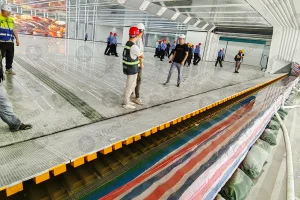
Chinese manufacturers such as Nanjing Junli Technology lead global research in intelligent civil defense and hydrodynamic gates. Holding extensive intellectual property portfolios in unpowered automatic gates, our facilities test designs in full-scale hydraulic pools mimicking flash floods and typhoon-induced sea surges.
Direct supply chain integration with localized raw material suppliers (aluminum extrusions, stainless steel plate mills, high-grade EPDM formulators) allows Chinese suppliers to offer top-tier flood barriers at 40% to 60% lower costs compared to European or North American market equivalents.
Every home, garage, and infrastructure project features distinct civil boundary conditions. Chinese factories specialize in custom sizing, modular panel segmentation, tailored drainage outlets, and customized load-bearing covers designed to match localized building codes and architectural aesthetics.
Engineered protection across residential, commercial, municipal, and electrical power sector landscapes.
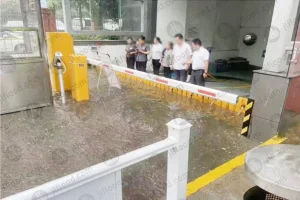
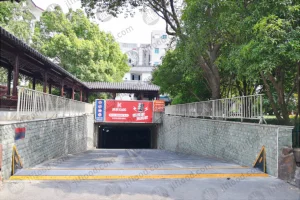
Urban storm runoffs frequently funnel down sloping residential driveways, destroying vehicles, electrical systems, and finished living spaces in underground basements. Installing a self-closing flood gate at the property boundary or garage crest guarantees peace of mind during extended vacations or nighttime downpours.
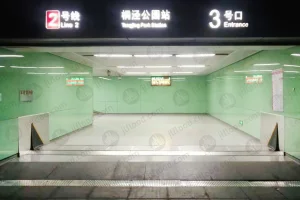
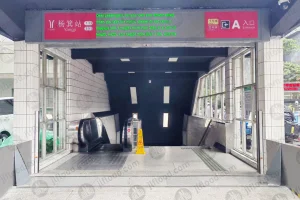
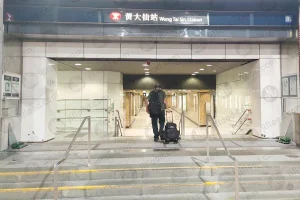
Metropolitans rely heavily on subterranean transportation networks. Self-closing metro flood gates (validated across major transit lines in Guangzhou, Beijing, Shenzhen, and Hong Kong) protect subway station entrances and interconnecting underground pedestrian walkways from extreme river surges or torrential rain overflow.
Critical electrical infrastructure requires uninterrupted operation. Water ingress into high-voltage transformer rooms or telecom server basements results in catastrophic regional blackouts. Low-profile flip-up and automatic embedded barriers shield substation gates without impeding service truck access.
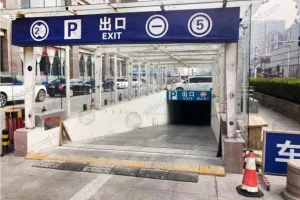
Shopping center car parks feature wide driveways accommodating simultaneous two-way traffic. Modular self-closing barriers are linked continuously across spans exceeding 20 meters, deploying seamlessly as a unified protective dam during flash flooding events.
A step-by-step framework for general contractors, architectural specifiers, and municipal buyers.
Define historical flood levels (100-year flood event data), target retention height (500mm - 1500mm), clear span width, driveway slope, and local drainage pit discharge capacity. Confirm traffic axle loading requirements (standard light residential vehicles vs. heavy emergency fire trucks).
Collaborate with Chinese factory engineers to review 3D CAD/BIM model integrations. Establish civil concrete recess trench dimensions, embedded steel anchor frames, side wall sealing interfaces, and electrical/alarm sensor pre-wiring if hybrid monitoring is desired.
Demand full-scale factory pool testing prior to international shipment. Professional manufacturers supply video verification, third-party inspection certificates (SGS, TUV, ISO), structural stress analysis, and hydraulic leakage measurement reports with each export order.
Addressing technical, operational, and maintenance queries from global buyers and civil engineers.
Self closing flood barriers operate entirely on passive hydrodynamic buoyancy principles. As floodwaters rise and fill the underground foundation basin, water displacement forces the buoyant panel upward, pivoting it automatically into a locked vertical retaining position. No sensors, electrical wiring, hydraulic oil pumps, or manual levers are involved, ensuring 100% operational reliability during severe blackout conditions.
Yes. Standard residential models are built with aircraft-grade 6063-T6 aluminum or 304 stainless steel tread plates designed to support vehicle wheel loads up to 10–15 tons. Heavy-duty commercial models engineered for cargo loading docks or metro driveways feature internal honeycomb ribbing certified for axle weights exceeding 40 tons.
Maintenance is minimal. We recommend quarterly inspections to clear accumulated leaves, silt, or street debris from the bottom basin intake grates using a garden hose or pressure washer. Side wall EPDM rubber seals should be inspected annually and lubricated with silicone spray to ensure long-term elasticity.
Our factory provides full OEM engineering customization. Wide driveways are covered using modular panel units joined together by intermediate support posts or flexible interlocking seals. For sloped driveways, foundation basins are installed with level adjustment shims and tapered concrete drainage collars.
We supply full English technical documentation including civil works foundation templates, anchor bolt layouts, structural calculation sheets, installation guides, remote commissioning assistance, and standard international warranties (typically 5 years for mechanical components, 2 years for elastomer seals).
Explore additional specialized flood gate solutions for high-risk infrastructure and custom architectural openings.