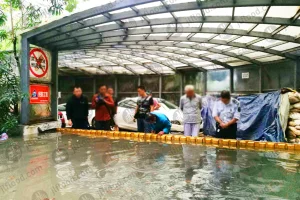
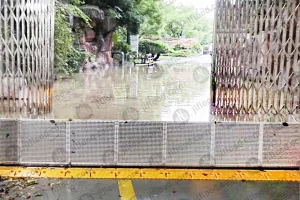
Accelerating global climate change has transformed extreme precipitation and flash urban flooding into primary operational liabilities for real estate developers, municipal transit authorities, and industrial facility managers. Underground parking garages, commercial basements, and subterranean infrastructure represent high-risk exposure zones where flooding can cause catastrophic structural, electrical, and economic damage within minutes.
Historically, flood mitigation relied heavily on manual deployment barriers (aluminum stop logs, sandbags) or electromechanical gate systems. However, empirical analysis of urban flooding events across Asia, Europe, and North America reveals severe vulnerabilities in traditional approaches: manual barriers fail due to human absence or delayed emergency deployment, while electric systems frequently suffer power grid disruptions during severe storm events.
This technical vulnerability has catalyzed global demand for hydrodynamic self-closing flood protection devices. Engineering specifications worldwide are rapidly transitioning toward zero-power, fully automatic hydro-buoyancy gate mechanisms. These unpowered passive systems utilize the kinetic and hydrostatic pressure of incoming floodwater itself to trigger panel deployment, ensuring instant protection with zero reliance on human activation or grid power.
A rigorous examination of hydro-buoyancy dynamics, structural frame engineering, and dual-elastomer sealing systems.
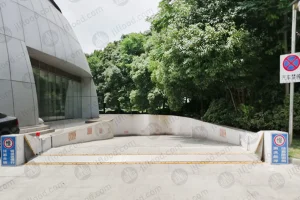
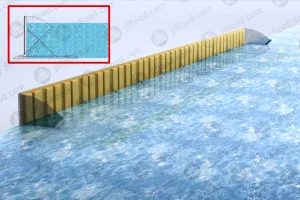
During normal operational conditions, the flood barrier panel sits completely flat inside a shallow embedded concrete trench at the garage entrance. Vehicles and pedestrians pass over the heavy-duty top plate without obstruction or impact on traffic flow.
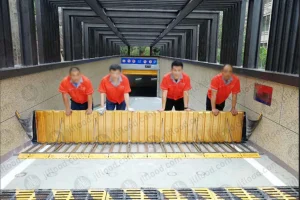
When surface runoff approaches the entrance, water enters the front intake grates of the recessed foundation chamber. As the internal fluid level reaches the design threshold, hydro-buoyancy forces automatically lift the lightweight, high-strength aluminum door panel.
As water levels rise further, hydrostatic pressure pushes the barrier panel firmly against side wall jamb seals. The continuous EPDM/TPU elastomer gasket compresses, creating an airtight, watertight vertical seal that completely blocks floodwater intrusion.
| Parameter | Standard Commercial Specification | Heavy-Duty Industrial Specification |
|---|---|---|
| Deployment Mechanism | Passive Hydrodynamic Buoyancy (Zero Power) | Passive Hydrodynamic Buoyancy + Manual Override |
| Structural Material | Marine-Grade Extruded Aluminum Alloy A6063-T6 | Structural Stainless Steel SUS304 / Heavy Aluminum 6005-T6 |
| Retaining Height Range | 400 mm – 1,200 mm | 600 mm – 2,000 mm (Modular Leaf Arrays) |
| Drive-Over Load Rating | 5 Tons – 20 Tons (Passenger Cars & Delivery Vans) | 40 Tons – 60 Tons (AASHTO HS-20 / Heavy Fire Trucks) |
| Leakage Rate (Verified) | < 0.05 L/hr per meter frame perimeter | Zero Measurable Leakage (Pressure Tested Pool Verified) |
| Sealing Polymer | UV-Resistant EPDM + Thermoplastic Polyurethane (TPU) | Oil-Resistant Vulcanized EPDM & Silicon Composite |
| Standard Clear Spans | 3.0 m to 6.0 m per single section | Unlimited (via intermediate supporting mulloins) |
Analyzing the industrial cluster benefits, engineering depth, and cost efficiency of Nanjing & Yangtze River Delta manufacturers.
Chinese manufacturers benefit from proximity to world-class aluminum extrusion and stainless-steel processing clusters in Jiangsu and Zhejiang provinces. Direct supply chain integration enables rapid precision milling of complex gate profiles, custom bottom chambers, and heavy-duty structural hinges at substantially lower material overheads than European or North American competitors.
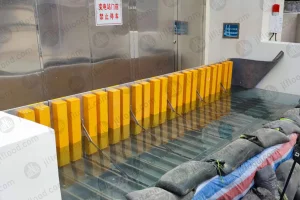
Top-tier Chinese factories, such as Nanjing Junli Technology Co., Ltd., operate specialized in-house hydraulic test pools. Every custom unit undergoes dynamic water-retaining verification, measuring panel deflection under full hydrostatic head pressure, automatic lifting reaction times, and gasket compression seal integrity before international export dispatch.
By leveraging advanced automated robotic welding, CNC structural cutting, and scale manufacturing, Chinese factories provide commercial garage flood barriers at 35% to 55% lower landed costs compared to western alternatives—without compromising structural integrity or international building code compliance.
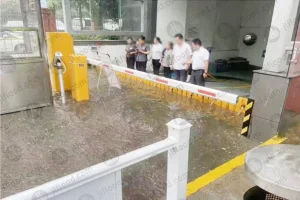
Underground car parks represent the most common deployment scenario for self-closing protection devices. Positioned at the top or foot of access ramps, flush-mounted embedded barriers protect hundreds of parked vehicles against flash flood inundation during extreme storm events.
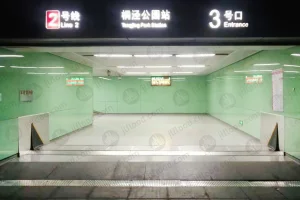
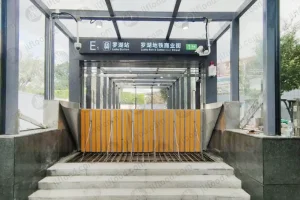
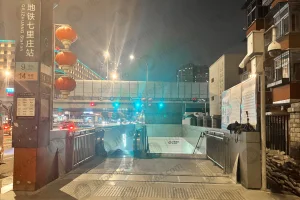
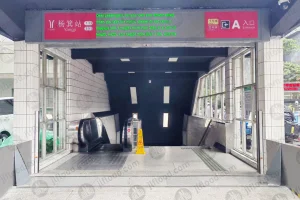
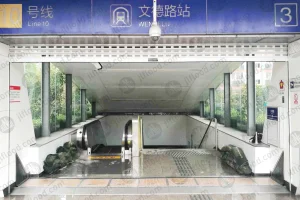
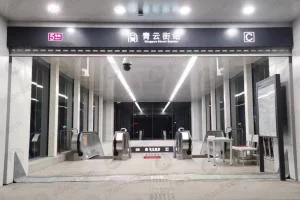
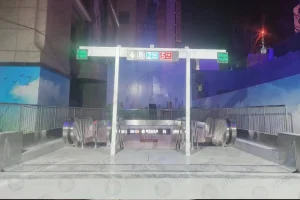
Subway station entrances and ventilation shafts act as giant funnels for urban floodwaters. China's top barrier manufacturers have engineered heavy-duty automatic hydro gates deployed extensively across high-density transit networks in Guangzhou, Beijing, Suzhou, and Hong Kong.
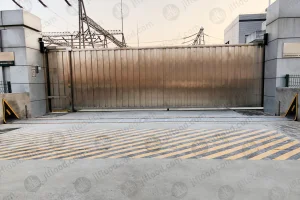
Flooding in high-voltage transformer yards or cable basements can trip regional power grids, causing millions in secondary damages. Self-closing flood barriers seal critical equipment perimeter portals, preventing water ingress while operating autonomously during severe blackout events.
Modern commercial complexes feature extensive underground retail and utility basements. Self-closing barriers preserve architectural aesthetics by remaining completely hidden underground until triggered by rising floodwaters during emergency climate events.
Essential criteria structural engineers and procurement managers must evaluate prior to issuing tenders.
Ensure the design panel calculation enforces a maximum deflection limit of L/250 under full hydro pressure design head. Excessive panel flexing compromises peripheral seals, leading to seal breach under high flood loads.
Aluminum extrusions must undergo architectural-grade hard anodization (≥ 25 microns) or fluorocarbon (PVDF) powder coating to withstand de-icing salts, automotive chemical runoff, and marine coastal atmospheric corrosion.
The recessed foundation frame must incorporate bottom drainage outlets and sediment trap sumps to clear ambient rainwater, gravel, and street debris during dry conditions, ensuring smooth panel movement.
When sourcing self-closing garage flood barriers from China, dealing directly with established engineering manufacturers like Nanjing Junli Technology Co., Ltd. guarantees access to original structural calculations, localized civil drawing support (CAD/BIM), custom embedment templates, and factory-direct warranty coverage.
While the mechanical deployment of self-closing barriers remains 100% unpowered and hydrodynamic, modern installations incorporate micro-power IoT telemetry sensors. Solar or battery-powered sensor modules transmit real-time deployment alerts, water level metrics, and status updates directly to smart city building management systems (BMS).
R&D efforts are increasingly focused on carbon-reinforced composite panels and advanced aluminum-lithium alloys. These lightweight high-rigidity materials enable wider single-span gate designs (>8 meters) without requiring intermediate support posts, simplifying garage entrance civil engineering.
Inspect our physical water test video and actual flood mitigation records from installed infrastructure projects.
Video Showcase: Hydrodynamic Automatic Self-Closing Barrier Water Testing at Nanjing Junli Technology Hydro Pool Facility.
The device operates purely on the hydro-buoyancy principle and hydrostatic water pressure. The door panel is seated inside an embedded floor trough. When floodwater enters the chamber, buoyancy forces automatically lift the panel. Rising water pressure then compresses the elastomer gaskets against the frame, locking the barrier in place. No electricity, motors, human operators, or sensors are required.
Yes. Commercial-grade garage barriers are built with structural internal ribbing and heavy-duty load plates. Standard units support vehicular axle loads up to 20 tons, while heavy-duty industrial models support up to 60 tons (AASHTO HS-20 truck loading), making them suitable for high-traffic garage ramps and logistics centers.
The general contractor must prepare a recessed reinforced concrete trench based on the manufacturer's CAD shop drawings, incorporating a bottom drain pipe connected to the building's sump pit. Embedded anchor frames are set level during the concrete pour, after which the factory-assembled flood gate modules are bolted into position.
The structural aluminum frame and stainless-steel hardware have an engineered service life exceeding 20 years. Maintenance is minimal: quarterly visual inspection of the foundation trench to remove leaves or gravel, and checking the condition of the EPDM perimeter seal gaskets every 3 to 5 years.
For regions subject to sub-zero temperatures, Chinese manufacturers offer optional low-wattage self-regulating electric heating cables integrated into the recessed foundation chamber. This prevents ice accumulation from freezing the panel inside the trough during cold weather.
Single panel spans can reach up to 6.0 meters, with standard water-retaining heights ranging from 400 mm to 1,500 mm. For wider garage driveways (e.g., 12 to 24 meters), modular multi-panel arrays with removable or pop-up intermediate mullion posts are engineered to suit site dimensions.
Yes. Top manufacturers provide order-specific hydrostatic water test certification, material mill certificates, structural deflection calculations, and ISO/CE compliance documentation for submission to project consultants, local building authorities, and commercial insurers.