Explore our core certified automatic flood protection barrier range engineered for un-manned operations and zero-electricity passive deployment.
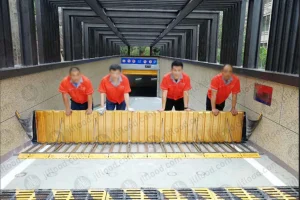
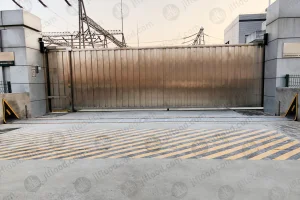
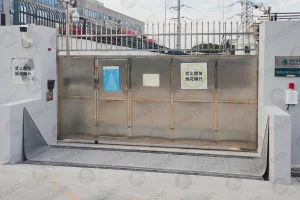
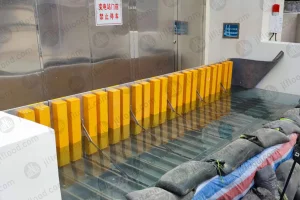
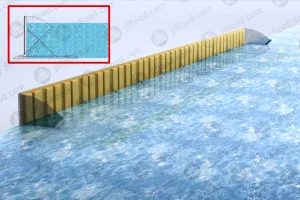
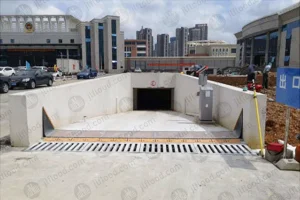
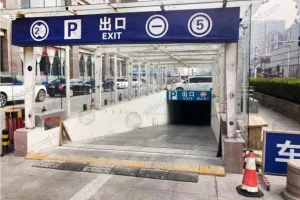
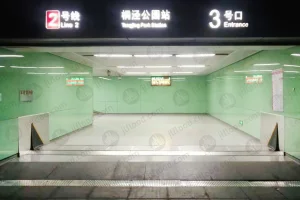
As global climate destabilization accelerates, severe cloudburst events and urban flash flooding present unprecedented risks to subterranean municipal architecture. Traditional flood barriers—such as manual aluminum stop logs, demountable flood gates, and electric/hydraulic flood barriers—fail precisely when they are needed most due to three systemic vulnerabilities: operational latency, municipal power grid blackouts, and critical labor shortages during sudden atmospheric anomalies.
Manual barriers require onsite security personnel to fetch, assemble, and bolt heavy aluminum planks during active downpours. In midnight flash floods or rapid urban inundations, human response time is inherently too slow, leading to catastrophic water ingress into underground garages, metro concourses, and transformer vaults.
Motorized, hydraulic pump, and sensor-driven automatic flood gates rely heavily on electrical power grids or emergency diesel generators. Severe storms frequently knock out municipal substations simultaneously, leaving active electromechanical gates paralyzed in the open position.
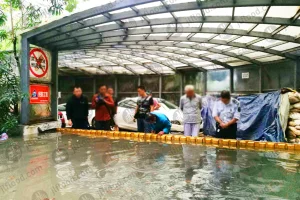
Nanjing Junli Technology’s Automatic Flood Barrier Without Personnel On Duty eliminates human dependency and electrical grid reliance completely. Operating on basic physical hydrostatics and hydrodynamic buoyancy principles, incoming floodwater itself powers the automatic rising and mechanical locking sequence within 0.1 seconds.
Deep technical breakdown of the hydrodynamic fluid-structure interaction driving Junli's self-closing and self-rising subterranean flood barrier systems.
The system consists of a flush ground-recessed foundation tray and an engineered lightweight high-strength barrier panel. When surface water reaches the warning threshold height (typically 30–50mm above finished ground level), water naturally flows through front intake grilles into the bottom foundation chamber. As the chamber fills, Archimedes' buoyancy force acts upon the hollow-cell aluminum panel, creating upward torque around the stainless steel primary hinge axis. As water level rises further, hydrostatic pressure forces the top seal against structural side jambs, creating an impenetrable dynamic water-retaining wall.
Constructed from aviation-grade 6063-T6 extruded aluminum alloy profiles treated with hard anodic oxidation (anodization thickness > 15µm). Resists marine salt spray, de-icing chemicals, severe traffic wear, and corrosive urban stormwater runoff for over 30 years of operational life.
Utilizes vulcanized multi-ridge EPDM (Ethylene Propylene Diene Monomer) hydrophobic rubber gaskets combined with fluorosilicone corner blocks. Seal elasticity is maintained under extreme thermal fluctuations (-40°C to +80°C), achieving near-zero leakage (<0.05 L/hr/m of joint line under 2m head).
The top cover plate of the recessed tray is reinforced with internal structural honeycomb ribs, capable of supporting heavy municipal vehicles, fire engines, commercial logistics trucks, and dense passenger vehicle traffic without deformation (A15 to F900 loading classes compliant with EN 124 standards).
Objective evaluation matrix for architectural specifiers, civil engineers, procurement directors, and municipal facility managers.
| Performance Indicator | Junli Hydrodynamic Barrier (No Personnel) | Electric / Motorized Gates | Manual Aluminum Stop Logs | Traditional Sandbag Barriers |
|---|---|---|---|---|
| Onsite Labor Requirement | 0 Personnel (Fully Autonomous) | 0 Personnel (If automated) / 1 Operator | 2–6 Heavy Laborers Required | 5–20 Emergency Workers |
| Power Source Dependency | 0% (Pure Passive Hydraulics) | 100% Mains / Generator Back-up | None (Manual Assembly) | None (Manual Stacking) |
| Response Trigger Speed | < 0.1s Water Inflow Trigger | 15s – 60s Motorized Delay | 30 mins – 2 Hours Assembly | 2 Hours – 6 Hours Stacking |
| Grid Blackout Reliability | 100% Operational Guarantee | High Failure Risk (Battery/Gen failure) | Operational (If labor is present) | Operational (Slow) |
| Aesthetic Architectural Fit | 100% Flush Ground Integration | Requires Side Posts/Motors | Storage Racks Required | Ugly / Temporary Emergency |
| Design Service Life | 30+ Years Maintenance-Free | 8–12 Years (Motor maintenance) | 10–15 Years (Seal deterioration) | Single-Use / Single Event |
| Drive-Over Traffic Bearing | Up to 50–60 Tons (Heavy Vehicles) | Limited to Light Vehicles | N/A (Blocks Entrance) | N/A (Blocks Entrance) |
How autonomous water-retaining solutions fulfill stringent international building codes, insurance mandates, and climate resilience frameworks.
Designed in accordance with US Federal Emergency Management Agency (FEMA) P-936 guidelines for floodproofing non-residential structures and ASCE 24-14 standards. Satisfies hydrodynamic impact resistance, static water head pressure tolerance, and zero-head leakage criteria required for critical municipal infrastructure.
Engineered to comply with European Union construction product performance criteria (EN 14351-1) and British Standard Institute PAS 1188-1/BS 851188 specs for perimeter flood protection barriers. Fully tested against wave action, hydrodynamic drag force, and silt accretion dynamics.
Commercial property developers, REITs, and municipal transport authorities deploying autonomous flood barriers benefit from lowered property insurance premiums, reduced climate risk liability, and improved GRESB / ESG sustainability scores by protecting high-value underground electrical assets.
Tailored structural designs deployed across high-risk urban flash-flood prone environments.
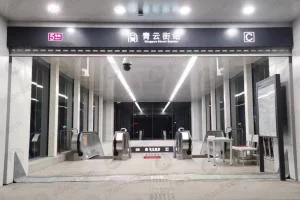
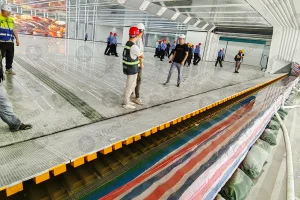
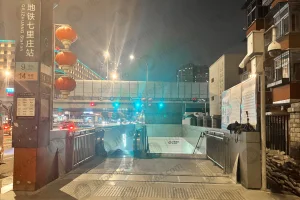
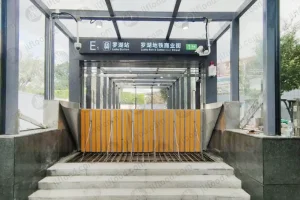
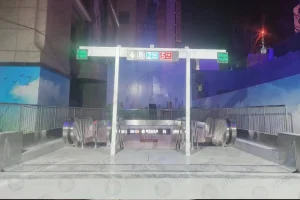
Installed at subway concourse portals, pedestrian connection tunnels, and underground railway ventilation shafts in Guangzhou, Beijing, Shenzhen, Suzhou, and Hong Kong MRT to prevent catastrophic tunnel flooding during severe typhoons.
Protects 110kV–500kV state power grid transformers, switchgear rooms, and cable trenches. Prevents regional electrical blackouts caused by water entering high-voltage enclosures during sudden urban cloudbursts.
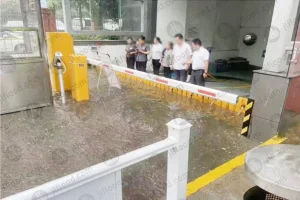
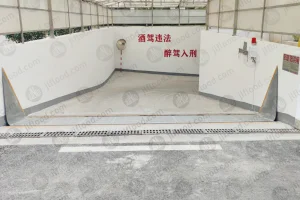
Embedded flush at subterranean garage driveway entrances of commercial shopping malls, luxury residential complexes, and hospital basements. Vehicles drive smoothly over the barrier daily without sensing its presence.
Acts as dual-purpose containment: blocks external storm surge water from entering hazardous production zones while functioning as a secondary containment barrier to stop industrial chemical runoff from leaking out.
Nanjing Junli Technology's multi-year vision for next-generation intelligent urban defense systems.
While the mechanical rising mechanism remains 100% power-free and hydraulic, optional self-powered LoRaWAN / NB-IoT wireless telemetry modules send instant SMS / cloud alerts to municipal control rooms the millisecond the gate deploys.
Integrating local meteorological radar data with smart city SCADA systems to forecast subterranean inundation risks hours ahead, pre-activating secondary security locks and automated perimeter alerts.
Next-generation lightweight carbon-fiber composite barrier leaves under development. Reduces panel moving mass by 40% while doubling structural impact resistance against debris load during flash floods.
From initial site survey to international export logistics and engineering commissioning support.
Assessment of clear width, curb geometry, historical flood elevation, peak traffic axle load, and subterranean drainage tie-in points.
Provision of localized Revit LOD 300 models, embedded steel frame shop drawings, and rebar clearance details for civil contractors.
100% full-scale water simulation test in Junli's factory pool. Deflection, lifting speed, and seal leakage rate certified prior to export packing.
Heavy export wooden crate shipping, full English installation manuals, video remote guidance, or engineer dispatch for turnkey commissioning.
Detailed technical answers regarding installation, routine maintenance, sediment management, and cold-climate operations.
The system operates entirely on natural hydrodynamic forces. The barrier panel is seated inside a recessed foundation chamber installed flush with the ground. When floodwater reaches the entrance, it flows into the chamber through front intake grilles. The rising water level creates Archimedes buoyancy force, floating the lightweight hollow panel upward. As water rises further, hydrostatic head pressure locks the panel firmly against the structural frame and dynamic EPDM rubber gaskets, sealing out water without requiring power, sensors, pumps, or manual effort.
The foundation tray features a self-draining sloping bottom profile connected to municipal storm drains or sump pumps. Small debris and sediment are flushed out automatically via bottom drainage outlets during normal rainfall. For heavy sediment environments, the top cover plate is modular and removable, allowing routine maintenance teams to perform simple high-pressure water jet cleanouts once or twice a year.
Yes. Standard models are engineered to handle vehicle axle loads up to 30–50 Tons (compliant with EN 124 D400 to F900 load classifications). Internal structural honeycomb reinforcement ribs ensure that heavy logistics trucks, fire engines, and buses can drive over the panel daily without causing structural deflection or damage to the underlying mechanical hinges.
For cold climates (e.g., Northern Europe, North America, Northern China), Junli offers optional low-wattage self-regulating electric heating cables embedded inside the bottom frame tray. This prevents ice accumulation from freezing the mechanical hinge or locking mechanisms, ensuring smooth hydrodynamic deployment even during freezing rain or snowmelt floods.
Standard single-module retaining heights range from 0.5 meters to 2.0 meters. Clear opening widths can span from 2.0 meters up to 6.0 meters for single leaves. For wide entrance driveways or metro connection portals exceeding 20 meters, multiple modular barrier units are linked together seamlessly with intermediate removable or automatic structural pillars.
Every wholesale shipment includes material mill test certificates (MTC) for 6063-T6 aluminum and SUS304/316 stainless steel, EPDM seal aging test reports, finite element analysis (FEA) structural calculation books, factory water pool testing videos, ISO 9001/14001 certificates, and comprehensive English civil installation and maintenance manuals.
Explore additional model configurations tailored for metro connection channels, embedded sub-grade applications, and modular flood defense arrays.