
Explore our field-proven automatic flood barrier series tailored for metro transit lines, utility substations, commercial garages, and industrial infrastructure.
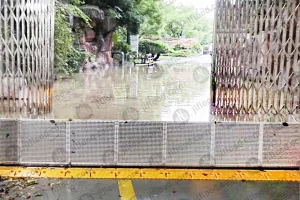

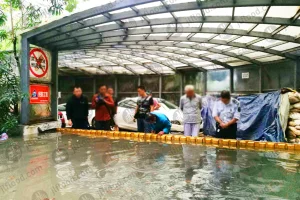
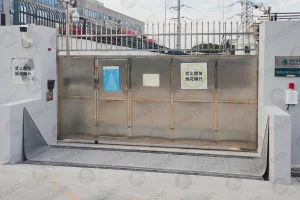
An authoritative analysis of extreme climate hazards, municipal risk mitigation, and the technical necessity for unpowered passive flood barrier systems in civil engineering.
In recent years, cloudburst floods, severe typhoons, and urban flash flooding events have increased exponentially in frequency and intensity worldwide. Urban planners, municipal engineers, and asset managers face an escalating risk to critical subterranean infrastructure. Traditional flood defense mechanisms—such as manual sandbag stacking, aluminum demountable slot-in stop logs, and electrically driven flood gates—suffer from fatal systemic vulnerabilities during severe meteorological events.
During catastrophic typhoons, municipal power grids frequently experience immediate blackouts or electrical trips caused by water ingress into localized transformers. When electrical supply fails, motor-driven automated gates without continuous UPS backup become entirely inoperable. Furthermore, manual flood defense options rely heavily on early warning systems, site accessibility, and rapid human deployment. Flash floods occurring during off-peak hours, weekends, or severe gridlocks often leave facilities unmanned, resulting in catastrophic submersion of multi-million dollar assets within minutes.
This critical vulnerability has driven global procurement toward Hydrodynamic Automatic Flood Barriers (HAFBs). Engine-free and unpowered automatic flood control devices utilize the fundamental physical laws of fluid mechanics—specifically buoyancy and hydrostatic pressure—to actuate protective walls instantly upon the arrival of floodwaters without requiring human intervention, sensor triggers, or external power sources.
Nanjing Junli Technology Co., Ltd. has engineered next-generation self-closing hydrodynamic flood barriers engineered to remain completely flush with surface pavement under ambient conditions. The structural layout operates on a dynamic hydraulic dynamic loop balance:
| Evaluation Vector | Hydrodynamic Automatic Barrier (Junli) | Motorized / Electrical Flood Gate | Manual Aluminum Stop-Logs |
|---|---|---|---|
| Power Dependence | 0% (100% Unpowered Passive) | Requires Continuous Power / UPS Backup | None |
| Human Operator Requirement | Zero Human Intervention Required | Manual Sensor Switch / Remote Control | High (Requires 2-4 Trained Crew) |
| Activation Trigger Time | Immediate (< 0.1s Upon Inflow) | 15 to 45 Seconds Motor Run | 30 to 120 Minutes Setup Time |
| Blackout Reliability | 100% Operational During Outages | Failsafe Risks If Battery Trips | Unaffected by Grid, Vulnerable to Logistics |
| Pavement Aesthetics & Usage | 100% Flush Ground Recessed Installation | Surface Mounted or Raised Threshold | Requires External Storage Room |
| Life-Cycle Maintenance Cost | Ultra-Low (No Motors/Pumps to Servicing) | High (Annual Motor/Control Inspections) | Moderate (Seal & Component Storage Loss) |
Detailed technical architectural blueprints designed to meet stringent municipal RFP tenders, international engineering standards, and enterprise risk management protocols.
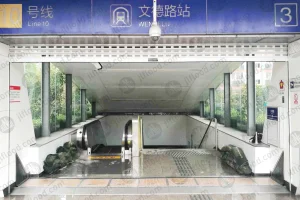
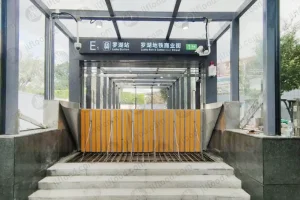
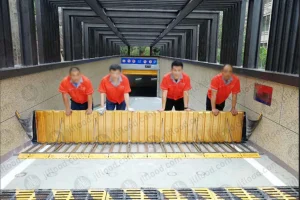
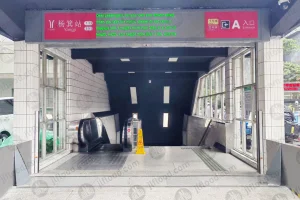
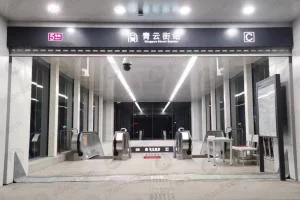
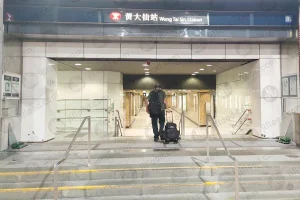
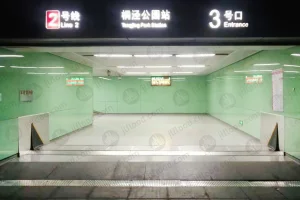
Underground metro networks represent high-density human traffic corridors where sudden water entry can cause catastrophic loss of life and electrical infrastructure damage. Sourcing requirements for transit authorities (such as Guangzhou Metro, Beijing Subway, and Hong Kong MTR) mandate ultra-fast dynamic response, flush surface integration for unimpeded pedestrian flow, and high resistance to heavy foot traffic and emergency service vehicles.
Junli Metro-Grade Automatic Flood Barriers are engineered with high-strength structural aviation-grade aluminum alloys, featuring customized clear spans over 20 meters via modular coupling and heavy-duty embedded steel structural frames.
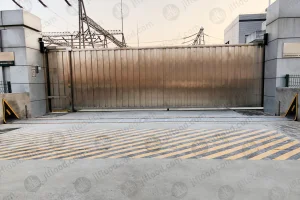
Substation transformer rooms, power distribution centers, and cable trench gates represent critical grid nodes. A flood event causing an electrical short inside a high-voltage substation can trigger regional grid failure. Commercial buyers require zero-maintenance passive barriers with dielectrically isolated sealing assemblies, fire-retardant silicone/EPDM seals, and tamper-proof perimeter locks.
Junli Substation Gates deliver zero-power mechanical continuous operational readiness, ensuring electrical grids stay operational during citywide storms.
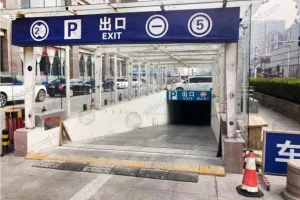
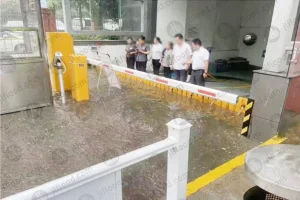
Commercial real estate asset managers and logistics hub operators face substantial liability when basement parking structures flood, destroying high-value vehicles and building HVAC systems. Ramping access points require surface-mounted or shallow-trench automatic flood barriers capable of supporting continuous daily vehicular passage without dynamic panel deformation.
Junli Garage Barriers feature engineered anti-slip tread surfaces, heavy-vehicle load ratings up to 50 tons, and automatic debris-flushing drainage profiles.
Municipal public works projects require seamless integration with existing urban storm drainage master plans. Junli provides end-to-end OEM and ODM architectural specifications, supplying civil design documentation, CAD/BIM structural integration models, and factory witness hydrostatic pressure testing certificates.
Unlike standard sheet-metal welded gates that suffer from seam fatigue under hydrostatic pressure, Junli flood panels are built using structural extruded aluminum-magnesium alloy profiles (6063-T6 temper) and 304/316 stainless steel hardware. The primary bottom and side seals utilize multi-cavity EPDM synthetic rubber with high weatherability, UV resistance, and chemical stability, retaining elasticity across extreme temperature fluctuations (-40°C to +90°C) for over 20 years.
Junli Technology operates a state-of-the-art manufacturing facility adhering strictly to global quality systems, engineering compliance, and transparent supplier protocols.
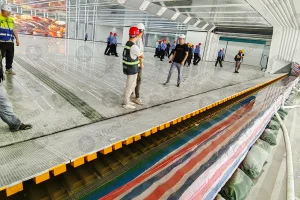
Every customized barrier lot undergoes rigorous full-scale hydrostatic testing within our 1:1 factory water testing pool, measuring leakage rates, structural deflection under hydro-head pressure, and dynamic lift response prior to international crate packing.
Manufactured in full compliance with ISO 9001 Quality Systems, ISO 14001 Environmental Management, and ISO 45001 Occupational Health standards. Design specifications match international flood proofing requirements equivalent to ASTM F3010 and FM 2510 standards.
Complete export documentation provided, including English structural calculation reports, civil chamber embedment drawings, step-by-step installation manuals, remote engineering video guidance, and 10-year structural warranty support.
Pioneering the intersection of mechanical hydrodynamic reliability and modern digital smart city infrastructure.
While the mechanical core of Junli automatic flood barriers remains 100% unpowered and passive to guarantee zero-fail operation during power outages, our R&D engineering division has developed optional smart Hydro-IoT telemetry expansion modules. This hybrid approach delivers the ultimate combination of absolute mechanical reliability and modern digital monitoring:
Leading Chinese high-tech manufacturer specializing in intelligent flood protection solutions and civil defense technology.
Headquartered in Qinhuai District, Nanjing, Jiangsu Province, Nanjing Junli Technology Co., Ltd. stands as a premier manufacturer of hydrodynamic automatic flood barriers, modular flood gates, and underground asset defense systems. With over a decade of continuous research, patent development, and full-scale hydraulic testing, Junli engineered solutions protect high-profile infrastructure across more than 30 major metropolitan regions.
Our multidisciplinary engineering teams cover four core technical domains: intelligent civil defense, automated flood barrier systems, structural bridge protection mechanisms, and intelligent energy grid protection. Operating in-house precision tooling, robotic welding lines, CNC machining centers, and full-scale hydraulic testing pools, we provide international procurement partners, EPC contractors, and municipal authorities with fully customized, high-reliability flood control barriers backed by authoritative technical documentation and global lifecycle support.
Clear technical answers to common queries raised by engineering consultants, municipal specifiers, and global B2B buyers.
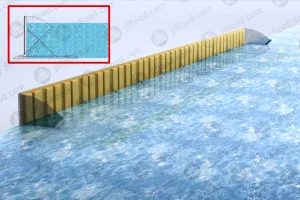
The system operates purely on passive hydrodynamic buoyancy and hydrostatic pressure. The flood panel rests flush inside a shallow recessed ground trench. When surface floodwater arrives, water flows into the trench basin through specialized inlet grates. An internal air-sealed float chamber within the panel generates positive buoyancy, lifting the gate automatically within seconds. As water levels rise further, hydrostatic pressure seals the continuous EPDM gaskets tightly against the frame jambs. No electricity, motors, wiring, or human intervention are ever required.
Standard Junli underground garage and driveway flood barriers are engineered and reinforced to support heavy vehicular traffic, rated for axle loads up to 50 tons (conforming to municipal heavy truck and fire engine passage standards). Heavy-gauge extruded structural aluminum-magnesium alloys (6063-T6) and internal stainless steel support ribbing ensure zero panel deformation during daily traffic operation.
The front edge of the recessed ground frame is equipped with narrow stainless steel sediment filters and brush seals that prevent large leaves, stones, and road debris from entering the inner basin. Furthermore, the internal hydraulic basin features a sloped self-clearing drainage channel. Maintenance protocols simply involve an annual flush with a high-pressure water hose to clear accumulated fine silt.
Standard unit retaining heights range from 500mm up to 2000mm. Single clear span panels can extend up to 6.0 meters wide. For wide entrance ramps, metro openings, or site perimeters exceeding 6 meters, multiple modular barrier segments are coupled together using dynamic intermediate support posts, enabling unlimited total opening widths.
Yes. We manufacture both recessed (embedded flush) flood barriers and surface-mounted flip-up/ramp flood gates. Surface-mounted models feature low-profile ramping thresholds that anchor directly onto existing smooth concrete driveways using expansion bolts, making them ideal for retrofit projects where floor slab trenching is not feasible.
Every wholesale shipment is accompanied by comprehensive engineering submittals, including ISO 9001 quality certificates, material mill test certificates (for aluminum profiles and 304/316 stainless steel components), 1:1 factory test pool hydrostatic seal test reports, CAD civil embedment drawings, structural calculation datasheets, and step-by-step English installation/maintenance manuals.
All flood panels, embedded side frames, and modular accessories are packed in heavy-duty ISPM 15 compliant fumigated wooden crates with internal shock-absorbing EVA foam liners and waterproof PE stretch wrapping to prevent scratches, moisture ingress, or dynamic transport damage during ocean transit.
The structural aluminum frame and stainless steel components have an engineered service life exceeding 30 years. The primary EPDM dynamic sealing gaskets are rated for 15 to 20 years of continuous outdoor weather exposure. Gasket kits are modularly designed and can be easily replaced on-site without removing the main structural frame.
Select your target engineering specification below to view complete factory pricing, technical datasheets, and custom fabrication quotes.
Send your entrance dimensions, design rainfall requirements, or site CAD drawings to our senior engineering team. Receive detailed technical proposals, civil embedment layouts, and wholesale factory pricing within 24 hours.


