
Explore our primary series of self-rising, zero-electricity automatic flood barriers tested and certified for municipal, industrial, and commercial entrance security.
As global climate volatility accelerates pluvial inundation and flash flooding risks, civil engineering standards for subterranean infrastructure are undergoing a fundamental transformation.
Traditional motorized flood gates and electrical pump stations suffer from a critical failure vector: grid collapse. Severe storm events, typhoons, and sudden cloudbursts frequently cause localized electrical blackouts or short-circuit control systems at the precise moment flood protection is required. Hydrodynamic passive systems eliminate electrical dependencies entirely.
Manual sandbag deployment and stop-log panel assembly demand significant manpower, advance warning, and site access. In urban environments where flash flood waters can rise by 1.5 meters within 15 minutes, human deployment is dangerously slow, expensive, and subject to severe logistical bottlenecks during off-peak hours or night shifts.
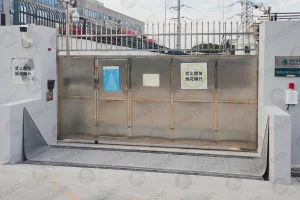
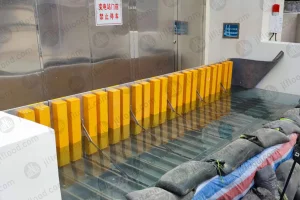
Next-generation automatic flood control devices utilize the intrinsic physical forces of incoming floodwater—buoyancy and hydrostatic pressure—to actuate structural wall panels automatically. Sunk flush into foundation channels, these panels rise smoothly as water fills the intake tray, sealing openings without requiring human presence or external power.
Nanjing Junli Technology Perspective: True resilience in urban flood control demands zero reliance on human decision-making, grid power, or electromechanical sensors during flash inundation emergencies.
A detailed examination of Archimedes buoyancy principles, structural load calculations, and long-term EPDM compression sealing dynamics.
The core mechanism rests inside a embedded foundation tray constructed from high-strength stainless steel or structural alloy. During dry conditions, the top barrier plate sits completely flush with the ground level, allowing heavy vehicle traffic (rated up to AASHTO HS-20 / EN 124 D400 heavy vehicle axle loads) to drive across without structural degradation.
When surface water overflows the roadway curb into the foundation chamber, incoming water fills the internal buoyancy tray. As water volume increases, the Archimedes buoyant force lifts the front lip of the barrier leaf. As the panel rotates upward on precision pivot hinges, incoming hydrostatic pressure pushes the barrier panel firmly against side frame seals, establishing an impenetrable barrier within seconds.
Water-tight integrity is governed by continuous, high-resilience EPDM (Ethylene Propylene Diene Monomer) gasket profiles. Unlike standard rubber compounds, marine-grade EPDM seals maintain elasticity across extreme temperature bands (-40°C to +120°C) and resist ozone degradation, oil runoff, and UV exposure for over 20 years. Dynamic pressure-assisted sealing profiles ensure that higher water heads produce tighter seal compression.
Standard engineering design envelope for Junli modular hydrodynamic gates:
| Flood Protection Technology | Activation Power Source | Deployment Latency | Labor Requirement | Blackout Reliability | Service Life & TCO |
|---|---|---|---|---|---|
| Junli Hydrodynamic Automatic Gate | Water Buoyancy & Pressure (0W) | < 0.5 Seconds | Zero Staff Required | 100% Operational | 20+ Years / Minimal TCO |
| Motorized Electromechanical Barriers | Electric Grid / Generator Backup | 30 – 120 Seconds | Automated / Sensor Dependent | Vulnerable to Grid Failure | 10 Years / High Maintenance |
| Manual Aluminum Stop-Logs | None (Manual Assembly) | 30 – 180 Minutes | 2–4 Trained Personnel | Operational (If Staff Present) | 5–10 Years / High Labor Cost |
| Traditional Sandbag Defenses | None (Manual Stacking) | 2 – 6 Hours | Heavy Labor Force | Operational (Slow) | Single-Use / Waste Heavy |
How Nanjing Junli Technology combines heavy industrial engineering, rigorous R&D testing pools, and supply chain scale to deliver high-performance flood control solutions worldwide.
Unlike regional assembling suppliers, Nanjing Junli Technology maintains proprietary, full-scale hydraulic testing pools. Every structural panel design undergoes real-water stress testing, measuring structural deflection under hydrostatic head, seal compression fatigue, and debris clearance capability prior to serial production.
Our Nanjing manufacturing base utilizes 12,000W fiber laser cutting stations, 5-axis CNC bending brakes, and automated robotic MIG/TIG welding cells. This ensures dimensional tolerances within ±0.5mm across 6-meter span extrusions, ensuring flawless onsite modular alignment and zero water bypass.
Subterranean flood barriers face harsh chemical environments, road salt, and stagnant runoff. We employ hot-dip galvanizing, 316-grade stainless steel hardware, and electrostatically sprayed fluorocarbon (PVDF) architectural coatings to guarantee 20+ year corrosion resistance in coastal or industrial atmospheres.
As a direct manufacturer based in Qinhuai District, Nanjing, Junli Technology integrates structural engineering, sealing chemistry, and civil interface design under one roof. Our technical division collaborates directly with international EPC contractors, municipal engineering consultants, and architectural firms to export certified, pre-assembled flood gate modules globally.
Proven performance across high-risk municipal, transport, energy, and commercial openings during actual typhoon-season inundation events.
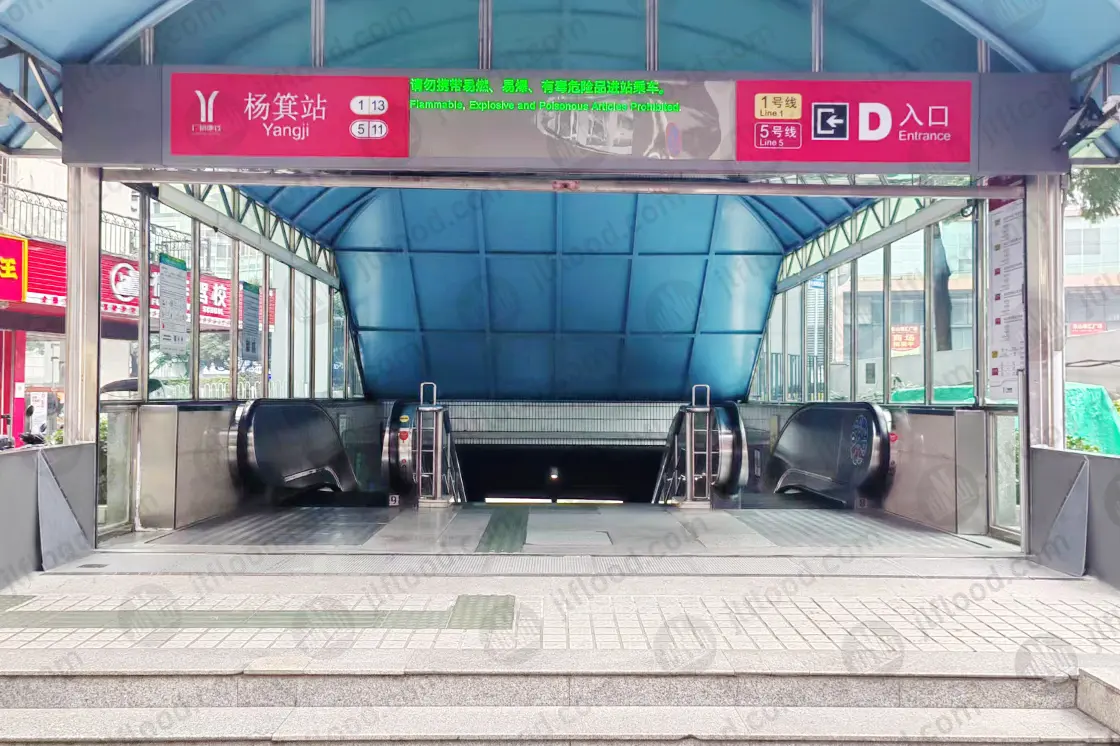
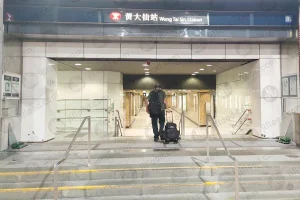
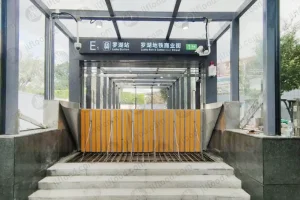
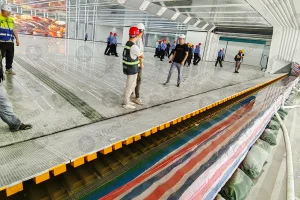
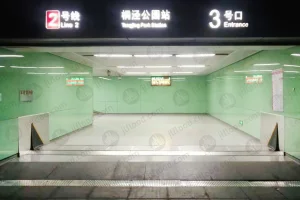
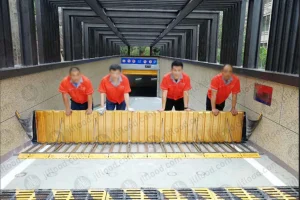
Subway networks are extreme flood vulnerability vectors; water entering a single entrance can paralyze dozens of kilometers of underground rail lines. Junli automatic flood barriers are field-installed across metro networks in Guangzhou, Beijing, Suzhou, Nanjing, and Hong Kong MTR connection channels, auto-closing without interrupting passenger flows during sudden cloudbursts.
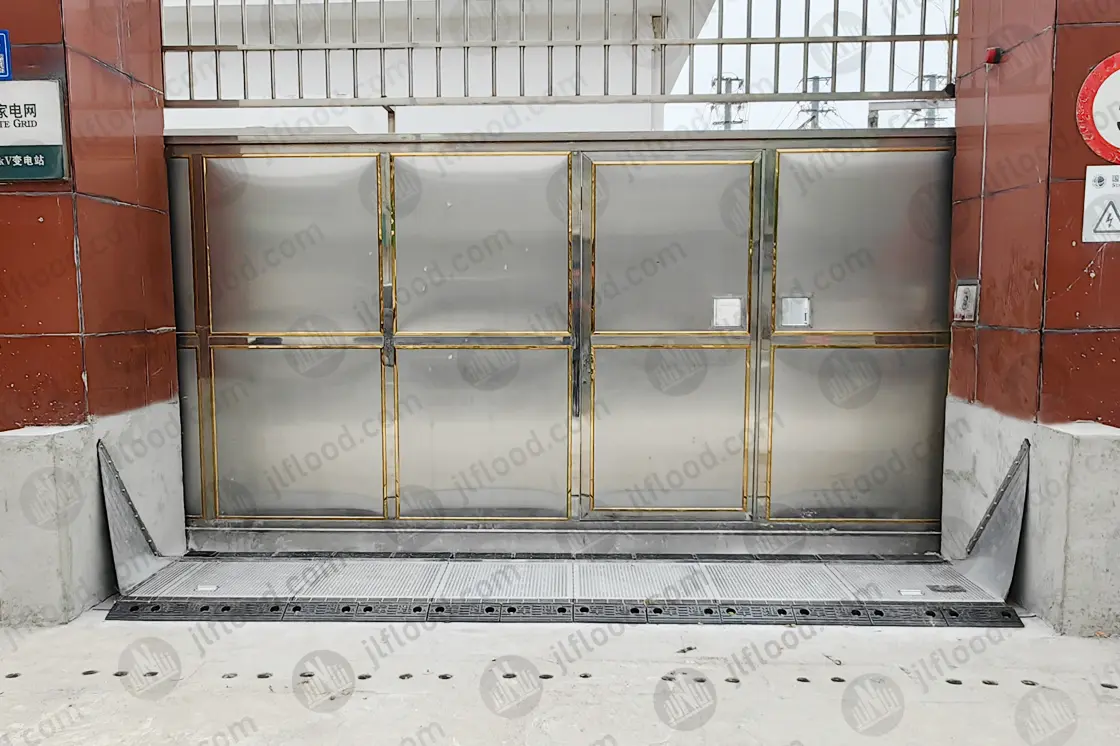
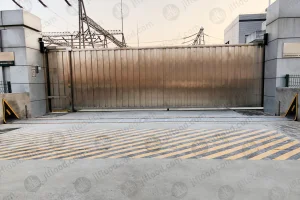
Flooding in high-voltage substation switchgear rooms leads to catastrophic regional power grid collapse. Our surface-mounted and embedded automatic gates safeguard main perimeter access gates, cable trench penetrations, and transformer bay doors across State Grid installations, guaranteeing continuous power resilience.
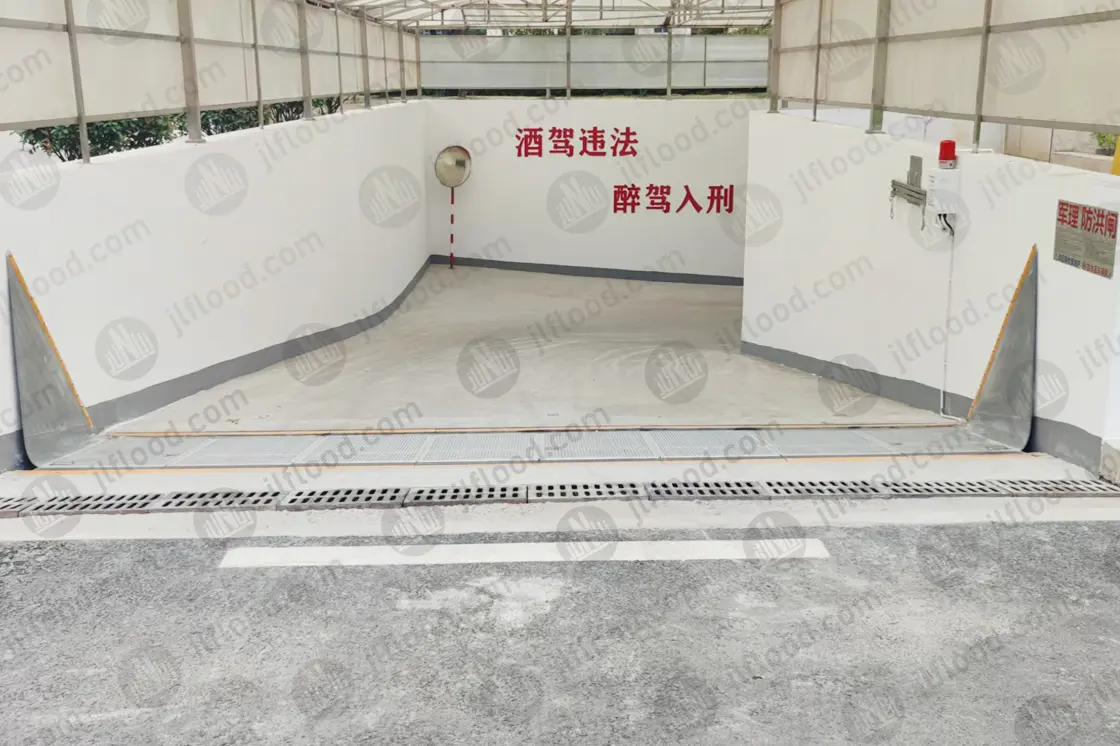
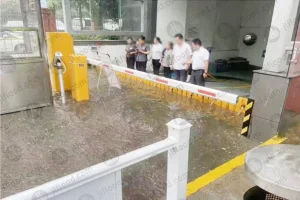
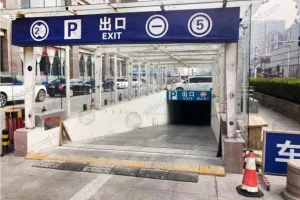
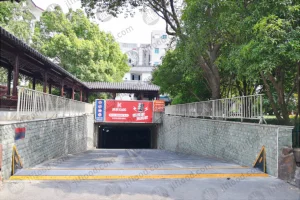
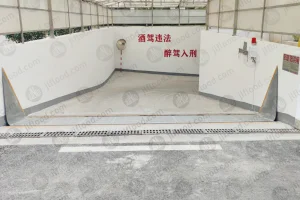
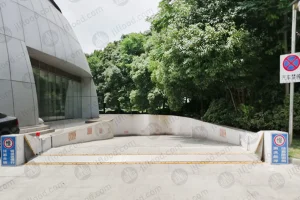
Underground garages in shopping plazas, hospital basements, and residential towers require flush floor surfaces for daily vehicle clearance. Junli garage flood barriers sit level with the driveway surface, rising automatically when storm runoff reaches curb height to protect vehicles and building services.
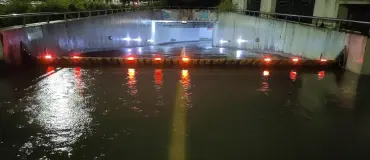
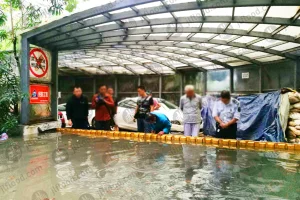
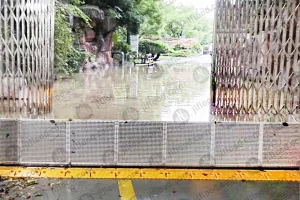
During major super-typhoon landfalls in Eastern China, installed Junli hydrodynamic gates successfully held back surface floodwater up to 1.2 meters deep at unstaffed entrances. Zero water penetration was recorded, validating full seal integrity under dynamic wave impacts.
Key specification parameters required by consulting engineers, EPC contractors, and municipal procurement directors when issuing RFPs for automatic flood control devices.
In-depth answers addressing structural engineering, maintenance, operational physics, and installation prerequisites.
Explore specialized flood protection models designed for sub-stations, metro connection channels, and heavy-duty embedded installations.

Submit your opening width, clearance height, and flood design parameters. Our Nanjing Junli Technology engineering division will generate full CAD proposal drawings, water-testing documentation, and direct factory wholesale pricing within 24 hours.


