
Explore our industrial-grade hydrodynamic barriers designed for subsurface transit, utility substations, and critical civil infrastructure. Every unit features power-free buoyancy deployment and verified zero-leakage seals.
Authored by Nanjing Junli Technology Co., Ltd. Engineering Directorate
As global climate disruption shifts rain patterns toward high-intensity cloudbursts and urban microbursts, urban infrastructure faces unprecedented hydrological stress. Conventional flood protection methods—such as manual sandbag deployment, temporary stop-logs, or sensor-actuated motorized gates—exhibit critical failure vectors during extreme meteorological events. Power grid blackouts, human operational delay, sensor electrical shorts, and mechanical motor jams represent single-point vulnerabilities that frequently result in catastrophic subterranean flooding.
This technical paper presents an exhaustive examination of hydrodynamic, self-rising, zero-power automatic flood defence systems. Operating purely on hydro-buoyancy dynamics and hydrostatic pressure balancing, these passive systems require no electricity, no human intervention, and zero digital sensor loops to achieve instant structural deployment. We explore the physics, structural mechanics, material choices, and manufacturing processes that enable wholesale buyers, EPC contractors, and municipal authorities to secure critical assets with high-reliability flood mitigation technology.
The operational foundation of a hydrodynamic automatic flood gate rests on hydrostatic pressure differential and Archimedes' principle of buoyancy. Unlike active motorized barriers, a passive hydrodynamic gate utilizes the incoming floodwater itself as the sole kinetic energy source for deployment.
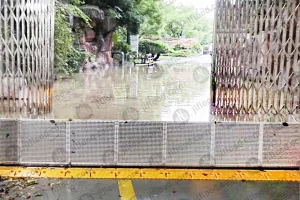
The barrier panel rests completely flush within a ground-embedded stainless steel or hot-dip galvanized basin. As surface runoff reaches threshold depths (typically 30–50mm), water flows through intake grates into the recessed foundation chamber. The intake flow geometry is hydraulically tuned to eliminate vortex formation and sediment accumulation.
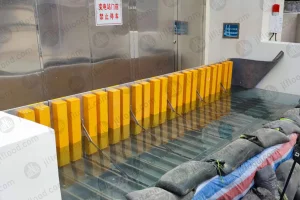
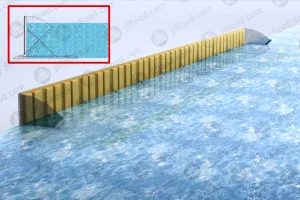
As the interior chamber fills, high-density closed-cell hydrophobic composite foam embedded within the 6063-T6 aluminum panel generates immediate upward positive buoyancy. The panel hinges upward automatically around a heavy-duty stainless steel pivot axis, rotating from a 0° horizontal resting position toward a 75°–85° incline within seconds.
Once deployed, the external water column exerts continuous horizontal hydrostatic force ($F = \rho g h A$) against the face of the barrier panel. This pressure forces the perimeter EPDM dual-lip seals tightly against the embedded steel side frames. Higher water levels increase sealing compression, ensuring a zero-leakage hydraulic seal under full design head.
| Evaluation Parameter | Hydrodynamic Automatic Barrier (Junli) | Electromechanical Motorized Gate | Manual Stop-Log / Sandbag System |
|---|---|---|---|
| Power Dependency | 0% (Pure Passive Hydraulic) | 100% (Grid Power / UPS Backup) | 0% (Human Labor Dependent) |
| Response Time | < 30 Seconds (Automatic) | 2 to 5 Minutes (Sensor Triggered) | 1 to 4 Hours (Manual Mobilization) |
| Blackout Reliability | 100% Operational Capability | High Failure Risk (Battery Depletion) | Operational (Requires Personnel) |
| Vehicular Drive-Over Load | Up to 40T (AASHTO HS-20 / Eurocode) | Varies (Surface Track Constraints) | N/A (Blocks Access When Erected) |
| Annual Maintenance Cost | Ultra-Low (Visual Inspection & Debris Clean) | High (Motor, Sensors, Wiring & PLC) | High (Storage, Training & Replacement) |
| Lifecycle Expectancy | 25+ Years (Anodized T6 Aluminum / Stainless) | 8 to 12 Years (Electrical Wear) | 3 to 5 Years (Material Degradation) |
Nanjing Junli Technology Co., Ltd. operates state-of-the-art production hubs within the Yangtze River Delta industrial belt. This strategic localization delivers exceptional supply chain resilience, advanced alloy sourcing, precision laser processing, and cost efficiency for large-scale enterprise procurement.
Our structural panels utilize custom-extruded 6063-T6 high-tensile structural aluminum alloy profiles. The frame enclosures are crafted from SUS304 or SUS316 marine-grade stainless steel. Through fully automated 12,000W fiber laser cutting stations and robotic TIG welding cells, we achieve dimensional tolerances within ±0.5mm across 6-meter single-span barrier leaves.
Quality assurance at Junli exceeds generic architectural door standards. Every custom-fabricated flood gate undergoes full-scale hydro-testing within our integrated 100-cubic-meter hydraulic testing pit prior to export. Gates are subjected to 120% maximum design head pressure to verify structural deflection coefficients (L/250 max limit) and document zero-seepage rates under real-world water pressure.
By leveraging China's complete ecosystem for raw aluminum extrusion, stainless plating, and specialized elastomeric vulcanization, we reduce production lead times by 40% compared to European competitors, making high-volume wholesale sourcing highly cost-effective.
Our engineering team provides comprehensive OEM/ODM custom adaptation. Whether accommodating irregular driveway slopes, angled kerb lines, or non-standard foundation depths, we deliver tailored CAD/BIM drawing packages within 48 hours of site survey receipt.
All export products are packed inside export-grade wooden cases complying with ISPM 15 standards. Frame assemblies are protected with anti-corrosion VCI shrink film and fitted with structural lifting lugs to streamline jobsite rigging upon port entry.
For Engineering, Procurement, and Construction (EPC) contractors, municipal transit authorities, and commercial real estate developers, specifying flood defense hardware requires stringent technical alignment. Below are the core parameters established by project engineers during tender documentation.
| Component | Material Selection | Standard Rating |
|---|---|---|
| Barrier Panel Shell | Aluminum Alloy 6063-T6 | ASTM B221 / GB 5237 |
| Buoyancy Core | Closed-Cell Hydrophobic Polymer | Density > 45 kg/m³ |
| Bottom Basin / Frame | Austenitic Stainless Steel 304/316 | ASTM A240 / EN 10088 |
| Primary Sealing Lip | Triple EPDM / Fluororubber Elastomer | ISO 48 / Shore A 65±5 |
| Hinge Axle Pins | Duplex Stainless Steel 2205 | High Shear & Fatigue Strength |
Global infrastructure deployment demands compliance with localized building codes, environmental regulations, and safety standards. Junli Technology supports international projects with full technical submittals, material traceability certifications, and structural computation reports.
Designed and factory tested in accordance with international protocols such as US ANSI/FM 2510 (American National Standard for Flood Abatement Equipment), British Standard PAS 1188-1, and relevant European standards (EN 13501 fire/material compliance).
We supply native Revit (.RVT), Industry Foundation Classes (.IFC), and AutoCAD (.DWG) dynamic models to integrate seamlessly into structural architecture plans during front-end engineering design (FEED).
Our specialized international service team offers remote video guidance, custom embedded steel positioning templates, detailed installation step-by-step documentation, and on-site engineering dispatch for major transit installations.
Orders ship with complete EN 10204 3.1 Mill Test Certificates (MTC) covering chemical composition and mechanical tensile properties for all structural aluminum profiles and stainless steel plates.
Urban hydrological planning is undergoing a seismic shift. Rapid urbanization combined with unpredictable weather patterns has exposed the limitations of traditional municipal storm networks. Modern resilience frameworks now emphasize "building-level passive perimeter defense."
Modern rainstorms regularly deliver 50mm to 100mm of precipitation per hour, quickly overwhelming city drainage networks. High-velocity surface runoff rushes down subterranean ramps within minutes. Passive automatic barriers eliminate the "human mobilization gap," engaging instantly as soon as runoff hits the barrier basin.
Global commercial developers and public sector institutions are adopting strict ESG (Environmental, Social, and Governance) targets. Hydrodynamic zero-power flood barriers align perfectly with carbon-neutral design guidelines, consuming zero standby electricity across their entire 25-year operational life.
Future urban resilience relies on interconnected physical and digital systems. Passive barriers act as autonomous physical nodes that mechanically stop water ingress while simultaneously transmitting status data to centralized Smart City Command Centers via IoT telemetry modules.
Junli automatic flood barriers are engineered to serve diverse critical infrastructure environments. Each scenario presents unique spatial, load, and hydrological demands.
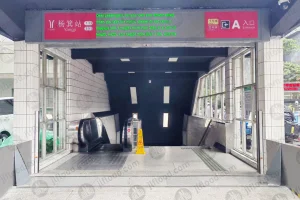
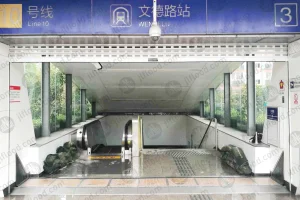
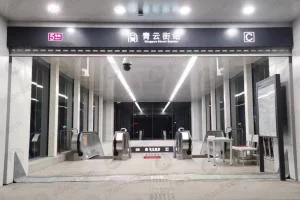
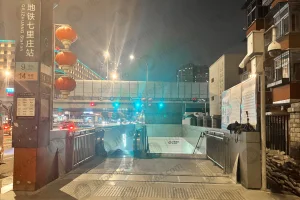
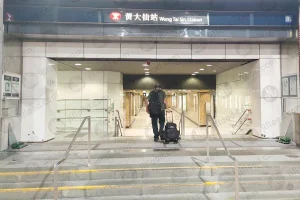
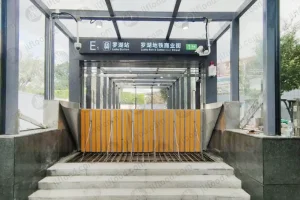
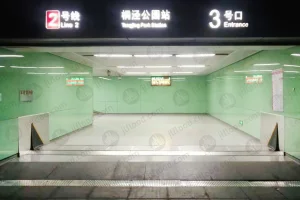
Subway station portals and pedestrian access stairs represent high-vulnerability openings. Flood water entering a station can inundate tunnels, disable traction power, and endanger lives. Our metro-type barriers (such as the HM4D and HM4E series) integrate flush with passenger walkways, supporting high pedestrian traffic while providing automatic protection during extreme rainstorm events.
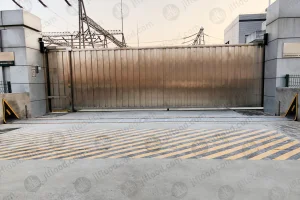
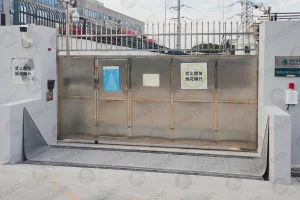
Transformer rooms, cable vaults, and high-voltage substations require continuous operation. A single flooded basement can short-circuit regional grid distribution. Junli substation flood gates prevent surface water intrusion into transformer bays and switchgear rooms without requiring facility operators to be present during sudden night monsoons.
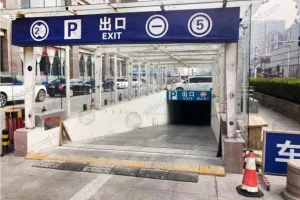
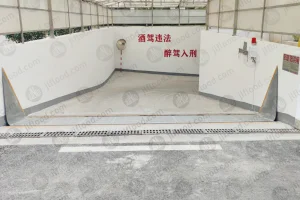
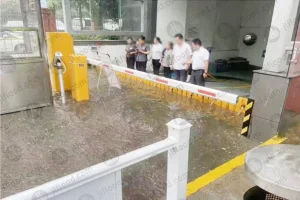
Basement parking ramps concentrate surface water runoff into steep downhill channels. Our heavy-duty drive-over automatic barriers are flush-mounted across ramp entries. Built to withstand continuous 40-ton vehicle traffic, they remain flush during normal operations and automatically deploy when water attempts to cascade down the slope.
Underground commercial corridors and civil defense installations require barrier solutions that preserve architectural aesthetics and accessibility. Surface-mounted and flip-up low-profile automatic gates blend smoothly into finished paving while providing certified protection during sudden flash floods.
Direct answers to critical questions raised by structural consultants, facility managers, and wholesale purchasing directors.
Review additional models tailored for metro connection channels, flip-up pedestrian doorways, and specialized power grid enclosures.

Need technical submittals, custom CAD drawings, or factory pricelists for your upcoming tender? Contact Nanjing Junli Technology for direct factory engineering support.


