Commercial wholesale pricing and technical specifications for municipal, metro transit, and high-density subterranean assets.
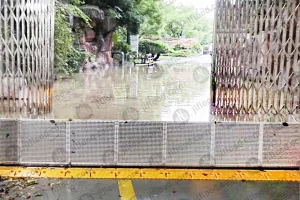
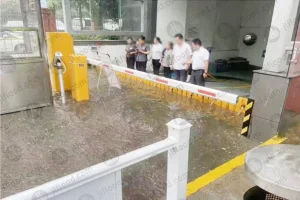
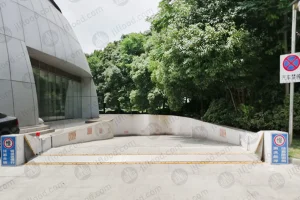
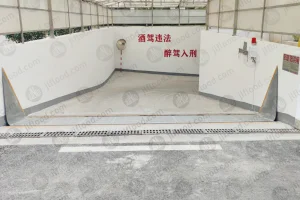

An authoritative analysis of urban waterlogging mitigation, self-rising structural mechanics, and life-safety asset protection.
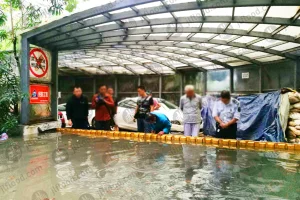
Rapid urbanization and global climate variance have resulted in heightened frequencies of extreme atmospheric river events and localized flash flooding. Dense urban centers depend heavily on subterranean structures, including metro transit networks, underground commercial multi-level parking garages, utility cable trenches, and electrical power substations. Traditional flood defense mechanisms—such as manual sandbagging, modular aluminum stop-logs, or electrically motor-driven flood gates—suffer from systemic failure modes during catastrophic storms.
Manual mitigation techniques require advance warnings, available labor, and manual physical deployment, which frequently fail during sudden microburst events or off-peak hours. Conversely, motorized electromechanical flood barriers are vulnerable to grid power outages, electrical short-circuits, sensor fouling, and mechanical motor jams right when flash flooding peaks. Hydrodynamic Automatic Flood Barriers (HAFBs) solve these failure modes by relying on pure water-buoyancy dynamics and hydrostatic pressure.
Engineered by specialized manufacturers like Nanjing Junli Technology Co., Ltd., hydrodynamic self-closing flood gates operate as passive mechanical systems. Installed flush within a recessed concrete foundation trench at facility entry thresholds, the barrier panel remains level with the roadway under normal conditions, permitting heavy vehicular and pedestrian traffic to pass unobstructed.
When surface runoff breaches the designated threshold level, floodwater gravitates into the recessed frame basin through intake grates. As water accumulates inside the sealed basin, Archimedes' principle of buoyancy exerts upward force on the internal structural panel. As the water level inside the chamber climbs, the floodgate rotates upward along its high-torque hinge axis. Once fully deployed, the hydrostatic pressure exerted by the external head of floodwater presses the barrier panel against reinforced side jamb seals, creating a hermetically sealed barrier against water intrusion.
Operates completely independent of electrical grids, battery backups, pneumatic actuators, or human intervention. Functions seamlessly during catastrophic municipal power blackouts.
Utilizes aviation-grade vulcanized EPDM rubber gaskets combined with specialized bottom hydrophobic seals, keeping fluid leakage rates far below international standard allowances.
Structural framework engineered from high-grade 6063-T6 aluminum alloy or 304/316 stainless steel, capable of resisting AASHTO HS20 / HS25 heavy vehicle wheel loading.
Comprehensive cost breakdown for commercial specifiers, EPC contractors, and international engineering procurement teams.
When procuring wholesale flood barriers for large-scale municipal transit networks or commercial portfolios, unit costs are evaluated on a per-linear-meter ($/m) or per-system configuration basis. Direct factory quotes depend on several technical metrics: clear opening span, design retaining height (hydrostatic head), alloy metallurgical grade, hydraulic damping specs, and civil embedment requirements.
| Barrier Model / Series | Retaining Height Range | Structural Material Grade | Est. Wholesale Price Range (USD / Meter) | Ideal Application Scenario |
|---|---|---|---|---|
| Automatic Hydrodynamic Gate (Embedded) | 0.5m – 1.2m | 6063-T6 Al-Alloy / SS304 frame | $450 – $850 / meter | Underground Parking Ramps, Commercial Malls |
| Heavy-Duty Metro Station Barrier | 1.0m – 2.0m | Heavy Reinforced Stainless Steel 316 | $800 – $1,500 / meter | Subway Entrances, Railway Interchanges |
| Electrical Substation Perimeter Gate | 0.6m – 1.5m | Fluorocarbon Coated Al-Alloy / Anti-Corrosive | $550 – $950 / meter | Power Substations, Cable Trenches, Utility Bays |
| Light Flip-Up / Pedestrian Barrier | 0.3m – 0.8m | Modular Anodized Aluminum Alloy | $300 – $600 / meter | Pedestrian Entrances, Doorways, Server Rooms |
| Custom Modular Water-Testing Barrier | Custom up to 2.5m | 316 Structural Stainless Steel / Custom Seals | Project-Based Quotation | Coastal Infrastructure, Sea-Locks, Nuclear Facilities |
While hydrodynamic automatic barriers present a slightly higher initial capital expenditure compared to manual aluminum stop-logs, their TCO across a 20-year lifecycle is drastically lower:
Leveraging Nanjing Junli Technology’s industrial infrastructure, precision engineering, and global logistics efficiency.
From aluminum extrusion tooling and robotic laser welding to EPDM gasket vulcanization, all manufacturing operations are concentrated in-house at our Nanjing facility. This ensures rigorous quality control and rapid lead times.
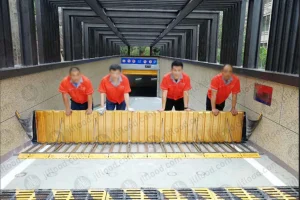
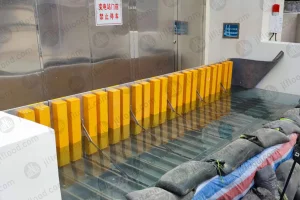
Every barrier series undergoes empirical performance testing within our dedicated hydrodynamic testing pool. We verify deployment speed, seal compression rates, and structural deflection under maximum design pressure heads prior to container packaging.
By leveraging China's dense industrial supplier ecosystem, Junli delivers high-specification flood protection systems at a fraction of Western European or North American production costs—enabling EPC contractors to maximize profitability while adhering to strict safety budgets.
Navigating global building codes, flood abatement standards, and project-specific civil integrations.
Deploying flood mitigation infrastructure internationally requires strict compliance with varying regional standards and civil engineering regulations. Junli Technology provides complete engineering backup documentation, structural calculation sheets, and localized civil drawing packages to streamline municipal approval processes worldwide.
Our flood barrier systems are designed and evaluated in accordance with globally recognized flood abatement testing guidelines:
Different climate zones and urban topographies demand customized civil interfaces:
How hydrodynamic flood barriers protect key assets across 30+ major metro systems and municipal installations.
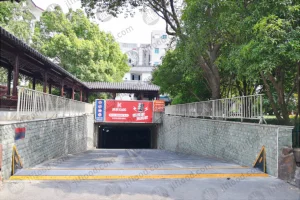
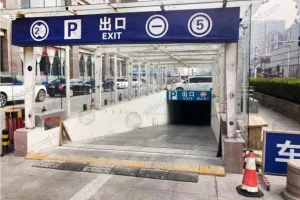
Protects steep subterranean parking ramps from surface runoff. Vehicles drive smoothly over the flush floor panel daily; during torrential rain, the barrier rises automatically to block ingress into multi-story basements.
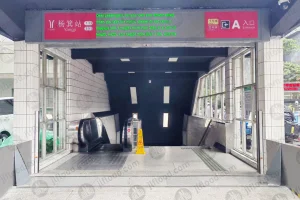
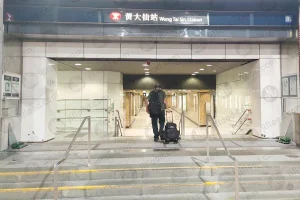
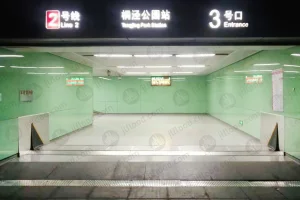
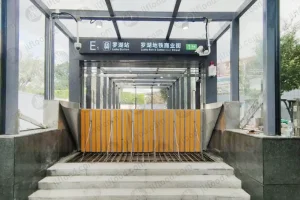
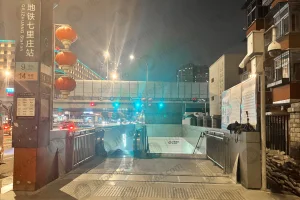
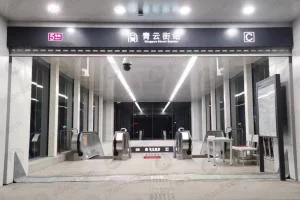
Deployed across metro networks in Guangzhou, Dalian, Beijing, and Hong Kong. Safeguards station portals, connection channels, and pedestrian concourses against sudden inundation during extreme storm events.
Prevents water ingress into critical electrical switchgear rooms, transformer vaults, and cable trenches. Preserves regional power grid integrity during severe coastal landfalls and atmospheric river events.
Merging mechanical fluid dynamics with digital building management systems (BMS) for real-time monitoring.
While the mechanical operation of hydrodynamic flood barriers remains 100% passive and power-free, the integration of smart IoT telemetry represents the future of commercial flood gate management. Modern flood defense specifications increasingly call for real-time digital monitoring to alert property managers and municipal control rooms during automated deployments.
Solar or long-life battery-powered micro-sensors located within the barrier chamber transmit wireless status updates (LoRaWAN, NB-IoT, or 5G) the moment water triggers initial panel movement. Property managers receive instant SMS/email notifications of rising water levels.
Contact closure switches integrated into the flood barrier frames interface directly with central Building Management Systems (BMS). Automated signals can trigger sump pumps, lower emergency fire shutters, or seal ventilation dampers in tandem with gate elevation.
Detailed engineering answers addressing structural, civil, operational, and procurement queries.
The barrier panel is housed flush inside a recessed concrete foundation chamber. When rising floodwater reaches the entrance threshold, it enters the chamber via inlet grates, generating water buoyancy and hydrostatic head pressure. This forces the panel to pivot upward and lock against sidewall gaskets. No power supply, sensors, pumps, or human intervention are required, ensuring 100% operational reliability during storm-induced power outages.
Standard hydrodynamic single-leaf modules accommodate retaining heights from 0.5m to 2.0m and clear single-span widths up to 6.0 meters. For extra-wide commercial driveways or multi-lane transit entrances (over 20 meters wide), multiple barrier modules are installed end-to-end using modular intermediate support pillars and synchronized hydraulic dampers.
Yes. Every barrier model undergoes full-scale hydraulic testing in our factory test basin. We test lifting responsiveness, hydrostatic structural deflection under maximum head, and EPDM seal compression rates. Detailed inspection certificates, material test reports (MTRs), and water test video recordings are provided with every wholesale order.
Hydrodynamic barriers require minimal maintenance due to their passive design. Semi-annual inspections involve clearing leaves or debris from the intake grates and flushing sediment out of the bottom chamber via the built-in drainage outlet. EPDM rubber seals are rated for a 10-15 year operational lifespan and can be quickly replaced using standard tools without removing the structural foundation frame.
All flood barrier components are packaged in export-grade reinforced wooden crates with waterproof vapor wrapping. Embedded frames and panel assemblies are custom-crated with corner protectors to ensure zero distortion during oceanic transit. Full installation manuals, civil blueprints, and anchoring hardware are included inside the crate.
Explore our complete manufacturing lineup of metro connection channel barriers, garage flip-up systems, and self-closing flood gates.