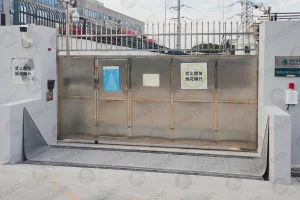
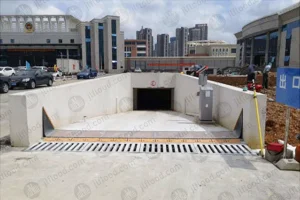
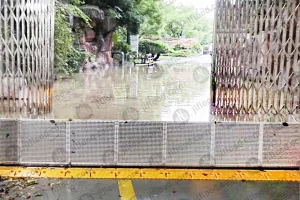
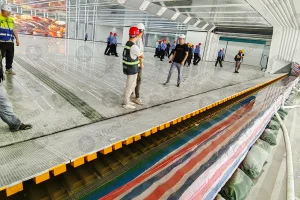
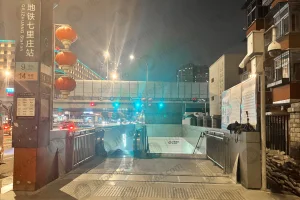
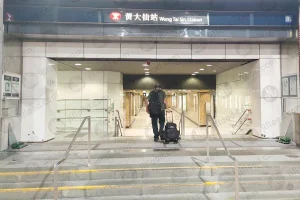
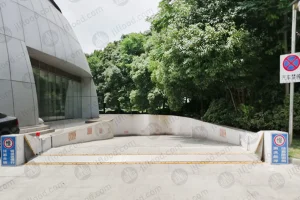
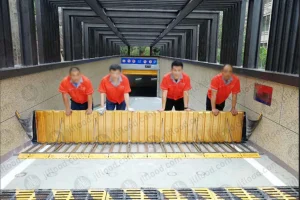
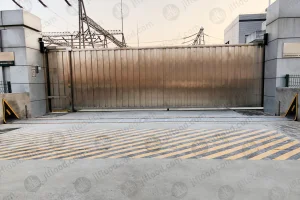
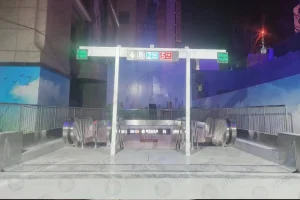
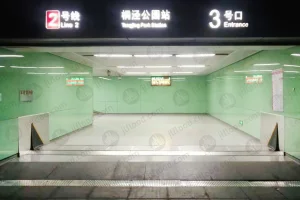
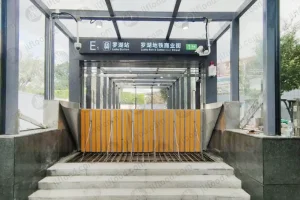
Explore our factory-direct wholesale barrier configurations engineered specifically for subways, underground garages, and transit utility vaults.
As global climate volatility amplifies flash flood frequencies, underground metro transit infrastructure faces unprecedented operational and structural threats. Passive hydrodynamic flood barriers represent the definitive shift from manual flood fighting to automated infrastructure self-defense.
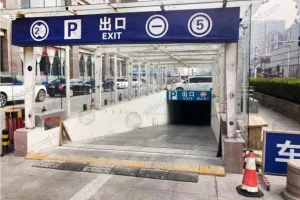
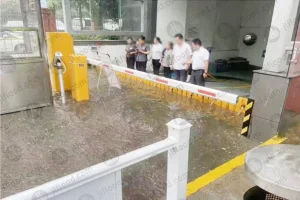
Underground metro portals are highly vulnerable to urban surface runoff during cloudbursts. Surface-installed and flush-embedded hydrodynamic gates automatically deploy the moment floodwater arrives, creating an impenetrable physical shield that stops water ingress prior to station flooding.
Interconnecting pedestrian tunnels between rail lines and commercial plazas require zero-threshold flood barriers. Hydrodynamic barriers lie completely flat in standby mode, ensuring zero obstruction to daily foot traffic, while responding instantly to water ingress without human intervention.
Electrical substations and air intake shafts power rail systems. Water intrusion causes catastrophic grid collapse. Heavy-duty unpowered automatic gates seal high-risk utility vaults against hydrostatic heads up to 2.0 meters, preserving core operational continuity.
Standard flood gates rely on electrical grid power, sensors, PLC controllers, and human activation—all of which frequently fail during extreme typhoons due to localized power blackouts. Nanjing Junli’s hydrodynamic design operates purely on fundamental hydraulic physics.
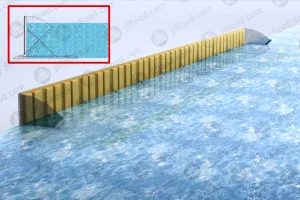
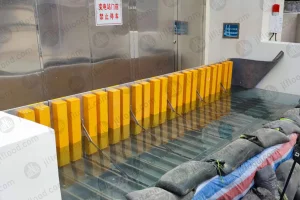
When floodwaters reach the trigger threshold, water enters the recessed bottom chamber through non-clogging intake grates. Utilizing Archimedes’ Buoyancy Principle and Pascal’s Law, the rising water exerts upwards buoyant force on the hollow-structure barrier panel, causing it to self-orient upwards. As water levels increase, the hydrostatic pressure forces the panel’s dynamic EPDM rubber gaskets against the perimeter structural frame, forming an impenetrable, self-tightening seal.
| Performance Parameter | Surface-Mounted System (HM4D-0006E) | Embedded Recessed System (HM4D-0006C/D) |
|---|---|---|
| Installation Method | Bolted directly to finished concrete apron (Retrofit) | Flush recessed chamber built into ground foundation (New Build) |
| Activation Principle | Automatic Hydrodynamic Water Buoyancy | Automatic Hydrodynamic Water Buoyancy |
| Standby Obstruction | Low-profile ramp (Slight elevation gradient) | 0mm Completely Flush (Zero Pedestrian/Vehicle Obstruction) |
| Standard Retaining Heights | 500mm – 1200mm | 600mm – 2000mm (Customizable) |
| Material Construction | High-Strength Anodized Marine Aluminum Alloy / SS304 | Structural SS304 / SS316 Stainless Steel & Heavy Duty Alloy |
| Load Rating Capacity | 20-30 Tons (Standard Commercial Vehicles) | 60+ Tons Heavy Transit / Fire Truck / Emergency Vehicle Rated |
| Leakage Rate Standard | < 0.1 L/min per meter of seal length (Exceeds Standard) | 0.00 L/min (Zero Leakage Verified under full static water head) |
As a premier China OEM/ODM manufacturer headquartered in Nanjing, Jiangsu Province, Nanjing Junli Technology Co., Ltd. integrates state-of-the-art automated fabrication with rigorous metallurgical engineering.
Our production floor utilizes heavy-duty fiber laser cutting, automated robotic arm seam welding, and high-precision CNC machining centers. This guarantees zero distortion along full barrier spans up to 60 meters, ensuring millimeter-perfect site fitment for global infrastructure contractors.
We do not rely on structural simulations alone. Every custom flood barrier design undergoes 100% full-scale hydrostatic testing in our specialized factory test pools. We measure structural deflection, buoyancy speed, and dynamic gasket sealing performance prior to export dispatch.
We provide full export-compliant wooden crate packaging, modular component labeling, comprehensive CAD/BIM drawing sets, site civil embedding templates, and remote or on-site engineering installation guidance for international EPC contractors.
The convergence of physical hydraulic engineering with digital IoT monitoring defines the next generation of urban infrastructure flood resilience.
While deployment remains 100% unpowered and hydrodynamic, our next-gen systems incorporate ultra-low-power NB-IoT/LoRaWAN sensors. Real-time telemetry relays barrier positioning angle, water depth, sediment accumulation, and dynamic sealing pressure to centralized Metro Operations Command Centers (OCC).
To resist aggressive de-icing salts, coastal brackish water, and high-acid urban runoff, our material roadmap incorporates military-grade fluorocarbon treatments, 316L super-austenitic stainless steel structural components, and self-healing EPDM gasket polymers rated for a 50-year maintenance-free lifespan.
Future urban projects demand fast track retrofitting. Junli is standardizing pre-engineered modular barrier cassette units. These standardized components allow engineering teams to install 10-meter wide station entrance barriers within single nocturnal maintenance windows (under 4 hours).
Procurement directors and civil engineering consultants require verified structural integrity, clear BIM integration, and long-term Total Cost of Ownership (TCO) advantage.
We supply full Autodesk Revit BIM models (LOD 400 detail) complete with anchor plate location coordinates, drainage pit structural connection requirements, and civil reinforcement rebars interface details for seamless incorporation into master EPC designs.
Every order includes project-specific FEA stress reports. Structural deflection under 2.0-meter static water head pressure and dynamic 60-ton vehicle impact force is calculated and verified to ensure structural safety factors exceeding 2.5x.
Unlike active motor-driven or hydraulic-cylinder gates that require monthly electrical testing, standby power backup, motor replacements, and active maintenance, hydrodynamic gates cost $0/year in electrical power consumption.
Meeting international building codes and municipal flood protection compliance standards worldwide.
Fabricated in strict compliance with ISO 9001:2015 Quality Management Systems, ISO 14001 Environmental Management, Eurocode EN 1990 (Basis of Structural Design), and EN 1991 (Actions on Structures). Weldments certified under EN 1090 structural steel standards.
Every shipment is delivered with a complete engineering documentation binder: Mill Material Test Certificates (EN 10204 3.1), Factory Hydrostatic Acceptance Test Reports, Assembly Assembly Drawings, and English Operation & Maintenance Manuals.
We provide full civil engineering interface drawings, embedded steel frame positioning templates, and video technical support. For major municipal metro tenders, our overseas service engineers can be dispatched for site supervision and commissioning.
Common inquiries from municipal engineers, architects, procurement managers, and distributor partners.
The system operates on pure physical fluid mechanics (Archimedes' Principle of Buoyancy). The flood barrier panel rests flush inside a ground chamber. When rising surface water flows into the chamber through top inlet grates, it exerts upwards hydrodynamic buoyancy on the engineered hollow panel. As the water level rises, the panel automatically rotates upwards to block incoming water. When floodwaters recede, water drains out through bottom weep-holes or sump pumps, allowing the barrier panel to self-return to its flat standby position flush with the road surface.
Yes. Nanjing Junli’s heavy-duty embedded metro flood gates (such as the HM4D-0006C series) are specifically structural-rated for heavy municipal traffic. The top cover plates and internal load-bearing ribs are constructed from high-tensile structural steel or heavy-grade aluminum alloy certified for wheel axle loads of 30 to 60+ tons (conforming to AASHTO HS-20 and European load standards). Buses, fire trucks, and heavy maintenance vehicles can safely drive over the flush barrier panel daily during standby mode.
Our designs incorporate multi-stage debris defense. Top inlet covers feature narrow stainless steel filtration grates that catch leaves and large particulate matter. The internal chamber floor is engineered with a sloped self-cleaning sediment channel that directs fine silt toward integrated drainage collection points. Furthermore, routine maintenance only requires flushing the chamber with a water hose twice per year using accessible cleanout covers.
Single continuous barrier panels can span clear widths up to 6.0 meters and retaining heights up to 2.0 meters. For wider subway concourses, main station plazas, or wide underground driveways (10m to 60m+), we deploy modular multi-leaf interconnected barrier arrays featuring intermediate removable or drop-down support mullions. This allows infinite width coverage with zero loss of structural seal integrity.
Yes. All Junli flood gates utilize standardized high-density EPDM (Ethylene Propylene Diene Monomer) seal profiles engineered for extreme UV, ozone, and chemical exposure. Seals are mechanical-fit (press-fit retention channels) rather than permanently glued, allowing on-site maintenance crews to replace seal segments in under 30 minutes without disassembling structural gate components.
We provide full white-label OEM/ODM assistance during bidding. Our engineering department supplies customized CAD layout drawings, embedded foundation rebar clearance specs, structural load calculation binders, tender specification text, and factory direct wholesale price quotations within 24-48 hours of project parameter submission.
Explore additional factory-certified flood protection barriers, embedded models, and specialized subway connection channel solutions.