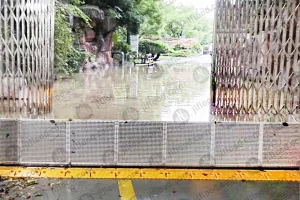
Explore our core baseline of power-free, hydrodynamic automatic flood barriers designed for embedded civil installation, underground transit hubs, and commercial complexes.
Rapid climate change, intensified urban surface runoff, and extreme meteorological events such as atmospheric rivers and tropical typhoons have fundamentally transformed urban risk management worldwide. Traditional flood control measures—such as manual sandbag deployment, modular aluminum stop logs, and electrically driven flood gates—are increasingly proving inadequate during rapid flash-flood events. Modern municipal planners, EPC contractors, and corporate risk managers require autonomous, zero-human-intervention solutions that guarantee 100% operational readiness without reliance on grid electricity or manual labor.
As a leading wholesale flood proof automatic flood barrier manufacturer and factory hub, Nanjing Junli Technology Co., Ltd. pioneers the development of hydrodynamic automatic flood gates. Operating strictly on passive physical principles of buoyancy and hydrostatic pressure, these systems remain flush with vehicular surfaces during normal conditions and self-activate within seconds when floodwaters arrive. This technical whitepaper explores the engineering standards, global procurement trends, supply chain advantages, and multi-sector application profiles that define modern perimeter flood barrier procurement.
Historical flood analysis across metropolitan centers reveals that severe urban waterlogging is almost universally accompanied by regional power outages, grid failures, electrical short circuits, or sensor malfunctions. Electrically actuated or motorized flood barriers carry a single point of catastrophic failure: power loss. Hydrodynamic automatic flood gates solve this vulnerability entirely by converting the dynamic kinetic energy and static head pressure of incoming water directly into mechanical lifting force.
Quantitative benchmarks establishing structural reliability, response velocity, and long-term operating efficiency.
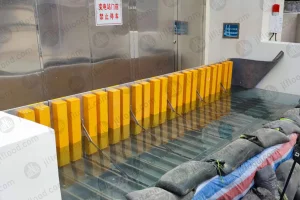
The core mechanics of the Junli automatic flood barrier system rely on fluid dynamics, Archimedian buoyancy, and lever-arm mechanical advantage. Embedded seamlessly into driveways, metro entrances, or substation perimeters, the barrier housing comprises a recessed steel/reinforced-concrete trench, a high-strength aluminum door leaf, and specialized EPDM dynamic sealing gaskets.
During dry conditions, the flood panel sits flush with the road level, matching exact surrounding elevation profiles. Engineered to withstand heavy-duty traffic loading (certified to load class D400 and E600, supporting heavy fire trucks and commercial vehicles), the panel allows unhindered daily transit.
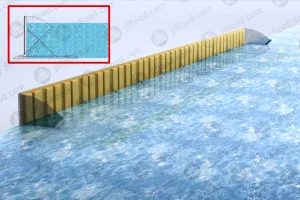
As flash flood surface water overflows the entry curb and enters the embedded collection chamber, fluid accumulates rapidly around the engineered buoyancy floats. As water level rises inside the basin, upward hydrostatic displacement force ($F_b = \rho_{water} \cdot V \cdot g$) initiates automatic rotation along the bottom pivot axis.
As the retaining leaf reaches its operational angle (typically 75° to 90° vertically), incoming exterior water head exerts continuous static pressure against the structural face. This head force drives triple-redundant EPDM side and bottom gaskets against stainless-steel frame stops, creating a hermetic seal against zero-leakage tolerances.
Sourcing automatic flood barriers for large-scale enterprise projects or municipal tenders demands stringent quality assurance, continuous material traceability, and scalable factory production capacity. Nanjing Junli Technology operates a state-of-the-art Industry 4.0 production ecosystem in Jiangsu Province, combining modern metallurgical engineering with proprietary hydrodynamic research.
Our production line utilizes high-precision fiber laser cutting systems and automated multi-axis robotic welding stations. Structural extrusions composed of 6063-T6 aircraft-grade aluminum alloy and SUS304/316 stainless steel frame assemblies are fabricated within sub-millimeter structural tolerances to ensure perfect field alignment.
Unlike trading entities that rely purely on 3D simulations, Junli maintains a dedicated, full-scale hydrostatic testing pool. Every customized flood gate series undergoes rigorous static water head testing, dynamic uplift verification, and seal deflection analysis prior to international crating and shipping.
Situated within the Yangtze River Delta manufacturing cluster, Junli benefits from direct raw material integration. From specialized aging-resistant EPDM rubber formulas to industrial-grade marine protective anodizing coatings, our supply chain guarantees 20-year structural service lifetimes.
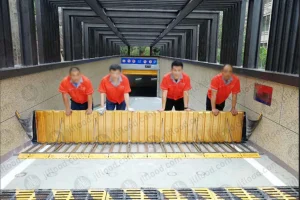
Watch full-scale hydrostatic water retention testing filmed live at our Nanjing manufacturing center.
Different physical structures face unique hydrological threats. Junli custom-engineers flood barrier geometry, retaining height limits (0.5m to 2.0m standard), and embedment frames to meet site-specific civil constraints.
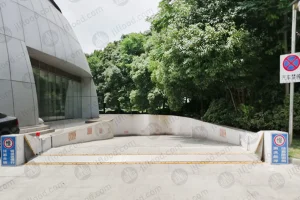
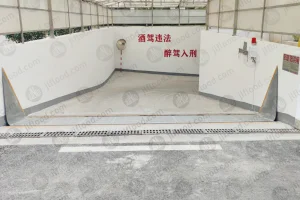
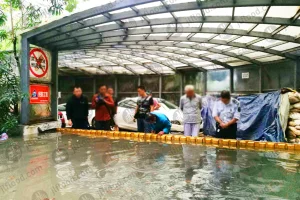
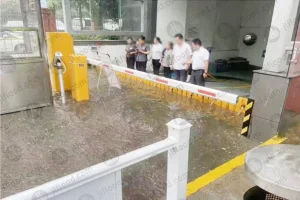
Underground commercial car parks are primary vulnerability zones during intense rainfall. Flush-mounted ramp barriers allow high vehicle throughput daily while guaranteeing immediate seal activation when surface gutter networks overflow, safeguarding subterranean infrastructure and parked assets.
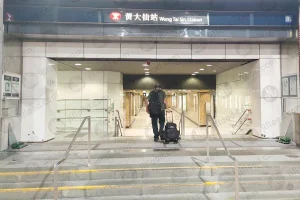
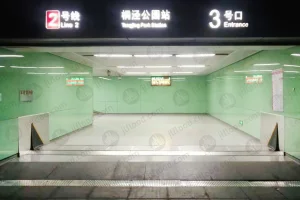
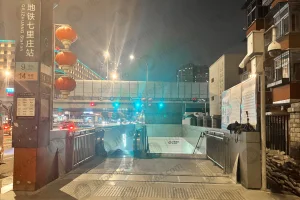
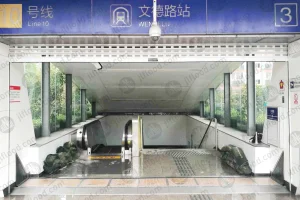
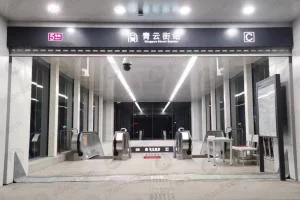
Subway entrances, ventilation shafts, and connection corridors between retail plazas and stations represent critical ingress points. Junli hydrodynamic barriers are field-proven across rail systems in Beijing, Guangzhou, Shenzhen, Suzhou, and Hong Kong, meeting strict transit safety specs.
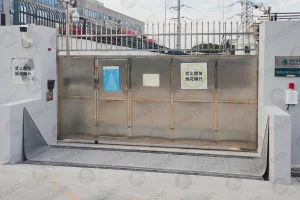
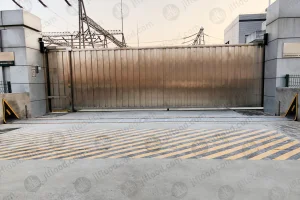
Critical power infrastructure requires 100% continuous protection. Water entering a high-voltage transformer yard causes catastrophic short-circuit outages. Our power-free perimeter barriers prevent substation inundation during severe typhoons without needing human operation.
Comprehensive engineering clarifications for civil engineers, procurement heads, and tender consultants.
The flood barrier panel sits flush inside a recessed foundation chamber during dry weather. When surface floodwater flows into the entrance, it collects within the embedded foundation tray. Rising water levels inside the tray naturally generate positive Archimedian buoyancy under designed float cavities. As buoyancy rotates the panel upward, hydrostatic head pressure from the rising floodwater pushes the structural leaf tightly against vertical stainless steel frame stops equipped with heavy-duty EPDM seals. The system requires zero motors, sensors, grid power, or manual labor—guaranteeing 100% automatic operation even during total power grid blackouts.
Junli standard flood panels are constructed using high-tensile 6063-T6 aluminum alloy extrusions and internal structural ribbing designed to support standard vehicle loads (20 to 40 tons overall vehicle weight). For heavy industrial driveways, logistics parks, or municipal fire truck access lanes, we engineer heavy-duty models certified up to EN124 Class D400 / E600 ratings (up to 400kN to 600kN test load), ensuring zero permanent structural deformation during daily traffic operations.
Our foundation chambers are equipped with integrated stainless steel debris filters and sediment settling channels. Small particulate debris passes through self-flushing bottom drainage channels connected directly to the facility’s municipal drain pipe or sump pit. Additionally, routine quarterly maintenance involves lifting the modular surface cover plates to clear minor accumulated silt using standard water flushing equipment, requiring less than 30 minutes per unit.
Yes. As a direct wholesale manufacturer, Junli provides full engineering support for international project tenders. We supply comprehensive CAD detail drawings, 3D BIM models, civil interface structural concrete rebar layout guides, English maintenance manuals, and factory water test certificates. Customized retaining heights (from 0.5m up to 2.0m) and continuous clear span configurations (multi-leaf connection arrays exceeding 30 meters wide) are routinely manufactured for overseas infrastructure projects.
Embedded models require a pre-dug concrete trench with embedded anchor bolts and bottom drainage hookups, ensuring a completely flush finish with surrounding asphalt or pavement. Surface-mounted or flip-up models are anchored directly onto pre-existing flat concrete floors, making them ideal for retrofit projects where floor excavation is restricted by sub-floor utilities or post-tensioned slab cables.
Browse our specialized line of surface-mounted, modular hydrodynamic, and high-impact structural flood gates engineered for rail transit stations and industrial installations.
Partner directly with China's premier automatic flood barrier manufacturer. Send your clear width, retaining height requirements, and civil site surveys to receive an engineering proposal and wholesale pricelist within 24 hours.