Explore our wholesale-grade, field-verified hydrodynamic barrier assemblies customized for high-traffic entryways and subterranean structures.
A technical assessment of modern urban flood risks and the shift toward hydrodynamic, non-powered passive safety barriers.
Urban subterranean entrances—such as parking garages, metro station access points, commercial concourses, and energy utility vaults—represent the most vulnerable breach points during severe weather events. Flash flooding and extreme cloudbursts frequently exceed municipal storm drain capacities, leading to rapid water accumulation that surges down entry ramps within minutes.
Traditional manual flood barriers (sandbags, slot-in aluminum stop logs) require advance warning, physically strenuous labor, and on-site staff availability. Electromechanical barriers, while automated, rely heavily on sensors, actuators, and main power grids—the exact infrastructure components that routinely experience catastrophic blackouts during severe typhoons.
Hydrodynamic automatic flood barriers solve these operational failures through fundamental physics. Flush-installed directly into the driveway surface, these barriers utilize the natural buoyancy of water and hydrostatic head pressure to deploy automatically without electricity, human intervention, or electronic signals.
| Evaluation Parameter | Hydrodynamic Automatic Barrier | Electromechanical Gate | Manual Aluminum Stop-Logs |
|---|---|---|---|
| Power Dependency | Zero (Buoyancy Driven) | High (Requires Backup Generators) | Zero (Manual Labor) |
| Human Operation Required | No (100% Unattended) | Optional (Sensor / Remote) | Yes (High Labor Demand) |
| Deploy Response Speed | Immediate (< 1 Sec Water Contact) | 30 - 120 Seconds | 30 - 90 Minutes Assembly |
| Blackout Reliability | 100% Operational | Vulnerable to Power Failure | 100% Operational (If Staff Present) |
| Architectural Impact | Flush Ground Integration | Visible Side Columns / Overhead Motors | External Storage Racks Needed |
| Heavy Traffic Durability | Integrated Heavy-Duty Load Plates | Varies by Motor Track Mechanism | N/A (Temporary System) |
Detailed engineering principles behind non-powered floor-recessed entryway flood barriers.
The system is housed inside a custom stainless steel or hot-dip galvanized structural basin recessed directly into the roadway threshold. Designed to meet load-bearing standards (up to 40-ton vehicle driveover), it remains flush with the surrounding pavement during dry conditions to allow uninterrupted traffic flow.
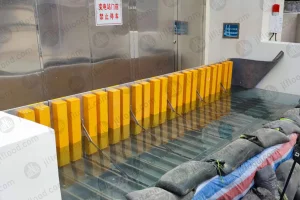
When surface floodwater flows toward the entryway, water enters the bottom basin intake ports. As the internal water level rises, the engineered density of the hollow aluminum alloy door panel generates vertical buoyancy, lifting the front edge automatically. As the water head increases, hydrostatic force pushes the panel into a fully upright, locked position.
Superior water tightness is achieved through continuous high-grade EPDM rubber seals applied along the bottom hinge and side abutments. Water pressure actively forces the primary lip seal against the frame, enhancing sealing capability as water depth increases, resulting in zero-leakage performance under extreme hydrostatic head.
Combining structural metallurgy expertise, large-scale modular fabrication, and certified quality testing to deliver international engineering solutions.
Access to world-class 6063-T6 architectural-grade extruded aluminum profiles provides lightweight structural integrity, maximum corrosion resistance, and high yield strength suited for heavy vehicle traffic environments.
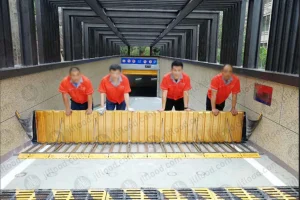
Chinese production bases offer flexible custom width configurations ranging from 2-meter garage entrances to 30-meter multi-segment station perimeter barriers, fully tailored to structural drawings.
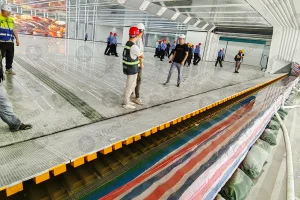
Leading manufacturers like Nanjing Junli Technology feature dedicated hydrostatic test pools, conducting full-scale water retention testing for leakage rate and lifting response prior to international shipment.
Direct wholesale factory sourcing significantly reduces procurement budgets compared to European alternatives while ensuring rapid production schedules for major municipal tenders.
Verified installation performance across underground garages, sub-stations, and rail transit lines across major cities.
Junli Technology Co., Ltd., located in Qinhuai District, Nanjing, Jiangsu Province, is a high-tech enterprise specializing in R&D and manufacturing of intelligent flood control systems. Operating across intelligent civil defense, flood mitigation, and energy sector protection, our solutions are engineered for severe urban waterlogging events.
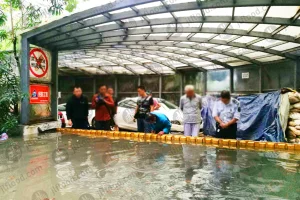
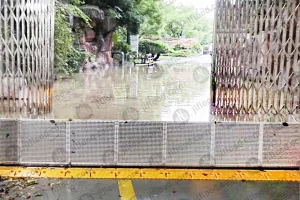
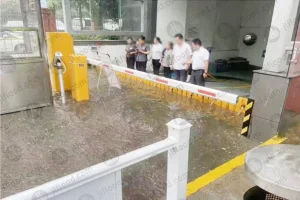
Every design is field-tested during typhoon seasons—including proven automated retention during Typhoon Bebinca—confirming power-free self-rising functionality under real surface flow conditions.
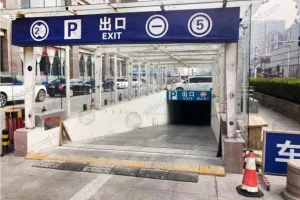
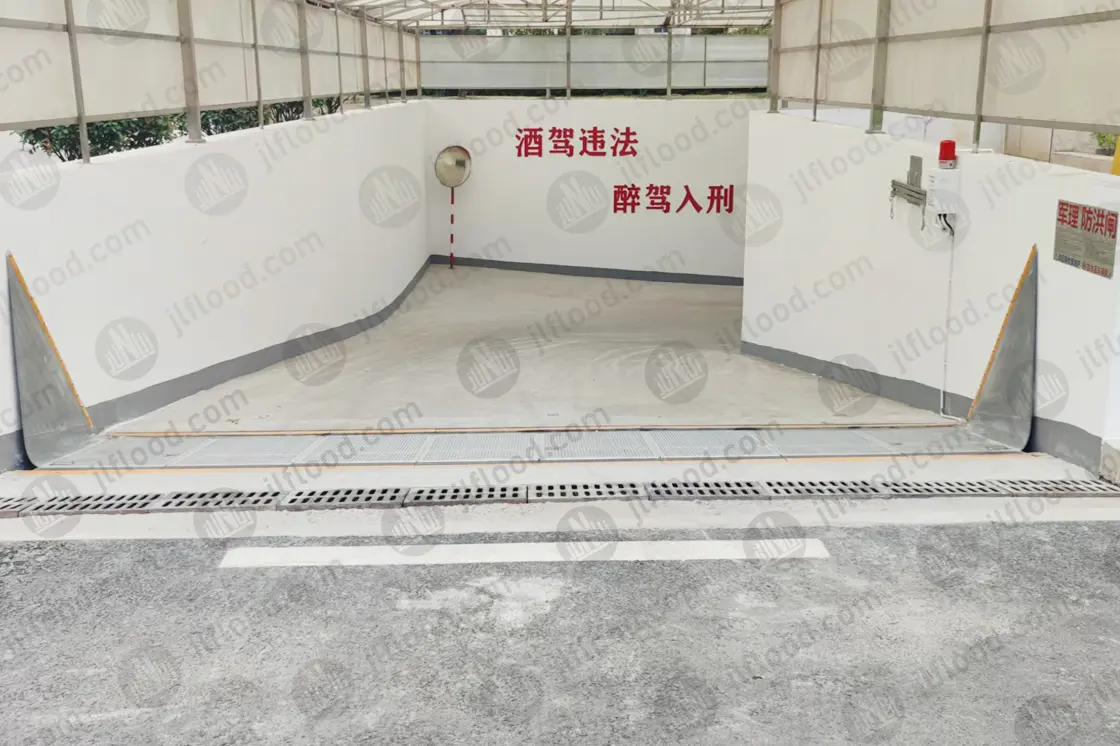
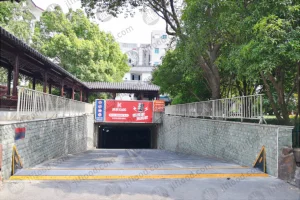
Flush ramp protection for commercial, residential, and hospital parking structures. Allows zero-bump driving during daily operational conditions and deploys automatically upon water arrival.
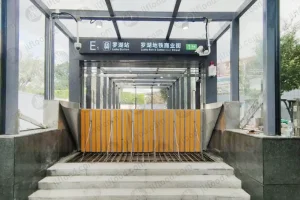
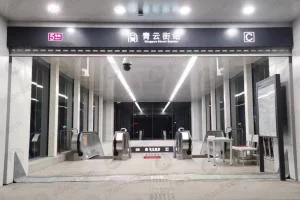
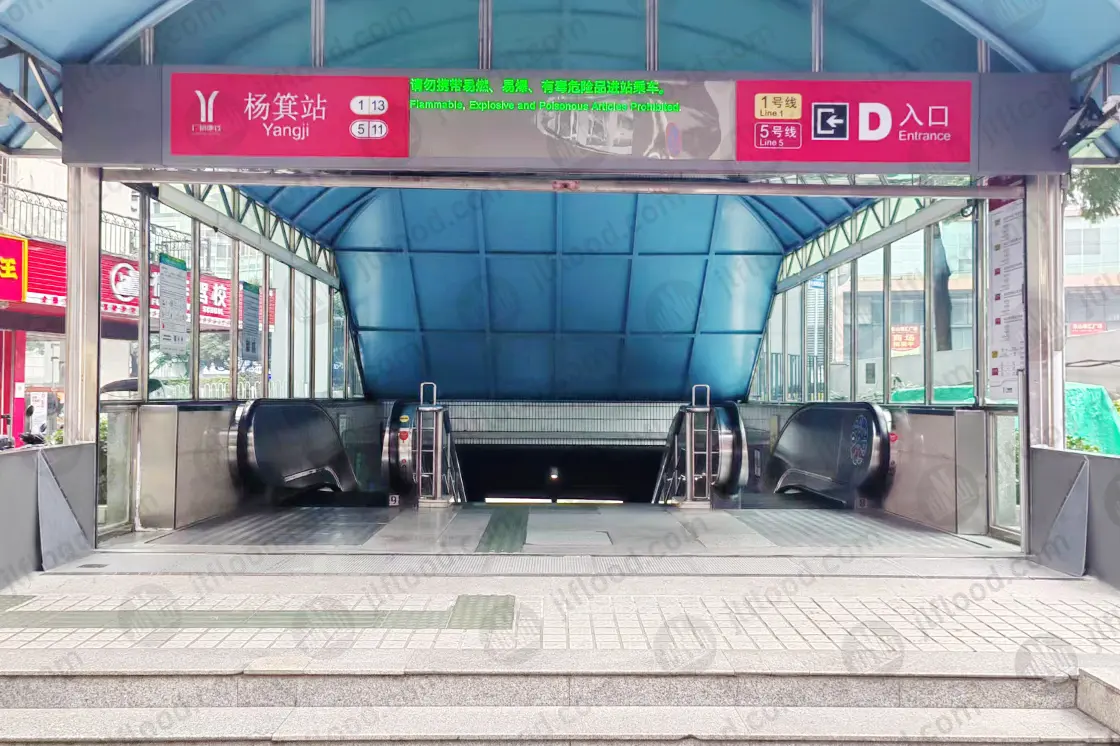
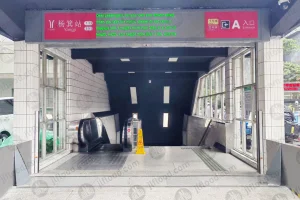
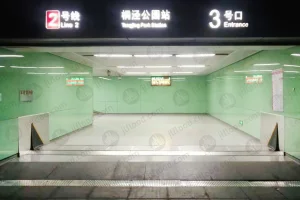
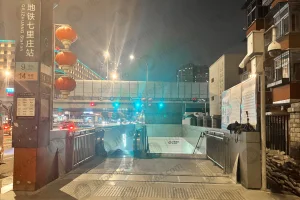
Validated on rail transit lines across Guangzhou, Suzhou, Beijing, Nanjing, Shenzhen, and Hong Kong. Essential barrier system for concourses and underground connection channels.
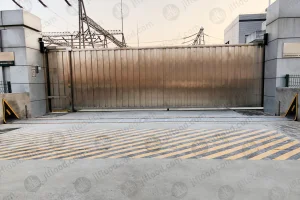
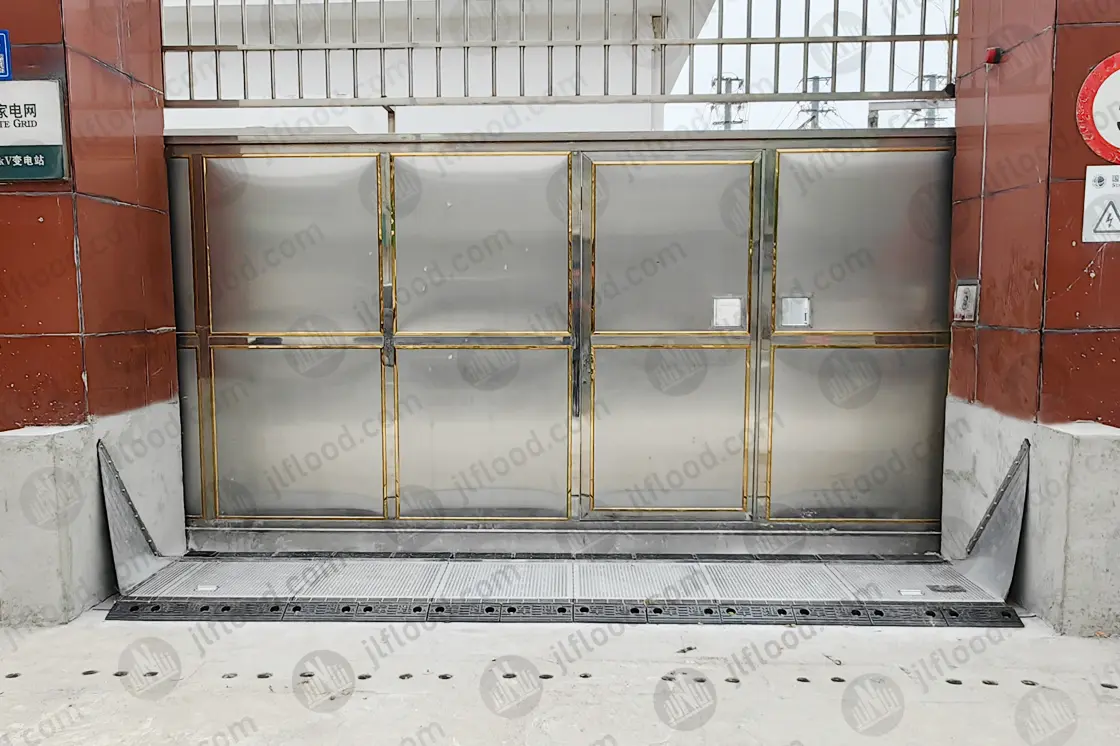
Dedicated perimeter security and cable trench barriers preventing catastrophic water intrusion into critical electrical rooms, grid distribution hubs, and transformer yards.
Customized engineering configurations tailored for global urban environments, heavy rain belts, and coastal typhoon regions.
For shopping centers, office towers, and mixed-use complexes, maintaining unobstructed foot and vehicular access is crucial. Hydrodynamic barriers seamlessly integrate flush into finished driveway granite or asphalt, eliminating trip hazards while providing 24/7 autonomous protection against flash urban inundation.
Underground pedestrian passages, highway underpasses, and civil defense shelters require heavy-duty water retaining capacity. Custom modular barrier configurations allow continuous spans exceeding 20 meters, utilizing intermediate removable mullions and structural side pillars to secure wide entryways.
Critical facilities housing high-voltage switchgear, server arrays, or hazardous chemical storage require complete water exclusion. Embedded automatic barriers provide passive compliance with emergency management standards, guaranteeing structural sealing without reliance on human response teams.
Key specifications international EPC contractors and architectural specifiers evaluate when purchasing wholesale flood gates.
Verify that ground surface plates meet localized vehicle load requirements (e.g., AASHTO HS-20, EN 124 D400) to ensure continuous heavy truck or bus passage without structural deformation.
Match the barrier panel retaining height (standard 500mm to 2000mm) against historic 100-year flood levels and civil engineering surface runoff calculations for the project location.
Ensure the floor embedment frame includes integrated drainage discharge outlets to route residual rainwater away from the foundation basin during minor rain events.
Select manufacturers providing export-standard wooden crating, modular assembly labeling, installation CAD templates, and step-by-step English technical manuals.
How passive physical barriers are integrating with smart municipal monitoring networks and ESG compliance framework.
While the mechanical lifting mechanism remains completely power-free and hydrodynamic, modern flood barriers now feature optional non-contact magnetic position sensors. These sensors output deployment status signals directly to Building Management Systems (BMS) or Smart City monitoring centers.
As global commercial real estate standards mandate reduced operational energy footprints, passive flood defense systems support ESG objectives by providing robust climate adaptation resilience without ongoing electric power draw or standby battery disposal issues.
Urban density demands rapid installation without prolonged facility closures. Standardized modular aluminum panel segments allow retrofit installation into existing driveway thresholds in as little as 24 to 48 hours, minimizing disruption to operating assets.
Clear, engineering-backed answers addressing common technical, operational, and commercial procurement inquiries.
Browse our additional factory-direct automatic flood gate designs, subway connecting channel barriers, and self-closing assemblies.