Facebook LinkedIn YouTube

Wholesale Hydrodynamic Flood Barrier Manufacturers & Suppliers

Global B2B Technical Procurement Guide & Engineering Whitepaper on Passive Hydro-Buoyancy Automatic Flood Defence Systems
Featured Hydrodynamic Automatic Barrier Series
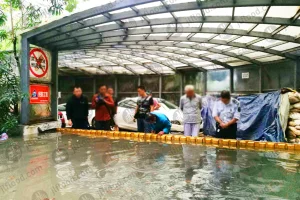
Wholesale Flood barrier, Flood defence automaticlly Manufacturer, Pricelist
Request Specification & Price
Wholesale Flip-Up Automatic Flood Barrier Manufacturer, Manufacturers
Request Specification & Price
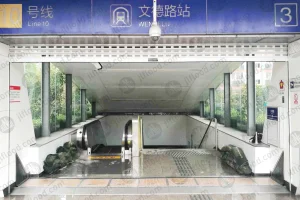
Wholesale Flood Barrier at Metro Stations Manufacturer, Quotes
Request Specification & Price
China Self opening & Closing Flood Gate Manufacturers, Suppliers
Request Specification & Price
China Automatic Flood Barrier without electric power Pricelist, Quotes
Request Specification & Price
China Flood Barrier at Dalian Metro Stations Manufacturers, Quotes
Request Specification & Price
Wholesale Automatic flood barrier, Embedded installation Manufacturer, Suppliers
Request Specification & Price
Wholesale Embedded type Automatic flood barrier for Metro Manufacturer, Suppliers
Request Specification & Price
Engineering Whitepaper

Hydrodynamic Automatic Flood Mitigation Systems: Technical Architecture & Mechanics

An analysis of passive hydro-buoyancy mechanisms replacing traditional electrical and manual flood gates across critical municipal infrastructure.

0.0 kW
Electricity Required
< 0.1s
Passive Trigger Speed
2.0 m
Max Retaining Height
25+ Yrs
Design Lifespan
In modern structural engineering and urban flood resilience, the transition from active powered barriers to hydrodynamic automatic flood barriers represents a pivotal leap in reliability. Flash flooding events caused by extreme weather patterns frequently coincide with municipal power grid collapse, rendering electromechanical, hydraulic, and pneumatic gates useless when they are needed most. Hydrodynamic flood barriers eliminate human intervention, external power dependencies, and electronic sensor vulnerabilities by utilizing Archimedes' principle of hydrostatic buoyancy.

1. Passive Hydro-Buoyancy Deployment

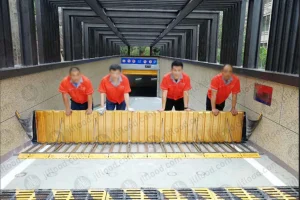
The core mechanism consists of a recessed bottom tray anchored flush with the driveable surface. As floodwater surges into the drive bay, water enters the foundation trough via front inlet grates. The engineered hollow leaf panel (constructed from high-grade structural aluminum or stainless steel) experiences hydro-buoyancy, rising automatically as water levels swell.

2. Hydrostatic Self-Locking & Dual-Lip Sealing

As the retaining leaf panel reaches its vertical 90-degree deployment vector, incoming hydrostatic head pressure pushes the structural barrier panel directly against heavy-duty EPDM seals mounted along the side jambs and bottom hinge channels. The higher the floodwater rises, the tighter the dual-lip seal compresses against the stainless steel frame.

3. Automatic Reset & Sediment Drainage

Once the floodwaters recede, water drains out of the underlying tray through integrated non-return sub-surface discharge outlets. Gravity returns the structural panel smoothly back into its recessed housing chamber, allowing immediate restoration of pedestrian or vehicular traffic without manual dismantling.

Technical Insight: Hydrostatic Head Pressure vs. Structural Yield Strength
Our structural calculations account for dynamic wave action, hydro-impact forces, and debris momentum. The aluminum extrusions (Alloy 6063-T6) utilized in OEM hydrodynamic barriers feature structural ribs providing a minimum bending moment safety factor of 2.5x under maximum design water level (HWL).
Supply Chain Leadership

China Factory Direct Manufacturing: Scale, Precision & Cost Efficiency

Why tier-1 global EPC contractors, municipal authorities, and commercial developers partner with leading Chinese hydrodynamic flood barrier suppliers.

Procuring hydrodynamic automatic flood barriers from established Chinese manufacturers offers distinct engineering and economic advantages. Located in major industrial technology hubs like Nanjing, Chinese flood barrier factories leverage fully integrated supply chainsβ€”from raw aluminum extrusion smelting and precision CNC machining to advanced EPDM rubber vulcanization and full-scale hydraulic test chambers.
Evaluation Parameter China Direct OEM / Factory Manufacturing Western Regional Distributors Traditional Manual Demountable Barriers
Manufacturing Scale & Lead Time High volume capacity (5,000+ meters/month); 15-20 days lead time Low-to-medium volume; extended 8-12 week lead time Variable supply chain; manual assembly requirement
Power Dependency Zero Electricity (100% Hydro-buoyant mechanics) Often requires backup diesel generators or UPS batteries Zero power, but requires 100% human labor force deployment
Customization Capabilities Full OEM/ODM engineering (Custom span, height, loading rating) Fixed modular standard dimensions Limited height adjustment; high site-work overhead
Vehicle Load Capacity Up to AASHTO HS-20 / Eurocode 40-Ton Heavy Vehicles Standard light-vehicle driveover ratings Not driveable; must be erected post-traffic clearance
TCO (Total Cost of Ownership) Optimal CAPEX + Near-Zero Maintenance OPEX High initial CAPEX + High distributor markup Low CAPEX + High ongoing labor & operational risk

Advanced CNC Milling & Laser Welding

State-of-the-art Chinese production lines utilize multi-axis Gantry CNC milling and automated robotic laser welding. This ensures structural frame tolerance within ±0.5mm across single-span spans exceeding 6 meters, establishing zero-gap seal interface contact alignment.

In-House Hydrodynamic Pool Testing

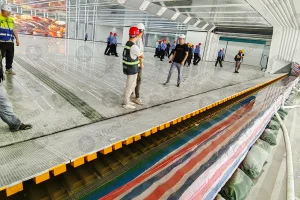
Leading manufacturers operate 1:1 scale hydraulic test basins. Prior to global export shipping, custom barrier configurations undergo hydrostatic pressure validation, dynamic flood pulse tests, and seal leakage rate inspections, with factory acceptance test (FAT) reports issued for every batch.

Export Logistics & Global OEM Support

Comprehensive export engineering support including localized civil work CAD/BIM drawing sets, embedded frame mounting templates, bilingual technical installation manuals, and sea-freight compliant heavy-duty steel skeleton packing.

Procurement Framework

Global Enterprise Procurement Specifications & Engineering Criteria

Key design and civil engineering parameters required by international consulting engineers, facility managers, and B2B buyers.

When specifying wholesale automatic flood barriers for critical commercial, industrial, or infrastructure assets, procurement officers and structural engineers must evaluate technical proposals against rigorous hydraulic and structural benchmarks:

1. Structural Load Bearing Capacity

The top cover plate of the embedded frame must withstand continuous traffic impact without deformation. OEM specifications require minimum load ratings matching AASHTO HS-20-44 truck loading (14.5 Metric Tons per axle) or European Standard EN 124 Class D400 for heavy commercial vehicular garage entrances.

2. Permissible Leakage Rate Standards

Unlike non-critical perimeter fencing, flood barriers protecting sub-grade assets must comply with strict sealing criteria such as FM 2510 or equivalent municipal water-tightness specifications. High-performance hydrodynamic gates limit allowable leakage to less than 0.5 liters per hour per meter of wetted perimeter.

3. Anti-Corrosion Material Matrix

Exposed components must resist harsh environmental degradation, de-icing salts, and chemical runoff. Specifications demand 6063-T6 anodized aluminum alloy panel construction paired with 304 or 316 grade stainless steel side jambs, hinges, and subterranean fastener hardware.

Civil Works & Sub-Surface Foundation Preparation: Successful barrier operation relies on correct civil embedment. The general contractor must prepare a reinforced concrete trench with smooth, level bedding (±2mm level tolerance) equipped with a dedicated gravity drain pipe or sump pump tie-in connection to evacuate residual stormwater from the basin tray.
Deployment Scenarios

Application Scenarios for Hydrodynamic Automatic Barriers

Tailored flood defence solutions across diverse urban infrastructure and high-value real estate assets.

Urban Mass Transit & Metro Stations

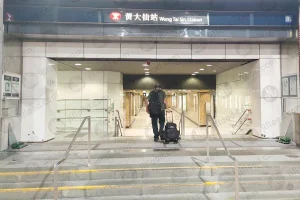
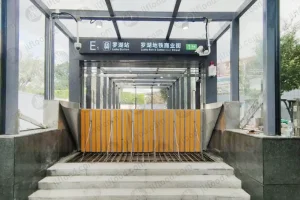
Subway entrance portals, pedestrian concourses, and ventilation shafts represent primary water entry points during flash urban waterlogging. Embedded automatic flood barriers sit flush with sidewalk paving, preserving 100% barrier-free accessibility during dry operational hours, while instantly pivoting upward when floodwaters reach critical threshold levels.

Underground Garages & Car Parks

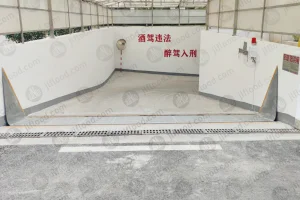
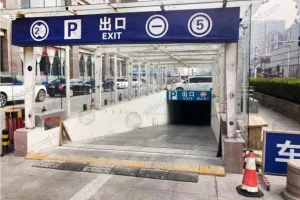
Commercial shopping malls, residential towers, and hospital basements house critical electrical switchgear, emergency generators, and high-value vehicles. Wide-span (up to 10+ meters multi-modular design) hydrodynamic ramp barriers safeguard sloped parking entrances against massive surface water inundation without impeding daily traffic flow.

High-Voltage Power Substations & Utilities

Power utilities and electrical substations require absolute zero-water breach security to prevent grid blackouts and catastrophic transformer short-circuits. Surface-mounted and embedded self-closing flood gates installed at equipment room perimeter doors ensure 24/7 un-staffed operational protection.

Global Compliance & Trends

International Regulatory Standards & Smart Resilience Trends

Navigating international building codes, ESG compliance, and IoT integration in urban flood resilience.

As international building codes (such as ASCE 24 in North America and Eurocode flood mitigation directives in Europe) tighten performance requirements for urban developments, enterprise buyers must select manufacturing partners capable of delivering verified regulatory documentation.

Localized Climate & Anti-Freeze Options

For sub-zero northern European or North American deployments, OEM factories integrate thermostatically-controlled electric heating cables inside the subterranean frame. This prevents ice accumulation from locking the buoyancy panel during freezing winter rain events.

IoT Telemetry & Smart Building Integration

Modern hydrodynamic gates can be retrofitted with low-power IoT micro-switches and optical water sensors. While the gate operates mechanically without power, these wireless sensors send real-time SMS/email alerts and SCADA status signals to building management systems (BMS) the moment deployment occurs.

Sponge City & ESG Capital Asset Ratings

Incorporating passive zero-energy flood resilience assets directly enhances corporate ESG metrics and lowers commercial property insurance premiums. Facility owners demonstrate proactive risk mitigation against climate change hazards without increasing operational energy carbon footprints.

Technical Q&A

Frequently Asked Questions by Global Specifiers & Buyers

Detailed answers addressing common installation, engineering, and maintenance inquiries.
Q1: How does a hydrodynamic automatic flood barrier operate completely without electricity or manual intervention?
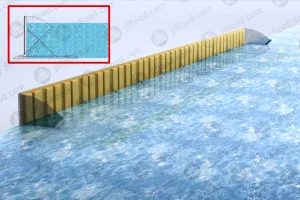
The system utilizes natural hydrostatic water pressure and Archimedes' buoyancy principle. The structural leaf panel is housed flush within a recessed foundation frame. When surface water flows into the chamber through front entry grates, the hollow buoyant panel floats and rises automatically. As water rises, hydrostatic pressure pushes the panel tightly against dual EPDM side seals, locking it in place until floodwaters recede.
Q2: Can heavy trucks and emergency vehicles drive over the barrier frame daily?
Yes. When in the resting position, the heavy-duty top cover plate and internal load-bearing structural pillars form a flush driveable surface. Standard commercial units are engineered to support 20 to 40 Metric Ton axle loads, fully meeting AASHTO HS-20 and EN 124 Class D400 vehicular traffic standards for parking garages and industrial estate entrances.
Q3: How is sediment, leaves, and mud managed inside the embedded bottom tray?
The foundation tray features sloped drainage channels and built-in sediment collection zones. Minor silt and leaves pass through the drainage system via gravity discharge outlets. For routine maintenance, top stainless steel inspection grates can be removed easily for quick vacuum or pressure-washer cleaning every 6 to 12 months.
Q4: What standard dimensions and custom retaining heights can Chinese factories supply?
Standard retaining heights range from 300mm to 2000mm (0.3m to 2.0m). Single-leaf clear spans are custom fabricated up to 6.0 meters wide. For wider openings such as multi-lane parking ramps or wide subway entrances, multiple barrier modules are coupled using removable or embedded structural intermediate mullion posts.
Q5: What are the installation requirements for retrofitting existing facilities vs. new construction?
For new construction, the embedded frame is cast directly into the concrete slab during structural foundation pouring. For retrofit projects, a trench is cut into the existing concrete drive ramp, a reinforced bed is prepared, the embedded frame is anchored into place, and fast-curing epoxy concrete is poured around the frame perimeter. Surface-mounted flip-up barriers are also available where ground trench excavation is restricted.
Q6: How are wholesale OEM orders packaged and shipped for international export?
All export orders are wrapped in protective multi-layer anti-scratch film, edge-protected, and secured inside heavy-duty fumigated wooden crates or steel-framed export pallets. Complete sets include embedded frames, panel assemblies, side jambs, EPDM seals, anchor bolts, CAD installation drawings, and factory water-test certification reports.
Heavy-Duty & Custom Hydrodynamic Flood Barrier Models
China Heavy duty automatic flood gate Hm4d-0006C Factory, Pricelist
Request Specification & Price
Wholesale Flood Gate at Metro Stations Manufacturer, Suppliers
Request Specification & Price
Wholesale Automatic flood barrier, Surface installation metro type: Hm4d-0006E Supplier, Quotes
Request Specification & Price
China Embedded flood barrier Hm4e-006C Manufacturer, Quotes
Request Specification & Price
China Surface type Automatic flood barrier for Metro Suppliers, Pricelist
Request Specification & Price
Wholesale Modular hydrodynamic automatic flood gate Supplier, Factories
Request Specification & Price
China Self closing flood barrier Factory, Factories
Request Specification & Price
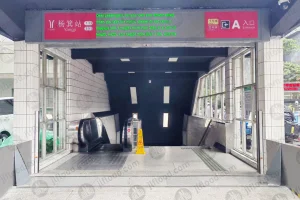
Wholesale Flood Barrier at Guangzhou Metro Yangji Station Suppliers, Factory
Request Specification & Price
Request a Catalog βœ‰ ↑