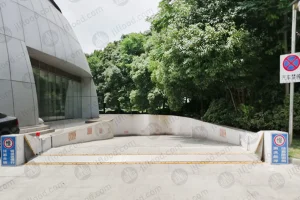
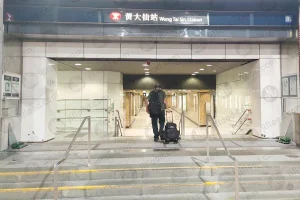
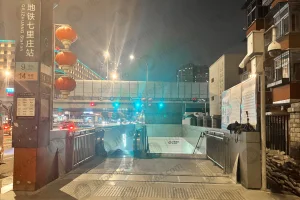
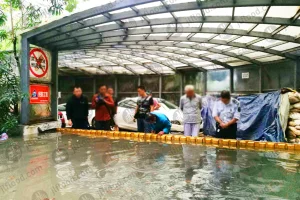
Explore our field-tested, industrial-grade steel and automatic flood barriers manufactured for commercial, metro, and power infrastructure projects.
As extreme hydrometeorological events increase in frequency and magnitude across global metropolitan hubs, the defense of subterranean civil infrastructure has shifted from reactive emergency response to proactive structural mitigation. Industrial facilities, subterranean transport networks, ultra-high voltage (UHV) power distribution substations, and multi-level commercial real estate complexes face unprecedented operational risks due to flash flooding and surface water runoff.
Within structural flood risk management, heavy-duty steel flood barriers and automated hydrodynamic flood gates represent the gold standard for high-consequence asset protection. Unlike modular lightweight aluminum flash-boards designed for temporary municipal containment, heavy steel barriers provide structural resilience against immense hydrostatic pressure heads, high-velocity dynamic hydrodynamic impacts, and heavy debris loads during storm surges.
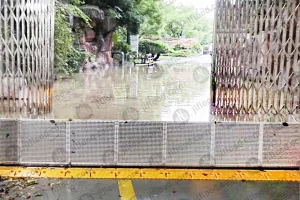
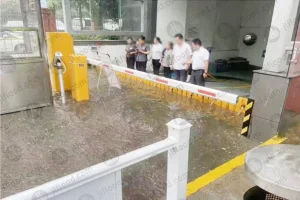
Rapid urbanization has created vast impermeable surface areas. When precipitation rates exceed local storm-sewer capacity (e.g., >80mm/hr), flash runoff funnels into low-lying ingress points such as underground parking ramps, metro station portals, and utility cable vaults within minutes.
Modern electrical substations house localized transformers and gas-insulated switchgear (GIS). A single flood penetration causes catastrophic arc-flashes, multi-million-dollar asset destructions, and grid outages affecting entire municipal sectors.
Global insurance syndicates now mandate certified structural flood defenses (such as FEMA P-936 or ISO 22301 compliance) prior to writing policies for subsurface urban commercial real estate, driving asset managers toward permanent steel barrier installations.
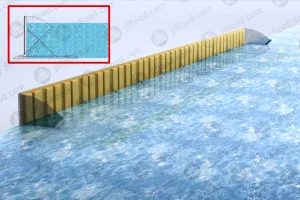
The engineering core of next-generation steel flood gates relies on hydrodynamic passive auto-deployment. Traditional motorized or electromechanical flood barriers suffer from a catastrophic single point of failure: loss of grid power during severe typhoons or electrical storms. Modern heavy industrial barriers operate on pure fluid mechanics—buoyancy and hydrostatic head pressure.
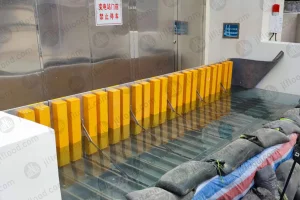
When surface water accumulates in front of an entrance, it overflows into the recessed foundation chamber embedded flush with the driveway or threshold. As the liquid level within the chamber rises, integrated high-density polyurethane float chambers inside the steel door panel generate buoyant uplift force. The door panel hinges upward automatically. Once elevated, the water's downstream hydrostatic head presses the panel firmly against vertical side jambs, compressing high-performance EPDM gaskets to form a watertight seal compliant with international standards.
| Technical Parameter | Structural Carbon Steel (Q355B / ASTM A36) | Stainless Steel (AISI 304 / 316L) | Extruded Modular Aluminum |
|---|---|---|---|
| Yield Strength (MPa) | 355 MPa (High Structural Resilience) | 205–290 MPa (Superior Anti-Corrosion) | 160–210 MPa (Light Duty Only) |
| Hydrostatic Head Rating | Up to 3.0 Meters Head Pressure | Up to 3.5 Meters Head Pressure | Typically Limited to 1.2 Meters |
| Debris Impact Resistance | Extreme (Resists floating vehicles/logs) | High Structural Plastic Deformation Limit | Low (Prone to local wall puncture) |
| Surface Treatment | Hot-Dip Galvanized (ISO 1461) + Epoxy Fluorocarbon | Passivated / Pickled / Electropolished Surface | Anodized / Powder Coated Layer |
| Service Life Expectancy | 30+ Years with Scheduled Seal Replacement | 50+ Years in Coastal Marine Environments | 10–15 Years under Heavy Traffic Load |
Different civil structures present vastly contrasting geometric, operational, and traffic load requirements. A successful engineering specification must balance daily architectural functionality with extreme contingency performance.
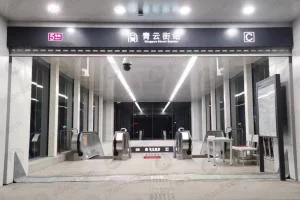
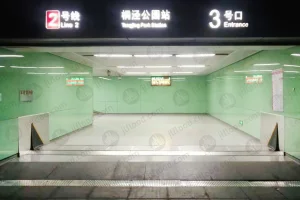
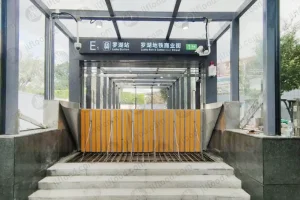
Challenge: High daily pedestrian footfall, zero allowable threshold height during normal operation, zero water leakage allowable into underground rail tunnels.
Solution: Surface-mounted or fully embedded hydrodynamic steel gates (such as the Hm4d and Hm4e series). During non-flood conditions, the steel cover plate rests flush with the finished granite floor, supporting pedestrian loading. In flood events, water triggers auto-erection to seal station portals up to 2.0m retaining heights.
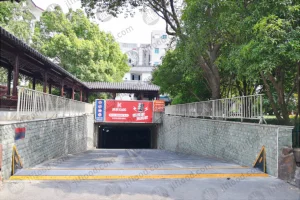
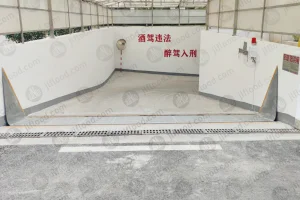
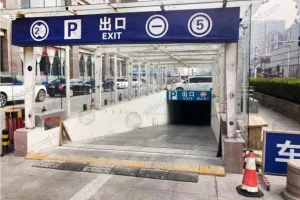
Challenge: Continuous heavy vehicle traffic (HS-20 / H-20 axle loads), low overhead clearance for overhead gates, wide span entrances (>10 meters).
Solution: Heavy-duty flip-up and modular hydrodynamic steel gates. Reinforced internally with structural I-beams and load-bearing drive-over top plates capable of supporting 30-ton gross vehicle weight without deforming the recessed foundation frame.
Challenge: Unmanned remote facilities requiring zero human operator dependency, strict dielectric clearance, boundary wall protection.
Solution: Unpowered automatic self-closing steel flood gates integrated directly into perimeter boundary walls and equipment room access doors. Mechanical latching systems lock the gate in its closed, sealed state until manually reset after floodwaters recede.
Challenge: Dual-purpose protection: preventing floodwater entry while simultaneously containing hazardous chemical or oil spills on site.
Solution: 316L stainless steel flood gates equipped with chemical-resistant Viton or specialized fluorocarbon elastomers, preventing environmental contamination during catastrophic industrial plant incidents.
The industrial flood control sector is undergoing a digital and material convergence. While mechanical buoyancy remains the baseline for zero-power safety, structural systems are increasingly augmented by smart monitoring, advanced materials, and digital twin technology.
Integration of wireless, low-power NB-IoT and LoRaWAN sensors within the foundation chamber. Facility management receives instantaneous mobile alerts regarding chamber water accumulation, deployment angle, seal compression status, and post-event drainage completion.
Incorporation of fiber-reinforced polymer (FRP) internal stiffeners alongside high-strength Q355B structural steel frames. This hybrid design reduces structural deadweight by 30% while retaining structural rigidity, enabling faster passive buoyancy response times.
OEM manufacturers now supply parametric Building Information Modeling (BIM) LOD 400 objects. Civil engineers can simulate hydro-structural interactions, load paths, and embedment rebar clashes inside Revit prior to site excavation.
Procuring wholesale steel flood barriers requires a comprehensive engineering workflow. A failure in civil embedment, concrete pouring, or seal selection renders even the strongest steel gate ineffective. Junli Technology provides end-to-end engineering support protocols for municipal contractors and wholesale distributors worldwide.
Engineering teams analyze historical precipitation data, expected hydrostatic head height, dynamic wave forces, and vehicle drive-over metrics. Finite Element Analysis (FEA) validates steel rib spacing and panel deflection limits under full hydro-load.
Factory-fabricated stainless steel or hot-dip galvanized foundation troughs are anchored directly into secondary concrete pour cavities. Integrated leveling screws allow installation tolerances within ±1.5mm across a 10-meter span.
Barrier perimeter seals utilize dual-durometer EPDM compound gaskets. The main seal uses hydrostatic fluid pressure from the floodwater itself to compress the gasket blade against the frame, increasing seal tightness as water depth increases.
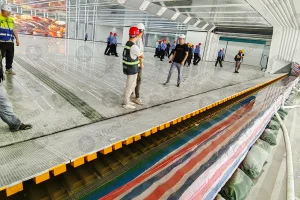
Before containerized shipping, every customized steel barrier undergoes full-scale hydro-testing inside our 100% real-water testing basin. Leakage rates are measured against stringent international standards (<0.1 L/min per meter of seal length).
Review our full range of embedded, automatic, and surface-mounted steel flood barrier models available for international distribution and project tendering.