
Commercial-grade hydrodynamic automated flood gates engineered for rapid subway, substation, and perimeter protection.
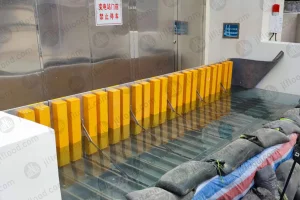
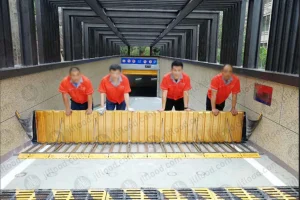
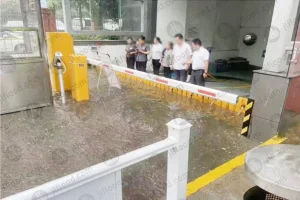
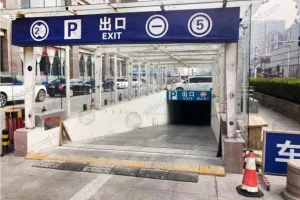
Analyzing the paradigm shift in flood defense for high-density underground infrastructure under extreme meteorological pressures.
Subway systems, underground rail transit corridors, and high-voltage power substations represent the backbone of modern municipal infrastructure. However, the accelerating frequency of hyper-localized torrential rainfall events, flash urban flooding, and coastal storm surges poses a catastrophic threat to underground civil assets. When surface water breaches underground entryways, transit network inundation occurs in minutes—causing multi-million-dollar rolling stock damages, prolonged system downtime, severe structural degradation, and unacceptable risks to public safety.
Traditional flood mitigation strategies relied heavily on manual deployment of sandbags, modular aluminum stop-logs, or electrically actuated sluice gates. Critical historical failure analyses reveal that manual systems suffer from catastrophic operational friction: human delay during off-peak hours, labor scarcity during city-wide storms, and traffic congestion preventing emergency crews from reaching station portals. Meanwhile, motorized electrical barriers frequently experience system lockouts caused by localized grid collapses, sub-station short circuits, or sensor failures during heavy downpours—the precise window when barrier deployment is non-negotiable.
Water-activated hydrodynamic flood barriers represent a passive engineering breakthrough. Utilizing fluid buoyancy principles and hydrostatic head pressure, these flush-embedded mechanisms self-deploy seamlessly without requiring electrical power, human intervention, telemetry signals, or mechanical assistance. Water itself becomes the activating fuel and locking force.
To enable engineering consultants, procurement directors, and municipal asset managers to make informed specification decisions, the technical comparison table below summarizes the key trade-offs between legacy flood defense methods and hydrodynamic self-rising flood barriers:
| Performance Attribute | Manual Sandbags / Stop-Logs | Electric Motorized Flood Gates | Hydrodynamic Water-Activated Barriers |
|---|---|---|---|
| Energy Dependency | Manual Labor Only | High (AC Grid / Diesel Backup) | Zero Energy (Passive Water Buoyancy) |
| Human Deployment Delay | 30 – 120 Minutes (High Risk) | 0 – 5 Minutes (Requires Signal) | 0 Seconds (Instantaneous Physical Response) |
| Blackout Reliability | Unaffected by Power | Fails if Backup Dies / Jams | 100% Fail-Safe Physical Reliability |
| Pedestrian / Vehicle Traffic | Obstructs Pathways Permanently | Ramps create continuous bump | Flush Floor Profile (Zero Obstruction) |
| Operational Lifecycle Cost | High (Continuous Labor & Storage) | High (Electric Motors & Sensors) | Minimal (Passive Structural Seals) |
Engineering deep dive into hydrodynamic mechanics, structural alloy load limits, and intelligent telemetry integration.
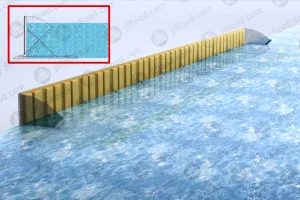
The foundation of the hydrodynamic flood barrier consists of an embedded stainless steel or structural aluminum frame recessed flush into the station threshold. When floodwater reaches a pre-determined triggering level, water flows through intake grilles into the lower retention basin. The rising fluid level exerts positive hydrostatic displacement forces on the internal hollow-core leaf, causing it to rotate upward along a reinforced hinge axle until reaching a vertical retaining angle of 75° to 90°.
Standard barrier leaves are extruded from high-strength marine-grade 6063-T6 or 6005A-T6 structural aluminum alloy, delivering yield strengths exceeding 240 MPa. Internal ribbing matrices are structurally optimized via Finite Element Analysis (FEA) to withstand static hydrostatic heads up to 2.0 meters, while simultaneously absorbing dynamic hydrodynamic wave impacts and floating debris strikes without permanent plastic deformation.
Watertight integrity is enforced through multi-stage EPDM (Ethylene Propylene Diene Monomer) vulcanized rubber gaskets. As the barrier leaf swivels to its fully upright position, hydrostatic water pressure forces the perimeter sealing lips against the embedded stainless steel frame sidewalls, creating a self-tightening sealing dynamic. Leakage rates are certified well within stringent international standards (EN 12211 / GB/T 33749), remaining below 0.05 L/(m·h).
While the mechanical core operates with 100% passive independence, modern smart-city projects increasingly demand real-time situational awareness. The next-generation engineering roadmap integrates low-power IoT telemetry modules directly into the embedded base frame. Sub-ghz LoRaWAN or NB-IoT sensors detect barrier rotation angles, water basin accumulation rates, and lock status, instantly broadcasting alert signals to Central Metro Control Centers (OCC) and automated SCADA management suites without altering the physical passive actuation redundancy.
Precision integration across critical subway entry points, auxiliary power substations, and underground connection passages.
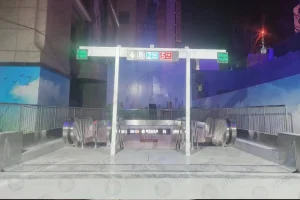
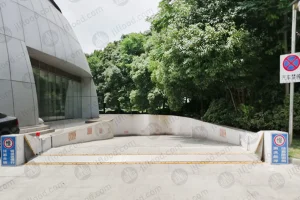
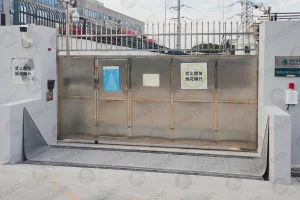
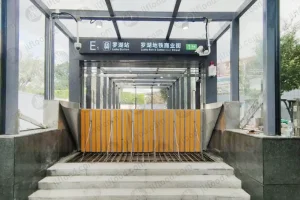
Metro station entrances situated at ground level or integrated into commercial plazas are extremely vulnerable to surface runoff accumulation. Recessed floor-embedded automatic flood gates provide an unobstructed pedestrian walkway during standard operation. When street flooding exceeds sidewalk curb thresholds (typically 50mm–100mm), the barrier deploys automatically, creating an impenetrable 0.8m to 1.5m water barrier across opening spans up to 20 meters wide.
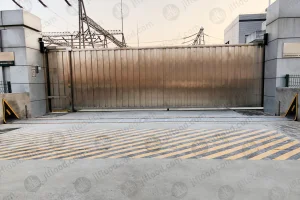
Subway electrical substations supply high-voltage DC power to third-rail or catenary equipment. Inundation of transformer vaults or switchgear rooms triggers catastrophic system blackouts. Surface-installed or embedded water-activated barriers at substation access gates ensure zero ingress into critical electrical infrastructure, maintaining grid continuity during severe storm events.
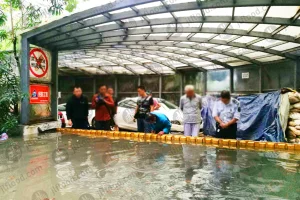
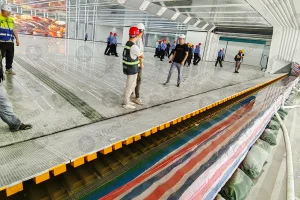
Modern transit stations connect directly to underground shopping malls, parking structures, and adjacent rail lines. Where liability boundaries cross between private real estate and public transit assets, modular hydrodynamic barriers serve as safety bulkheads. In the event of a commercial building basement flood, the connection barrier rises automatically to isolate and protect the public metro network.
Ground-level ventilation louvers and low-lying intake grilles represent direct conduits into subterranean track tunnels. Compact flip-up or water-activated flap barriers designed specifically for trench openings prevent floodwaters from plunging directly into subway tunnel shafts, protecting signaling equipment and traction infrastructure.
Understanding international civil engineering standards, risk mitigation economics, and wholesale price structure dynamics.
Municipal infrastructure specifications globally are shifting from reactive emergency measures to mandatory passive resilience design. Regional building codes across North America (ASCE 24), Europe (Eurocodes EN 1990 / EN 1991), and Asia-Pacific (GB 50157 Metro Design Standards) increasingly require passive flood barriers at all transit entryways located below the 100-year base flood elevation (BFE).
While hydrodynamic self-rising flood barriers carry a higher initial material procurement cost than basic manual aluminum stop-logs, their 20-year Total Cost of Ownership (TCO) is significantly lower. Manual barriers incur ongoing expenses: annual crew deployment drills, secure warehouse storage, labor wages during flood alerts, and the immense financial liability of human failure. Hydrodynamic systems eliminate operational labor costs entirely.
Wholesale procurement costs for commercial flood barrier systems depend on specific engineering parameters. Understanding these variables ensures accurate budget estimation during project design phases:
How Nanjing Junli Technology delivers high-precision OEM/ODM engineering, scaled production, and rapid global export capabilities.
Headquartered in Nanjing, Jiangsu Province, Nanjing Junli Technology Co., Ltd. operates within China's premier advanced equipment manufacturing corridor. Direct proximity to world-class aluminum extrusion mills, precision rubber vulcanization plants, and heavy steel fabrication hubs allows us to streamline material sourcing, reduce production lead times, and guarantee raw material traceability.
Our manufacturing facility houses large-format 5-axis CNC machining centers, automated robotic welding stations, and dedicated full-scale hydraulic testing tanks. Every barrier system undergoes 100% factory water-retaining verification—validating buoyancy response speeds, mechanical locking rigidity, and zero-leakage threshold seals prior to export packaging.
Whether supplying custom one-off replacement barriers for retrofit metro stations or standardized production runs exceeding thousands of meters for regional high-speed rail corridors, Junli offers flexible OEM/ODM contract terms. Complete structural calculations, CAD shop drawings, installation templates, and international export packing (ISPM-15 compliant wooden crating) ensure seamless delivery to global job sites.
Complete lifecycle guidance from pre-bid site survey to civil concrete pouring, field testing, and maintenance protocols.
Successful installation of recessed water-activated flood barriers requires seamless coordination between barrier manufacturers, civil engineering contractors, and local transit authorities. Junli Technology provides comprehensive engineering submittal packages to guarantee compliance with regional building standards and municipal civil specifications:
Recessed foundation chambers require concrete embedment channels with integrated rebar tie-ins. Bottom drainage ports must connect directly to station gravity drains or sump pump pits to prevent sediment accumulation inside the housing chamber during dry periods.
Hydrodynamic barriers require minimal regular maintenance. Preventive maintenance protocols involve biannual debris removal from the bottom chamber, visual seal inspection, and annual simulated water fill testing to confirm smooth mechanical rotation.
Technical answers to common engineering, procurement, performance, and maintenance questions.
The barrier operates using pure hydrostatic buoyancy mechanics. When surface floodwater enters the recessed ground basin, fluid displacement exerts upward hydraulic force against the hollow-core aluminum panel. The panel pivots upward naturally on stainless steel hinges as the water level rises. No electricity, battery backup, hydraulic pumps, or human operators are needed.
Yes. Heavy-duty models (such as our HM4D series) feature reinforced structural aluminum alloy top cover plates and heavy steel bottom embedment frames. Standard units support Class-A vehicle loadings up to 40 Tons (AASHTO HS-20), allowing buses, fire engines, and delivery trucks to drive over the flush surface during normal daily operation.
The housing chamber features removable stainless steel sediment filter grilles and internal slope gradients directing debris toward dedicated clean-out drain ports. Routine municipal street sweeping or brief vacuum maintenance twice per year keeps the interior chamber free of debris.
Standard retaining heights range from 500mm to 2000mm. Single clear span units range from 1.0m to 6.0m. For wide station entrances exceeding 10 meters, modular multi-leaf units are linked with intermediate removable mullions to achieve unlimited total span coverage.
Yes. Every factory order is water-tested in our full-scale testing pool. We issue certified test documentation, seal leakage rate measurements, and HD video verification for client approval prior to international shipment dispatch.
Standard model production lead time is typically 15 to 25 calendar days depending on total linear meter quantity. Custom engineered units requiring FEA structural adjustments or special anodization coatings are manufactured within 30 days.
Additional specialized flood defense gates for metro portals, garage ramps, and connection channels.
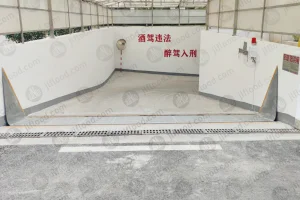
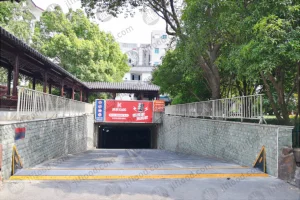
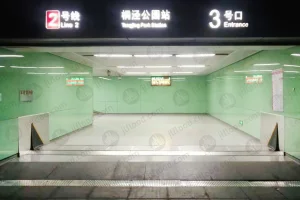
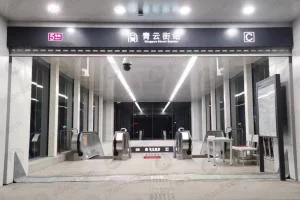
Partner directly with Nanjing Junli Technology Co., Ltd. for engineering CAD blueprints, customized hydrodynamic specifications, and direct factory pricing.


