
Deployment-ready hydrodynamic self-rising flood gates certified for subterranean transit, underground parking ramps, and high-voltage electrical substations across the Absheron Peninsula.
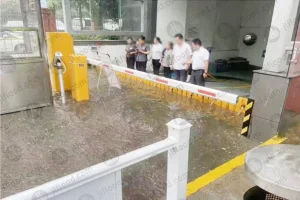
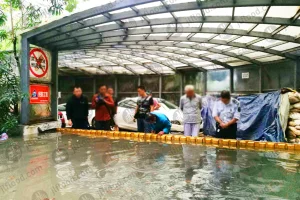
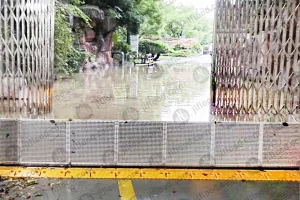
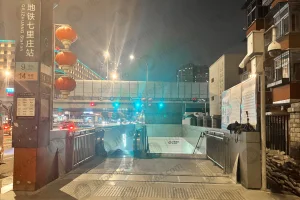
The Republic of Azerbaijan presents a unique hydrological regime characterized by contrasting topographic zones—from the semi-arid Absheron Peninsula and low-lying Kura-Aras basin to the steep slopes of the Greater and Lesser Caucasus mountains, bordering the landlocked Caspian Sea.
In recent years, regional climate variability, combined with accelerated urban expansion across the Baku Metropolitan Area, Ganja, Sumqayit, and Mingachevir, has significantly heightened flash flood vulnerabilities. Severe precipitation events, coupled with rapid snowmelt in mountain headwaters, create extreme surface water runoff. When cloudbursts hit Baku's urban core, the city's municipal drainage networks are quickly overwhelmed, causing rapid pluvial inundation in low-lying zones, underground garages, commercial basement levels, and rail transit portals.
High-density districts like Nasimi, Sabail, and Narimanov experience rapid water accumulation in depressed road segments and basement ramps during spring and autumn downpours.
Severe seasonal river swelling threatens critical infrastructure, agricultural processing plants, and energy logistics hubs located in Shirvan, Sabirabad, and Neftchala.
Heavy onshore winds drive coastal wave setup, threatening marine terminals, desalination facilities, and petroleum logistics facilities around Sangachal and Alat.
Worldwide civil engineering standards have shifted away from active mitigation systems (such as motorized gates, electric submersible pumps, and human-deployed temporary aluminum stop-logs) toward passive, self-acting, hydrodynamic technology.
In high-stakes industrial environments—such as oil refineries, natural gas compression stations, electrical utility substations, and metro networks—human error, delayed response time, and grid failures during extreme storms are leading causes of severe property damage.
| Parameter / Feature | Traditional Sandbags / Manual Barrier | Motorized Electric Flood Gates | Junli Hydrodynamic Automatic Barrier |
|---|---|---|---|
| Power Requirement | Manual Labor | Requires Constant Electric Power / Generator | 100% Unpowered (Water Buoyancy Powered) |
| Deployment Speed | 2 to 5 Hours (Slow) | 1 to 3 Minutes (Requires Trigger Signal) | Immediate (< 0.1s Passive Physical Response) |
| Human Reliability Risk | High (Requires On-site Personnel) | Medium (Relies on Sensors/Control Boards) | Zero Risk (Pure Mechanical Physics) |
| Vehicular Traffic Impact | Blocks Access Completely | Requires Surface Tracks or Threshold Rails | Flush Surface Mounting (0 Ground Obstacle) |
| Maintenance Cycle | Single-use / Degradable | High (Motors, Wiring, Backup Batteries) | Low (Visual Annual Seal & Chamber Inspection) |
| Caspian Marine Corrosion | N/A | High Risk of Electrical Short Circuits | Marine Grade SUS316 / Anodized Aluminum 6063 |
Nanjing Junli Technology’s actual water-retaining flood barriers operate strictly under hydrostatic buoyancy and leverage gravity to maintain a zero-maintenance, zero-power defense line.
The flood barrier frame is embedded flush into the roadway surface, ramp, or portal threshold during civil works. Under dry conditions, heavy vehicles, delivery trucks, and pedestrians cross the top leaf plate without obstruction or vibration.
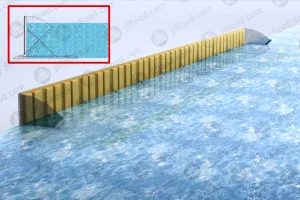
When surface runoff approaches the entrance, water enters the front inlet mesh into the sealed bottom chamber. As the internal water level rises, the engineered density of the hollow aluminum alloy panel creates immediate upward buoyancy.
As the barrier reaches its vertical retaining position (up to 90 degrees), incoming water pressure pushes the rear panel firmly against EPDM marine-grade elastomeric gaskets, forming a tight, continuous seal that blocks floodwaters.
When storm runoff recedes and internal chamber water drains through gravity check-valves or municipal outlets, the panel automatically lowers back flush into its floor housing, restoring unrestricted vehicular movement.
Our structural engineering team provides complete AutoCAD, BIM models, and civil interface calculations formatted for Azerbaijani consulting firms and municipal contractors.
Engineered to meet the tough architectural and operational demands of Azerbaijan’s critical infrastructure, energy assets, transit networks, and commercial real estate projects.
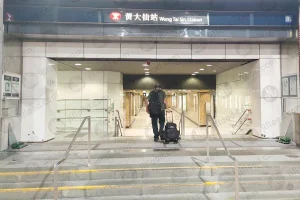
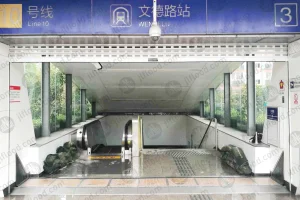
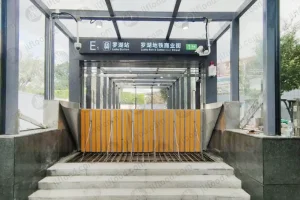
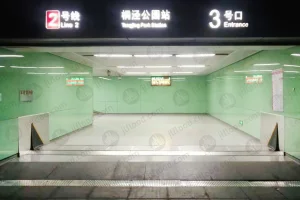
Underground station entrances, passenger concourses, and ventilation shafts require robust flood protection. Embedded hydrodynamic gates prevent surface water inflows without impairing commuter traffic during peak hours.
Oil refineries in Sumqayit, gas compression plants, and Sangachal onshore storage terminals require severe storm resilience. Zero-spark, unpowered hydrodynamic barriers prevent chemical/oil runoff contamination.
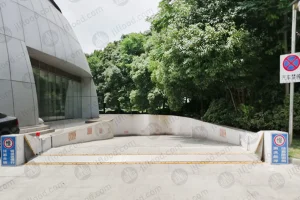
Major commercial hubs (e.g., Port Baku, Crescent Bay, White City developments) feature deep underground parking ramps. Flush modular flood barriers safeguard high-value vehicles against sudden pluvial water ingress.
High-voltage utility substations, power transformers, cable trenches, and municipal water treatment facilities require continuous protection against flooding to ensure continuous city operations.
Nanjing Junli Technology operates full-scale hydraulic testing pools where every engineered barrier design undergoes rigorous hydrostatic leakage, structural deflection, and load-bearing testing prior to export.
Constructed with aircraft-grade extruded T6-treated aluminum alloy (6063-T6) and heavy-duty 304/316L stainless steel side frames. Designed to withstand surface wheel loads up to 40 tons (T40 vehicular traffic rating).
Utilizes multi-lip vulcanized EPDM rubber profiles engineered for ozone resistance, UV stability, and Caspian saline environment resilience. Ensures zero leakage under maximum static water heads up to 2.0 meters.
Every customer order includes factory water test documentation. Video verification reports detailing lifting speeds, seal compression rates, and pressure drop measurements are provided for consultant approval.
Streamlined procurement pathways, technical documentation, and container shipping solutions connecting Nanjing manufacturing facilities directly to Baku Port and project sites.
Our technical support team works closely with Azerbaijani architectural teams and EPC contractors to ensure seamless integration with local building standards set by the State Committee for City Building and Architecture of the Republic of Azerbaijan.
Fully compliant with international standards including EN 13564, ISO 9001 quality management, ISO 14001 environmental management, and FM 2510 flood mitigation standards.
Direct freight shipping routed via rail/sea transportation networks through the Trans-Caspian International Transport Route (TITR) directly into Baku International Sea Trade Port at Alat or Baku Freight Stations.
Includes complete English installation manuals, step-by-step civil engineering embedment templates, and remote video commissioning assistance for contractor teams across Azerbaijan.
Understanding factory direct pricing parameters enables project managers, municipal planners, and commercial developers to accurately budget for flood defense infrastructure.
Investing in passive hydrodynamic flood barriers offers exceptional return on investment (ROI). A single severe flooding event in a Baku commercial garage or power substation can cause millions of Azerbaijani Manat (AZN) in structural damage, business interruption, vehicle write-offs, and legal liability.
As Azerbaijan advances its smart city initiatives in Baku, East Zangezur, and Karabakh urban redevelopment projects, flood defense engineering is evolving into an integrated digital ecosystem.
While the mechanical rising action of Junli flood barriers remains 100% unpowered and passive for maximum safety, optional smart telemetry packages can be layered onto the physical hardware. Wireless solar-powered sensors can transmit real-time panel elevation angles, water depth telemetry, and maintenance alerts directly to central SCADA systems or municipal emergency operation dashboards via cellular or LoRaWAN networks.
Technical details and answers for engineers, procurement directors, and civil contractors.
The barrier panel is housed inside a recessed floor chamber. When floodwater reaches the entrance, water enters the chamber through front intake grates. The natural buoyancy of the engineered hollow panel causes it to float upwards automatically. As the water level continues rising, hydrostatic pressure forces the panel into a locked 90-degree position against EPDM seals. The system relies entirely on physical water dynamics—no electricity, sensors, or human intervention are needed.
Yes. Our standard underground ramp flood barriers are rated to withstand axle loads up to 40 tons (T40 traffic standard). The top cover plate is engineered with reinforced structural ribs to handle continuous traffic from delivery trucks, buses, and passenger vehicles in dry conditions.
For coastal installations near Baku Bay, Sangachal, or Sumqayit, we utilize marine-grade 6063-T6 aluminum alloys with thick anodized surface treatments alongside 316L stainless steel side frames and fasteners. Combined with UV-stabilized EPDM gaskets, this guarantees a 25+ year lifespan even in saline marine microclimates.
Custom manufacturing typically takes 15 to 25 days depending on total linear meterage and retaining height specs. Rail or sea freight transit via the Middle Corridor to Baku Port or local freight hubs generally requires 18 to 28 days. Expedited air shipping is available for urgent critical repair projects.
Yes. For existing structures where excavating a floor chamber is not feasible, we supply surface-mounted flip-up barriers or shallow-embedment units that require minimal concrete trenching.
Full range of automatic flood barriers, metro connection channel gates, and substation protection units available for order and wholesale delivery to Azerbaijan.
Contact our technical engineering team today for architectural consultations, customized AutoCAD embedment blueprints, and direct factory pricing for the Azerbaijan market.
Send Inquiry Now

