
Hydrodynamic, self-activating barrier systems designed for extreme urban flood scenarios, subterranean garages, and public transit nodes across Greater Tokyo.
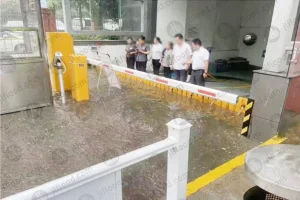
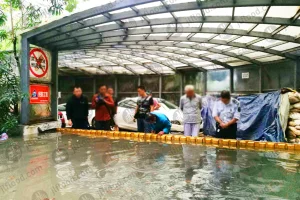
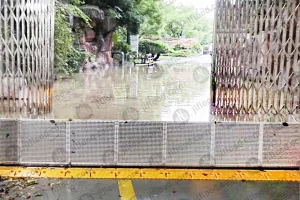
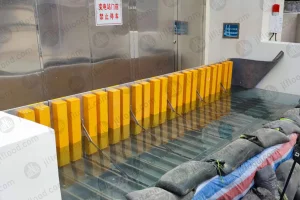
The Tokyo Metropolitan Area, home to over 37 million residents, represents one of the world's most complex hydro-geological environments. Characterized by low-lying eastern coastal districts (the Koto 5 Wards: Sumida, Koto, Adachi, Katsushika, and Edogawa), intricate subterranean subway transit webs (Tokyo Metro & Toei Subway), and vast multi-level basement real estate in districts like Shibuya, Shinjuku, and Ginza, Tokyo faces unprecedented exposure to acute waterlogging. Climate change has intensified the frequency of typhoon-driven storm surges and super-localized cloudbursts—locally known as "Guerrilla Rainfall" (ゲリラ豪雨 - Gerira Gōu)—frequently exceeding 100mm per hour.
Traditional manual flood defense barriers (such as aluminum stop-logs or sandbags) fail to meet the operational velocity required during flash inundation events. Furthermore, modern urban flooding routinely collapses power distribution grids, rendering motorized or sensor-dependent electrical flood gates utterly useless at the precise moment of crisis. As an established actual water-retaining flood barrier factory serving the Tokyo engineering ecosystem, Nanjing Junli Technology delivers zero-power hydrodynamic passive defense solutions engineered to mitigate catastrophic infrastructure collapse without human intervention.
Key Insight for Tokyo Asset Managers: "Electric pumps fail during power grid outages. Reliable flood protection must utilize the kinetic energy and buoyancy of the floodwater itself to actuate structural barriers instantly."
How Junli's zero-power passive flood gates convert floodwater pressure into instant structural defense.
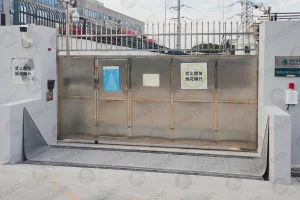
The barrier door panel rests flush inside an embedded underground foundation trench. When surface water flows into the intake chamber, Archimedes buoyancy force naturally lifts the dynamic door panel, raising it automatically as water levels ascend.
Engineered with automotive-grade EPDM dynamic seals combined with self-tightening water hydrostatic pressure gaskets. Higher flood depth increases lateral sealing force against the structural frame, achieving near-zero leakage performance.
Reinforced with structural SUS304 / SUS316L stainless steel structural extrusions and high-tensile aviation aluminum panels. Built to easily support continuous heavy commercial traffic (Japan JIS T-25 axle loads) without structural deformation.
| Engineering Parameter | Junli Hydrodynamic Automatic System | Standard Motorized Barrier | Manual Aluminum Stop-Logs |
|---|---|---|---|
| Power Source | 0 kW (100% Passive Hydrodynamic Buoyancy) | 2.2 - 5.5 kW (Requires Grid/Generator) | Manual Labor Required |
| Activation Trigger | Automated upon surface water arrival (< 0.1s) | Electric sensor / Manual switch | Manual deployment (30-60 mins) |
| Blackout Reliability | 100% Operational during citywide grid failure | 0% Operational unless backup UPS holds | N/A (Depends on personnel access) |
| Traffic Load Rating | JIS T-25 Heavy Axle Load (Drive-over capability) | Varies (often light-duty frame) | Requires trench removal for vehicle access |
| Sealing Efficiency | < 0.05 L/min per meter (Hydrostatic self-seal) | 0.2 - 0.5 L/min per meter | 1.0 - 3.0 L/min (High seal wear) |
| Structural Service Life | 25+ Years (Corrosion-resistant SUS304/316) | 8 - 12 Years (Mechanical motor wear) | 5 - 10 Years (Seal degradation) |
Customized engineering arrays designed for high-risk Tokyo infrastructure segments.
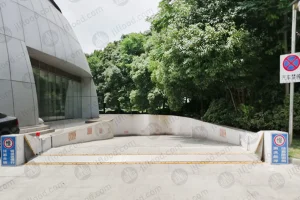
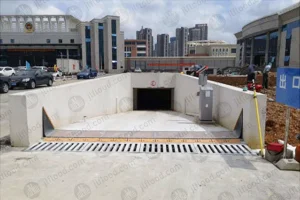
Installed at underground ramp entrances in commercial complexes across Ginza, Shibuya, and Marunouchi. Rests completely flush with the roadway surface during normal operation. Vehicles drive over smoothly without noise or structural impact until floodwaters strike.
Critical infrastructure protection for utility substations, transformer vaults, and hyperscale data centers. Features tight peripheral seals preventing even minor moisture ingress that could trigger catastrophic high-voltage short circuits.
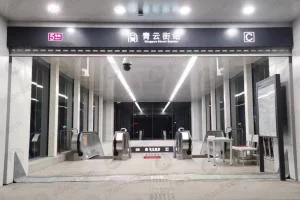
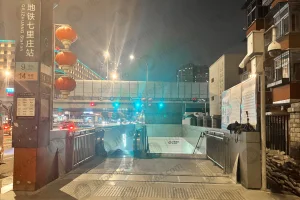
Modular wide-span barriers engineered for high-pedestrian traffic subway station portals, emergency ventilation shafts, and subterranean pedestrian concourses matching Tokyo Metro design requirements.
Designing hydro-mechanical barriers for the Japanese architectural market requires strict compliance with guidelines established by the Ministry of Land, Infrastructure, Transport and Tourism (MLIT) and the Architectural Institute of Japan (AIJ). Beyond retaining water during typhoons, Tokyo's infrastructure built environment demands seismic resilience.
Nanjing Junli Technology’s engineering team has optimized structural frame flexibility and anchoring bolt tolerances to withstand seismic ground acceleration. In the event of a compound disaster—such as a major earthquake followed by tsunami or storm surge waterlogging—Junli barriers maintain structural seal integrity even under multi-axis foundation displacement.
Employs flexible polyurethane elastomer perimeter interfaces that absorb up to ±25mm of concrete foundation movement without unseating the retaining gate frame.
Extruded aluminum components undergo multi-layer fluorocarbon anodization and powder coating, offering superior resistance against de-icing salt and coastal marine atmospheric corrosion in Tokyo Bay.
We provide full AutoCAD detail drawings, BIM Revit models, and structural civil interface calculation sheets tailored for Japanese general contractors (Taisei, Kajima, Obayashi, Takenaka, Shimizu).
Unmatched manufacturing capacity, full-scale hydrostatic testing pool, and cost efficiency for international procurement.
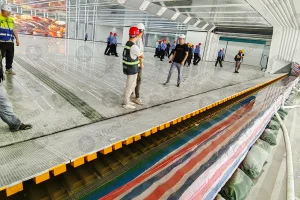
Nanjing Junli Technology Co., Ltd. operates a high-tech manufacturing center equipped with heavy CNC laser cutting systems, robotic welding cells, and dynamic hydrostatic test basins. As a direct OEM/ODM manufacturer—not a trading intermediary—we maintain complete control over raw material procurement, structural fabrication, EPDM seal vulcanization, and quality validation.
Every barrier array destined for the Tokyo market undergoes rigorous 100% full-scale hydrostatic pressure testing in our dedicated factory water testing pool prior to export packing. This eliminates field installation failures and ensures turnkey compliance upon site delivery.
Direct factory-floor pricing compared to domestic Japanese niche suppliers, delivering major Capex savings for REIT asset developers.
Standard project fabrication completed within 15-20 days, supported by direct sea shipping lanes from Nanjing/Shanghai Port to Tokyo Port.
Customs-ready ISPM-15 fumigated timber packaging, complete English/Japanese installation manuals, and third-party inspection certificates.
For EPC contractors, municipal procurement officers, and global real estate investment trusts (REITs), specifying flood barrier assets requires balancing initial capital expenditure (CapEx) against long-term maintenance overhead (OpEx) and insurance risk profiles. Traditional motorized gates incur significant recurring maintenance costs (annual motor servicing, electrical sensor replacement, standby battery tests).
By contrast, Junli's zero-power passive hydrodynamic barriers possess no electrical actuators or complex digital sensors, lowering life-cycle maintenance costs to periodic visual inspections and seal cleaning. Global asset managers operating under FM Global or Japanese commercial property insurance guidelines can achieve substantial premium reductions by installing verified passive flood protection systems.
Browse our full catalog of field-tested automatic flood barriers, embedded metro gates, and power substation protection units.
Contact our hydro-mechanical engineering team today for custom CAD layout drawings, structural load calculations, and direct factory pricing for your project in Greater Tokyo.
Send Inquiry Now

