
Field-proven actual water retaining barrier technology engineered in China for heavy monsoon protection across Indian metro stations, basements, and critical utilities.
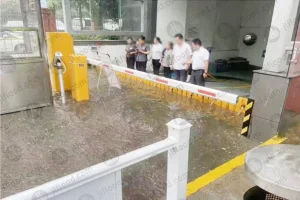
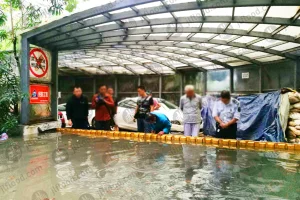
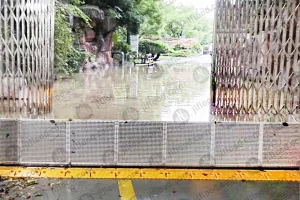
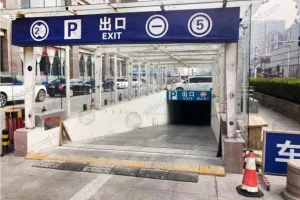
In recent years, rapid urbanization combined with intensifying monsoon cloudburst events has severely tested the resilient threshold of civil infrastructure across key Indian metropolises including Mumbai, Chennai, Bengaluru, Delhi NCR, Hyderabad, and Kolkata. Urban flooding in India is no longer merely an seasonal inconvenience; it represents a major macro-economic risk factor threatening underground metro networks, high-voltage electrical substations, commercial tech parks, IT corridors, and subterranean logistics hubs.
Traditional flood defense mechanisms deployed across Indian project sites—such as manual sandbagging, modular aluminum stop-logs, or electrical motor-driven sluice gates—exhibit critical single-point vulnerabilities. During catastrophic cloudburst events, municipal grid failures frequently collapse local power supplies precisely when electric gates need to operate. Furthermore, manual deployment protocols fail when sudden flash floods inundate access ramps before facility management staff can intervene.
To bridge this critical infrastructure gap, Nanjing Junli Technology Co., Ltd. (operating globally as Junli Flood Control) provides Chinese high-tech engineering precision directly to Indian contractors, EPC entities, municipal corporations, and private industrial developers. As a primary manufacturer of Actual Water Retaining Flood Barriers, Junli delivers hydrodynamic self-rising barrier systems that utilize hydrostatic pressure and water buoyancy to achieve automatic, zero-power physical flood isolation.
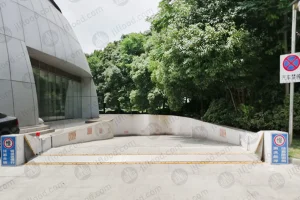
The Junli Hydrodynamic Automatic Flood Barrier operates strictly according to Pascal's Principle and Archimedes' Buoyancy Principle. Installed flush into the ground surface across entrance driveways, metro station portals, or building doorways, the system remains completely dormant under normal conditions, permitting heavy vehicular traffic and pedestrian passage.
As surface run-off reaches the threshold level, floodwater enters the recessed stainless steel foundation frame through front inlet grates. No sensors or electricity required.
Water accumulative depth in the bottom chamber generates upward buoyant thrust under the specialized lightweight alloy panel, forcing the door to rotate upwards autonomously.
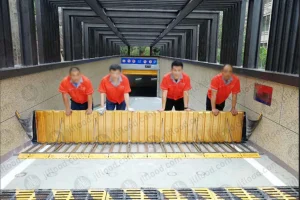
The rising water level presses the panel tightly against side frame seals. Dynamic EPDM rubber gaskets lock under hydrostatic load, providing 100% watertight isolation.
| System Parameter | Junli Hydrodynamic Automatic Barrier | Manual Aluminum Stop-Logs | Electric Motorized Sluice Gates |
|---|---|---|---|
| Power Supply Need | 0% (Completely Passive Hydromechanics) | 0% (Manual Labor) | 100% (Grid + Backup Generators Needed) |
| Deployment Reaction Time | < 1 Second (Immediate Buoyancy Response) | 30 – 120 Minutes (Heavy Physical Effort) | 2 – 5 Minutes (If Power & Sensors Active) |
| Human Operation Risk | Zero Staff Intervention Required | High (Prone to Traffic Delay & Absence) | Medium (Requires Manual Trigger / Sensor OK) |
| Drive-Over Traffic Load | Heavy Duty 60T (Axle Load Verified) | Not Driveable (Must be Installed Post-Event) | Varies (Requires Surface Tracks / Trench) |
| Lifespan & Maintenance | 20+ Years (304/316 Steel & Aircraft Alloy) | 5 – 10 Years (Seal Degradation in Storage) | 5 – 8 Years (Motor/Sensor Servicing Needed) |
China's manufacturing scale coupled with Junli's strict compliance with international engineering standards makes our actual water retaining barriers the ideal solution for Indian mega-projects under national development frameworks such as the Gati Shakti National Master Plan and the Smart Cities Mission.
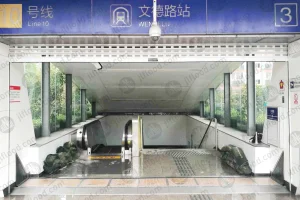
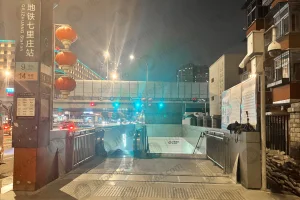
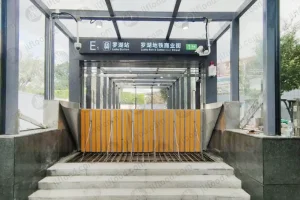
Protecting pedestrian entrance portals, ventilation shafts, and underground concourses for metro corridors such as Delhi Metro (DMRC), Mumbai Metro (MMRDA), Chennai Metro (CMRL), and Namma Metro Bengaluru (BMRCL). Surface-type and embedded-type variants ensure complete flood barriers that deploy before water can reach lower train tracks.
Inundation of 220kV or 400kV substation transformer yards causes multi-district electrical blackouts. Installed at perimeter access gates for Power Grid Corporation of India (PGCIL) and state electricity boards (SEBs), Junli substation flood barriers prevent surface water from entering critical switchgear control rooms.
Multi-level underground parking structures in IT corridors (such as Bengaluru's Outer Ring Road or Hyderabad's HITEC City) suffer millions in vehicle damage during urban waterlogging events. Flush ramp-mounted self-closing barriers maintain normal vehicle drive-over while offering instantaneous activation.
Automotive plants in Tamil Nadu, pharmaceutical facilities in Gujarat, and chemical warehouses require strict protection against hazardous wastewater influx and heavy rain surges. Junli heavy-duty flood gates seal chemical storehouses and facility perimeters against catastrophic water ingress.
Procuring directly from Junli Technology in Nanjing, China gives Indian EPC entities, procurement specialists, and municipal tenders a direct cost-to-performance advantage. Operating as an end-to-end original equipment manufacturer (OEM), Junli controls structural engineering, CNC laser profile cutting, robotic welding, dynamic EPDM vulcanization, and hydraulic testing under one roof.
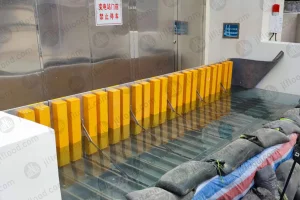
We do not deliver theoretical designs. Every series of Junli flood barriers undergoes 100% full-scale hydrostatic pool testing prior to export shipment. Our factory pool testing measures water retaining structural deflection, lifting speed, dynamic sealing tightness under maximum hydrostatic head pressure, and post-inundation reset capabilities.
Integrating Chinese hydro-engineering products into Indian civil tender designs requires seamless technical cooperation. Junli supports Indian engineering consultants, structural architects, and main contractors with comprehensive localized services:
Junli’s ongoing R&D roadmap continuously advances passive hydrodynamic technology by introducing smart IoT telemetry modules:
IoT-Enabled SCADA Integration: While the barrier mechanism remains 100% mechanical and power-free, optional solar-powered LoRaWAN/NB-IoT sensors can transmit real-time deployment notifications and water level telemetry to municipal smart city control rooms or building facility management consoles.
Nanotech Dynamic Seals & Saltwater Resistance: Development of self-lubricating fluoro-silicone seals designed for extreme saline exposure along Indian coastal belt projects (such as Mumbai Coastal Road and Chennai Port developments).
Explore our full range of surface-mounted, embedded, and heavy-duty automatic flood gates ready for direct procurement and shipping to major ports across India.
Everything engineering consultants, EPC contractors, and purchasing managers need to know about specifying, ordering, and importing Junli flood control systems into India.
Manual sandbags and aluminum stop-logs rely entirely on human availability, early warning lead times, and physical labor. During sudden monsoonal cloudbursts in cities like Mumbai or Chennai, staff often cannot reach the site due to traffic gridlock. Junli hydrodynamic barriers activate automatically in less than 1 second upon water contact without human presence, eliminating operational failure risks.
Yes. Junli heavy-duty embedded barriers are engineered with structural aircraft-grade aluminum alloy panels and reinforced 304/316 stainless steel frame housings rated for axle loads exceeding 60 tonnes (tested according to international vehicular traffic loading standards). They sit completely flush with the road surface under dry conditions.
We provide full engineering support including AutoCAD (DWG) civil drawings, structural load calculation reports, concrete block-out pit specifications, and drainage connection guidelines. Our engineers collaborate directly with your local civil team to ensure seamless installation into ongoing construction or retrofit projects.
Standard modular production takes approximately 15 to 20 days following technical drawing approval. Ocean freight shipping from Shanghai or Ningbo port to major Indian container ports (such as Nhava Sheva / JNPT Mumbai, Chennai, Mundra, or Kattupalli) typically takes 14 to 22 transit days. Express air shipping is available for urgent spare components.
Because the system contains zero electrical motors, sensors, or complex gearboxes, maintenance is exceptionally low. We recommend quarterly routine inspection to clear debris/leaves from the bottom chamber frame drainage channel and annual visual verification of dynamic EPDM side seals. Replacement seal kits can be ordered directly from our factory.
Send us your entrance clear width, required water retaining height, and site opening drawings today. Our engineering design team will return a customized technical specification table, CAD embedment layout, and factory-direct price quotation within 24 hours.


