
Direct OEM factory supply designed for heavy-duty traffic, high hydrostatic head resilience, and zero-power hydrodynamic activation.
The Pacific Northwest is experiencing unprecedented shifts in precipitation intensity. Seattle’s dense urban topography—characterized by steep glacial hills sloping into Elliott Bay, the Duwamish Waterway, and Lake Union—creates a severe risk profile for surface runoff during winter Atmospheric River events.
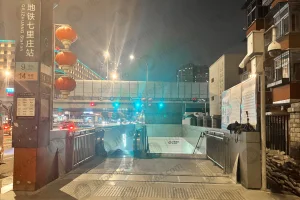
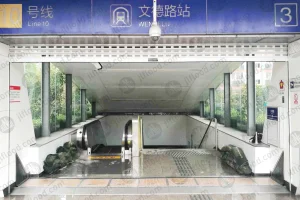
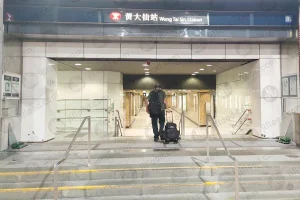
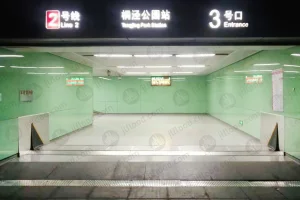
Underground transit networks such as the Sound Transit Link Light Rail system, downtown pedestrian concourses (e.g., Westlake, Pioneer Square, International District/Chinatown), and commercial building parking basements face rapid inundation when municipal storm mains exceed capacity.
As a specialized Chinese hydrodynamic flood barrier manufacturer, Nanjing Junli Technology Co., Ltd. delivers custom-engineered, passive automatic flood gates that mitigate flash flooding risks without relying on electrical power, manual deployment, or grid availability.
During major Pacific Northwest winter storms, localized power grid failures frequently coincide with severe rainfall. Active flood control systems reliant on sensors, electric motors, or human operator dispatch suffer a high rate of failure during peak storm events.
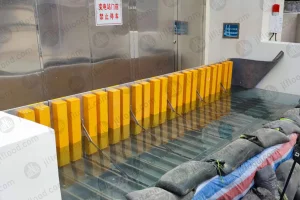
Junli's hydrodynamic barrier utilizes pure water buoyancy and hydrostatic pressure. When floodwater reaches the trigger threshold, the embedded panel floats and locks automatically—protecting subway portals and subterranean infrastructure 24/7/365.
Municipal authorities, structural engineering firms, and general contractors in King County face tight capital budgets and strict compliance guidelines set by the Seattle Department of Transportation (SDOT) and King County Metro. Direct sourcing from a tier-1 Chinese manufacturer provides a compelling cost-to-performance ratio without sacrificing engineering rigor.
By eliminating multiple layers of regional broker markup, Junli delivers commercial-grade aluminum alloy and stainless steel flood barrier assemblies to the Port of Seattle at 40% to 60% lower costs than domestic US fabricators.
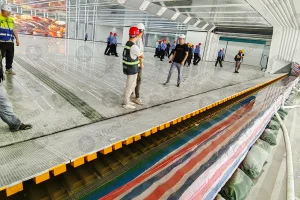
Unlike small local metal shops, Junli operates a dedicated hydraulic testing basin. Every custom transit order undergoes full static water head leakage testing before container loading, backed by certified factory test reports.
Our engineering division provides complete CAD submittals, Finite Element Analysis (FEA) structural calculations, and seismic load compliance documentation matching Washington State Building Code specifications.
The core technology behind Junli’s metro flood protection barriers relies on fluid mechanics: hydrodynamic buoyancy combined with hydrostatic self-locking. The barrier remains completely flush with the surrounding pavement during normal operation, supporting heavy pedestrian or bus traffic.
The following budget matrix outlines FOB China rates and estimated CIF Port of Seattle landed costs for standard and heavy-duty metro flood barrier configurations. Custom span widths up to 25 meters are calculated per linear meter.
| Barrier Model Type | Retaining Height | Material Spec | FOB China (USD / Linear Meter) | Est. CIF Seattle (USD / Meter) | Typical Seattle Application |
|---|---|---|---|---|---|
| Embedded Hydrodynamic Type | 0.6m – 1.0m | Aluminum 6063-T6 / Stainless Frame | $450 – $680 | $520 – $780 | Link Light Rail Station Ingress / Ramp Entrances |
| Heavy-Duty Transit Embedded | 1.2m – 2.0m | High-Strength Alloy + FEA Reinforcement | $750 – $1,150 | $860 – $1,300 | Subterranean Concourse Gates & Tunnel Portals |
| Surface-Mounted Retrofit | 0.5m – 0.9m | Anodized Marine-Grade Aluminum | $380 – $550 | $440 – $630 | Pioneer Square & Downtown Building Retrofits |
| Pedestrian Flip-Up Automatic | 0.4m – 0.8m | 304 Stainless Steel / EPDM Seal | $320 – $480 | $370 – $550 | Substation Doorways & Equipment Vault Outlets |
| High-Load Dual-Leaf System | 1.5m – 2.0m | 316 Structural Stainless Steel / Reinforced | $1,200 – $1,850 | $1,380 – $2,100 | Industrial Substation Perimeter & Depot Gates |
*Note: Actual freight costs depend on container load factors (20GP vs 40HQ) and current ocean shipping tariffs to Seattle. Request a formal quotation for exact project submittals.
Underground stations along the Downtown Seattle Transit Tunnel (DSTT)—such as Westlake, University Street, and Pioneer Square—are positioned below steep hill grades. During heavy cloudbursts, runoff flows down Pine, Pike, and James Streets toward station portals.
Solution: Embedded continuous-span automatic hydrodynamic barriers installed flush with sidewalk tiles. Zero tripping hazard for transit commuters; instant pop-up defense when street gutter capacity fails.
Seattle’s SODO district and the Duwamish Industrial Zone sit near sea level and suffer from tidal backwater flood conditions combined with river overflows during King Tides.
Solution: Heavy-duty self-closing flood gates for utility vaults and power distribution enclosures, rated against brackish tidal water exposure and continuous dynamic pressure heads.
Multi-level parking structures in downtown high-rises require wide-span barrier protection across vehicle ingress ramps to safeguard high-value tenant vehicles and mechanical rooms.
Solution: 40-Ton axle-load certified hydrodynamic driveway barriers. Integrated warning light modules alert descending drivers when the barrier initiates passive deployment.
Subterranean passageways linking rail stations to commercial shopping centers (e.g., Pacific Place, Bellevue Square) represent critical ingress vectors for localized urban flooding.
Solution: Modular embedded flip-up gates engineered with architectural cover plates matching local terrazzo or granite finishes.
Delivering high-integrity flood control infrastructure across international boundaries requires a methodical, traceable engineering workflow from initial civil survey to final installation audit.
Junli engineers collaborate with Seattle project architects to review peak 100-year rainfall depth, kerb geometry, and clear opening dimensions. FEA structural models ensure zero deformation under extreme static heads.
Extrusion of marine-grade 6063-T6 aluminum panels, robot-assisted TIG welding of stainless steel frames, and assembly of EPDM sealing channels. 100% of units are full-water tested in our Nanjing factory pool.
Export-ready wooden crate packaging designed for sea freight. Delivery directly to Port of Seattle or job site. Includes English civil construction templates, embedment drawings, and remote commissioning support.
As smart city infrastructure evolves, flood protection gates are transitioning from purely mechanical components to fully integrated IoT-enabled resilient assets.
While mechanical activation remains 100% power-free, Junli's next-generation metro barriers feature optional low-power NB-IoT/LoRaWAN sensors. These transmit real-time deployment alerts, water level monitoring, and frame vibration data directly to municipal transit command centers during a storm event.
In response to Washington State's stringent sustainability and green building standards, Junli has introduced green aluminum alloys smelted using renewable hydro-power, reducing the embedded carbon footprint of our metro barrier assemblies by over 50%.
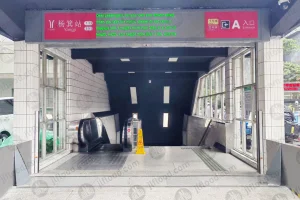
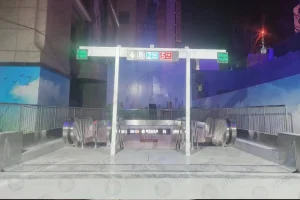
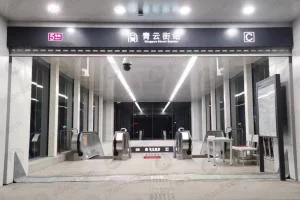
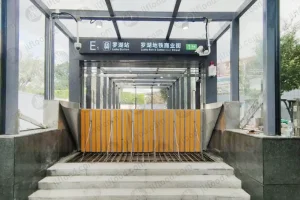
Explore our complete transit flood protection line-up available for custom order and export to North America.
Consult directly with Nanjing Junli's flood engineering specialists. Send us your clear opening dimensions, civil submittal requirements, or tender specifications for immediate turn-around on technical drawings and factory-direct pricelists.


