
High-durability automatic and modular flood gates manufactured to ISO 9001 and TCVN engineering standards, designed specifically for rapid deployment across Ho Chi Minh City’s electrical substations and transit networks.
Ho Chi Minh City (HCMC) stands at the nexus of compounding hydrological challenges: rapid urban subsidence, extreme tropical monsoon downpours, and severe Saigon River tidal surges that regularly exceed +1.70 meters above Mean Sea Level (MSL).
Under the Southern Power Corporation (EVN SPC) distribution network, low-lying electrical substations in Thu Duc City, District 7, Binh Thanh, and Nha Be face severe risk of catastrophic short-circuiting when floodwaters breach transformer bays and basement control rooms. A single localized inundation event can cause cascading regional blackouts, paralyzing industrial output across high-tech zones.
Traditional electric flood barriers, motor-driven sluice gates, and submersible pumps rely heavily on main power or diesel generator auto-starts. However, urban flooding during severe typhoons (such as Typhoon Kalmaegi or seasonal king tides) frequently triggers instantaneous substation tripping. When grid power fails, motorized systems lock up. Unpowered hydrodynamic self-rising barriers eliminate human error and electrical failure modes completely.
Technical Insight for HCMC Utility Specifiers: Hydrodynamic automatic barriers utilize the physical principle of fluid buoyancy. As water accumulates at a substation gate or cable trench, the fluid flows into an embedded bottom chamber, automatically lifting the structural retaining panel into place with 0% electricity consumption and zero standby operational costs.
Designed for harsh tropical conditions and zero-maintenance operational demands, Chinese hydrodynamic automatic flood barriers employ high-grade structural stainless steel (SUS304 / SUS316L) and lightweight aviation-grade aluminum alloys.
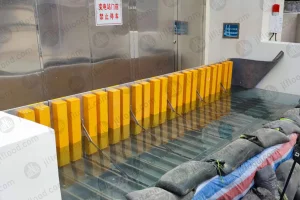
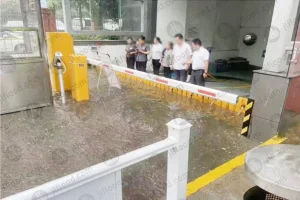
The panel remains flush with the driveable surface under dry conditions (supporting vehicle axle loads up to 40 tonnes). When flash floods or tidal surges hit the gate, surface water enters the embedded foundation trough through top inlet grates, creating hydraulic uplift under the panel.
As the flood crest rises, hydrostatic pressure pushes the retaining panel against high-density EPDM vulcanized rubber seals integrated into vertical side wall frames. The higher the water pressure, the tighter the compression seal becomes, driving leakage rates down to near zero.
Once floodwaters recede through municipal storm drains or pumping stations, water inside the foundation trough drains out via specialized low-level check valves. The structural panel slowly settles back into its flush ground chamber automatically.
Our engineering team custom-fits flood barriers to match specific infrastructure geometries, traffic requirements, and ground settlement patterns prevalent across Greater Ho Chi Minh City.
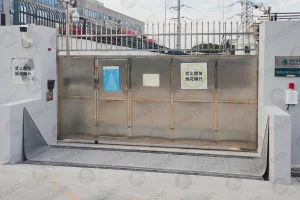
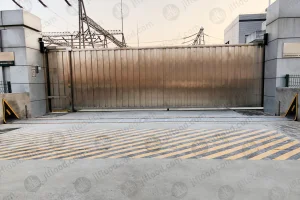
Substation outer perimeter vehicle gates require continuous heavy equipment access (transformers, service trucks). Standard removable aluminum stop-logs cause operational friction because staff must manually drop them during heavy storm warnings. Hydrodynamic drive-over barriers remain invisible flush under truck wheels until water floods the driveway, providing 24/7 passive perimeter security for critical assets like the Thu Duc 220kV Substation or Cat Lai 110kV Switchyard.
Low-clearance cable duct entries represent the most vulnerable intrusion point for water ingress into substation relay rooms. Compact flip-up automatic gates and embedded seal barriers block water penetration into sensitive circuit breaker bays, preventing flash short-circuits during high-humidity inundations.
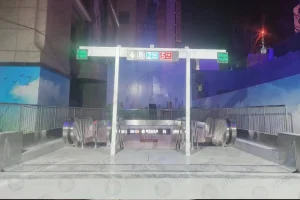
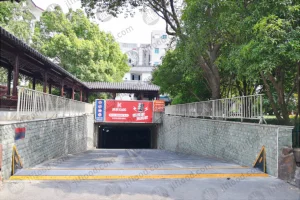
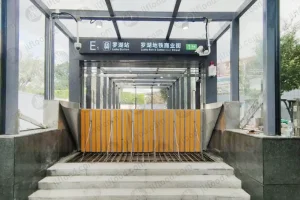
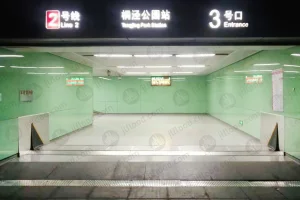
Urban rail transit networks in HCMC require certified flood barriers at passenger concourses, emergency stairwells, and underground power distribution substations (e.g., Ben Thanh Central Station, Suoi Tien Terminal). Barriers comply with stringent rail safety parameters and fire evacuation specs.
Global semiconductor plants, cloud data centers, and multi-tenant industrial facilities in District 9 & Thu Duc require certified flood defense guarantees to comply with corporate risk insurance mandates (e.g., FM Global standards).
A Total Cost of Ownership (TCO) evaluation over a 15-year lifecycle highlights why utility engineers in Vietnam are moving away from manual sandbags and motor-driven sluice gates toward unpowered hydrodynamic technology.
| Evaluation Parameter | Sandbag Defenses | Manual Demountable Stop-Logs | Motorized / Hydraulic Gates | Hydrodynamic Self-Rising Gate |
|---|---|---|---|---|
| Power Requirement | None | None | High (Grid / Diesel Backup) | 0% Power Needed |
| Human Operator Requirement | Intensive (10+ people, hours) | Moderate (2-4 people required) | Low (1 button operator) | 100% Fully Autonomous |
| Blackout Vulnerability | N/A | N/A | High Risk (Electric Failure) | Zero Vulnerability |
| Response Latency | 2 to 5 Hours | 30 to 60 Minutes | 3 to 5 Minutes | < 0.5 Seconds |
| Vehicle Load Bearing | No Access | No Access while erected | Depends on design | 40 Tonne Heavy Traffic |
| 15-Year Life Cycle Cost | Extremely High (Repeated Labor) | Moderate (Storage & Maintenance) | High (Motor & Battery Spares) | Lowest TCO |
Direct factory procurement from Nanjing/Ningbo/Shenzhen manufacturing centers provides project developers in Ho Chi Minh City with substantial cost savings compared to European imports, backed by full ACFTA Form E tariff advantages.
| Barrier Model / Type | Retaining Height | Material Construction | Estimated Unit Price (FOB USD/m) | Estimated CIF HCMC (USD/m) |
|---|---|---|---|---|
| Hydrodynamic Self-Rising Substation Gate | 500 mm | Stainless Steel SUS304 Frame + Air-Craft Alloy Panel | $380 – $480 / meter | $410 – $520 / meter |
| Hydrodynamic Heavy-Duty Substation Gate | 800 mm | SUS304 Reinforcement + Heavy EPDM Seals | $520 – $680 / meter | $560 – $730 / meter |
| Hydrodynamic High-Water Substation Gate | 1000 mm | SUS316L Marine Grade Option / Dual Chamber | $690 – $880 / meter | $740 – $940 / meter |
| Substation Cable Trench & Door Flip-Up Barrier | 400 – 600 mm | Lightweight Anodized Aluminum Panel | $290 – $390 / meter | $320 – $430 / meter |
| Modular Aluminium Demountable Stop-Logs | 600 – 1200 mm | Extruded Aluminum Alloy 6063-T6 | $180 – $280 / meter | $210 – $320 / meter |
Note on Shipping & Customization to Vietnam: Prices vary based on clear span dimensions, surface loading ratings (e.g., 20T vs 40T truck loads), and custom color finishes matching EVN standard green/gray palettes. Transit time from Southern China ports to Cat Lai Port (HCMC) is typically only 3 to 5 days, minimizing site lead times.
Navigating Vietnamese construction codes and EVN technical tenders requires strict engineering documentation, material traceability, and seamless structural integration.
Our substation flood gates comply with Vietnamese National Standards (TCVN) for hydraulic structure tightness and civil defense. Every shipment includes factory hydro-testing certificates, raw material mill certificates (MTC ISO 10204 3.1), and finite element structural deflection reports certified for high-pressure heads.
We supply local EPC contractors and civil engineering partners in Vietnam with detailed CAD Auto-CAD foundation trench designs, rebar reinforcement layouts, and pre-embedded anchor bolt templates in advance of civil pouring, guaranteeing a 100% flush fit during final assembly.
Saigon River floodwaters carry high levels of salinity and industrial pollutants. Our barriers feature fluorocarbon-coated aluminum panels, 304/316L stainless steel hardware, and anti-aging EPDM gaskets rated for decades of exposure in tropical coastal climates.
Whether retrofitting an operational 110kV substation or embedding into a greenfield transit depot, installation follows a rigid 5-step engineering checklist.
Excavate a foundation channel across the gateway corresponding to the specified embedment depth (typically 250mm–400mm deep depending on panel retaining height).
Connect bottom chamber drainage outlets to the substation’s external storm network or sump pit, then position the pre-assembled embedded steel chassis using precision laser levels.
Pour C30/C35 non-shrink waterproof concrete around the frame, ensuring complete consolidation to prevent micro-fissure water seepage under the frame.
Mount the buoyancy panel, heavy-duty torsion springs, side rubber seals, and top surface drive-over grates into the hardened chassis.
Perform a live water-fill test to verify rapid buoyancy response, seal tightness, and zero leakage before site handover to EVN asset managers.
Our factory provides bilingual English/Vietnamese installation videos, CAD shop drawings, and remote video guidance for local contractors throughout Vietnam.
The next generation of passive flood protection incorporates zero-power smart sensing, giving utility managers real-time spatial awareness without sacrificing passive mechanical reliability.
While mechanical rising requires no power, integrated passive magnetic sensors transmit signal triggers to substation SCADA systems, alerting central command centers in real time the exact second a perimeter flood gate engages during an urban deluge.
R&D initiatives focus on self-healing EPDM polymer blends that maintain elastic memory under extreme tropical thermal cycles (up to 45°C ambient ground temperatures in HCMC dry seasons) without cracking or permanent deformation.
From automated drive-over gates to flip-up cable room barriers and rail transit protection, our factory supplies custom-built configurations to match exact client drawings.
Send your project gateway dimensions, target retaining heights, or CAD drawings directly to our senior flood control engineering team. We will return a customized technical proposal, structural calculation sheet, and FOB/CIF Cat Lai pricing within 24 hours.


