
Engineered specifically for underground car parks, metro line access shafts, and commercial basements across Osaka Bay and downtown districts. These 4 core flood gate architectures feature full water-testing validation and zero-electricity passive deployment.
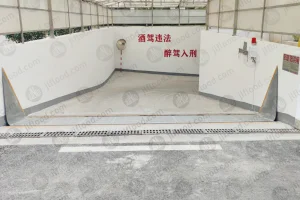
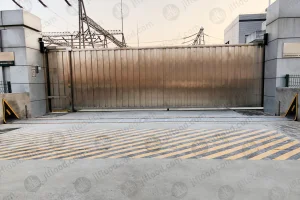
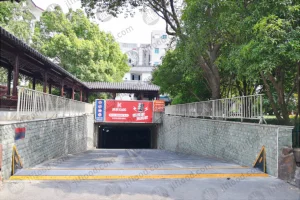
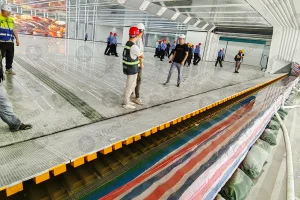
The Osaka Metropolitan Area, located at the mouth of the Yodo River basin and facing Osaka Bay, represents one of East Asia’s most densely populated industrial and financial epicenters. With extensive subterranean networks—including the Umeda Underground Shopping Mall (Whity Umeda), Namba Underground Complex, multi-level metro transfer hubs (Osaka Metro Midosuji and Tanimachi Lines), and critical transformer substations—the city presents unique hydrological vulnerabilities during typhoon seasons and extreme cloudburst events (Guerilla Rainstorms).
Ever since Typhoon Jebi (2018) inundated coastal logistics parks, Kansai International Airport (KIX), and Osaka Bay industrial zones, the Ministry of Land, Infrastructure, Transport and Tourism (MLIT) and Osaka Prefectural Government elevated mandatory flood barrier standards for non-residential commercial structures and critical utility gates.
Osaka’s urban layout relies heavily on continuous subterranean pedestrian passages and basement parking ramps. A single breach at a driveway threshold can flood interconnected transit tunnels within minutes. Rapid-deploying or unpowered hydrodynamic barriers are now mandatory specified countermeasures.
With massive infrastructure investments surrounding Yumeshima island and mainland transport corridors, municipal engineering tenders mandate validated water-retaining flood barriers equipped with certified factory hydrostatic pool test reports and zero-power emergency activation.
Traditional manual sandbags and motorized electric barriers possess critical failure modes during urban inundation: sandbags require intensive manual labor and advance warning, whereas motorized electric gates fail when intense typhoons knock out local electrical sub-stations. Nanjing Junli Technology’s hydrodynamic power-free automatic flood barrier solves both vulnerabilities through mechanical buoyancy physics.
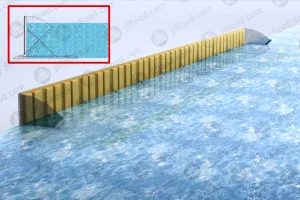
The barrier panel is installed flush within a stainless-steel or heavy-duty aluminum foundation frame embedded at ground level. When rising surface water flows into the internal chamber, integrated buoyant core structures automatically elevate the door panel. As the water head increases, hydrostatic pressure pushes the panel tightly against vertical frame seals, tightening the structural closure in direct proportion to the flood depth.
Every custom barrier manufactured for Osaka municipal projects undergoes rigorous validation in our state-of-the-art 30-meter continuous hydrostatic water testing pool prior to export packing. Unlike competitors who rely solely on Finite Element Analysis (FEA) computer simulations, Junli provides true empirical testing verification.
| Testing Parameter | JIS / International Benchmark | Junli Factory Water Test Protocol | Osaka Project Compliance Verification |
|---|---|---|---|
| Hydrostatic Pressure Deflection | L/250 max deflection under rated head | < L/350 structural stiffness via 6063-T6 aluminum structural ribs | Passed — Verified for Osaka Metro & Substation Specs |
| Sealing Leakage Rate | < 0.20 L/min per linear meter | < 0.05 L/min per linear meter (Near-Zero Seepage) | Passed — Certified by 3rd-Party Hydrodynamic Inspection |
| Unpowered Lifting Speed | Manual intervention required within 15 min | 0.1s to 5s automatic deployment upon water ingress | Passed — Zero human operation required during power loss |
| Salt Spray / Corrosion Resistance | 500 Hours Neutral Salt Spray (NSS) | 2000+ Hours Fluorocarbon & Anodized Finish | Passed — Built for Osaka Bay high-salinity marine air |
Tailored technical configurations designed to meet specific engineering criteria across Osaka’s municipal, transport, energy, and commercial sectors.
Osaka Metro stations require flush surface-mounted or embedded barriers across wide pedestrian entrances (spanning 4m to 18m). Junli multi-leaf hydrodynamic arrays feature interlocking stainless-steel side jambs that eliminate center posts, leaving passenger traffic completely unobstructed during dry weather while offering instant rising protection during flash floods.
Kansai electrical infrastructure and high-voltage transformer rooms demand zero water penetration. Junli substation flood protection barriers incorporate high-pressure EPDM compression seals and anti-seismic anchor frames capable of withstanding both hydrostatic head pressure and co-occurring seismic ground shaking during typhoon events.
Subterranean parking structures in Umeda, Shinsaibashi, and Namba require ramp-installed barriers engineered to sustain heavy 40-tonne vehicle traffic (AXLE load compliance). Junli flip-up and automatic embedded hydrodynamic gates feature reinforced structural tread plates and silent rubber dampening pads.
Overseas architectural consultants and Japanese general contractors (Taisei, Obayashi, Kajima, Takenaka) demand rigorous structural documentation before approving flood mitigation submittals. Nanjing Junli Technology provides a complete technical dossier tailored to Japanese regulatory demands:
Combining advanced smart manufacturing with direct maritime routes to Osaka and Kobe ports for uncompromised lead times and structural superiority.
Automated CNC fiber laser cutting and robotic seam welding ensure frame dimensional tolerances within ±0.5mm, guaranteeing seamless embedding into concrete ramps without on-site structural modifications.
Every single flood barrier leaf is assembled and pool-tested under full water head pressure in our dedicated test basin, capturing verifiable leakage video documentation for client submittal approval.
Located in Nanjing along the Yangtze River maritime corridor, Junli coordinates direct vessel shipping to Osaka Port and Kobe Port, providing 40-50% cost savings compared to Japanese domestic fabricators while matching lead times.
A detailed evaluation comparing passive hydrodynamic systems against legacy sandbagging and electro-mechanical flood doors over a 20-year operational lifecycle.
| Evaluation Vector | Legacy Manual Sandbags | Motorized / Electric Flood Gates | Junli Hydrodynamic Automatic Barrier |
|---|---|---|---|
| Initial Capital Expenditure (CAPEX) | Low Initial Cost | Very High (Motors, Sensors, Wiring) | Moderate & Direct Factory Competitive |
| Labor & Operational Cost (OPEX) | Extremely High (20+ workers per deployment) | Moderate (Routine electrical testing) | Near Zero (Unpowered automatic deployment) |
| Power Grid Blackout Reliability | N/A (Human dependent) | High Risk (Fails if generator/UPS cuts out) | 100% Fail-Safe (Pure physical buoyancy) |
| Deployment Response Speed | 2 to 5 Hours (High risk of inundation) | 1 to 3 Minutes (If sensors trigger) | 0.1 to 5 Seconds (Instantaneous water contact) |
| 20-Year Total Asset Protection ROI | Negative (High leak damage risk) | Moderate (High maintenance overhauls) | Maximum ROI (Zero flood loss record) |
Send us your clear opening width, required retaining height, and ground site photos. Our engineering team will return a complete submittal package within 24 hours.
Send Inquiry Now for Osaka MarketExplore our full range of surface-mounted, embedded, heavy-duty, and rail transit flood barriers tested for urban and municipal installations.
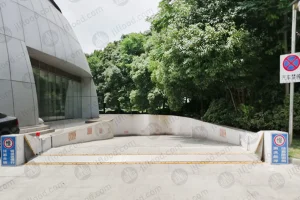
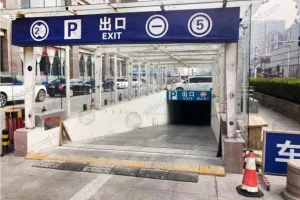
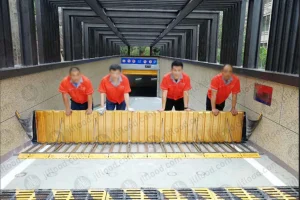
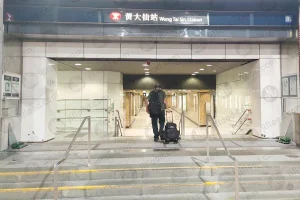
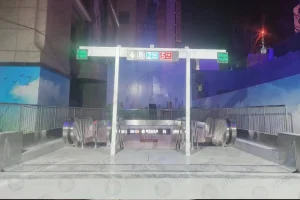
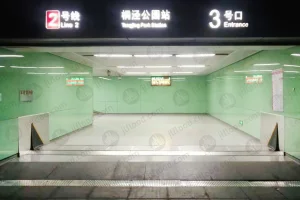
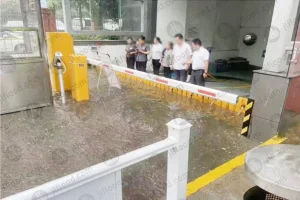
Answers to key questions asked by structural engineers, municipal buyers, and general contractors in Japan.
Every single flood barrier manufactured for the Osaka market undergoes full-scale testing in our 30-meter hydrostatic test basin before shipment. We fill the pool to maximum design head pressure (up to 2.0m retaining height) to measure structural deflection, frame stress, and seal tightness. We issue an official Factory Acceptance Test (FAT) report along with HD video verification for every order.
Yes! Junli automatic hydrodynamic flood barriers operate on 100% passive water buoyancy physics. Rising floodwater enters the bottom chamber, causing internal buoyant aluminum core structures to rise and automatically seal the threshold. No electricity, batteries, sensors, or human operators are required, ensuring total reliability when typhoon power outages occur.
Our barrier panels use high-grade 6063-T6 architectural aluminum alloy treated with high-micron anodic oxidation or fluorocarbon (PVDF) coating. Ground frames and structural brackets are crafted from SUS304 or SUS316 marine-grade stainless steel. All rubber seals are custom-extruded vulcanized EPDM, resistant to saltwater, ozone, and temperatures ranging from -30°C to +80°C.
For embedded models, a concrete trench matching our provided CAD embedment drawings must be prepared at the driveway or entrance threshold, complete with a bottom drainage outlet. For retrofit projects where trenching is not feasible, we supply surface-mounted flip-up models that anchor directly onto existing reinforced concrete slabs.
Standard model production requires approximately 10 to 14 days. Direct ocean shipping from Nanjing/Shanghai port to Osaka or Kobe takes only 3 to 5 days. For urgent municipal projects, air freight options can deliver smaller units within 48 hours.


