
Pre-engineered and hydrostatically tested automatic flood gates designed to safeguard San Francisco subterranean structures without electrical reliance.
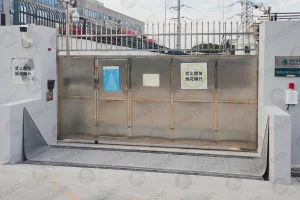
Commercial Flood Control Defence Barrier for SF Bay Waterfront
Wholesale Flood control defence Manufacturer, Supplier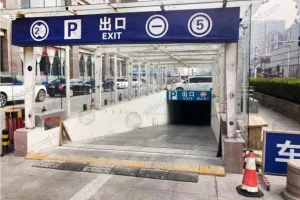
Hydro-Passive Self-Closing Barrier for SF Commercial Buildings
China Self closing flood barrier Factory, Factories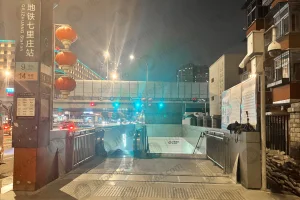
Embedded Automatic Barrier for SF BART & MUNI Transit Portal
Wholesale Embedded type Automatic flood barrier for Metro Manufacturer, Suppliers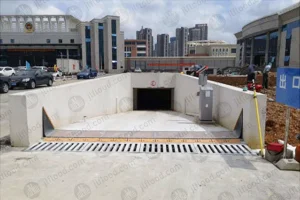
Heavy-Duty Self-Closing Flood Gate HM4D for SF Industrial Vaults
Wholesale Self closing flood barrier Hm4d-0006D Suppliers, PricelistAnalyzing Atmospheric Rivers, King Tides, and Urban Topography Risks Across the SF Peninsula
San Francisco's microclimate makes it vulnerable to extreme atmospheric river events (AR-4 and AR-5 categories). These intense precipitation plumes hit the city's steep topography, causing rapid runoff that converges into low-lying commercial sectors such as South of Market (SoMa), the Mission District, and the Embarcadero corridor.
Projections from the San Francisco Bay Conservation and Development Commission (BCDC) indicate a potential 12 to 24-inch rise in Bay waters by 2050. Coupled with seasonal King Tides and storm surges, subterranean real estate, transit portals, and ground-level infrastructure face imminent risk of seawater backflow and surface inundation.
The San Francisco Bay Area Rapid Transit (BART), MUNI Metro portals, underground utility vaults (PG&E grid interfaces), and multi-level parking garages in the Financial District represent high-value targets. A single unmitigated flood event can result in tens of millions of dollars in asset destruction and grid operational downtime.
During severe atmospheric storms in Northern California, power grid blackouts are common. Traditional active flood barriers reliant on electrical sensors, hydraulic pumps, or manual human deployment frequently fail. Junli Technology’s hydrodynamic self-closing flood barriers utilize natural water buoyancy and hydrostatic pressure to deploy automatically without electricity, human intervention, or electronic signals—providing 24/7/365 continuous defense for San Francisco properties.
Comprehensive Hydrostatic Factory Acceptance Testing (FAT) & Seal Verification for San Francisco Buyers
Procuring flood barriers for critical commercial real estate in San Francisco requires empirical validation. Renderings and theoretical calculations are insufficient. Nanjing Junli Technology operates a dedicated, full-scale hydraulic testing basin capable of simulating dynamic hydrodynamic surge pressures, continuous static head loading up to 2.0 meters, and high-velocity debris impacts.
Every flood gate exported to San Francisco and Northern California general contractors is accompanied by an extensive quality documentation dossier:
| Technology Parameter | Junli Hydrodynamic Passive Barrier | Traditional Active Electric Barrier | Manual Aluminum Stop-Logs |
|---|---|---|---|
| Power Source | Zero Power (Fluid Buoyancy Driven) | Electricity / Backup Generator Required | Manual Human Effort |
| Activation Trigger Time | Immediate (<0.1s passive reaction) | 30-120 Seconds (Sensor dependent) | 30-60 Minutes (Human deployment) |
| Blackout Reliability | 100% Operational Capability | High Failure Risk during Grid Down | Independent of Power (High Human Risk) |
| Maintenance Profile | Low (Visual Inspection & Chamber Flush) | High (Motor, Wiring, Battery Replacement) | Medium (Storage, Gasket Deterioration) |
| SF Building Code / FEMA Compatibility | Fully Compliant (ASCE 24-14 / TB 3-93) | Requires Auxiliary Power Systems | Often Non-Compliant for Unattended Sites |
Turnkey Engineering Specifications for Urban Transit, Utility Vaults, and Commercial Properties
Flush-mounted within the driveway threshold of commercial high-rises in Downtown SF and SoMa. Vehicles drive over the structural stainless steel cover plates daily without impact. During flash floods, rising water enters the foundation chamber, instantly elevating the door panel to block water entry into basement levels.
Designed for power distribution utilities (such as PG&E regional substations) across the Bay Area. Keeps high-voltage electrical switchgear dry during atmospheric river inundations. Features high chemical resistance against runoff oil and road salts.
Specialized high-span structural barriers tailored for subway portal entrances, ventilation shafts, and pedestrian connecting tunnels. Engineered to withstand hydrodynamic impact loads up to 10 kN/m² while maintaining structural seal integrity.
Our engineering team provides comprehensive Auto-CAD drawings, BIM Revit models, civil embedment structural calculations, and localized hydraulic performance specs tailored to SF Public Works and Building Code standards.
Request Technical Dossier & CAD FilesEnsuring Seamless Integration with Local California Civil & Environmental Protection Regulations
Junli flood barriers fulfill Non-Residential Floodproofing requirements outlined by FEMA. Designed to handle hydrodynamic and hydrostatic loads with verified low-leakage performance under extreme emergency conditions.
Engineered according to the American Society of Civil Engineers (ASCE 24-14) standards for flood-resistant design and construction, ensuring structural safety in designated SF flood hazard areas.
Formulated to seamlessly integrate into commercial plans submitted to the San Francisco Department of Building Inspection (DBI), meeting strict structural load ratings for heavy vehicle traffic.
Unmatched Manufacturing Precision, Cost Efficiency, and Rigorous Quality Assurance from Nanjing Junli Technology
Our Industry 4.0 factory in Nanjing utilizes 12,000W fiber laser cutting stations and automated CNC machining to guarantee structural tolerances within ±0.5mm, ensuring seamless embedment frame fitment for SF job sites.
All structural load-bearing frames and stainless steel panels undergo robotic MIG/TIG welding accompanied by Non-Destructive Testing (NDT) to prevent microscopic weld seam fractures under severe hydrostatic pressure.
Unlike localized assemblers, Junli controls the full manufacturing spectrum. Every batch design undergoes physical water immersion and high-pressure head verification in our 50-meter testing basin prior to containerization.
Crucial Engineering & Logistics Insights for General Contractors, Specifiers, and Property Owners
Junli hydrodynamic barriers operate on purely mechanical fluid dynamics. As surface runoff or rising Bay tide waters fill the bottom recessed foundation chamber, natural hydrodynamic buoyancy forces lift the panel upwards. As the water level continues to rise, hydrostatic pressure firmly pushes the barrier panel against the side frames, activating the dual EPDM lip seals. The entire process requires 0% electricity, 0% human intervention, and 0% sensor triggering.
Every order is tested in our full-scale hydraulic pool. We record full video evidence of the lifting cycle, hydrostatic static head retention, and seal leakage measurement under design flood heights (e.g., 1.0m, 1.5m, 2.0m). Detailed Factory Acceptance Testing (FAT) reports, material mill certificates, and seal longevity data sheets are included in the export documentation.
Yes. Our underground garage and entrance barriers are engineered with high-strength structural steel or aviation-grade aluminum alloy panels, rated for HS-20 and HL-93 heavy vehicle loading (up to 40-ton axle loads). When flush with the road surface, the heavy-duty top plates easily accommodate continuous vehicular traffic without compromising the interior mechanical mechanism.
The system features an integrated self-cleaning sediment deflection profile. The bottom chamber includes sloping drainage slots connected to the site’s storm drain network or sump pump pit. Routine maintenance involves a simple periodic high-pressure water flush of the bottom channel to clear accumulated silt or street debris.
Following CAD drawing approval and factory water testing verification, manufacturing takes approximately 2 to 3 weeks. Direct ocean freight shipping from Shanghai/Ningbo ports to the Port of Oakland typically takes 14 to 18 days. Complete door-to-door delivery with customs clearance can be coordinated with your local general contractor or project manager.
Explore our complete range of specialized flood gates, subway connection channels, and power facility protection systems.
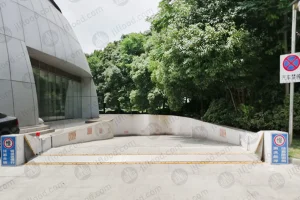
Embedded Installation Automatic Barrier for San Francisco Driveways
Wholesale Automatic flood barrier, Embedded installation Manufacturer, Suppliers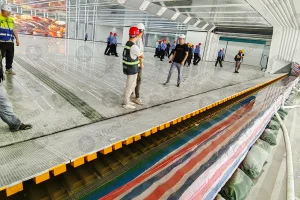
Self-Opening & Closing Passive Gate for SF Commercial Entrances
China Self opening & Closing Flood Gate Manufacturers, Suppliers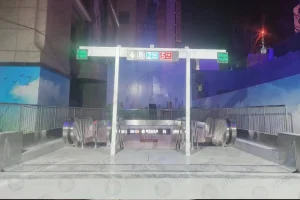
Subway Station Ingress Protection Gate (San Francisco & Global Metros)
China Flood Barrier at Dalian Metro Stations Manufacturers, Quotes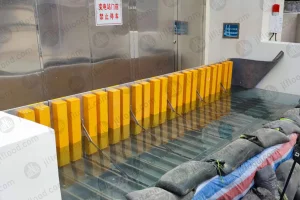
Substation Vault Perimeter Barrier for Bay Area Power Grid Sites
China Flood Barrier at Substation Gate Manufacturer, Supplier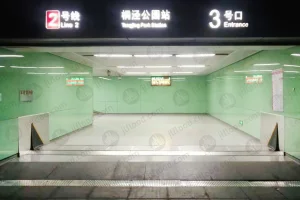
Metro Connection Channel Barrier for Underground SF Pedestrian Concourse
Wholesale Flood Barrier at Metro Connection Channel Manufacturer, Factories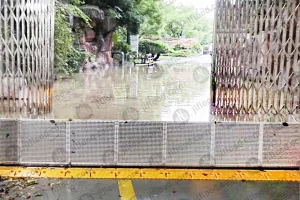
Power-Free Hydrodynamic Flood Defense Gate for SF Microclimates
China Automatic Flood Barrier without electric power Pricelist, Quotes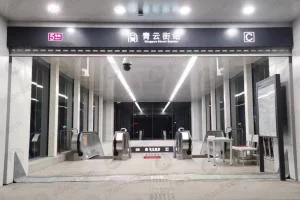
High-Span Transit Station Portal Flood Barrier for Urban Metros
Wholesale Flood Gate at Metro Stations Manufacturer, Suppliers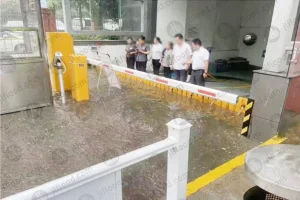
Automatic Heavy-Duty Flood Defense Barrier for San Francisco Infrastructure
Wholesale Flood barrier, Flood defence automaticlly Manufacturer, PricelistConsult with our senior flood protection engineers today. Receive custom CAD site layouts, hydrostatic test reports, and factory-direct pricing for your San Francisco project.
Send Inquiry Now

