
Hydrodynamic Zero-Power Automatic Protection Systems Engineered for LA Metro, Subterranean Transit Hubs, and Commercial Infrastructure Resilience
Send Inquiry NowStandard-setting hydrodynamic flood barriers engineered for rapid deployment, high static water head retention, and 20+ year zero-maintenance reliability in Southern California urban transit environments.
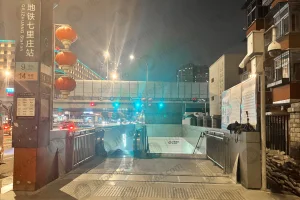
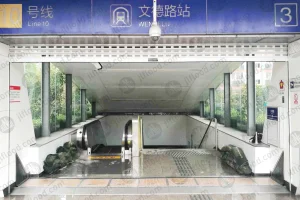
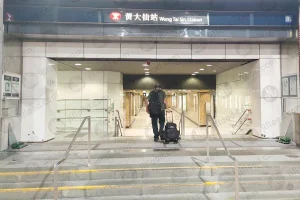
The Greater Los Angeles metropolitan area faces a rapidly changing hydrological risk profile. While Southern California historically evokes images of drought, climate intensification has introduced hyper-concentrated storm phenomena—most notably atmospheric rivers (ARs) and intense El Niño storm tracks. When these systems dump record precipitation over the Los Angeles Basin, the region's dense urban impermeability triggers severe flash flooding, urban waterlogging, and extreme surface runoff.
For subterranean transit infrastructure, such as the expanding LA Metro (LACMTA) network—including the D Line (Purple Line) Extension, Regional Connector, and future Sepulveda Transit Corridor—this hydrological shift poses an existential threat. Subterranean metro portals, ventilation shafts, emergency egress points, and subterranean concourses act as natural gravity sinks for high-velocity floodwaters.
Plume-driven rain events deliver up to 5–8 inches of rain within 24 hours. The resulting runoff overpowers traditional storm drain networks, channeling thousands of gallons per minute toward low-lying transit entrances in Downtown LA, Hollywood, and the Westside.
Extreme storm events routinely cause regional grid instability. Conventional electric flood gates, motorized pumps, and powered barriers fail precisely when floodwaters crest—creating immediate disaster scenarios if passive systems are not in place.
Modern municipal specification standards (including USACE, FEMA Technical Bulletin 3-93, and LA City Building Code Chapter 93) increasingly mandate passive, non-electric automatic flood barriers. Municipal authorities and private developers can no longer rely on manual sandbagging or motorized gates requiring human intervention or standby generator power.
The core mechanism of Nanjing Junli Technology's metro flood barrier systems relies on pure physics: hydrostatic pressure and dynamic water buoyancy.
Traditional flood mitigation relies on human action (installing modular aluminum stop-logs) or electromechanical actuators (motors, hydraulic arms, sensors). Both failure vectors expose transit authorities to extreme liability during sudden cloudbursts. Junli's hydrodynamic barrier embeds seamlessly flush into the ground level of metro portals, underground garage ramps, and electrical utility vaults.
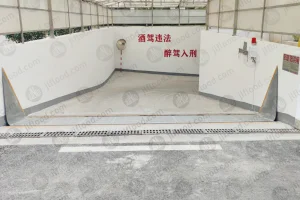
In standard dry weather, the high-strength aluminum door panel lies completely flat inside a stainless steel drive chassis, flush with the surrounding sidewalk or vehicular roadway. It easily supports heavy traffic loads up to AASHTO HS-20 / HS-25 (40-ton vehicle impact capacity).
As surface runoff flows toward the subway entry, floodwater enters the embedded retention basin through targeted intake grates. As water fills the internal float chamber, natural hydro-buoyancy pushes the stainless steel / aluminum panel upwards immediately without electric power.
As water level rises, increasing hydrostatic head pushes the vertical barrier panel tight against side frame jambs. Multi-stage continuous EPDM elastomeric gaskets compress firmly, sealing the entrance against water penetration up to 2.0 meters of standing head.
| Performance Characteristic | Junli Hydrodynamic Barrier | Electric / Motorized Gates | Manual Stop-Log Panels |
|---|---|---|---|
| Power Supply Dependency | Zero Power Required (Passive) | Requires Grid or Generator Backup | Manual Labor Required |
| Activation Time | Automatic (< 30 Seconds) | 1–5 Minutes (If Sensors Work) | 30–120 Minutes (Heavy Logistics) |
| Blackout Reliability | 100% Operational Capability | High Failure Risk During Storms | Not Applicable |
| Maintenance Requirements | Minimal (Annual Debris Check) | High (Motors, Sensors, Wiring) | Medium (Storage & Seals) |
| Vehicular Load Rating | Heavy-Duty AASHTO HS-25 / 40-Ton | Variable / Often Light-Duty | No Roadway Driving Surface |
Why leading US engineering procurement teams and civil contractors choose Nanjing Junli Technology Co., Ltd. for large-scale infrastructure defense projects.
Nanjing Junli Technology Co., Ltd., located in Qinhuai District, Nanjing, Jiangsu, stands at the forefront of global flood mitigation engineering. Across four specialized technical domains—Intelligent Civil Defense, Intelligent Flood Control, Intelligent Bridge Infrastructure, and Intelligent Energy Security—Junli combines automated smart manufacturing with rigorous hydraulic testing.
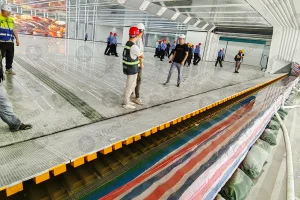
Unlike regional fabricators who rely solely on computer finite element analysis (FEA), Junli maintains an advanced, full-scale hydraulic testing facility in Nanjing. Every production model for metro transit, power substations, and underground parking structures undergoes 100% full hydrostatic head testing before ocean shipment.
Procurement managers in Los Angeles working on high-priority municipal transit contracts require guaranteed lead times, clear BIM/CAD documentation, and custom dimensional compliance.
Tailored technical configurations engineered to protect critical public transit assets, commercial centers, and energy grids throughout LA County.
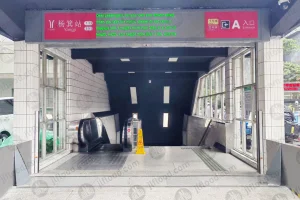
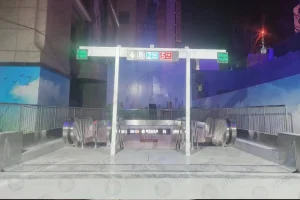
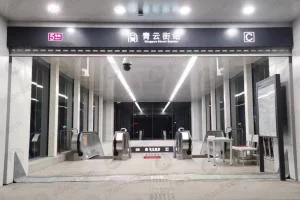
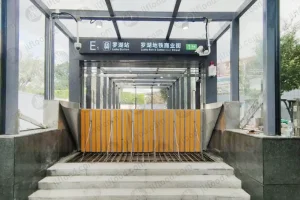
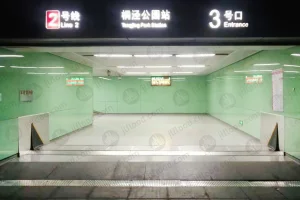
Flush-mounted hydrodynamic barriers installed at pedestrian portal stairwells, escalator entries, and connection channels (such as Downtown LA Union Station, Wilshire/Western, and Hollywood/Highland stations). Completely flat during daily foot traffic; automatically rises when stormwater flows exceed street curb levels.
Critical protection for commercial high-rises, residential complexes, and shopping plazas in Century City, Santa Monica, and Financial District DTLA. Heavy-duty aluminum alloy panel tolerates continuous drive-over traffic without deformation or seal degradation.
Prevent regional electrical blackouts by isolating high-voltage transformer rooms, underground cable vaults, and switching stations. Compact flip-up and embedded automatic gates prevent catastrophic water ingress into critical energy infrastructure during heavy atmospheric river events.
Explore our full line of field-proven, pool-tested hydrodynamic gates designed for OEM and municipal project deployment.
Detailed answers regarding engineering compliance, installation civil works, local building codes, and international delivery.
Contact Nanjing Junli’s specialized flood control engineering team for project feasibility reviews, CAD drawing requests, structural calculations, and factory-direct pricing for the LA market.
Send Inquiry Now

