
Industry-Grade Hydrodynamic Protection Whitepaper: Technical Specifications, Commercial Tender Guidelines & Infrastructure Resilience for Brazilian Mass Transit Authorities
Direct manufacturer deployment options for Brazilian urban rail transit networks, underground substations, and severe inundation zones.
An authoritative breakdown of climate adaptation challenges facing Metropolitan Transport Authorities across São Paulo, Rio de Janeiro, and Porto Alegre.
Urban mass transit systems across Brazil are currently confronting unprecedented hydrological pressures. The rapid expansion of major metropolitan hubs—most notably the Greater São Paulo Area (Metrô SP), the Rio de Janeiro rail network (SuperVia and MetrôRio), and the Porto Alegre Trensurb system—has coincided with increasingly violent tropical flash-flooding events (tempestades tropicais). Subterranean infrastructures, including metro entrance concourses, pedestrian connection tunnels, and electrical traction substations, represent high-risk vulnerable points during severe weather events.
Historical inundation events in Southern Brazil and flash floods in São Paulo’s Marginal Tietê and Pinheiros basins have demonstrated that traditional manual flood barrier deployments—such as sandbags, manual stop-logs, or motorized gates reliant on grid electricity—are structurally insufficient. Power outages frequently accompany extreme storms, rendering electro-mechanical gates non-functional exactly when floodwaters breach street-level kerbs. To achieve true infrastructure resilience, Brazilian municipal engineers and EPC contractors are turning to Hydrodynamic Automatic Self-Rising Flood Barriers engineered by Nanjing Junli Technology Co., Ltd.
How buoyancy-driven mechanical dynamics eliminate human error and electrical failure in high-stakes subterranean rail environments.
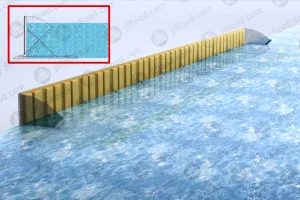
The flood gate panel is recessed flush into a heavy-duty stainless steel embedded bottom foundation box. When surface runoff overflows urban kerbs and enters the chamber, natural hydrostatic pressure and hydrodynamic buoyancy forces lift the door panel automatically. No human intervention, sensors, or electrical power are required.
Utilizing aerospace-grade synthetic EPDM compound gaskets combined with dual-tier side wall seals, Junli flood barriers maintain absolute zero-leakage performance under extreme hydraulic heads up to 2.0 meters, fully complying with international leakage standards (DIN 19569-4 / BS EN 12266-1).
Engineered with structural-grade 6061-T6 aluminum alloy or 304/316 stainless steel internal ribbing. The flush drive-over top cover supports high-frequency vehicular traffic (up to 28-ton axle weights) without structural deformation, ideal for bus-rapid transit (BRT) lane intersections and metro maintenance depots.
| Performance Criteria | Junli Hydrodynamic Auto-Barrier | Electric/Motorized Flood Gates | Manual Stop-Logs / Sandbags |
|---|---|---|---|
| Power Reliance | 100% Passive (Zero Electricity) | Requires Grid Power or Generator Backup | Manual Labor Dependent |
| Response Speed | Immediate passive trigger (< 30 sec full lift) | 3 - 10 minutes (Sensor delay) | 1 to 4 Hours (High failure rate during sudden flash floods) |
| Operational Standby Cost | Zero (Mechanical passive stability) | High (Continuous motor/battery maintenance) | High (Labor call-out fees & storage space) |
| Service Life Cycle | 25+ Years (Stainless Steel / Anodized Al) | 8 - 12 Years (Electrical components degrade) | Single use or short lifecycle |
| Subterranean Suitability | Optimized for Metro Entrances & Shafts | Risk of short-circuit during submerged conditions | Not feasible for wide transit spans |
Leveraging high-end Chinese industrial automation to deliver certified, cost-effective flood control systems directly to Brazilian ports.
Nanjing Junli Technology Co., Ltd. operates a state-of-the-art manufacturing campus in Jiangsu, China, specializing in multi-segment civil defense, bridge, and intelligent flood management infrastructure. Our facility integrates automated CNC laser cutting, robot-assisted TIG welding, and automated surface treatment pipelines (anodizing and anti-corrosion fluorocarbon coating).
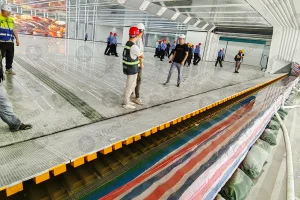
Every single barrier configuration bound for export undergoes full-scale hydraulic stress and leakage testing in our proprietary testing pool. This rigorous quality control ensures that when units arrive at Brazilian ports (Santos, Paranaguá, or Rio de Janeiro), they comply flawlessly with technical specifications.
Navigating Brazilian import regulations (including NCM codes, SISCOMEX customs clearance, and ABNT NBR structural standards) requires an experienced global partner. Junli provides end-to-end export documentation, sea-freight reinforced wooden packaging, and precise CAD/BIM Civil Interface Drawings.
By combining Chinese Industry 4.0 supply chain scale with direct OEM engineering pricing, Junli offers Brazilian infrastructure projects up to a 40% cost reduction compared to European or North American flood gate suppliers, without compromising structural or hydraulic performance.
Transparent pricing metrics and cost-driver analysis for municipal procurement managers, civil engineering consultants, and public-private partnerships (PPPs).
Understanding the total cost of ownership (TCO) for metro flood barrier procurement in Brazil requires evaluating several core engineering parameters. Factors influencing the final project quote include clear span width, retaining height requirements (typically 0.6m to 1.5m for metro access points), material composition, and structural load ratings for street-level installation.
| Barrier Type / Configuration | Retaining Height Range | Primary Material Grade | Estimated FOB China Price (USD/Meter) | Target Application Scenario |
|---|---|---|---|---|
| Embedded Hydrodynamic Metro Barrier | 0.6m – 1.2m | 304 Stainless Steel / Aircraft Aluminum | $850 – $1,450 / m | Metro station pedestrian entrances, concourses |
| Heavy-Duty Surface Automatic Barrier | 0.5m – 1.0m | Reinforced 316 Stainless Steel Frame | $750 – $1,250 / m | Commercial car park ramps, transit depots |
| Flip-Up Hydrodynamic Barrier (HM4D-0006E) | 0.4m – 0.8m | Anodized Structural Aluminum Alloy | $600 – $950 / m | Substation pedestrian doors, equipment rooms |
| Self-Opening & Closing Wide-Span Gate | 1.0m – 2.0m | Custom Structural Alloy + EPDM Seals | $1,200 – $2,200 / m | Metro connecting channels, flood walls |
Tailored flood defense implementations designed to meet Brazilian urban topography and mass transit structural layouts.
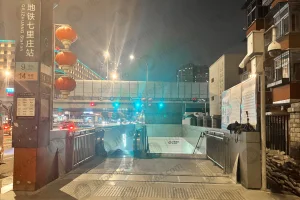
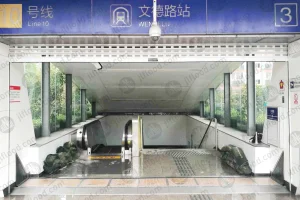
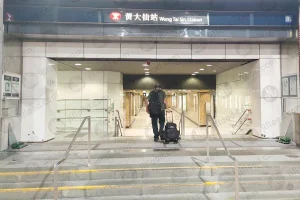
Street-level stairwells on heavily trafficked avenues (such as Av. Paulista or Av. Faria Lima in São Paulo) require completely flush barriers when retracted. Junli’s embedded automatic barriers blend seamlessly into urban pavement, triggering only when surface water flows exceed safety levels.
Underground substations feeding electric rail grids are highly vulnerable to short-circuit disasters during floods. Surface-mounted flip-up barriers (HM4D Series) protect equipment room doors and cable trenches, ensuring continuous grid power during regional storms.
Commercial office towers, shopping malls, and intermodal freight logistics hubs utilize Junli drive-over flood gates across entrance ramps to safeguard valuable underground vehicular assets and electrical infrastructure.
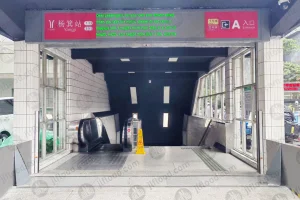
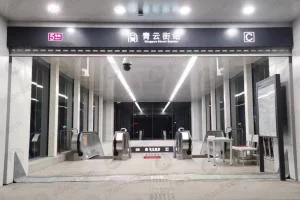
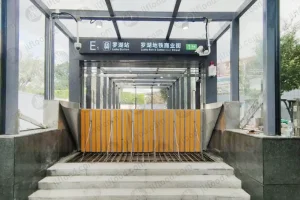
Explore our complete range of certified flood protection barriers, field-proven across global infrastructure networks.
Expert answers covering installation civil works, import procedures, structural certification, and maintenance protocols.
Send us your opening dimensions, clear width specifications, or project CAD drawings. Our technical sales engineering team will provide a comprehensive layout proposal, structural calculation summary, and direct factory quote within 24 hours.


