
Zero-power, hydrodynamic automated barriers certified for severe urban flooding scenarios and mass transit portals.
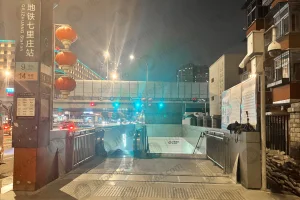
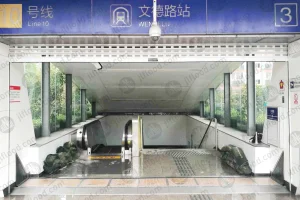
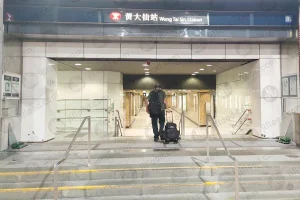
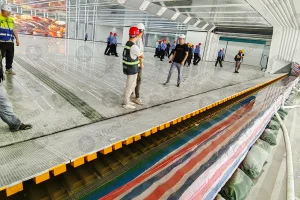
As the Republic of Iraq embarks on an unprecedented infrastructure modernization decade—highlighted by the ambitious Baghdad Metro project spanning 7 lines and 64 stations, as well as transit expansion initiatives across Basra, Erbil, and Mosul—urban flood mitigation has emerged as a cornerstone of civil engineering design. The Mesopotamian plain, characterized by flat topography, clay-rich soil with low water infiltration rates, and intense hyper-localized cloudburst events, poses unique hydro-geotechnical risks to underground civil works.
Key Infrastructure Insight: Modern metro lines and underground utility conduits cannot rely on traditional electric-powered flood pumps or manual sandbag deployment during catastrophic cloudbursts. Hydrodynamic self-rising barriers operate entirely without electrical grid power or human intervention, eliminating single points of failure during storm-induced power outages.
Iraq experiences acute seasonal weather polarization. Extended dry periods create heavy dust and fine particulate accumulation across urban impervious surfaces. When severe convective thunderstorms occur during the winter and spring months, rainfall runoff converts instantly into silt-heavy surface floodwater. For underground transit portals, sub-surface parking structures, and electrical substations along the Tigris and Euphrates basins, traditional flood prevention mechanisms often fail due to three critical factors:
Nanjing Junli Technology’s hydrodynamic automatic flood barriers overcome these localized vulnerabilities through purely passive mechanical buoyancy physics. Installed flush with the ground level across station entrances, pedestrian plazas, and subterranean vehicle driveways, the barrier resting position acts as a heavy-duty, vehicle-rated access threshold.
When surface floodwaters flow toward the entrance, water enters the recessed bottom foundation trough through intake grates. As the fluid level inside the chamber reaches the calibrated hydro-static threshold, high-density closed-cell buoyancy modules generate upward vertical force. The main flood door panel pivots upward automatically, forming an impermeable, self-locking water retention wall. As the incoming water level rises, hydrostatic lateral pressure forces specialized EPDM vulcanized multi-lip gaskets tighter against the side frame jambs, achieving zero water leakage without requiring sensors, PLC controllers, actuators, or backup generators.
Activated purely by water buoyancy and hydrostatic pressure. Operates seamlessly during total grid failure and blackouts.
Integrates seamlessly with station pedestrian floor tile work or road pavement. Zero obstruction to daily passenger flow or traffic.
Self-cleaning chamber geometry and sealed stainless steel mechanical pivots prevent sand buildup and jamming in harsh arid environments.
Combining high-volume modular production, precision structural welding, and rigorous water-tank seal testing for rapid deployment to Middle Eastern mega-projects.
Why international EPC contractors and Iraqi municipal authorities are transitioning to automated hydrodynamic systems.
| Evaluation Parameter | Manual Aluminum Stop-Logs | Electrical Motorized Flood Gates | Junli Hydrodynamic Automatic Barrier |
|---|---|---|---|
| Power Requirement | Manual labor needed | High electric load (Grid + Backup UPS) | Zero Power (Pure Hydropower) |
| Activation Trigger | Human warning & physical assembly | Water sensor & electric motor | Immediate Passive Water Buoyancy |
| Reaction Window | 30 – 120 minutes | 2 – 5 minutes (Fails if power lost) | Instantaneous (< 10 seconds) |
| Sand & Silt Sensitivity | High (Track blockage during fitment) | High (Motor gear jam risk) | Ultra-Low (Self-flushing trough design) |
| Maintenance Profile | High storage space, gasket decay | Monthly electrical & motor checks | Low (Annual mechanical check) |
| Life Cycle Cost | Moderate initial, high labor cost | High installation & power backup cost | Lowest Total Cost of Ownership (TCO) |
Deploying metro-grade flood barriers in Iraq requires precise architectural customization to handle climate extremes—ranging from summer ambient temperatures exceeding 50°C to winter cloudbursts. Nanjing Junli Technology provides tailored civil engineering interfaces compatible with Iraqi standard concrete mix designs and construction codes.
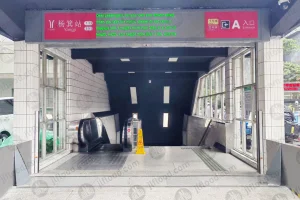
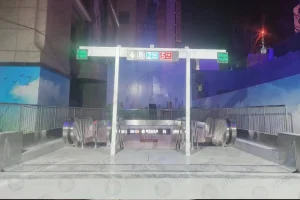
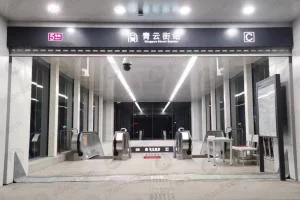
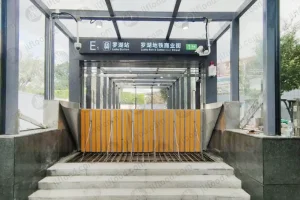
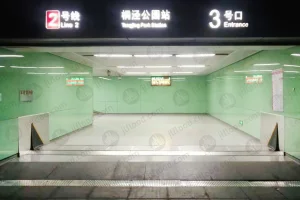
Station portals along proposed Baghdad Metro lines require wide, barrier-free clear spans to accommodate peak commuter movement during morning and evening transit windows. Junli’s Embedded Automatic Metro Barriers sit completely flush with granite or tile finished floors. Stainless steel 304 or 316 structural frame casings are cast directly into station portal aprons, delivering a seamless aesthetic that activates automatically if floodwaters approach station stairs.
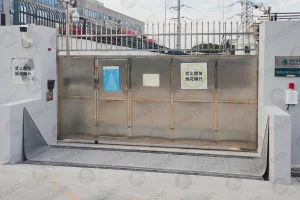
In municipal energy distribution facilities across Baghdad, Basra, and Erbil, water intrusion into transformer rooms leads to catastrophic long-term blackout damage. Our surface-mounted and self-closing flood gates create hermetically sealed perimeter containment zones around critical substation gates and cable trench access points, preventing sub-surface urban runoff from reaching power generation units.
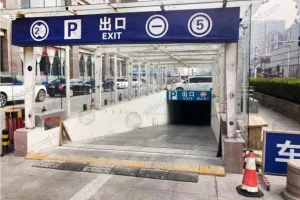
Commercial shopping complexes, government centers, and metro park-and-ride facilities feature steep basement access ramps. Standard surface drainage channels are routinely overwhelmed during cloudbursts. Junli heavy-duty vehicle-rated barriers sustain single-axle loads exceeding 50 tons while maintaining rapid hydrodynamic lifting capability when storm runoff cascades down garage entrance ramps.
Explore our complete range of certified hydrodynamic gates, flip-up barriers, and specialized station connection channel protection solutions.
In-depth responses covering installation engineering, civil integration, maintenance protocols, and shipping logistics to Iraq.
Iraqi cities experience sudden cloudburst floods often paired with thunderstorm-induced electrical outages. Standard motorized flood gates fail when electricity cuts out. Junli hydrodynamic barriers operate on 100% passive water buoyancy physics—requiring zero power, zero electrical wiring, zero sensors, and zero manual operation. When water arrives, the barrier rises reliably every single time.
Our bottom embedded frame incorporates a self-flushing hydro-geometric channel and stainless steel 304/316 debris screens. Rainwater entering the chamber flushes fine dust and sediment through secondary drainage outlets. Furthermore, mechanical hinges utilize sealed self-lubricating composite bearings that prevent sand ingress and jamming even after months of dry exposure.
We supply continuous modular clear spans from 1.0 meter up to 6.0 meters per leaf, and infinite modular array combinations for wide entrance concourses over 30 meters wide. Retaining heights range from 0.5m, 0.9m, 1.2m, up to 2.0 meters depending on hydraulic design head calculations provided by your civil consultant.
Nanjing Junli Technology delivers complete engineering submittal packages in English. This includes Auto-CAD dimensional drawings, 3D BIM models, structural FEA load calculation reports, material mill certificates (Stainless Steel 304/316, 6063-T6 Aluminum Alloy), EPDM rubber aging test certificates, and factory water-tank test video verification.
Standard order production takes 14 to 21 calendar days at our Nanjing manufacturing facility. Sea freight transit from Shanghai or Ningbo Port directly to Umm Qasr Port (Iraq) typically requires 22 to 28 days. Expedited air freight for urgent project components is available via Baghdad International Airport (BGW) or Erbil International Airport (EBL).
Our dedicated structural engineering team provides complete tender specification support, CAD embedment details, and competitive factory-direct quotes for Iraqi infrastructure developments.
Send Inquiry Now

