Comprehensive Whitepaper on Hydrodynamic Power-Free Automatic Flood Protection Gates for Sydney Metro, Melbourne Suburban Rail Loop, Brisbane Cross River Rail, and Australian Coastal Infrastructure.
Engineered to meet Australian Standards (AS/NZS 1170 & AS 3600), delivering zero-power automatic hydrodynamic deployment during severe flash floods and East Coast Low (ECL) weather events.
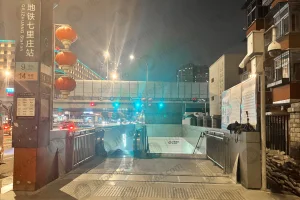
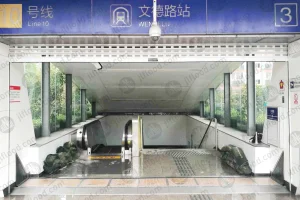
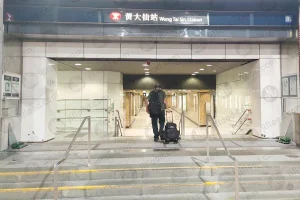
Australia’s major urban centers—Sydney, Melbourne, Brisbane, and Perth—are expanding subsurface mass transit networks at an unprecedented rate. Iconic projects such as the Sydney Metro City & Southwest, Melbourne’s Suburban Rail Loop (SRL), and Brisbane’s Cross River Rail represent tens of billions of dollars in critical infrastructure investments. However, Australia's changing climate, characterized by intensified East Coast Lows (ECLs), severe La Niña cycles, and sudden tropical downpours, presents acute flood risk profiles for subterranean environments.
Underground railway station portals, subterranean pedestrian connection channels, track vent shafts, and underground traction substations act as low-resistance ingress channels during severe surface waterlogging events. Traditional flood defense measures—such as manual aluminum stop-logs, sandbagging, or electrically powered vertical flood gates—introduce catastrophic single-point failures during major storm events:
Extreme weather routinely knocks out municipal power grids. Electrically powered flood gates fail precisely when storm water ingress peaks, leaving station portals completely exposed.
Flash urban flooding in Australian cities can submerge a station entrance within 8 to 15 minutes. Manual installation of flood boards or deployment of site staff during off-peak hours is logistically impossible.
Uncontrolled water ingress into metro tunnels corrupts signal infrastructure, floods high-voltage switchrooms, destroys rolling stock, and presents life-safety hazards to thousands of commuters.
Regulatory Compliance Note: Metro flood control systems in Australia must comply strictly with the National Construction Code (NCC), Australian Standards AS/NZS 1170.1 (Permanent, imposed and other actions), AS 3600 (Concrete structures), and local authority mandates (such as Transport for NSW Sustainable Design Guidelines and Victoria Department of Transport Standards).
Nanjing Junli Technology Co., Ltd. hydrodynamic automatic flood barriers are engineered specifically for critical civil transit networks.
The core technological advantage of Junli’s metro flood barrier lies in its hydrodynamic passive buoyancy mechanism. Unlike motorized or hydraulic systems that depend on water level sensors, PLC controllers, emergency backup generators, and human intervention, Junli automatic flood gates utilize the hydrostatic energy of incoming floodwaters to actuate the protective wall.
| Parameter | Standard Metro Specification |
|---|---|
| Retaining Height ($H$) | 500 mm – 2000 mm (Customizable) |
| Clear Width Span ($W$) | 1.0 m – 6.0 m (Modular linked up to 50m+) |
| Primary Structural Panel | Stainless Steel 304 / Marine-Grade 316 / Aircraft-Grade Aluminum |
| Foundation Embedment | Hot-Dip Galvanized Structural Steel (AS/NZS 4680 compliant) |
| Sealing System | Replaceable EPDM Rubber / Fluororubber Dual-Lip Gaskets |
| Load Bearing Capacity | Class C250 (25t) to Class F900 (90t heavy vehicles) |
| Leakage Rate | ≤ 0.05 L/hr per meter of seal (Exceeds international standard) |
Procurement directors and tier-1 EPC contractors (such as CPB Contractors, John Holland, Acciona, and UGL) servicing the Australian rail market face dual pressure: strict compliance with Australian engineering safety guidelines alongside rigorous capital budget constraints. Traditionally, European or North American flood barrier suppliers offered high lead times (26–36 weeks) and exorbitant unit pricing due to localized, low-volume fabrication lines.
Nanjing Junli Technology Co., Ltd. changes the competitive dynamic for Australian infrastructure procurement through industrial supply-chain advantages:
Located in Nanjing's high-tech manufacturing corridor, Junli operates precision CNC laser cutting arrays, robotic submerged-arc welding systems, and automated sealing assembly lines, achieving a 4-week production lead time for large metro contract orders.
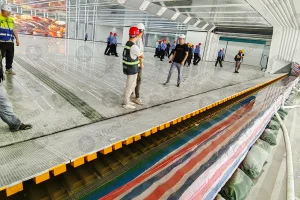
Junli maintains a custom full-scale hydraulic testing pool capable of verifying flood barriers under real water head loads up to 2.5 meters. Every order undergoes 100% water-retaining and leakage acceptance testing prior to export shipping.
Direct manufacturer sourcing eliminates intermediary margins, delivering engineered-to-order flood defense barriers meeting Australian Standards at a significantly reduced capital cost per linear meter.
Designing customized flood protection for diverse rail transit interfaces and civil assets.
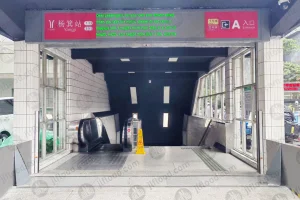
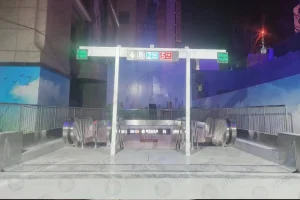
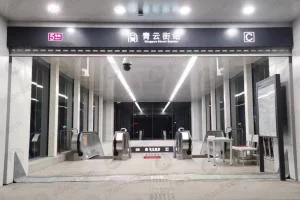
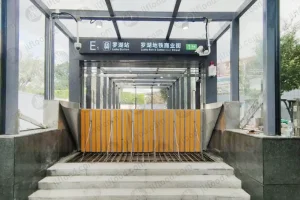
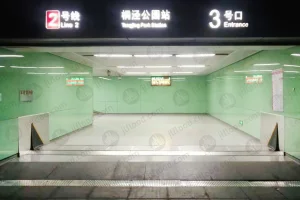
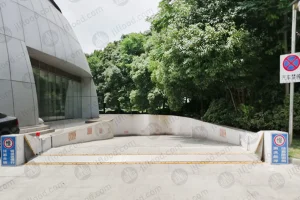
Modern Australian metro stations feature wide, open-concept pedestrian plazas to accommodate high commuter foot traffic. Junli’s embedded hydrodynamic flood barriers sit level with paved granite or concrete finishes. When triggered by stormwater runoff, the barrier rises silently to create a secure perimeter without disrupting urban aesthetics during dry periods.
Subterranean passages connecting metro concourses directly to adjacent commercial shopping precincts (e.g., Pitt Street Mall links or Melbourne Central connectors) represent high financial risk. Junli flip-up and automatic embedded barriers isolate retail zones during extreme weather, preventing cross-asset flood inundation.
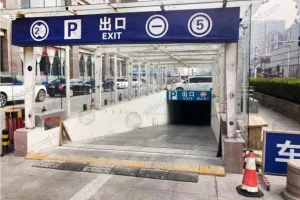
Rail networks rely heavily on ground-level and basement power substations. A flooded transformer room results in system-wide transit shutdowns. Junli self-closing flood gates and light flip-up barriers provide 24/7 un-staffed isolation for cable trenches, equipment doorways, and transformer bays.
Coastal transit lines in Sydney Harbor, Brisbane River corridors, and Gold Coast light rail routes face corrosive salt air and brackish tidal surges. Junli supplies marine-grade Stainless Steel 316 panels combined with fluoropolymer corrosion coatings to withstand harsh saline environments.
As transit operators move toward smart city infrastructure management, the integration of real-time monitoring technology into passive civil flood defense is becoming standard across Australian tier-1 projects. Junli is at the forefront of this transformation:
While mechanical deployment requires no electrical power, Junli barriers can be fitted with ultra-low-power wireless sensors that transmit real-time gate position (Open / Deploying / Fully Locked) to the Metro Operations Control Center (OCC).
Junli provides complete 3D BIM (Building Information Modeling) objects and structural CAD files, allowing Australian consulting engineers (AECOM, Aurecon, WSP, Mott MacDonald) to integrate barriers seamlessly into early station design phases.
Zero energy consumption during standby and operation lowers operational carbon footprints, contributing directly to ISCA (Infrastructure Sustainability Council of Australia) certification points.
When requesting quotes for Australian metro projects, procurement teams should evaluate total cost of ownership (TCO) and compliance documentation. The table below outlines key parameters required for accurate commercial pricing from Nanjing Junli Technology:
| Evaluation Parameter | Information Required from Buyer | Junli Engineering Deliverable | Impact on Project Budget |
|---|---|---|---|
| Opening Geometry | Clear width span, finish floor level (FFL), kerb height | Custom panel sizing & embedded frame structural drawings | Determines material volume (SS304 vs SS316) |
| Design Flood Elevation (DFE) | 1-in-100 year flood level or maximum expected water head | Hydrostatic pressure calculation & panel thickness spec | Optimizes structural stiffness vs weight |
| Traffic Loading Class | Pedestrian only (A15), Light Commercial (C250), Heavy Fire Truck (F900) | Top cover plate plate thickness & internal rib reinforcement design | Ensures civil slab longevity under vehicle traffic |
| Site Civil Interface | New build concrete slab vs retrofit on existing concrete | Civil anchor specifications & concrete recess blockout detailing | Minimizes site civil installation costs |
Our specialized flood control engineering team provides rapid turnaround on pricing, shop drawings, Finite Element Analysis (FEA) reports, and water-testing validation certificates.
Send Inquiry Now & Request Technical CatalogTechnical and commercial clarity for Australian transit authorities, structural consultants, and head contractors.
The barrier operates entirely on passive fluid mechanics. As surface runoff enters the recessed stainless-steel foundation frame, the buoyant panel rises automatically due to hydrostatic pressure and Archimedes' principle. No electrical wiring, water level sensors, hydraulic pumps, or human intervention are required. This guarantees 100% operational readiness during extreme storms when local electrical grids fail.
Yes. Junli barrier designs are evaluated according to AS/NZS 1170 structural action standards, AS 3600 concrete embedment guidelines, and hot-dip galvanizing standards per AS/NZS 4680. We provide structural engineering calculation books, Finite Element Analysis (FEA) reports, and third-party witnessed hydrostatic test reports per project order.
Standard manufacturing lead time at our Nanjing facility is 3 to 5 weeks upon CAD drawing approval. Ocean freight shipping to major Australian ports (Sydney Port Botany, Port of Melbourne, Port of Brisbane, Fremantle) typically takes 14 to 20 days. Accelerated air-freight options are available for urgent retrofit emergency projects.
Absolutely. Embedded-type barriers are engineered with internal heavy-duty load ribbing. Depending on specification, top cover plates meet load ratings from Class C250 (25-tonne, suitable for public delivery vehicles) up to Class F900 (90-tonne, suitable for heavy emergency response fire appliances and heavy freight trucks).
Maintenance is minimal. The system features self-draining debris channels that flush sediment during routine cleaning. High-grade EPDM gaskets are designed for a 10-15 year UV and water exposure lifecycle and can be replaced on-site using simple mechanical fasteners without excavating the foundation frame.
Yes. We provide complete installation manuals in English, step-by-step video installation guides, concrete embedment templates, and live video commissioning support. Field engineering support can also be arranged for major rail transit infrastructure contracts.
Explore our full suite of proven automatic flood defense barriers, station channel flood gates, and specialized water testing configurations.