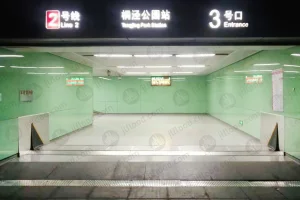
Engineered specifically for low-maintenance, zero-power operation in high-density urban transit nodes.
Addressing the unique hydro-geological vulnerabilities of the National Capital Region (NCR) through hydrodynamic passive flood barriers.
Metro Manila (NCR) presents one of the world's most complex urban hydrology challenges. Situated on an alluvial plain bounded by Manila Bay to the west and Laguna de Bay to the east, intersected by the Pasig-Marikina River basin, the metropolis is routinely subjected to torrential monsoon downpours (Habagat) and severe tropical cyclones. Events such as Typhoon Ondoy, Typhoon Carina, and Typhoon Kristine have demonstrated that urban drainage systems in Manila can be overwhelmed within less than 45 minutes of sustained rainfall.
As major mega-infrastructure projects accelerate—most notably the Metro Manila Subway Project (MMSP), North-South Commuter Railway (NSCR), and expanded LRT-1/LRT-2/MRT-3 interchange hubs—protecting subterranean transport corridors from catastrophic inundation has become a paramount structural engineering requirement. Sub-surface station entrances, vent shafts, cable utility tunnels, and underground parking basements represent single-point vulnerabilities. A single breach during a flash flood can result in billions of Philippine Pesos (PHP) in asset destruction, extended mass transit paralysis, and loss of life.
Information Gain Notice for Civil Engineers & Procurement Directors: Traditional flood defense relies on manual aluminum stop logs, sandbags, or electrically powered vertical lift gates. In Manila’s typhoon conditions, regional grid power failures occur almost simultaneously with flash floods. Manual barrier deployment fails when emergency personnel cannot navigate flooded streets to reach station portals. Hydrodynamic Automatic Self-Rising Flood Barriers eliminate both human intervention and electrical power dependency entirely.
Metropolitan transit authorities across Tokyo, Singapore, Guangzhou, and New York have upgraded their subterranean defense protocols following severe deluge disasters. The comparative matrix below outlines how hydrodynamic technology fulfills international resilience benchmarks in contrast to legacy solutions:
| Evaluation Parameter | Legacy Sandbags / Stop-Logs | Motorized Electric Flood Gates | Hydrodynamic Self-Rising Gate (Junli Standard) |
|---|---|---|---|
| Deployment Trigger | Manual labor required (2-4 hours) | Water sensor + Electric Motor | Pure Hydrodynamic Buoyancy (0.1s response) |
| Power Dependency | None | 100% Dependent (Requires UPS/Genset) | 0% Power Consumption (Passive Physics) |
| Manila Grid Blackout Risk | High operational failure | High vulnerability to power loss | 100% Immune to Power Outages |
| Traffic Load Rating | Zero (Blocks traffic continuously) | Low - Medium (Surface obstruction) | AASHTO H-20 / HS-20 Heavy Vehicle Rated (28+ Tons) |
| Structural Lifespan | Single-use / Disposable | 8 - 12 Years (Mechanical wear) | 25+ Years Stainless Steel / Marine Alloy Structure |
| Sealing Efficiency | High leakage rate (>15 L/min/m) | Medium leakage (5-10 L/min/m) | Zero Leakage / Double EPDM Gasket Seal (<0.05 L/min/m) |
How Archimedes' principle and hydrodynamic water pressure deliver fail-safe performance during urban deluges.
The barrier panel rests completely flush inside an embedded ground frame during dry conditions. As floodwater flows toward the protected entrance, water enters the bottom basin chamber. The buoyancy panel automatically floats, lifting the front edge of the barrier plate instantly as the water level rises.
As water depth increases against the raised panel, hydrostatic pressure forces the gate tighter against the side support frames and base sealing gaskets. The greater the flood depth, the tighter the seal becomes, eliminating mechanical latching failures.
Engineered with bottom flush-out channels and angled sediment deflectors. Monsoon debris, trash, and Manila river silt are prevented from jamming the internal hinge system, ensuring smooth opening and automatic resetting once floodwaters recede.
Tailored engineering configurations for critical transport networks, commercial centers, and industrial facilities in the Philippines.
Underground metro stations along Quezon Avenue, Shaw Boulevard, Kalayaan, and NAIA Terminal 3 require high-capacity retaining barriers at street-level pedestrian stairwells and ventilation shafts. Embedded automatic flood barriers remain flush with sidewalk tiles, allowing millions of daily commuters uninterrupted foot traffic until triggered by floodwater.
Commercial towers and shopping hubs in Bonifacio Global City (BGC), Makati Central Business District, and Ortigas Center feature multi-level basement car parks. Surface-type and embedded flood barriers installed at garage entry ramps prevent catastrophic flooding of high-value vehicle inventory and electrical control panels.
Power substations located near the Pasig River, Marikina Valley, and Laguna de Bay lowlands are highly prone to grid-destroying submersion. Flip-up and self-closing flood gates installed at transformer vaults and control room doorways ensure uninterrupted power distribution during extreme storm events.
Facilities located in Manila South Harbor, North Harbor, and Navotas Fish Port face dual threats: torrential rainfall and marine storm surges from Manila Bay. Marine-grade 316L stainless steel barriers resist high-salinity corrosion while holding back 1.5m to 2.0m dynamic hydraulic heads.
Integrating IoT sensors, BIM modeling, and advanced material science into Metro Manila’s smart city flood resilience.
As urban infrastructure evolves towards digital twin technology and central SCADA control, flood barriers must transition from isolated physical barriers into connected IoT smart nodes. Junli Technology’s R&D roadmap emphasizes four major technological vectors:
Equipping passive hydrodynamic barriers with solar/battery-powered LoRaWAN and 5G sensors. Operational status, deployment angle, water level height, and seal integrity are broadcast in real-time to the Metro Manila Development Authority (MMDA) control room and building SCADA systems.
Transitioning barrier leaves to high-strength carbon-fiber-reinforced polymers (CFRP) and marine-grade aluminum honeycomb matrices. This reduces panel weight by 40%, boosting hydrodynamic activation speed to under 0.05 seconds while maintaining 30-ton vehicle load ratings.
Providing full Autodesk Revit BIM families and FEA stress simulation models directly to EPC contractors in Manila. This ensures frictionless civil interface integration during the initial architectural design phase of subway portals and commercial basements.
Understanding cost variables, material selection, and direct factory supply pricing for Philippine contractors and developers.
When specifying and sourcing automatic flood barriers for wholesale projects in Manila, direct-from-factory pricing is determined by five primary engineering metrics. Our Nanjing manufacturing facility offers FOB China and CIF Manila / Port of Batangas commercial terms to support EPC contractors:
| Barrier Model / Type | Standard Height Range | Material Specification | Target Wholesale Price Range (USD / Meter)* |
|---|---|---|---|
| Embedded Hydrodynamic Metro Barrier | 500mm – 1200mm | Stainless Steel 304 / 316L Base Frame + Fluororubber Seals | $450 – $850 / meter |
| Surface-Mounted Ramp Barrier | 400mm – 900mm | Heavy-Duty Structural Steel / Marine Alloy Panel | $380 – $680 / meter |
| Flip-Up Doorway Barrier | 300mm – 600mm | Anodized Structural Aluminum Alloy | $280 – $480 / meter |
| Self-Closing Substation Gate | 600mm – 1500mm | Reinforced SS316 Hydro-mechanical Pivot Assembly | $550 – $980 / meter |
*Note: Prices vary based on total line width span, customized axle load requirements, and custom freight terms. Send your project drawings to receive a precise bill of materials (BOM) quote.
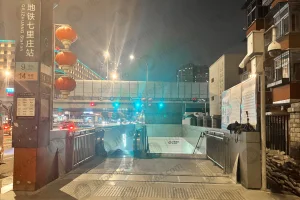
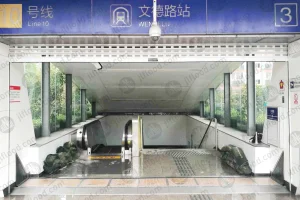
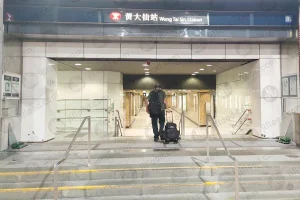
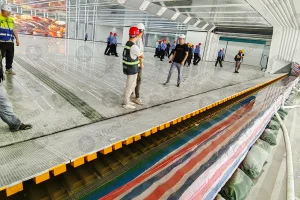
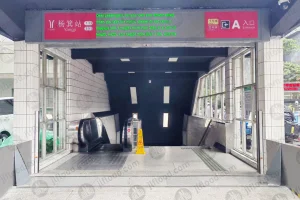
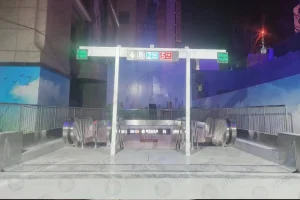
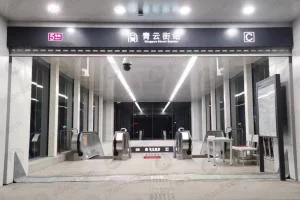
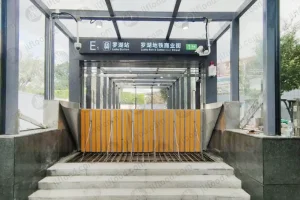
Proven rail transit and underground passage installations from our global reference portfolio.
End-to-end manufacturing, custom civil design, quality testing, and installation guidance for major projects in the Philippines.
Our engineering team reviews your civil drawings, threshold geometry, and PAGASA precipitation data to produce exact embedment frame blueprints and rebar integration notes.
Every manufactured barrier array undergoes full-scale hydro-testing in our dedicated testing basin, measuring leakage rates under maximum design head pressure before shipment.
Custom heavy-duty wooden crate packaging with moisture protection. Direct sea freight dispatch from Shanghai/Ningbo ports straight to Manila South/North Harbor.
Comprehensive English installation manuals, step-by-step video tutorials, and technical engineer dispatch for large transit contracts in Metro Manila.
Direct answers to technical, civil engineering, and commercial questions from Philippine clients.
Contact our structural engineers to request customized CAD drawings, wholesale pricelists, and complete tender documentation for your metro, commercial, or utility project.
Send Inquiry Now